


Dylan Dreiling, Tegan Cain and Carson Jacobs have different stories and different routes through baseball. All three began in Ellis County, all three are still working toward the major leagues and all three have lessons for the young players coming up behind them.
By ALIN HETT
Hays Post
A summer day at the ballfield. A long rehabilitation session. A pitcher trying to make a hitter chase a fastball at the edge of the strike zone.
Those moments look nothing alike. But for Dylan Dreiling, Tegan Cain and Carson Jacobs, each has been part of the same climb: from baseball in and around Ellis County to the professional game.
Dreiling, a Hays native, is an outfielder in the Texas Rangers organization. Cain grew up in Ellis and is a pitcher in the Philadelphia Phillies system. Jacobs, who attended Thomas More Prep-Marian and played for the Hays Larks, is a relief pitcher in the Chicago White Sox organization.
None has reached the major leagues yet. They are building their careers in the minor leagues, where the path forward is made of daily work, long seasons, adjustments and even setbacks. Their individual routes are different, nevertheless their hometown connection and the goal ahead give their stories common ground.
Dylan Dreiling: Building the routine
Dreiling finished August with a hit in every game he played for the Double-A Frisco RoughRiders. He batted .429 with four home runs and 17 RBIs over 20 games, earning the Texas Rangers’ Minor League Player of the Month award. www.mlb.com
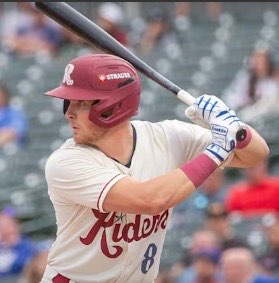
It was the kind of month that can make a season feel easy. Dreiling said it didn’t come from a major change to his swing or approach. The difference, he said, was getting more comfortable in his second year of professional baseball and staying consistent with his daily work in the batting cages.
That comfort took time. The jump from college to the pros brought a different rhythm and a different mental test. A college player might have a few days after a tough weekend series to work on an issue before the next games. In professional baseball, Dreiling said, players can be back in the lineup the next day.
“You’re playing six days a week,” he said. “You’re gonna be in there every game.”
Last season, he found it hard to leave baseball at the ballpark. When he wasn’t playing as well as he expected, he would go home thinking about his swing and watching video. This year, feeling better at the plate helped him switch off after games and spend his time doing other things.
Dreiling has also learned to separate the work before the game from the job during it. Batting practice and pregame defense are times to develop, analyze and make adjustments. Once he steps into the batter’s box, he said, it is time to trust that work and compete.
“I think if you blend them together, where you’re stepping into the box and you’re thinking about some stuff you worked on prior to the game, you’re kind of screwed before you even get in there,” he said.
That balance, working deliberately, then trusting the work, has roots in Hays. Dreiling said his father and grandfather were the best coaches he had because they knew him and how he played.
He remembers going to the field with his grandfather every day during the summer. He also remembers having college baseball players come through the area while he was growing up. Watching and learning from them helped Dreiling see what the game could look like at the next level.
His own path led to the University of Tennessee, where he became one of the biggest stars of the 2024 College World Series. Dreiling was named the tournament’s Most Outstanding Player after helping the Volunteers win the national championship. The Texas Rangers selected him in the second round of the 2024 draft. utsports.com
Even after a strong season, Dreiling sees ways to improve. He wants to become more consistent from week to week and continue to improve defensively.
"I had a good month of the year this year where I felt as good as I've ever felt, probably in my life," Dreiling said. "Then there was there was other games and weeks outside of that where I didn't really feel good at all, and I think if I was a little more consistent, I would have had an even better year this year."
His advice to young players reflects the same focus he has brought to his own development: make progress without trying to do everything at once.
“The main piece of advice I would give is you don't have to go and do everything at once," Dreiling said. "Like young kids, they have so much time to continue to get better every day, and you don't have to go and work out for four hours a a day."
Tegan Cain: Winning without playing
For a year and a half, Tegan Cain’s baseball career was measured in rehabilitation sessions instead of innings.
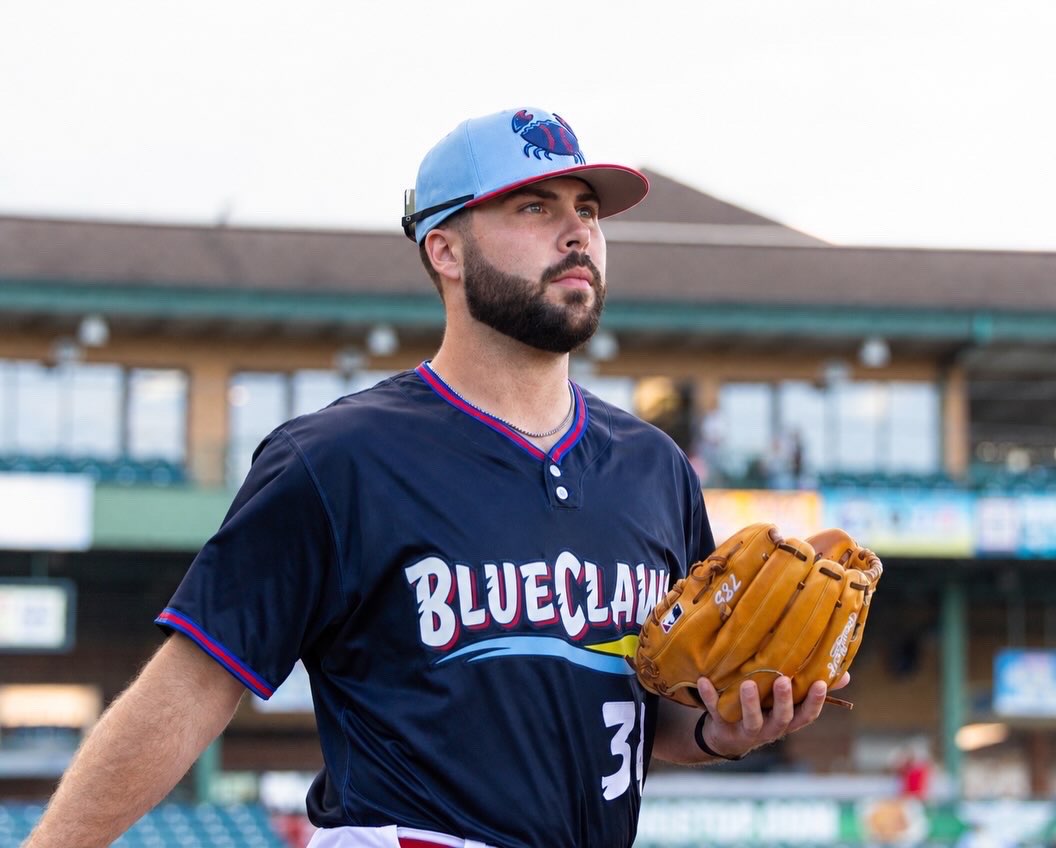
Coming back from Tommy John surgery, Cain spent hours with physical therapists and athletic trainers, repeating the same work day after day. When asked whether the physical recovery or the mental recovery was harder, he didn’t hesitate.
“I would say mental for sure,” Cain said.
The physical routine could take five to seven hours a day, he said, and the repetition became mentally draining. But the deeper challenge was finding a way to keep competing while he couldn’t play baseball. Cain said the Phillies’ mental performance staff helped him through that period and gave him people he could talk with as he worked to shift his outlook.
“You have to find a way to get better every single day, and you have to find a way to win and compete without actually playing baseball,” he said.
When Cain returned to the field this season, he wanted to prove he belonged. He said he had been told not to expect too much, but he came in determined to compete and show what he could do. Staying healthy was his main focus, and he was excited to have the chance to play again.
Cain pitched at Barton Community College and the University of Kansas before the Phillies selected him in the 13th round of the 2024 draft. This season, he played for the High-A Jersey Shore BlueClaws. www.mlb.com
Professional baseball has also changed how Cain thinks about a player’s role. In college, he said, coaches make more of the decisions as they work to build a team and win games. In pro ball, players have more say over the kind of work they do and how they manage their careers.
“You kind of decide your fate once you get into pro ball,” he said. “With the work, the kind of work that you put in, and how much you dedicate yourself to the game.”
For Cain, the opportunity to play professionally still carries a sense of wonder. He grew up in Ellis and said he didn’t think playing a professional sport was a real possibility. Being able to play baseball as a job, he said, is something he has always wanted.
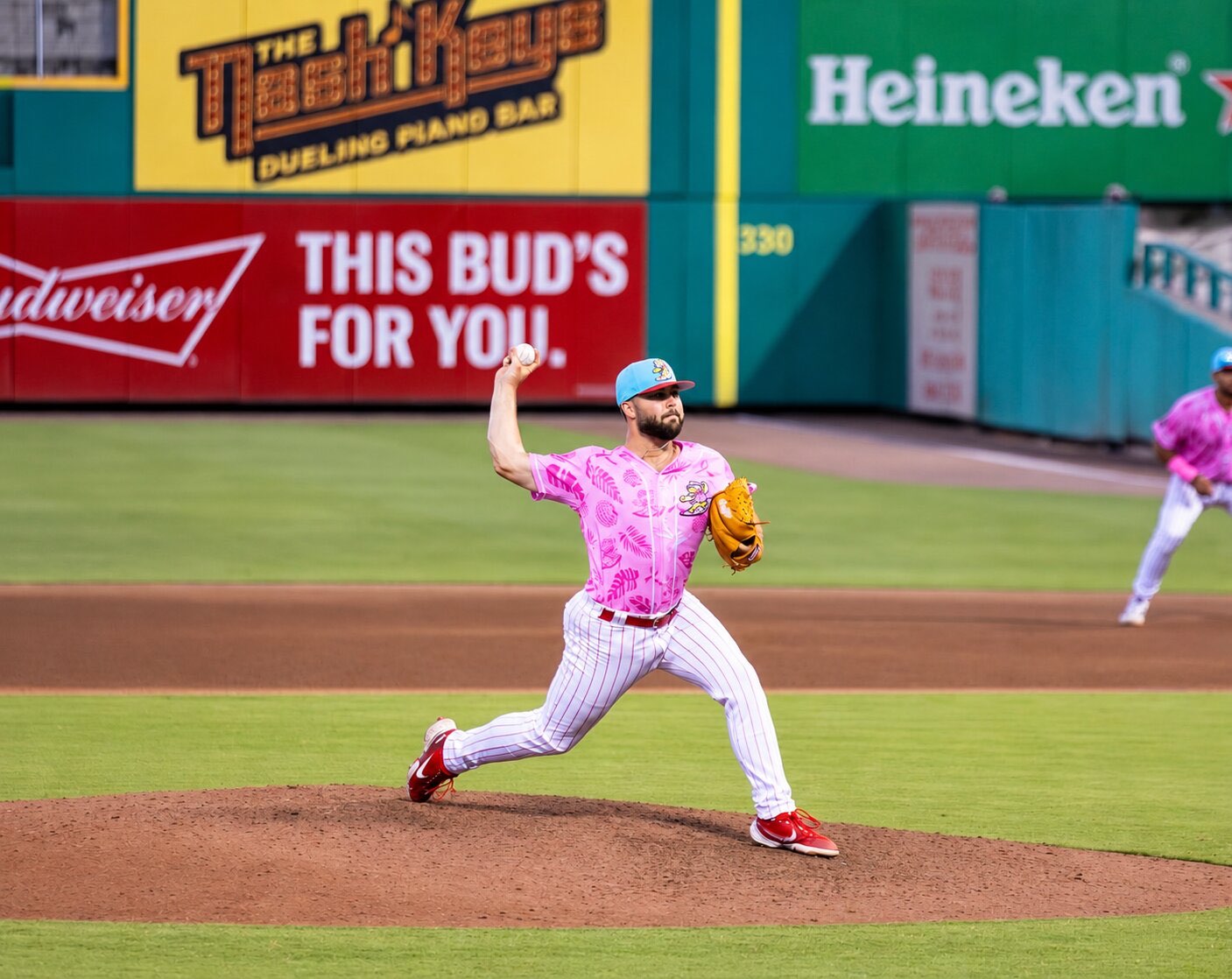
His connection to home has become part of what keeps him motivated. Cain wants young players across western Kansas to know that a professional career can be possible for them, too. He said some smaller schools in the region don’t have baseball programs, and players may not get as many chances or as much exposure.
Cain played both ways at Barton before coaches decided they wanted him to pitch. He sees that experience as proof that more than one door can open in baseball, and that sometimes the route forward is not obvious at first.
“I think it’s really important that I make it known that it can be done,” he said. “Hopefully, some of those kids are inspired by watching Dylan, Carson and myself.”
The next part of Cain’s work is getting stronger and improving his mobility so he can regain the velocity he had before surgery. He said he was throwing in the mid-90s this season and reached 97 mph, but had thrown harder in 2024. Above all, he wants to stay healthy and available.
“Being consistent, being healthy, being on the field every day and being available,” Cain said, “I think those are some of the best skills.”
Carson Jacobs: Finding the strike zone
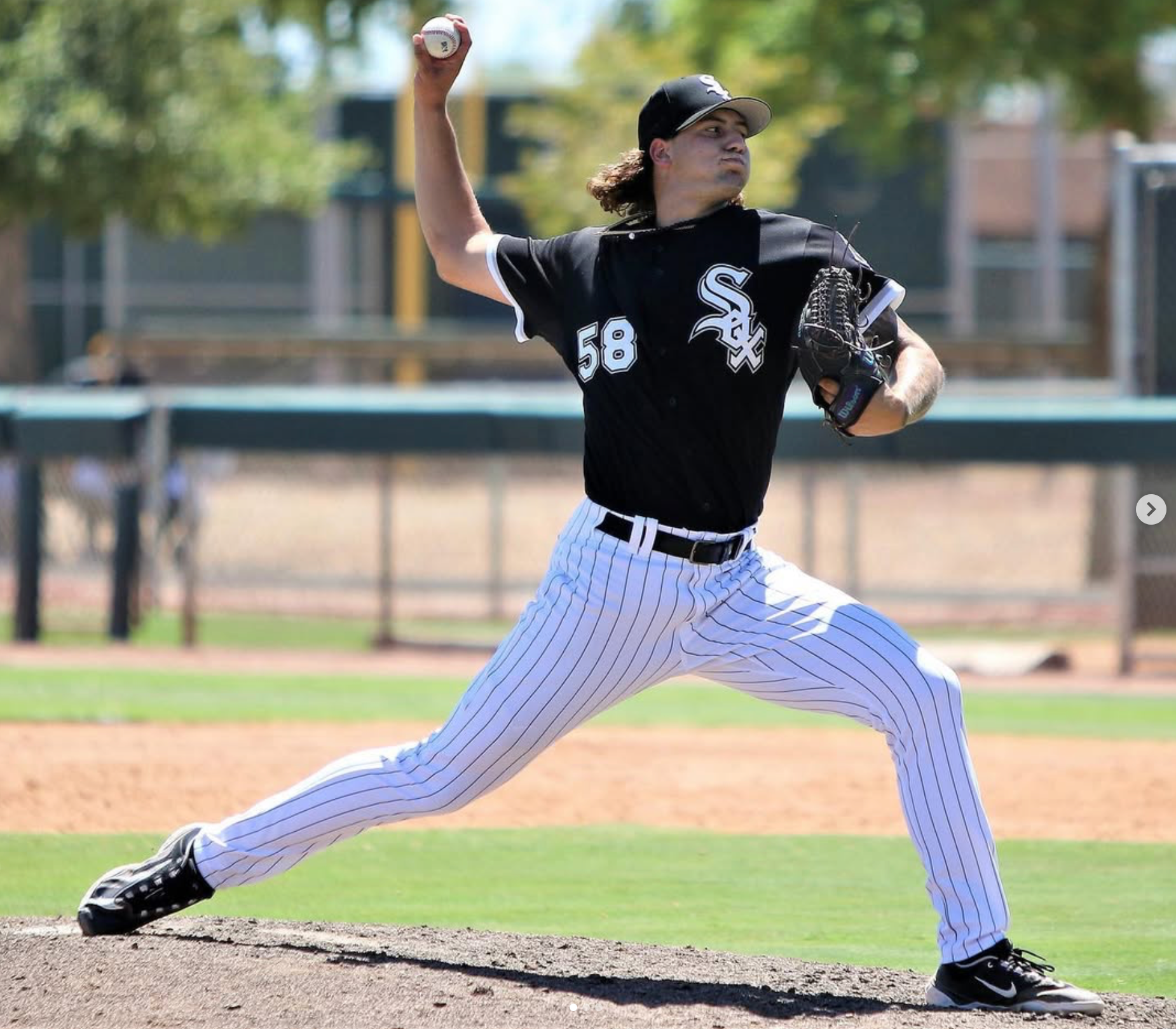
Carson Jacobs has spent the climb from Thomas More Prep-Marian to the Hays Larks and the White Sox organization learning just how much the game changes from one level to the next. Now a reliever with the Double-A Birmingham Barons, he says hitters are more selective as the competition gets tougher. www.milb.com
“They look for the pitch they know they can hit,” Jacobs said.
The umpires have also impressed him. They are precise about the edges of the strike zone, and Jacobs said he has sometimes received a report after a game showing a pitch he thought was close had missed by more than he realized.
“You get the report back, and, yeah, it wasn’t even close,” he said.
Jacobs throws a four-seam fastball, a slider and a splitter. His fastball usually reaches 94 to 97 mph, and he has touched 99.8. At an estimated 6-foot-8, he joked that some people say 6-foot-9, he brings an unusual look to the mound.
Jacobs said coaches have told him he has the tallest release point in the minor leagues, at about 7 feet, and one of the longest extensions.
"I feel like I've gotten better, I'm still trying to learn how to use my body," Jacobs said. "I think this year was a lot better and my coaches have been telling me that I have the tallest release height in the minor leagues, and then I have one of the longest extensions in the minor leagues too."
Jacobs is still learning to use his height to his advantage, pointing to Milwaukee Brewers pitcher Jacob Misiorowski as an example of a tall pitcher who makes the most of his extension and release.
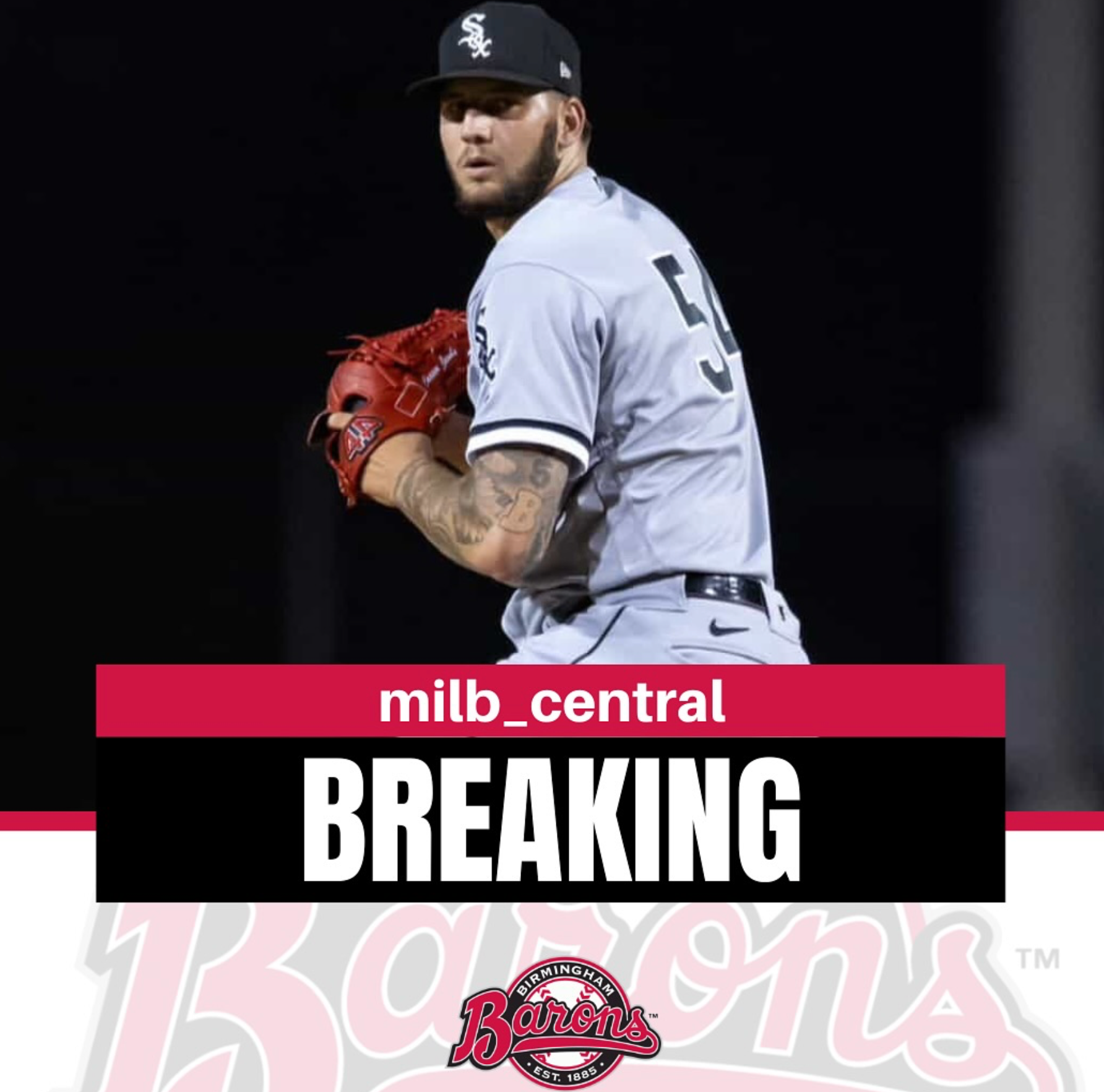
That physical advantage does not remove the need for control. Jacobs said his biggest weakness has been walking hitters. He wants to put the ball in the strike zone and make each at-bat competitive instead of giving opponents free passes.
One pitch he feels good about is his slider. Jacobs has adjusted it to make it harder, faster and sharper and he is proud of what it has become. Command is the next piece he wants to improve.
When asked what he would tell a young player at TMP or elsewhere, Jacobs offered a reminder that extends beyond baseball: “Be where your feet are.”
The people around a player, and the time spent with them, are part of the journey, he said.
Jacobs said he misses his friends and family while spending much of the year away but is also proud to see more athletes from Hays getting college and professional opportunities.
“It’s pretty cool to see what Hays has become,” he said. “There’s so many more people that are coming out of Hays now, getting looks and getting a shot.”
Dreiling’s routine, Cain’s recovery and Jacobs’ command are different challenges, but each player described the same kind of progress: showing up, learning from what happened the day before and preparing for what comes next.