


By KAREN MADORIN
The London Blitz involved nine months of German bomber-induced devastation that drove residents to constant awareness regarding locations of nearest bomb shelters.
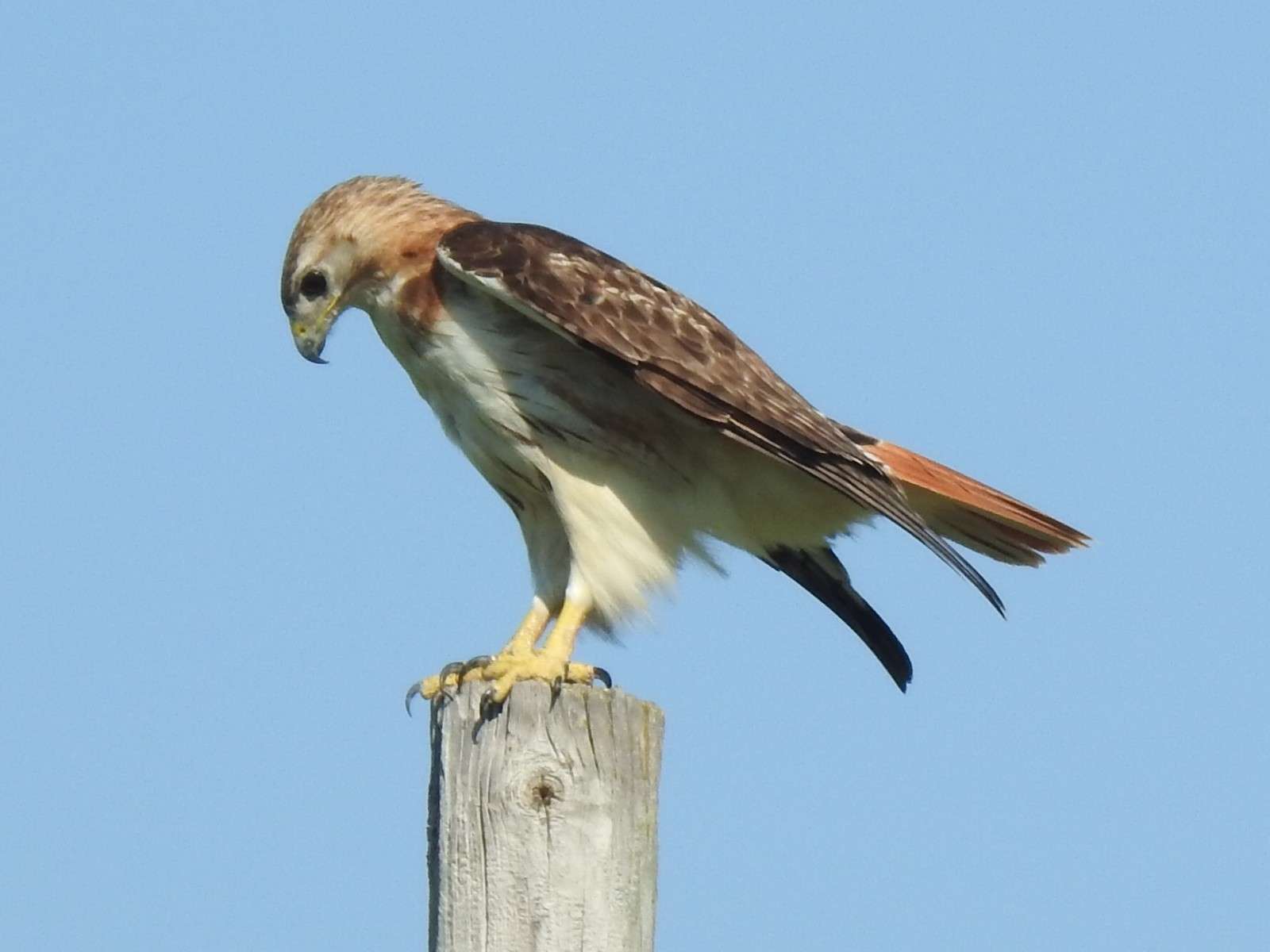
While the banks of Big Creek haven’t echoed from the drone of mechanical motors and sound of carpet bombs exploding one right after another, one locale west of Ellis suffered effects of a dive-bombing hawk intent on scoring a fresh chicken dinner.
With military-precise forays, this bird of prey forced my six hens and one rooster into a life of focused caution totally unlike their usual meanderings over that prairie hill top.
Typically, our contented and previously oblivious free-ranging fowl wandered only as chickens can across open grassland. They searched out crunchy grasshoppers and other insects that entered beaks as bugs and emerged from their other end as rich, deep yellow-yolked eggs.
Once our flock caught this relentless hawk’s sharp eye, this once free-spirited group cowered in the shadows of lilac hedges or cedar rows surrounding the property.
Upon hearing that red tail’s distinctive high pitched “scree” or seeing its shadow, contented clucks and cackles morphed into strident squawks and frantic gyrations as the girls ran for cover.
Even without stress, chickens don’t hurry gracefully—think miniature feathered and beaked dinosaurs lumbering disjointedly to safety. Awkward describes this agitated forward, sideways, and sometimes circling movement.
While the hens panicked, their rooster earned kudos for sounding his unique alarm that set off this harried escape. Following his alert, he held his ground like a good commander assuring himself his harem reached safety. Occasionally, he enjoyed the aid of our protective terrier.
One morning our camouflage Jack Russell and I took advantage of cool temperatures to water flowerbeds.
Intent on soaking thirsty plants, I barely noticed when Buster the feisty watch dog rapidly leapt forward. Barking as he raced toward alarmed and raucous chickens about twelve feet away led me to jump to the wrong conclusion. I thought he was chasing a chicken. I scolded and called him back until I saw that red tail swoop low in an attempt to snag a young white pullet in its outstretched talons.
Buster understood his duty. Ignoring his inattentive mistress, he yipped and sprang upward, heroically targeting the invader’s signature tail.
Inspired by his bravery and striving to keep dog and chickens safe, I morphed the hose into a water cannon and began spraying skyward. Hidden under the veil of falling water, the targeted hen dashed toward a lilac bush while Buster barked like Patton giving Germans you know what. Conceding defeat, the hawk reversed course and rose to ride a high thermal in the blue Kansas sky.
The war didn’t end that day. Attacks continued.
Using my trusty hose-powered nozzle, I targeted that hawk every time it buzz-bombed our goofy girls. For a time, our chickens preserved their lives by creeping along the edges of hedges and tree lines while 14-pound Buster the Watchdog scanned the heavens like an air raid warden awaiting the next assault.
Just as London survived the German Blitzkrieg, our hilltop endured repeated redtail attacks with the aid of a shrill terrier and garden hose artillery.
Karen Madorin is a retired teacher, writer, photographer, outdoors lover, and sixth-generation Kansan.