


By KAREN MADORIN
"Don’t know what you’ve got 'til it's gone."
Locals are feeling the pain of these "Cinderella" lyrics right now with the unexpected Fort Hays State University administration Sternberg announcement. Like everyone responding, Sternberg Museum is an iconic presence I expected I could always visit. According to multiple media threads, Sternberg is integral to this region.
My first Sternberg contact was in the '70s when it was located on Fort Hays State's campus.
As a commuter, I wanted somewhere to hang between classes. If I needed to study, it was quiet. If I had extra time, I could explore displays or read old newspapers and other documents. For two summers, this was my go-to campus hideaway. It didn’t make me a paleontologist or any other scientist, but it created a recreational rockhound with multiple history and science interests.
Later, as Eco-meet coach, my team prepped for meets in Sternberg’s archives. What an amazing collection those kids accessed! As a mom and grandma, I trailed little ones to teens who loved dinosaurs and living critters they could examine up close. Nothing like having a 7-year-old granddaughter explain those giant land tortoises clacking shells were reproducing right before our eyes.
As an avocational historian, this museum offers many connections.
Too often Western Kansans hear, “There’s nothing here.” Oh, those speakers are wrong!
I think about curious soldiers who served at Kansas forts and found amazing leaf, shark teeth, as well as minute and giant sea creature fossils. Fort Wallace physician Theophilus Turner and famous scout William Comstock found the bones that escalated Edward Cope’s and Othniel Marsh’s historic “Bone Wars.”
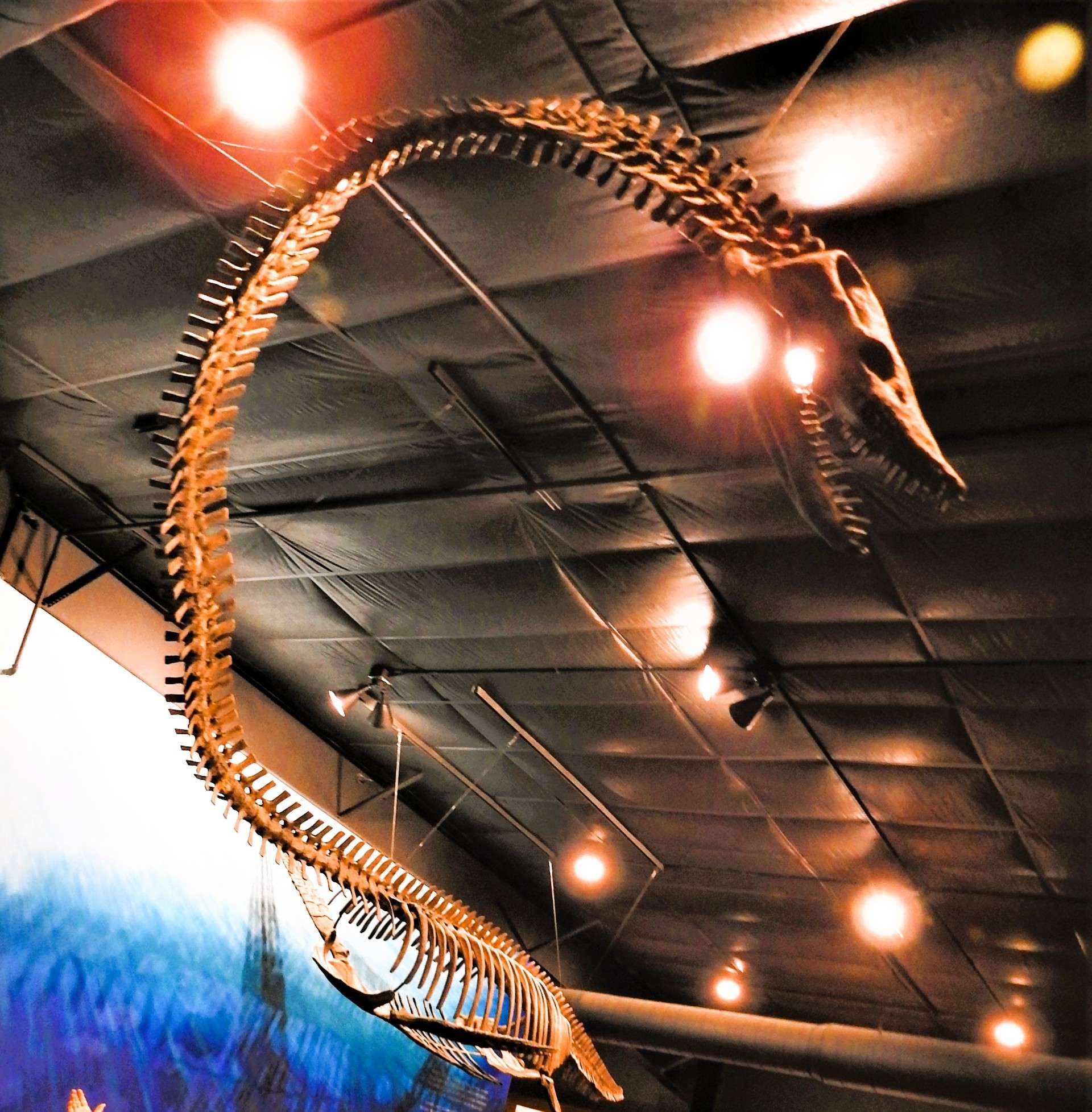
During the late 1860s, Turner and Comstock discovered and recovered a large Elasmosaurus near Fort Wallace. Keep in mind, this occurred during heated conflicts between native tribes, American soldiers, and incoming settlers competing to occupy this landscape. Finding and excavating a giant Elasmosaurus carried serious risk.
Dr. Turner knew to contact expert paleontologist, Edward Cope, arranging to ship this national treasure to the Academy of Natural Sciences in Philadelphia.
Once there, Cope misinterpreted the find as a long-tailed, short-necked creature and installed the head on the wrong end. Taking advantage of his professional adversary’s mistake, Othniel Marsh publicly humiliated Cope. This intensified what became known as the “Bone Wars.” The good news is this specimen is still preserved in Philadelphia as well as having its reproduction on display at Fort Wallace Museum.
Imagine visiting Sternberg Museum where you can view mosasaurs, plesiosaurs, and Elasmosaurus if not in situ at a dig, at least in displays and wall murals. While studying amazing artifacts, check out the replicated Sternberg dig site.
Sternberg and his brother came West to fulfill military obligations following the Civil War. In a landscape some claim possesses nothing, they discovered and excavated fossils that occupy prestigious museums and collections throughout the world.
Locals can enjoy Sternberg finds in Hays or at the Smithsonian or Woodland Park, Colorado, Dinosaur Museum. Imagine how youngsters’ world views expand when they visit a museum far from home and recognize the collector as someone who discovered those artifacts near the child’s home.
Here’s hoping people recognize how blessed we are to have this research and educational resource available so we can preserve it the way Sternberg preserved fossils to share with future generations.
Providing inspiration to youngsters and adults, Sternberg Museum offers a collective Great Plains history that links natural and biological sciences, military forts, settlement, and indigenous people.
Where such stories connect, Sternberg is the glue.
Karen Madorin is a retired teacher, writer, photographer, outdoors lover, and sixth-generation Kansan.