


By KAREN MADORIN
Once planet Earth tilts and sunrays shine late-summer yellow, early season hopes morph into grasshopper-eaten petals and leaves.
That doesn’t mean butterflies, bees, and hummingbirds vanish. They just harvest golden pollen or sip sweet nectar from raggedy blooms.
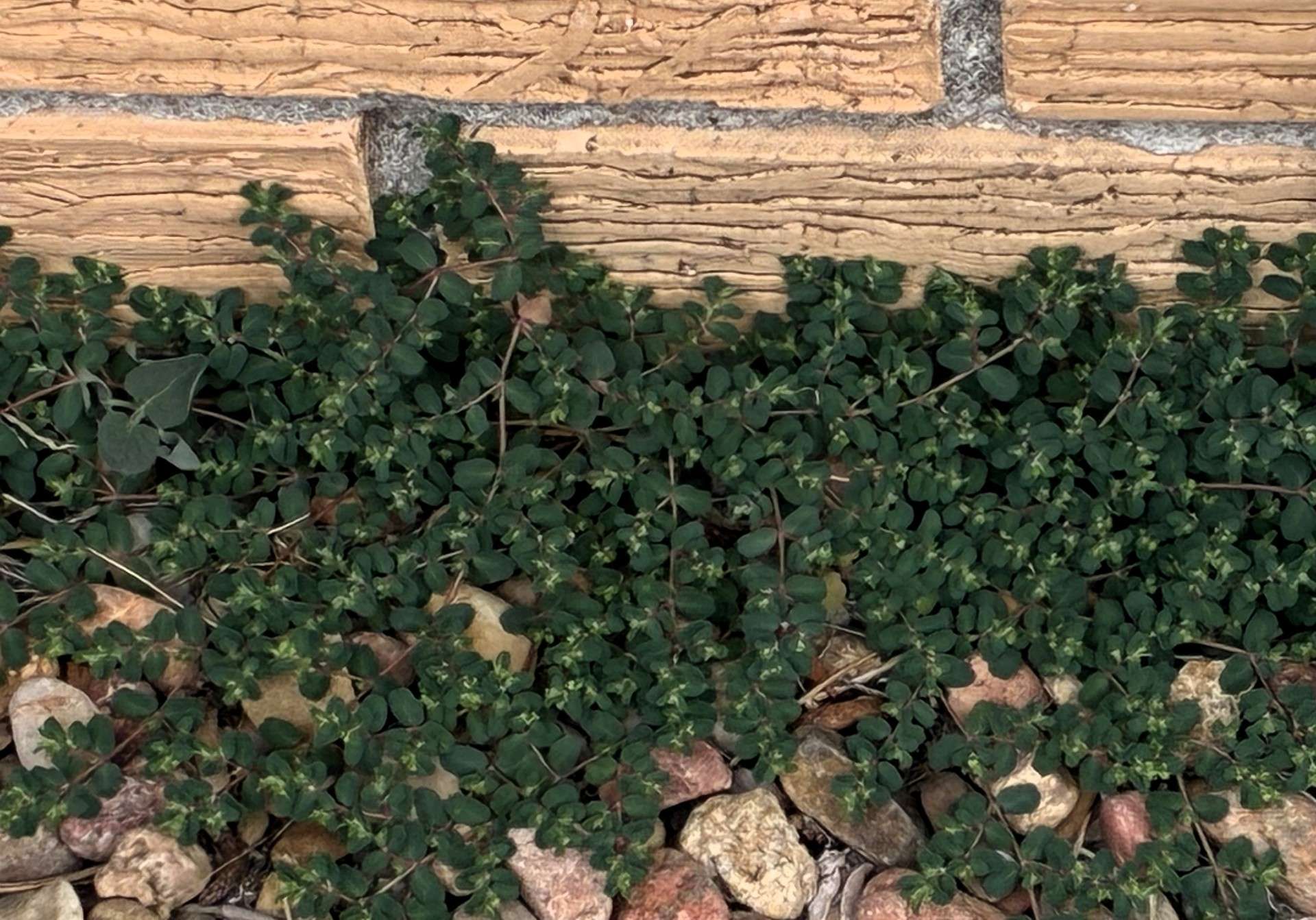
While garden lovelies look moth-eaten, a mystery low-growing, leafy mat spreads overnight through my rock gardens. I’ve yanked it by its roots thrice this summer and swear it multiplied with a vengeance. What is this scourge?
The first time I de-thatched our front flower bed, one plastic grocery bag provided a funeral crate for this obnoxious weed’s remains. The second removal required two bags and double the labor. Follow the math. The third time, I spent two hours stuffing four bags with this reproductive wonder’s dangling stems.
Geneticists should study this plant to identify whatever magic makes it thrive in a rock bed on the west side of a brick house. Summer heat should roast its vining stems covered with hairy little leaves. But no, this plant flourishes not only amongst rocks but also in driveway and sidewalk cracks.
A friend recognized this nemesis that not only likes rocky landscaping but also prospers in silty, fine garden dust. She called it spurge—I suspect creeping spurge. This summer, I’ve become too acquainted with this invader.
After identifying this unwelcome resident, I learned that while native to eastern North America, it adapted well to the Great Plains.
Where agricultural plants require encouragement to succeed, this intruder thrives in heat, drought, bad soil, rocks, and cracks in cement. In addition, it loves full sun and grows anywhere, blanketing plants in its path. Its DEEP tap root aids its survival, considering the best way to remove spurge involves wrenching that from the depths of the earth. Unfortunately, if any root remains, that plant regenerates.
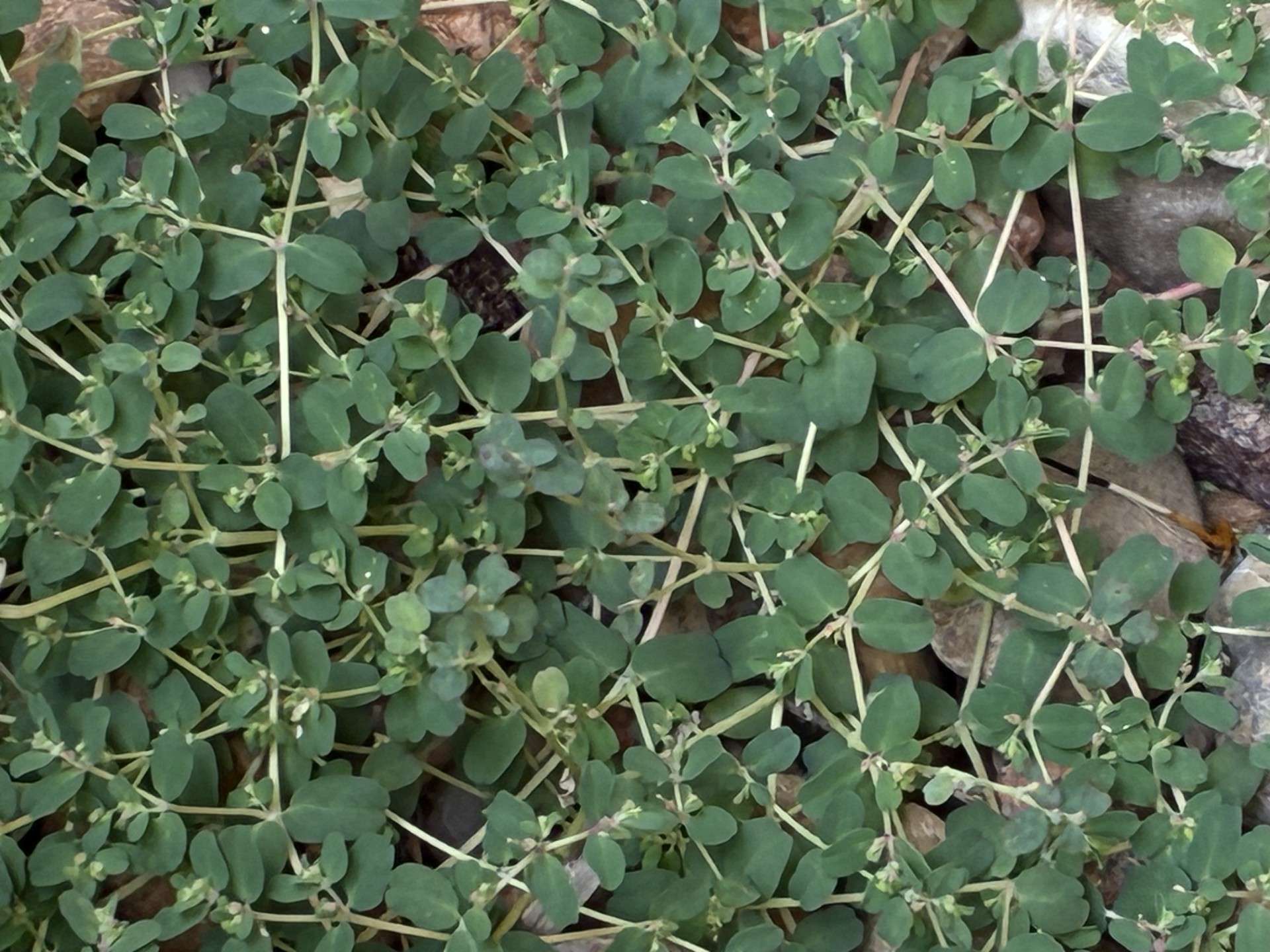
A member of the Euphorbicae family, which includes rubber plants and castor beans, this nemesis develops from germination to seed production in 30 days. The flower is so tiny one might need a magnifying glass to see it. Obviously, stamens and ovules exist because one plant can produce 5,000 seeds. No wonder they smother the rocks in front of my house.
Extension reports offer spurge warnings. They suggest gardeners wear gloves when removing it. You’d think something this prolific would possess some merit, but apparently its sap is toxic to humans and animals and can trigger contact dermatitis in sensitive individuals.
I guess I’m lucky because I pulled it three times this summer without gloves before I learned this. Thank goodness I didn’t touch sappy fingers to eyes because that causes serious trouble. Experts add that gardeners shouldn’t compost spurge unless they want to see it spread. They added that mowing multiplies it, too.
For those dealing with spurge, yank it from damp earth to increase chances of removing the entire root. Don’t ignore it because it reproduces at lightning speed.
Tuck vinyl gardening gloves in locations you’ll remember before starting an eradication mission. Bag and seal plant carcasses so they don’t sprinkle microscopic seeds throughout the yard.
At this point, I haven’t discovered a redeeming quality in this matting plant that adapted perfectly to life on the prairie.
Perhaps future scientists will discover spurge cures water shortages or other environmental threats. Until then, destroy those tap roots.
Karen Madorin is a retired teacher, writer, photographer, outdoors lover, and sixth-generation Kansan.