


By KAREN MADORIN
House sparrows made themselves at home in our backyard this summer. Observing their daily dust baths makes me wonder if the marketer of dry shampoo didn’t spend time watching these little birds’ hygiene practices.
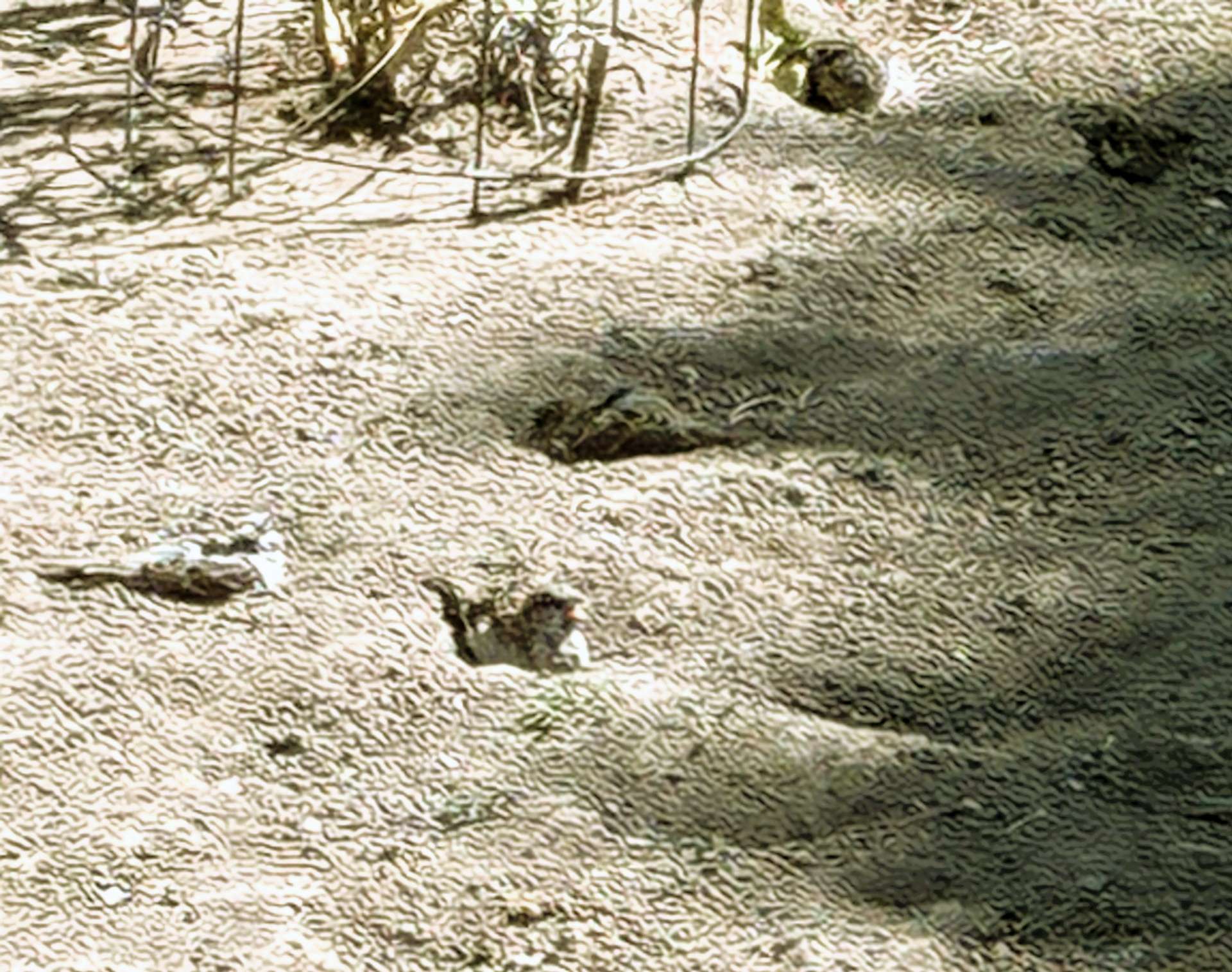
Although we provide bird baths where these little birds can drink and splash, they enjoy group dust baths every day. Their ablutions created enough cereal bowl-size indentions in our garden that they inspired research. I learned more than I expected.
Just as humans produce oils that mat hair and clog pores, ditto for sparrows—only it's feathers that mat. A gland located above their tail feathers provides oil for grooming. Practicing daily hygiene, they preen each individual feather to spread this secretion. This maintains feather cleanliness, insulation properties, and flight readiness. It also accumulates, along with dead cells and dirt. Just as dry shampoo helps clean human hair, dust bathing takes care of sanitation issues for sparrows.
Researchers spend much time observing sparrow hygiene practices, including dusting practices. When I read the descriptions, they nailed details.
Via a coordinated inner clock, sparrows signal one another when it’s time to gather for a fluff. Twenty to fifty show up from every direction to loosen fine soil, raking and flinging with tiny bird feet. I like to imagine they’re listening to Chubby Checkers sing “Do the Twist” as they gyrate left and right to create what I call the cereal bowl effect. Once soil rises in clouds, dust applications begin.
Watching sparrows apply this powdery concoction makes me laugh. The sparrows chitter continually as they continually loosen dry earth while simultaneously fluffing feathers.
Once plumage meets expectations, dust flies. Each bird contorts acrobatically until they work in enough fine particles to coat their skin. Once they inundate every pore, birds finish by wildly flinging dust under each wing, which make me imagine junior high males coating armpits with deodorant before a school dance. All 20 to 50 sparrows follow the same procedure, which takes only minutes to complete. They wrap this ritual with a full body vibration that shakes off excess dust, carrying away oils and other detritus.
The research explained social hierarchy is important amongst these flocks. Leaders get first choice of prime dusting spots while birds lower on the totem pole wait their turn or dust along the edges of the group. This accurately represented bird action in our yard. Poohbahs occupy center stage with minions surrounding them.
While an actual dust bath doesn’t take much time, birds, once finished and perched in a tree, continue preening amidst non-stop chatter. These little brown birds know how to jabber and groom. Agility is everything as sparrows maneuver beaks to guarantee every feather meets specifications. I have new respect for bird spines based on the writhing contortions performed to make sure they’re flight-ready.
At some point, the flock responds to another signal I don’t see or hear, and rises to seek their evening roost. I presume they agree with me that there’s nothing better than a restful sleep after a thorough degreasing—be it with dry shampoo or dust bath.
Karen Madorin is a retired teacher, writer, photographer, outdoors lover, and sixth-generation Kansan.