


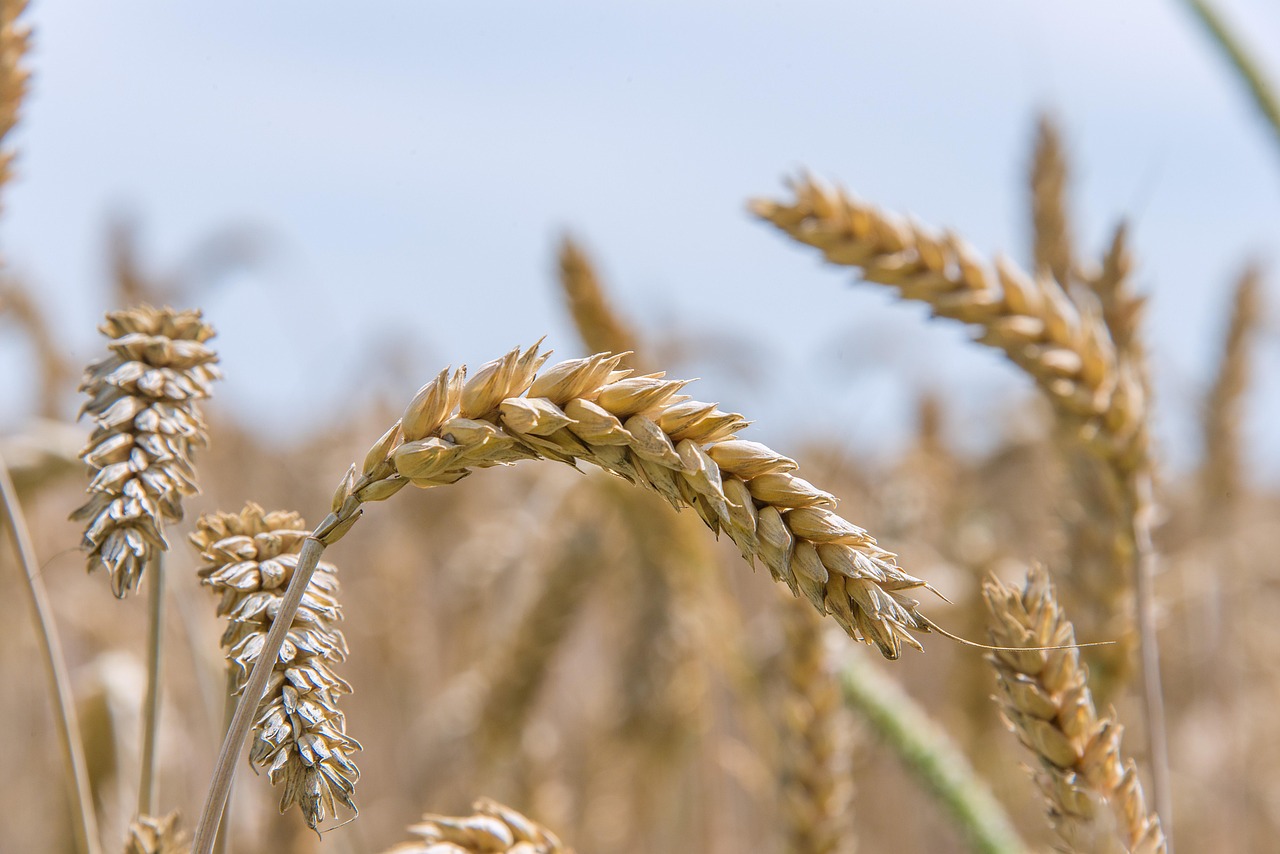
On this episode of the Hays Post Podcast, Becky Kiser, news reporter, talks about the area wheat harvest with Stacy Campbell, Cottonwood Extension crop production specialist.
Campbell also talks about weed control after harvest and how to be on the outlook for chinch bugs.
Transcript:
Kiser: The Hays area wheat harvest is winding down, is slightly slowed down because of the recent wet weather. I'm Becky Kaiser, Hays Post Eagle Radio News with crop production specialist Stacey Campbell of the Cottonwood Extension District. We'll also talk about weed control after harvest and the threat of chinch bugs.
It's all on this episode of the Hays Post podcast. We had a story on earlier this morning, news story, Stacey, that was state averages, wheat was not looking really great, right? You know, most of it was poor to fare and about 60% of it cut, look like locally.
Campbell: Yeah, locally. So I was telling you, we actually do a weekly crop report that's turned into USDA Ag Statistics Service, and that's due every Monday morning. And I was doing it yesterday morning, but I was texting guys at some of the elevators, and a few farmers saying, Where are we at on wheat harvest?
And we are a little further along than what I realized. I put down an average of 80%, probably should have put 85. We're somewhere between probably 80 to 90% done with wheat harvest, give or take some.
It's moved along pretty good, obviously, with this last big rain that's going to slow things down for a bit, and with anything, I know one guy that just started the day before the rain, kind of a smaller farmer, but there's quite a few that are done here in Ellis County, anyway, that's where we're at on wheat harvest.
Kiser: And one of the things we wanted to talk about is, and I know that you've talked about this in years past too, is weed control after the harvest happened.
Campbell: Obviously with this moisture, and since we didn't have a great wheat crop, the stands were thinner, weeds were already starting to come up before the wheat was harvested and now that you've taken off more wheat, even though you've maybe, if you're no till, and you've, you've left the residue out there, like a lot of guys still have right now, there's less residue there.
There's more sunlight hitting the ground with this moisture, weeds are just taking off, and guys, it's going to be better, I know it's going to cost money, but to get out there and spray them sooner than later, while they're still small, and also when you're spraying them, kind of our standard post-emergent stuff is Roundup two 4d and dicamba, but you could also add a product that's got some residual.
That would persist in the soil to help give some weed control for a little bit longer, and the products that they can consider are like sharpen, reviton, flumy and spartan, so maybe consider putting those in the tank as well when you're doing those post applications of weeds after weed harvest, and the sooner the better.
Our weed specialist, I kind of like what she says. We tell guys four inches or less is when we want to start controlling weeds, so that kind of equates to when they get past the height of a beer can, it's kind of time to start spraying them and we know there's going to be others coming. But we know that with the resistance of several of our weeds now, if you let them get very big, they get really, really hard to control.
Kiser: As a reminder, people who are harvesting or have just finished, they can also enter some of their best wheat in Ellis County far.
Campbell: yes, the Ellis County fairs coming up, July 11 through the 17th, but there's also an opportunity for about anybody to enter almost anything they want in the fair, whether they be youth or adults, and the farmers can actually interfere into an open class market wheat show, there's some good prize money if you win, it's I think about $75 for this little bag of wheat.
I remember one year a guy that had never done it put some wheat in there and won it, and he came in later and goes, "Man, I mean, what would this equate to per bushel? He said, "No, that's a lot of money. So he was kind of tickled that he got the $75 check for having the champion wheat. So the way they do well, is you can literally just fill a zip lock bag at the elevator, or if you've got a bin at home, take some out of there. You can take it to the elevator, and then I'll come around and pick it up here before the harvest.
Or you can run it by the extension office. You do have to fill out a little crop data card. It doesn't take long. It's when you planted it, what variety, if you fertilized it, putting herbicide down, just some cropping history and then boom, you're entered, and we'll take it from there.
Kiser: Also, you talked about this a couple times when you were here before about the wheat plot, you just got some results hot off the press for us.
Campbell: Yes. I just got kind of the wheat plot results figured yesterday, so we'll get those up on our website and have them thrown out on social media as well, and our website. If you just google Cottonwood extension, you should be able to get our website, and then you'll see where you can click on some different tabs.
I think it's crops and livestock tab. If you click onto that, you should be able to, probably have to scroll down a little ways, and see the results of our wheat variety test plots, and the one here in Ellis County, pretty excited about, we had a good one.
The experiment station actually helped me put it out. It is smaller plots, but it's replicated. Each variety is put in three times randomly. It was on fallow ground. It actually did real well. Our yields were anywhere from 40 to 60 bushels, or I think 45 or upper 40s to 60 bushels, so we've got those results with replicated varieties, quite a few of them. So I encourage guys to take a look at that
Kiser: Wonderful, chinch bugs a problem?
Campbell: Oh yeah, chinch bugs used to be an eastern Kansas thing. They overwinter bunch grasses, but for whatever reason, I'm not sure we figured out why.
Our entomologists and stuff, they've just kind of been slowly migrating further west, and basically they're in the wheat, not doing much damage, or any, really. I mean, they're doing some feeding, but you know, the wheat is pretty much mature.
But once it dries down, and then you harvest the wheat, they move out, and the small nymphs, the immatures, are actually the ones that do most of the feeding, the majority of the feeding, and they can literally just walk out and march many, many feet over to what usually is an adjacent sorghum or feed sorghum Sudan crop, and they're just coming up, so they're small seedling plants, and if you get a bunch of them on there, it can kill them, and it happens.
They won't typically go into the whole field, they'll, they'll go in 6, 8, 10, 12 rows and damage those, so a guy could do some spraying around the border, but it's kind of getting late enough that they're probably already there, and they're hard to kill. They get down into the whirl of the leaf and stuff, so you might just, instead of spraying, just let them take those rows, and you can go back and plant them later, because here, probably in another 10 days to two weeks, they'll kind of subside, potentially.
If you want to spray them, we've got information on that. Basically, you need a lot of water to try to get good coverage. Drop nozzles if you can to try to get that product down there. Do it in the morning when it's cool, there's going to be more bugs out feeding versus the heat of the day, same in the evening, late, but actually early morning is the best time, because insects do not like the heat because of their exoskeleton.
They like to be out when it's cooler in the heat of the day. If you're out there spraying, more of them are going to be tucked down into the whirl of the leaves and down into that stem where the leaf collar is, and it's going to be hard to get the product to them.
Kiser: Let's shift gears a little bit and talk about lawn care. Now's a good time if you've got the warm season grass, which hopefully people in our area do. You can be doing some fertilizing of it.
Campbell: Yep, yep, your warm season grasses, which are Bermuda, buffalo, and zoysia. This is the time to fertilize, and June is kind of the optimum time.
Kiser: I just had that done, actually.
Campbell: Good. Sometimes I tell people what they should do, and then I don't do it, but I did get my fertilizer out too, and then finally got some more rain on it, and that's what you want. Just the rain has got to get it incorporated. So, if you can get a half inch or more of rain, then you get it incorporated, and it starts going to work.
If you want to fertilize your warm season grass, now's the time to do it. Now, with buffalo, it's not as competitive with competing with the weeds, so it's kind of optional whether you fertilize buffalo grass or not.
I mean, you can if you want kind of a little thicker plush or lawn, but you can also kind of spur some weed growth, because buffalo usually doesn't have that thicker canopy, we'll say, like Bermuda. So, anyway, now's the time.
Also, core aerating is another management practice you can do if you want to. It just helps with, with overall management, better lawn, your core aerating, you're taking two three inch cores out of the soil with a special machine, and that kind of aerates that soil. You can go rent them from the rental places, or I think there's some folks here in town that'll come do it for you.
Kiser: While we're talking about lawn, you may have some new trees that you put in in the spring, and people, a lot of people like to stake those, and you want to remind them that you don't leave them staked forever.
Campbell: after a year. If you planted a tree last year, it should be good to go. You shouldn't need to stake it anymore. Take the wires and whatever you've got around them off and pull the post. I have seen countless times to where people just leave them on and as the tree grows, it starts growing into it and that's called girdling, to where it basically kind of kills that outer tissue that cambium layer, which is what moves nutrients up and down in the tree, so you're doing more harm than good.
So, after one year of them being staked, you need to pull all those out of there, it should be good to go. Also, get the stakes out of there. The post I've seen, where if they put them pretty close to the tree, 10 years from now, the tree's starting to grow into the stake, and there, again, you've done more harm than good.
Kiser: And while you're out there looking at trees, check for bag worms.
Campbell: Yep, it's that time of year. If you've got any kind evergreen type trees or shrubs, they seem to prefer those, they'll eat other stuff too. Check for bag worms. If you've checked and you just got a few, you can literally pick them off. We suggest get a little soapy water, throw them in there, and then when you're done, just throw them literally out onto the lawn or the driveway, where it's sunny, and that'll, that'll finish them off, but if you've got them pretty badly, then you may need to spray, but now is the time to be checking and spraying for bag worms.