


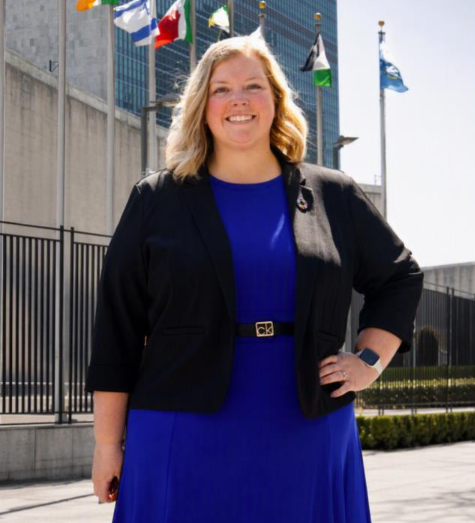
By ALEXANDRA MIDDLEWOOD
Insight Kansas
The biggest danger after any election is not losing. It is drawing the wrong conclusions about why you won or lost.
That risk is especially high in Kansas after the 2026 election.
Republicans will likely point to the state's enduring partisan fundamentals and conclude that Kansas remains safely Republican. Democrats will point to their gains and argue that Kansas is continuing its steady march toward competitiveness. Both narratives contain a kernel of truth. Both also risk missing what voters were actually trying to say.
The most striking feature of Kansas politics today is not overwhelming support for one party or the other. It is the degree to which many voters remain unconvinced by both.
The 2026 Kansas Speaks Survey found that satisfaction with the Kansas Democratic Party stands at 32.8%, while satisfaction with the Kansas Republican Party is 32.1%. Ratings for the national parties are similarly low: 30.4% for Democrats and 29% for Republicans. These are not the numbers of an electorate enthusiastically rallying behind either side. They describe a public that remains skeptical of both parties and willing to consider alternatives.
That should give both parties pause.
For Republicans, the lesson should be that electoral success is not the same thing as public satisfaction.
Kansas voters continue to elect Republicans up and down the ballot, particularly in rural areas. But voters also expect solutions to the challenges facing their communities. Consider Medicaid expansion. The Kansas Speaks Survey found that 68% of Kansans support expansion, and more than half say the issue is highly or extremely important when deciding whom to support for the Kansas Legislature. Support has remained around 70% for years.
Whether one favors the policy or not, it illustrates a broader point. Voters notice when issues with broad public support remain unresolved. They notice when rural hospitals struggle financially. They notice when access to health care becomes more difficult. They notice when government appears unable or unwilling to address persistent problems.
Assuming that partisan loyalty will always outweigh these concerns is a risky bet.
Democrats face a different but equally significant challenge.
For years, some Democrats have viewed every electoral gain as evidence that Kansas is becoming a bluer state. Yet many of the voters supporting Democratic candidates today remain independents, moderates, and even former Republicans. These voters are often motivated less by partisan attachment than by concerns about governance, competence, and political extremism.
In other words, many of these voters are not necessarily becoming Democrats. They are becoming more willing to vote for Democrats under certain conditions. In political science, we often call these “rented voters”.
That distinction matters.
If Democrats interpret recent gains as evidence of a durable realignment, they may be disappointed. Voters who cross party lines can just as easily cross back. Electoral success does not create a coalition by itself. Governing and good policy does.
If Democrats want to keep these voters, they must demonstrate that winning elections leads to better outcomes.
That means addressing issues that affect people's daily lives: healthcare access, economic opportunity, housing affordability, infrastructure, and public education. Simply being the alternative to Republicans will not be enough over the long term.
The broader lesson from 2026 is that many Kansans appear less interested in ideological battles than political strategists assume. Voters are often pragmatic rather than partisan. They care about results more than rhetoric. They want government to work, regardless of which party receives credit.
That creates a challenge for both parties. Republicans may be tempted to view their victories as an endorsement of the status quo. Democrats may be tempted to view their gains as proof that demographic and political trends are inevitably moving in their favor.
Both interpretations overstate what happened.
The election was less an endorsement of either party than a reminder that many voters remain available to be persuaded.
Kansans have not handed anyone a mandate. They have issued a challenge.
The party that succeeds over the next few years will not be the one that writes the most flattering post-election narrative. It will be the one that correctly recognizes what voters were actually asking for: less political scorekeeping, more effective governance, and policies that lead to tangible improvements in people's lives.
Alexandra Middlewood, PhD, is an associate professor and chair of the Political Science Department at Wichita State University.