


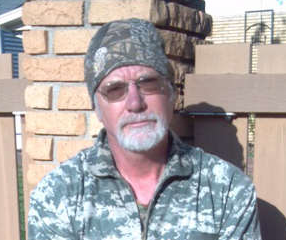
By STEVE GILLILAND
Outdoors Kansas
By now you’ve probably heard most of the “It’s so dry that” jokes, but here are a few more for good measure.
It’s so dry, the catfish are carrying canteens, trees are bribing dogs, and fire hydrants are chasing dogs down the street.
The Democrats have announced a water pistol buy-back program, Baptists are baptizing with wet-wipes, and migrating ducks and geese have to bring their own water.
CRP now stands for Crispy Rotational Pasture, and the Kansas Department of Wildlife, Parks and Tourism is offering a new hunting license this year — it’s good for the harvest of one camel, either sex.
Yes, we need rain…again.
I hesitated to even write this column, for fear I would end up with broken legs and kneecaps, so farmers and ranchers, please don’t tar-and-feather me for this statement, but a long dry spell this time of the year can have its benefits for outdoorsmen.
First, let’s look at the obvious, that being how this dry spell will affect waterfowl hunting.
Most of the McPherson Valley Wetlands near McPherson are dry, and the wetlands just outside Inman barely have any water at all. There are several ponds along the K-61 four-lane highway that are completely dry, as are many other ponds in this part of the state.
Many of these ponds and water impoundments are favored by ducks and geese over the next couple months, so now all those birds will have to find other water in farm ponds, stock ponds and sand pits for example. There is just as much feed around for them this year as any year, so that will probably mean just as many ducks and geese as on any other year will stop here for a spell.
Putting two-and-two together means if you can get permission to hunt some of those otherwise overlooked and out-of-sight spots, the waterfowl hunting for you this year may be tremendous.
Whether big game, small game, winged or four-footed, furbearers or predators, all critters need water and dry spells can affect critter movement, so it’s a no-brainer that more wildlife will be watering at the ponds, creeks and rivers that still hold water.
Deer stands placed near water are good bets near dawn and dusk on any year, but this season hunting near a water source may be especially productive as more deer will be drinking from those spots. If your hunting property doesn’t have water on it, try hanging a stand or putting up a blind as close as you can get to the nearest water.
Stock tanks and windmill tanks will probably be more popular watering spots this season for wildlife too, so, if possible, find some cover within shooting range of them.
In short, this year water sources may even be a bigger draw than corn feeders or salt blocks, so place your deer stands and blinds accordingly.
Most predator trappers agree that pond dams are good spots to set traps for bobcats and coyotes, as they also need water and like to nose around on the dams. All pasture ponds will have cattle trails leading to and around them, and predators use those same trails too.
Following the same thinking, since some of those ponds are dry this year, the ones still holding water might be better trap sites this year than usual, as more predators and furbearers will be traveling there to drink. Deep holes in creeks and rivers that still have water will also see more wildlife traffic that normal.
I always wonder where all the beavers and muskrats go when ponds and drainage ditches go dry, and this year, water sources still with water could see an influx of them too.
Fishing is also affected by extended dry spells as water levels drop in ponds, lakes, rivers and streams and fish become more concentrated around cover in the available water.
I questioned a friend who is a tremendous fisherman about this and he confirmed my assessment. He also added that ice fishing is often great on years when water levels are low, as fish are easier to locate beneath the ice.
Jacques Cousteau once said “We forget that the water cycle and the life cycle are one.” Leonardo da Vinci saw that “Water is the driving force of all Nature.”
Yes, it’s dry again and we need good soaking rains.
It seems that many native Kansans I know have long ago made peace with our state's propensity to stay dry, but as a Kansas transplant, I still struggle with that.
Nelson Mandela said “Let there be work, bread, water and salt for all.” I guess we can furnish the work, bread and salt, but only God can send the water. Even though it’s dry, use some of the above tips to Explore Kansas Outdoors!
Steve can be contacted by email at stevenrgilliland@gmail.com.