


By CRISTINA JANNEY
Hays Post
Audoboun of Kansas recently celebrated five years of its annual Lek Treks event in Hays.
About 150 people from across the nation will be in Hays from April 9 to 12 for the event, which celebrates prairie-chickens.
Northwest Kansas is unique in that both lesser and greater prairie chickens nest here.
The birds are particularly popular with bird watchers because of their elaborate mating dances and booming calls.
However, Jackie Augustine, executive director of Audubon of Kansas, raised concerns last week when the federal government delisted the lesser prairie-chicken as an endangered species.
"We wish we could tell you that lesser prairie-chickens are no longer on the Endangered Species list because permanent habitat protections were put in place, or that their abundance has rebounded throughout their range," Augustine said in a statement.
"Instead, lesser prairie-chickens became officially delisted due to multiple court cases filed by industrial oil, big agriculture, and the Attorneys General from Kansas, Texas and Oklahoma. On Feb. 26, the delisting became official through publication in the Federal Register," Augustine said.
Augustine continued, "However, we still have a glimmer of hope to save this charismatic species. At the same time as the publication of the delisting, the US Fish and Wildlife Service also published a 'status review' for the lesser prairie-chicken.
"This is the first step in considering the species for relisting. They are specifically asking for new information since 2022.
"Information on sightings of the birds outside their traditional historic range, population trends, including leks that have disappeared since 2022, and threats to prairie-chicken habitat, including plowing prairie or industrial energy development within their range, would be particularly useful."
The developers of the project, ibV, said initial surveys of the property found no nesting prairie-chickens, but representatives told county officials they would do further surveys this spring.
On the national level, Sen. Jerry Moran, R-Kansas, who is from Plainville, applauded the delisting of the lesser prairie-chickens.
He said he would, "continue to support local efforts to promote voluntary solutions that will protect the bird’s habitat without placing unnecessary burdens on our agricultural community.”
The grasslands of northwest Kansas are an ideal habitat for prairie chickens, Augustine told a group gathered at the Sternberg Museum for a Chamber ribbon cutting for Lek Treks last month. A lek is another name for the bird's mating grounds.
Augustine said lesser prairie-chicken populations have been declining. There are about 25,000 left in the world, and three-quarters of them are in Kansas.
The prairie chicken festival used to be conducted in Oklahoma, but the lesser prairie-chickens have disappeared from that range.
The Kansas population is stable, Augustine said, but if the birds and their grassland habitat are not protected, the birds could be lost.
Grassland habitat is being lost at a larger rate than any other habitat in North America, Augustine said. The prairie is being developed and urbanized, taken over by trees, and developed for solar and wind farms.
Prairie-chickens avoid tall structures like trees because they can be homes to predators such as hawks or raccoons, Augustine said.
They prefer to mate in wide open grasslands.
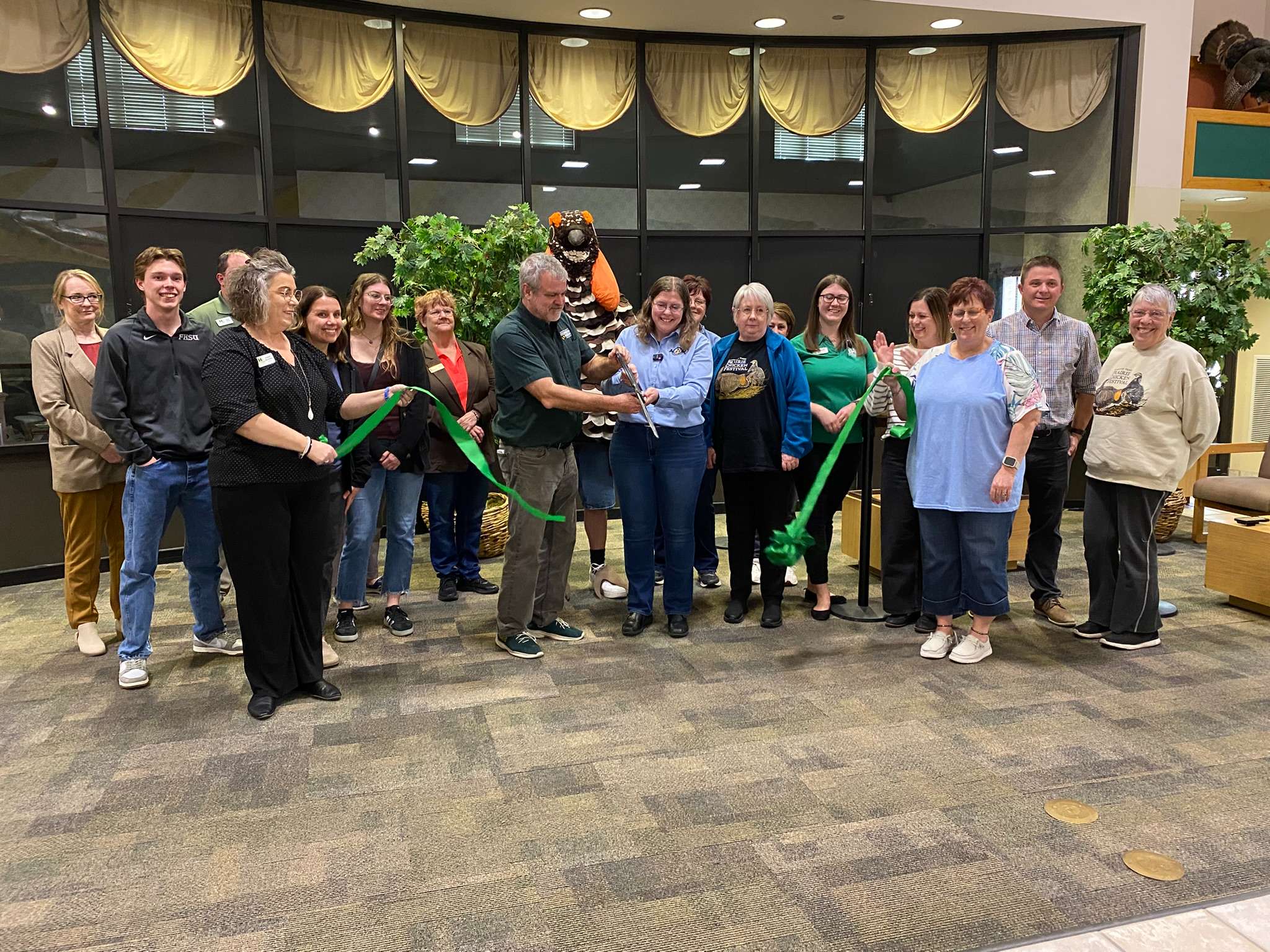
Bird watchers enjoy keeping a life list of all the birds they have seen. The Lek Treks prairie chicken festival allows birders to go out in blinds or on van tours to see these rare birds, Augustine said.
"They are not displaying or obvious when other birds come through, like cranes. You really have to make a concerted effort to see these birds," she said.
She added, "[Festivalgoers] come out here just expecting to see the birds, and then they meet you—this community that is so welcoming.
"They go to private land where we give our tours, and they see how the landowners and ranchers in this area are such great stewards of the grassland habitat ... and they leave Kansas really knowing that this is a special place because of these birds and the communities that support them."
Augustine said the Audubon of Kansas would like to expand the festival, but it needs more volunteers and more private landowners with leks to open land for viewing.
All of the prairie-chicken tours for this year's festival are full, but the festival has wait lists.
Kenn Kaufman, a Kansas native and renowned ornithologist and author, will speak Saturday, April 11, at the Sternberg Museum. His lecture is open to the public.
You can learn more about Lek Treks by clicking here.
Learn more about Audubon of Kansas at audubonofkansas.org or follow them on Facebook.
Learn more about the local chapter, Sunflower Audubon, on its website, sunfloweraudubon.org, and join their discussion group on Facebook.