


By KAREN MADORIN
Nature’s adaptations amaze me!
Take a look at how seeds get transported from host to a new site where they sprout and thrive. Some such as dandelions and maple helicopters fly in the wind. Others latch Velcro-like onto fur or pant cuffs to travel. Many get eaten and transported in guts 'til they plop, surrounded by a personal fertilizer packet. You get the point.
Mother Nature is the queen of adaptation, especially regarding bird beaks specifically designed to accommodate specific dining practices. We recently enjoyed a visit from birds with a particularly interesting beak—red crossbills.
We commonly see seed eaters since we feed sunflower and safflower seeds to feathered visitors. These guests’ eating apparatus is designed to latch onto encased seeds and crack the shell to extract its protein and fat rich treasure. These include various sparrows, finches, black birds, grackles, starlings, and the rare cardinal.
Less frequently, specialized woodpeckers check out insects in the trees, on utility poles, or in the grass. Their beaks are sturdily designed for probing, digging, and hammering.
Clever redheaded woodpeckers latch toenails into our electric poles and listen intently before digging out yummy bugs. In no time, they pound their way to full tummies, and I’m guessing headaches.
Little downies occasionally check out the ash tree to see what tasty treats they can pluck from the bark.
Several resident flickers regularly scope the yard for ant populations.
In short time, they seek and peck using substantial probing devices until they eat their fill.
Robins love the yard and garden where they use perfectly designed bills to snag insects off plants or from upper soil surfaces. Nature has combined listening devices to hear worms moving just under the surface with a beak that can dive and grab a writhing earthworm in a flash.
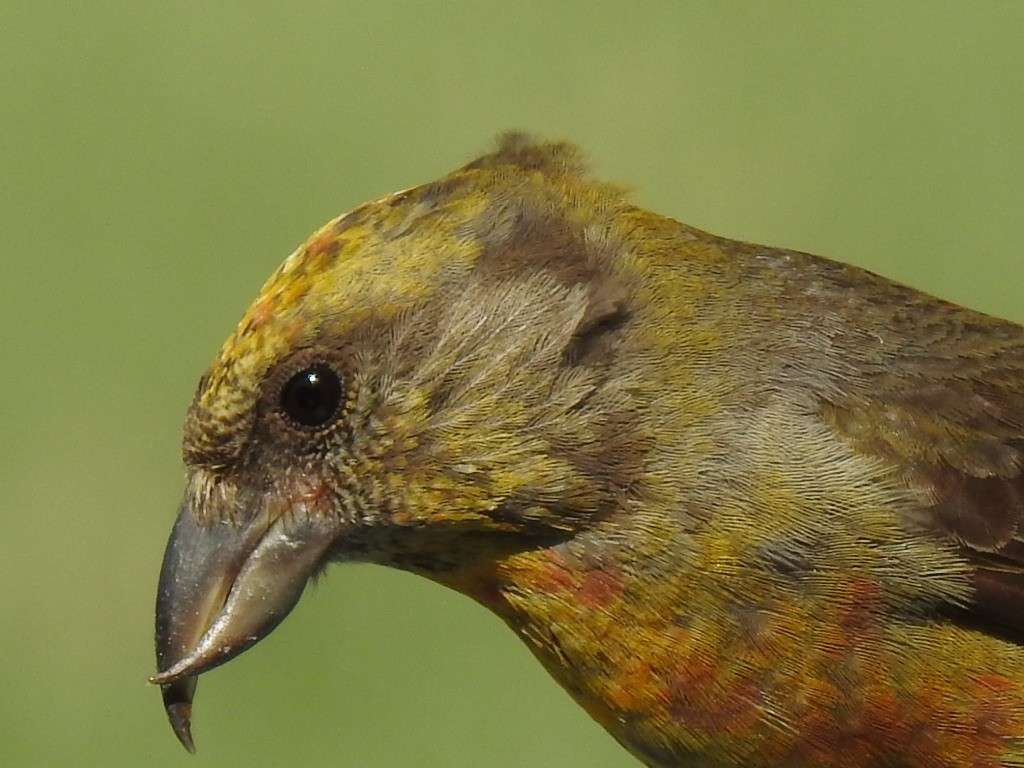
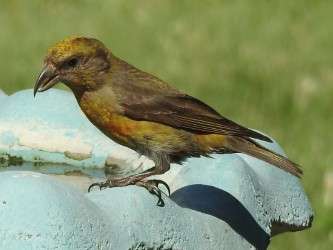
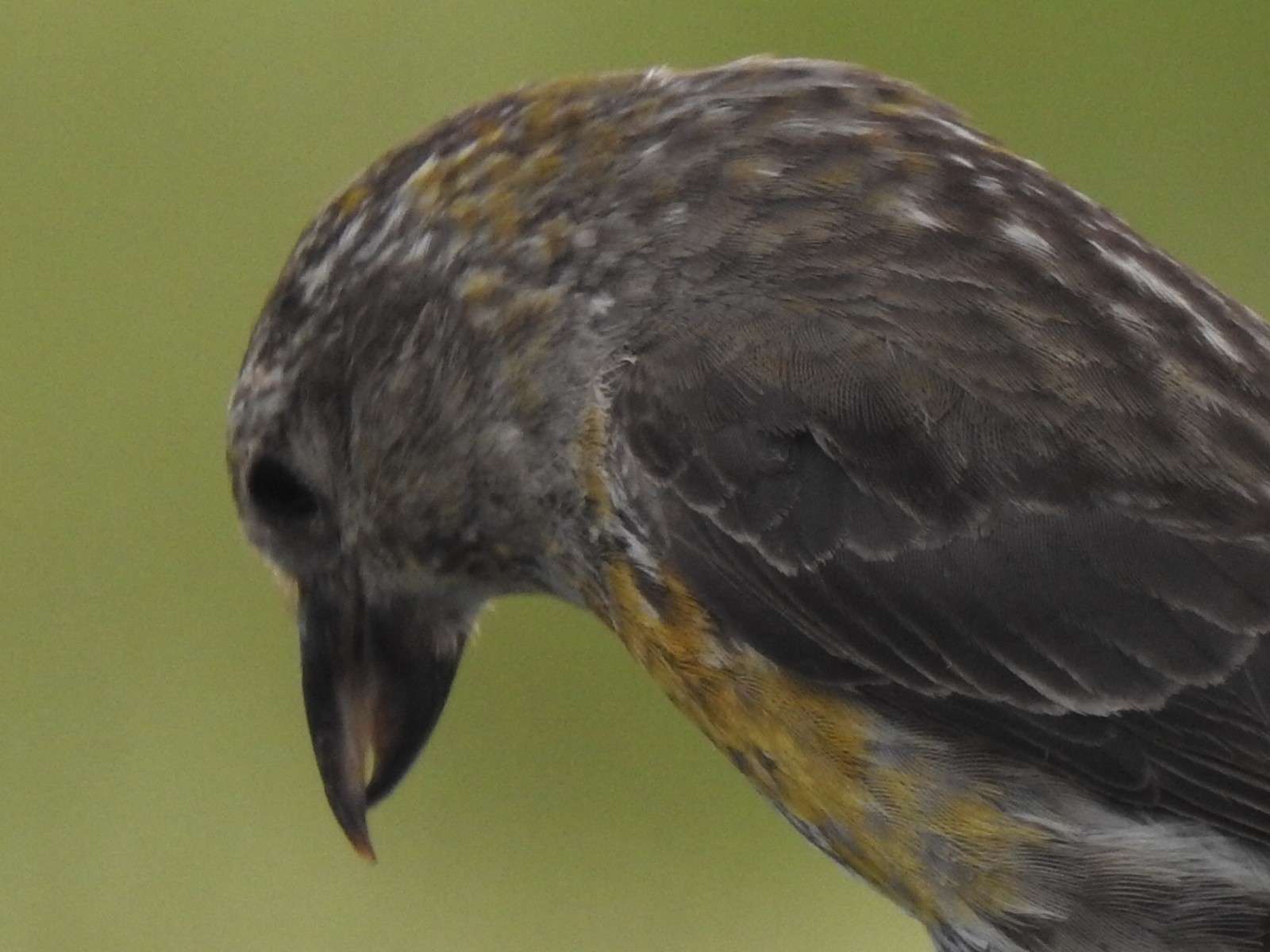
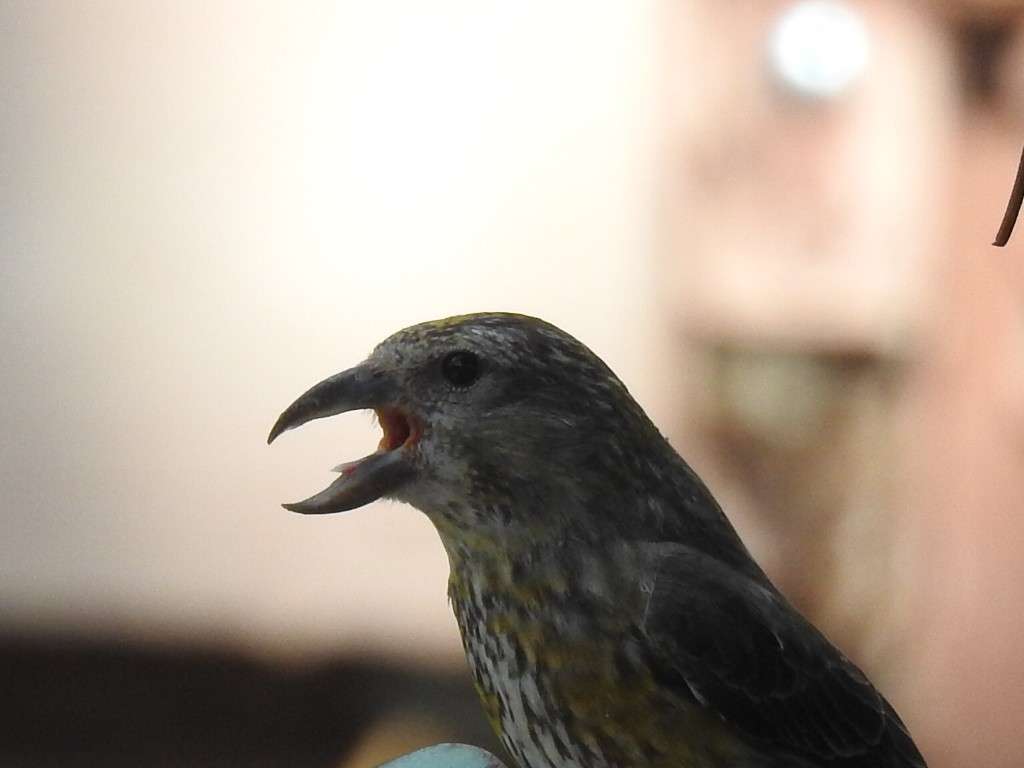
One type of bill we rarely see on the plains is the unique crossbill. These birds look like they need orthodontic interventions. Their beaks resemble sharply hooked scimitars designed to slash and rip. The two sections cross with a pronounced overbite and underbite.
Clearly, such a design can’t perfectly meet as you’d expect to see in sparrows, kingbirds, or robins. Nor will it fit down a tubular blossom to permit nectar seeking like hummingbird’s long, skinny beaks do. This adaptation permits a bird that normally lives in coniferous forests to slash pine or spruce cones to rip out one layered seed after another.
This year offered plains residents a unique opportunity to see crazy-billed birds that typically live in distant coniferous forests. Starting in mid-July, western Kansans with pine trees in their yards noted unusual birds visiting bird baths. Body wise, males display mixtures of red and dark hues. Females tend to muted orange and yellow shades. Juveniles in our yard were darker shades of gray. What they all shared was that dagger-style beak. Upon seeing it, you know you have a special guest.
Researchers only guess why birders see irruptions of unexpected visitors in this area. A few years ago, it was a snowy-owls. This year crossbills. If you saw them, count yourself blessed to observe one of nature’s amazing adaptations.