


By STEVE GILLILAND
Explore Kansas Outdoors
Each fall, when the Kansas Fur Harvesters has their annual convention, my mind goes back to this adventure from years ago.
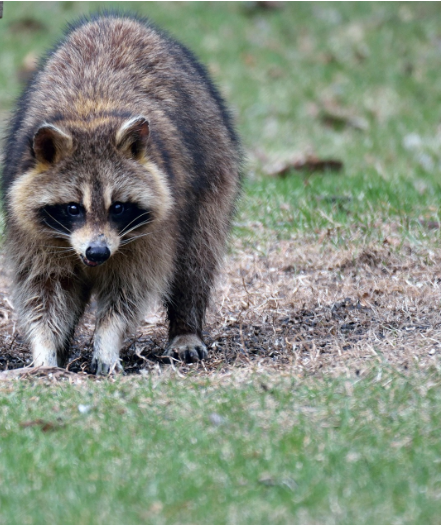
When it comes to eating habits, raccoons are a lot like teenage boys; they’ll eat anything that smells good, and a lot of things that don’t.
Common home-grown coon baits are marshmallows, jelly beans, peanut butter, barbeque sauce, maple syrup and cream corn. There are people raking in the dough selling custom-baked pet treats, so one year after the Kansas Fur Harvesters convention, I opened the Gilliland Coon’ Bait Test Kitchen, intent on dazzling the trapping world with my coon bait creations.
First order of business was to put on my lab coat and hair and beard net. My brother once ran the R&D department at a brand name dog food plant and had to wear hair and beard nets to guard against getting hair in the dog food, so I thought it only right that I guard against hair in my raccoon bait!
I needed some early success, so for my first creation I used a jar of product I bought at the convention. The jar contained all the flavors and smells the seller used in his raccoon bait; you merely added the jar contents to one pound of dog or cat food.
I marched into my woodworking shop turned test kitchen with a bag of Walmart’s cheapest cat food under my arm. In a monstrous zip-lock bag I mixed the cat food and the powder in the jar, which smelled sweet and yummy like butterscotch. The whole shop (I mean, test kitchen) smelled like butterscotch for three days. It’s good I’m not a sleep walker; I probably would have awakened late that night and found myself eating a bowl of it with milk.
For my second creation I wanted to try a recipe I found on the all-wise, all-knowing internet. The base for this recipe was commercial pond fish food.
At the recent trapper’s convention, I’d been warned repeatedly not to use commercial fish food as it quickly deteriorates into mush when it gets damp (the surest way to goad me into trying something is to warn me repeatedly against it) so I poured my commercial fish food into a one-gallon ice cream bucket which I placed on the step going into the garage.
When I returned a while later, there sat an empty ice cream bucket on the step. It suddenly dawned on me that the bucket was exactly like the one that held the dog food in the pantry for our little wiener dog Lucy. My wife saw the bucket of fish food on the step, thought it was nice of me to refill Lucy’s dog food bucket and promptly fed her a heaping bowl of commercial pond fish food!
No harm done; the ingredients were probably not much different than those in dog food anyway, but then not only did Lucy love to get a bath, I had to chase her around the sink as she kept swimming away from me!
With a zip-lock bag of the fish food and various other ingredients, I entered the SATELLITE test kitchen, aka my wife’s REAL kitchen.
This was still a test, so I used just a small amount of the fish pellets, then added mini-marshmallows, molasses and vanilla according to the recipe. I mixed it all together and sealed the bag. It smelled like my grandmother's ginger cookies times ten, but looked like it had already been eaten once. In my defense, at least it was a palatable "kitcheny" smell and didn’t reek of rotten eggs or dirty gym socks like many trapping baits.
I let the concoction marinate for a few days, then decided it was NOT exactly what a finicky, man-of-the-world raccoon might want to smear all over his face so I found a bulk food store and came home with butterscotch oil, peppermint oil and anise oil, all of which, by the way, are oft-used ingredients in commercially made raccoon bait.
Anise oil smells like black licorice and I decided to play with it first. I opened the jar of the afore-mentioned gingerbread-smelling goo and tore off a softball-sized chunk, put it into its own container and began adding the anise.
My drum beats to the tune that “more is always better,” so I dumped every last drop from the three tiny bottles into the goo and mixed it as best I could. It was soft and pliable all right but mixing it was like trying to stir something into a volley ball. When I finished, it smelled like an explosion at a black licorice factory, but looked like a bowl of cow brains.
Next was the butterscotch oil. I only had two little bottles of it, so again I ripped off a chunk of the gingerbread goo and added the oil. It actually smelled yummy like a combination of grandma’s cookies and Werther's candies, but looked no different than the first.
Last, but not least, was the peppermint oil. Again, I pried off a lump of the goo and added the peppermint. I intentionally took a big whiff of the oils before adding them to the mix, and the peppermint was the sharpest of the three. It was sweet like peppermint, but almost overpowering. When finally mixed, this last attempt smelled like wonderful sweet wedding mints, but still looked like cow brains.
I’m embarrassed to say that the test kitchen experiments were the highlight of this project. The only catch made with my experimental offerings was a possum; understandable I guess, using bait that looks like cow brains. Anyway, it all made for a good story and taught me a lesson………No, it didn’t; I’m sure I’d try it all again in a heartbeat!
Continue to Explore Kansas Outdoors.
Steve can be contacted by email at stevenrgilliland@gmail.com.