


By KAREN MADORIN
My ancestors emigrated from their original homes to homestead central and western Kansas starting in 1872.
Canadians arrived by train to settle Devizes in Norton County. Indianans moved by horse and wagon to settle Ford, Kansas. Brits via New York state traveled to Russell County by Union Pacific. Volga Germans ventured to Rush County by Missouri Pacific.
Once here, they traveled and worked with literal horsepower, requiring livery stables, blacksmiths, and hayfields, not gas stations. However, within two generations, technology shifted and each expanding family needed gas pumps and auto mechanics.
Grandma, born in 1909, first recollected horse-drawn wagon and buggy travel. Technology advanced and her dad bought a motor car. By the time she married Grandpa in 1925, they drove an early model Ford from Colorado to start their home in Ford, Kansas.
His family’s once busy livery stable stood behind his grandparents’ house, an outdated business. Over time it deteriorated so that when I visited on Memorial Day to lay flowers on family graves, it was only a memory. When I visited her during college breaks, we’d watch evening news, and she’d laugh about going from horse travel to riding in airplanes in 65 years.
Now that I’m older than she was, I think about change in my lifetime. While vehicles offer more sophisticated amenities than early day Model A's and T's with crank starts and hand-controlled windshield wipers, gas stations and mechanic shops still offer essential services along busy American highways.
In remote areas, card-tro—unmanned gas stations—require a credit card and a driver’s ability to fuel vehicles to keep engines running. Although a necessary adaptation, it doesn’t reflect the change that occurred when horses ceased to be necessary and automobile drivers had to think about which towns supplied gas pumps.
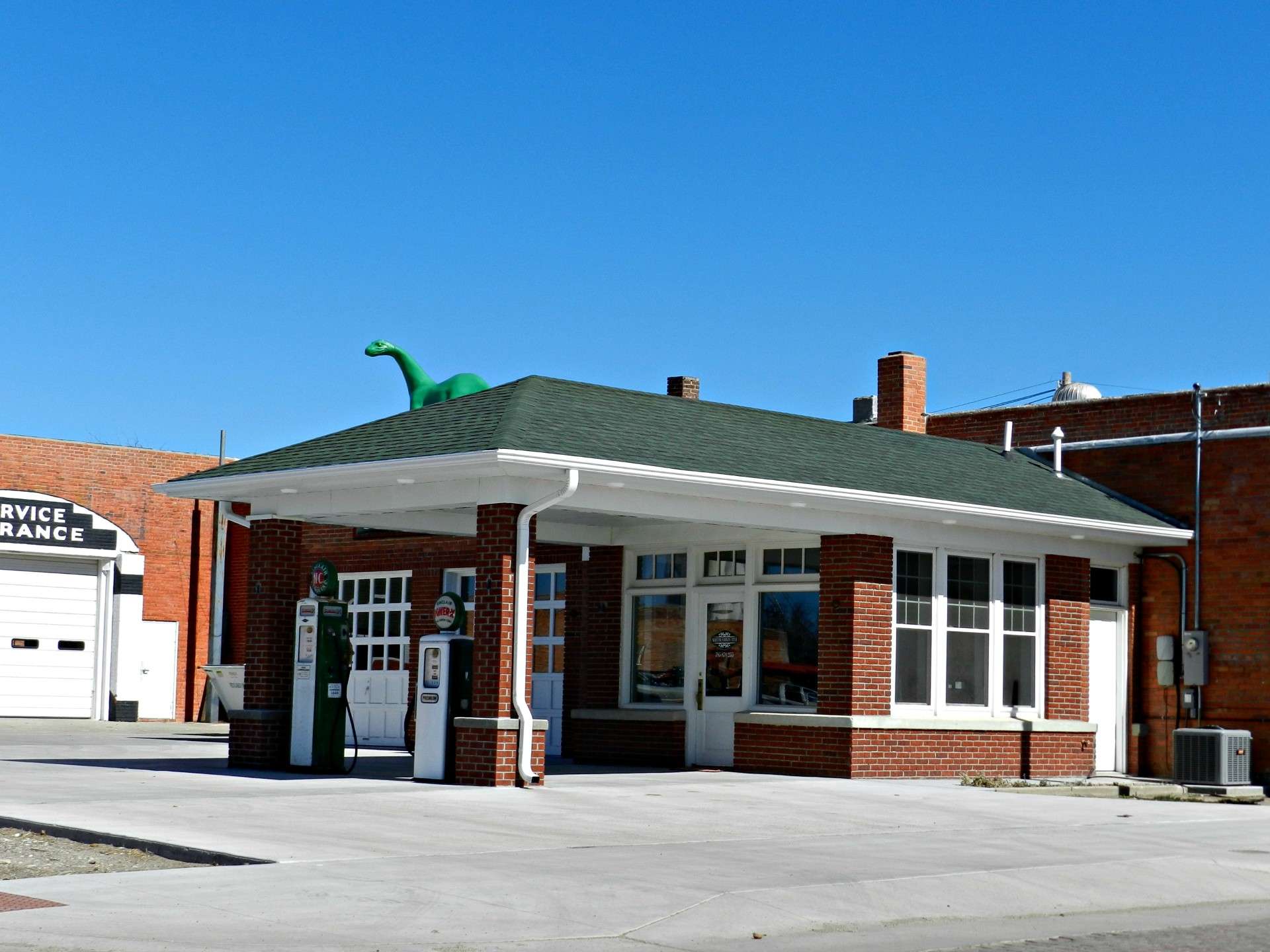
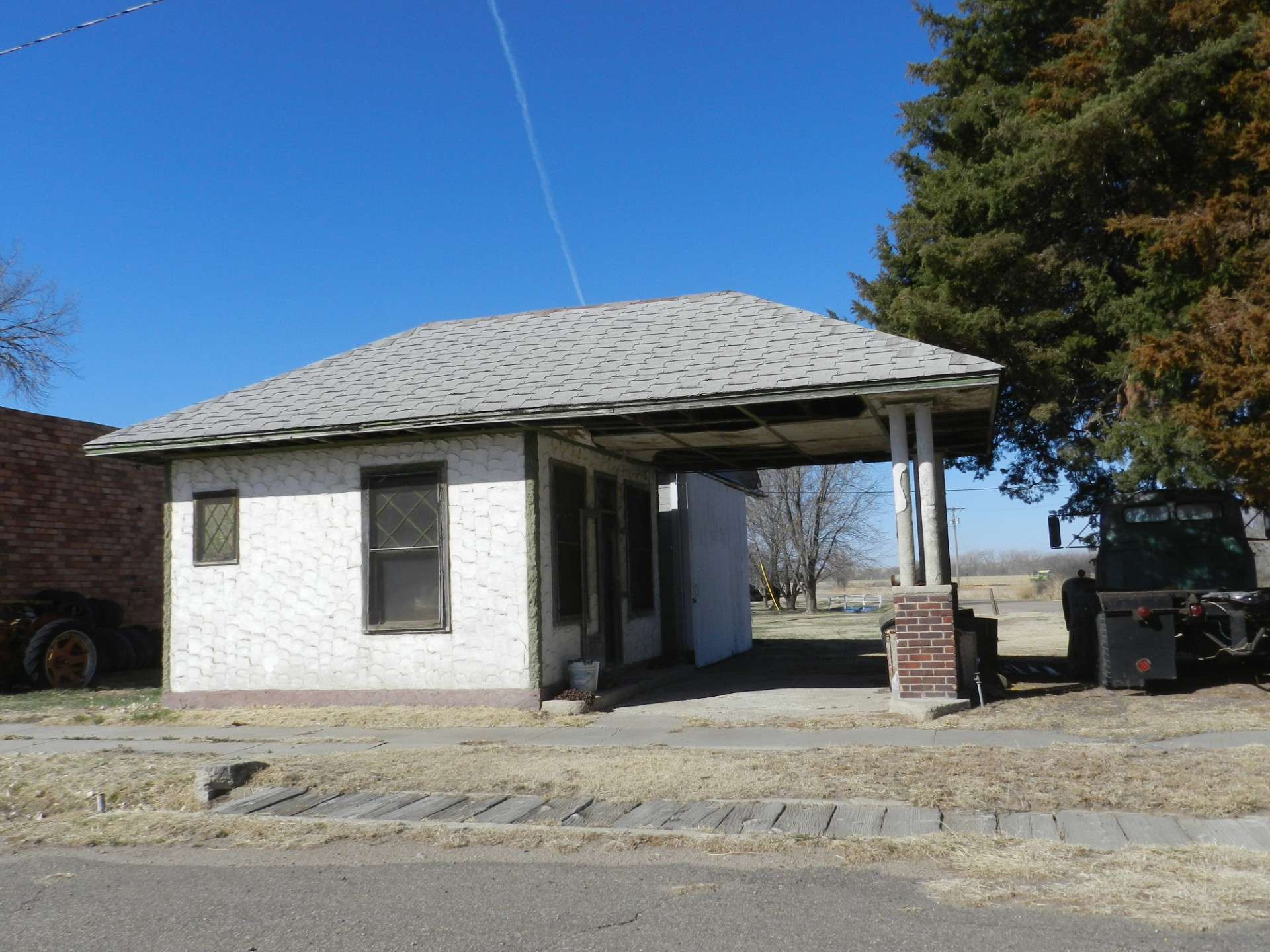
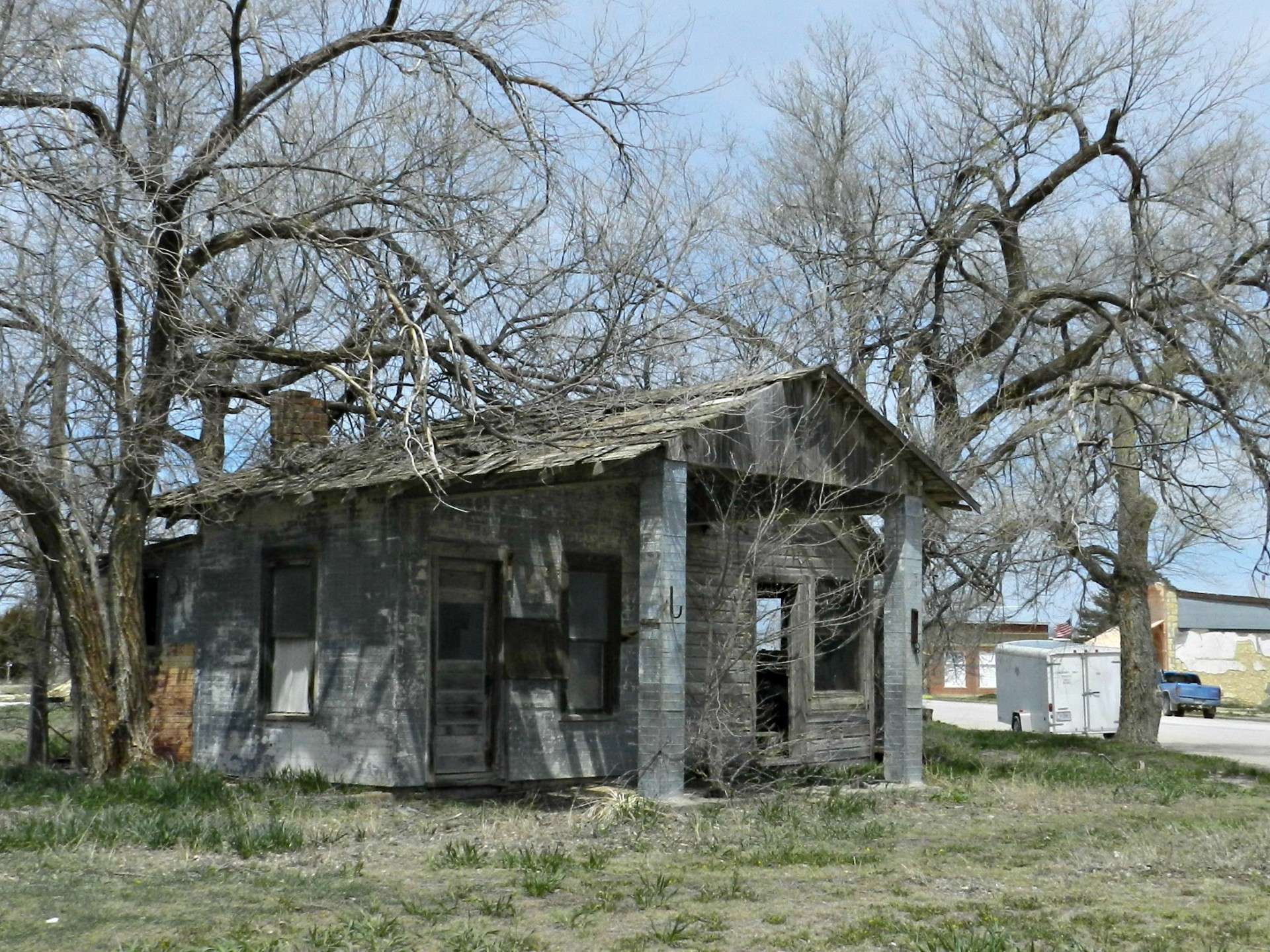
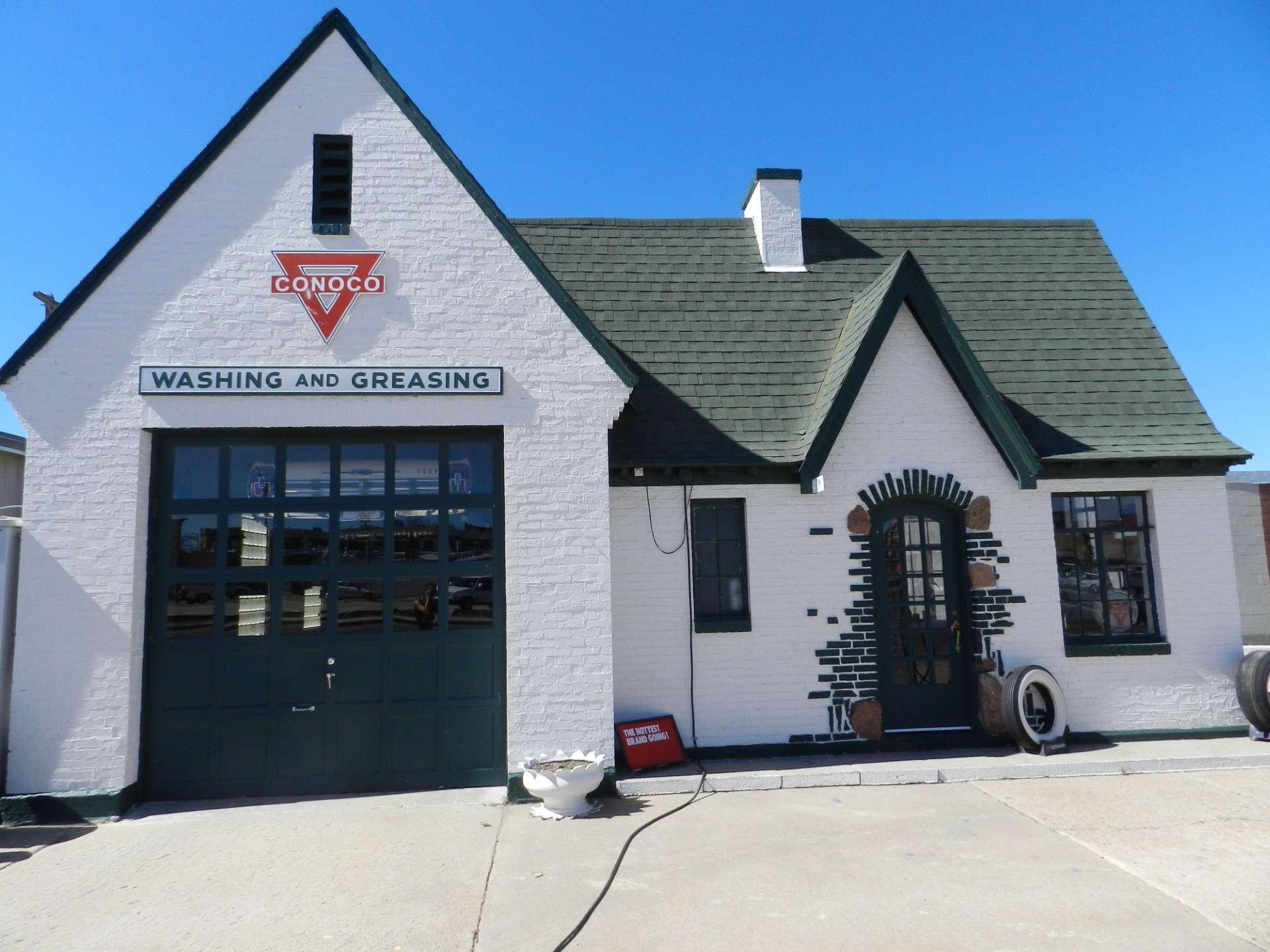
This makes me think about Kansas artist Rudolph Wendelin’s dad adapting from selling heating oil to establishing a gas station/mechanic garage in Ludell. Then I recall quaint gas stations I’ve photographed as I cruise Blue Highways. Refined petroleum and combustion engines changed our world. While businesses evolved from full-service stations with employees who filled customers’ tanks, checked oil, and cleaned windows to current practice self-serve, most travelers still require petroleum-base fuels.
However, that’s changing.
A motel we visit in Wyoming offers guests driving electric vehicles charging stations. Recently, a nearby truck stop installed an island of recharge ports. Those will multiply as electric cars become more reliable and affordable and infrastructure is secure. At the cusp of a major shift, Americans transition from gas to electric-powered travel.
At the moment, I’m not sold on the benefits, but I’ve studied enough history to know technology and energy needs drive change. Switching from horse to motorized travel forced business to reconsider customer need. Now, those will include updated vocational training, additional recharge ports, an ample electrical supply along with skilled mechanics to service the system. Who knows what other jobs will open?
To remind me humans survive progress, I timehop through rural towns with vintage gas stations standing on once busy corners and invite my imagination to transport me across decades. Then I mentally leap a century forward to consider what future travelers will envision when they see our old quick shops and truck stops.
No matter what, we can count on change.
Karen Madorin is a retired teacher, writer, photographer, outdoors lover, and sixth-generation Kansan.