


By CRISTINA JANNEY
Hays Post
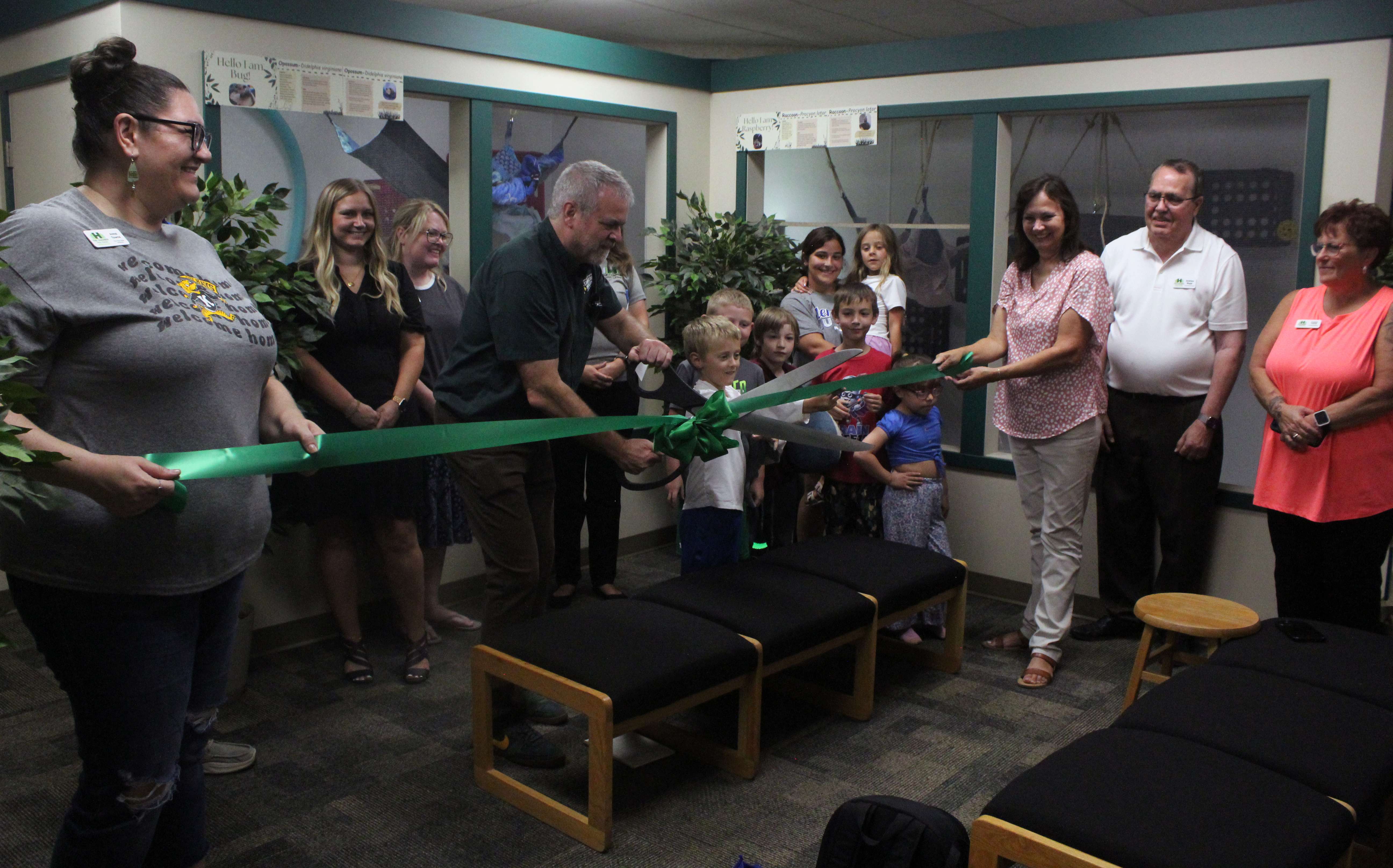
The Sternberg Museum of Natural History unveiled the renovation of its Discovery Center at a Chamber in Hays ribbon-cutting on Tuesday, July 7.
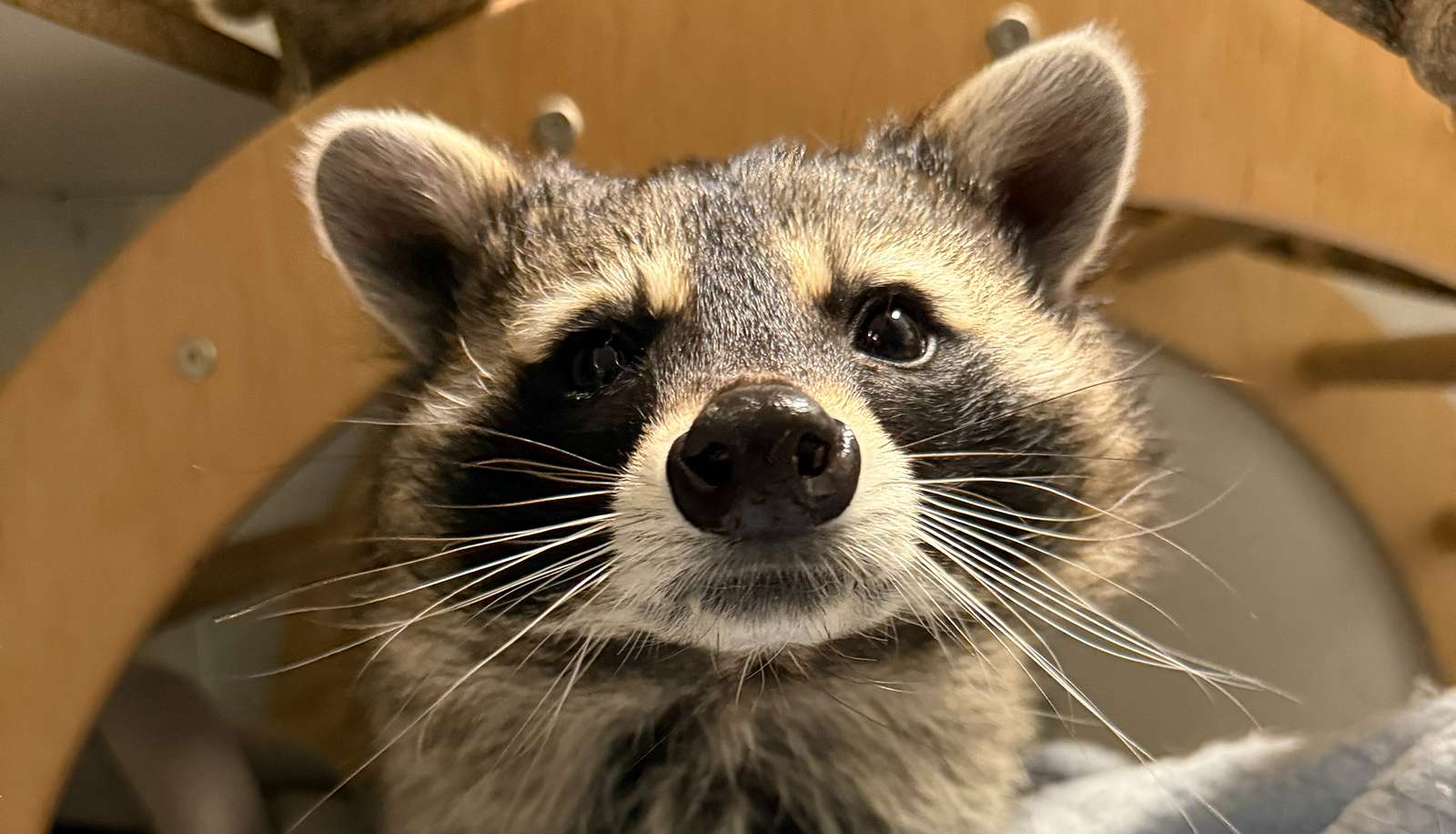
The museum has added new habitats for three mammals, Charlie or “Chuck” the woodchuck/groundhog, Bugs the opossum and Raspberry the raccoon.
All three of the animals were rescued, have been rehabbed and will be part of the Sternberg’s education programs.
Funds for the project came from the Heartland Community Foundation, and Fort Hays State University assisted with constructing the habitats.
Alicia Gaede, naturalist and education manager, described the animals’ journey to the Sternberg.
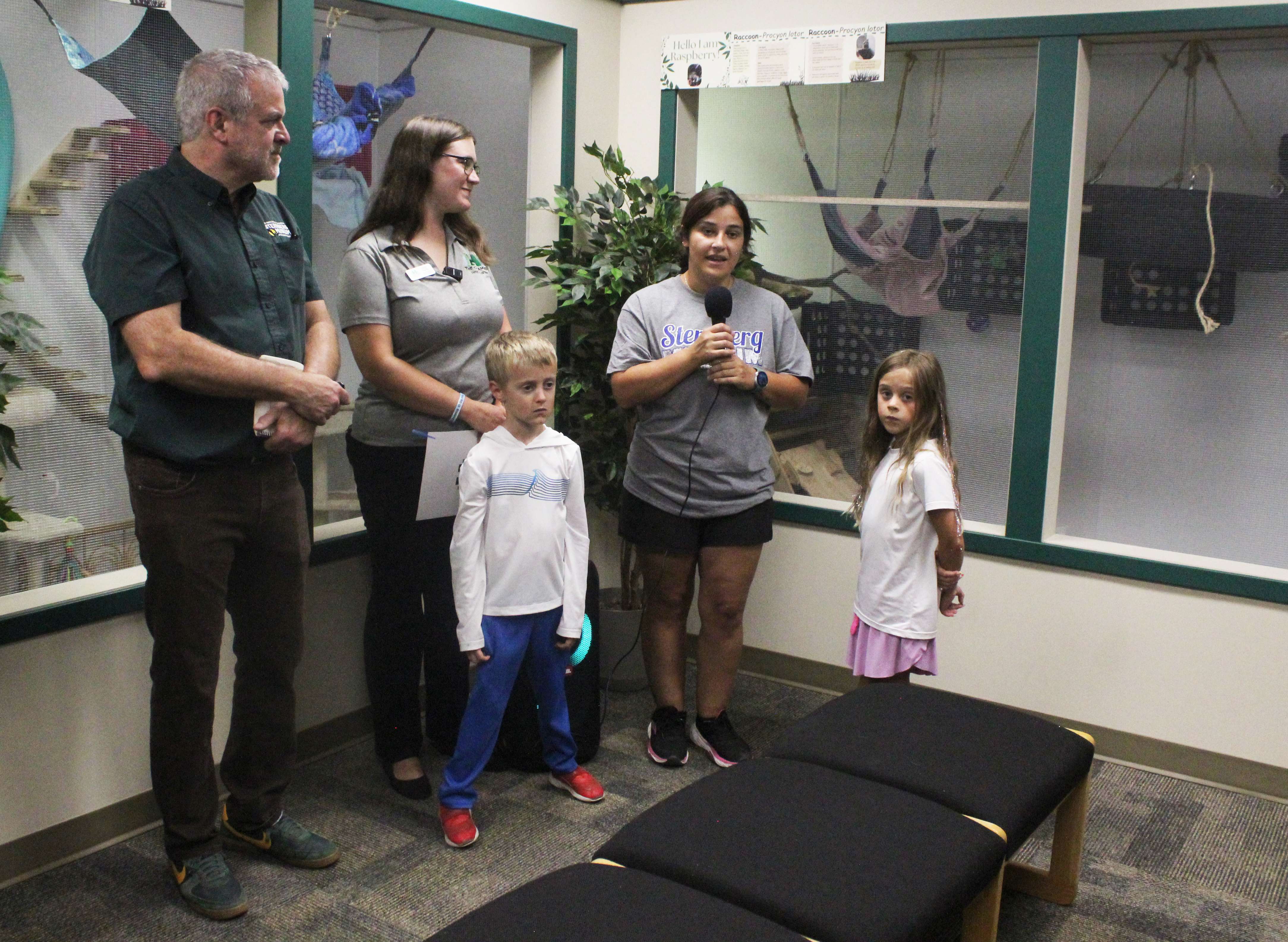
Gaede said she did not know what Charlie’s gender was, so she thought it could be a good name for either, and Chuck seemed to fit for her species.
Bugs was named by her rescuers. Unfortunately, she was so badly injured when she was found that she was surviving on bugs that fell from a bug zapper.
Raspberry’s name came from Sternberg Executive Director Reese Barrick and follows reptiles and amphibians in the Sternberg collection that are also named after fruit.
Raspberry was found as a baby and was being treated as a pet. The state allowed the Sternberg to take custody of the raccoon.
“She was great with kids. If you've seen her earlier, she's been up at the front of the cage looking at people, and so I'm really happy that we have her,” Gaede said.
She said one of the things she loves to do at the museum is to teach people about the things that are considered to be the unlovable.
“So lots of people don't like possums. I hear all the time that she's ugly. She is a little ugly, but it's cute,” Gaede said.
She said she hopes the museum will have the animals for years to come. Raccoons can live to be 18 years old.
The animals will not always be visible, she said. They have beds and hiding areas to “take breaks.”
Raspberry and Chuck come out of their hiding places regularly to eat snacks and are incorporated into children's birthday party animal encounters.
Gaede said she hopes to eventually incorporate Bugs at some point, too.
Guests can view the animals during Feeding Frenzy Fridays, which are from 10 to 11 a.m. throughout the museum. Listen to the intercom for announcements of which animals are being fed and where they are located.
Each habitat is designed specifically for the animals that live in it.
Bugs experienced an injury to one of his shoulders in the wild, so his habitat was adapted for that disability.
Raspberry has tons of toys to destroy, and Chuck’s habitat is filled with wood for him to chew on.
“Raccoons are so smart,” Gaede said. “They will get bored really easily, and then they will start destroying stuff. “They'll get really sad. So we want to make sure that she has fun stuff to play with.”
Raccoons also love water, so Raspberry also has a large bowl of water to play in.
The museum has purchased toys for Raspberry from the Arc Thrift Store, but kids who would like to donate toys are also welcome to do so, she said.
You might think having mammals in the Discovery Room would create quite a smell. However, Gaede said Raspberry and Bugs are both litter box trained.
Barrick and Gaede said their goals with the new exhibit are education.
“So, my biggest hope for this, and one of the things that I think we are really good at here at the Sternberg, is helping kids, love the unlovable,” Gaede said.
“I feel like we are doing our job here to teach about snakes,” she said. “So I hope the next step is that we can teach them about mammals and why they are important, even though they are all considered trash mammals. I hope that once they leave here, they get to have a relationship with these animals.”
Barrick encouraged parents and their school-age children to take advantage of the Sunflower Summer program, which runs through Aug. 2, to visit the Sternberg Museum and the animals for free.
Barrick said, unfortunately, oppossums and snakes have been killed as vermin.
“But these are important animals for ecology, and we can live with them,” he said. “And Alicia [Gaede]'s amazing at sending that message to the kids because that's the generation that's going to grow up and think that all these animals are really cool, and we won't have that same sort of attitude,” Barrick said.