


By KAREN MADORIN
Sometimes it takes decades to connect dots that offer history buffs a more complete picture of a time and place.
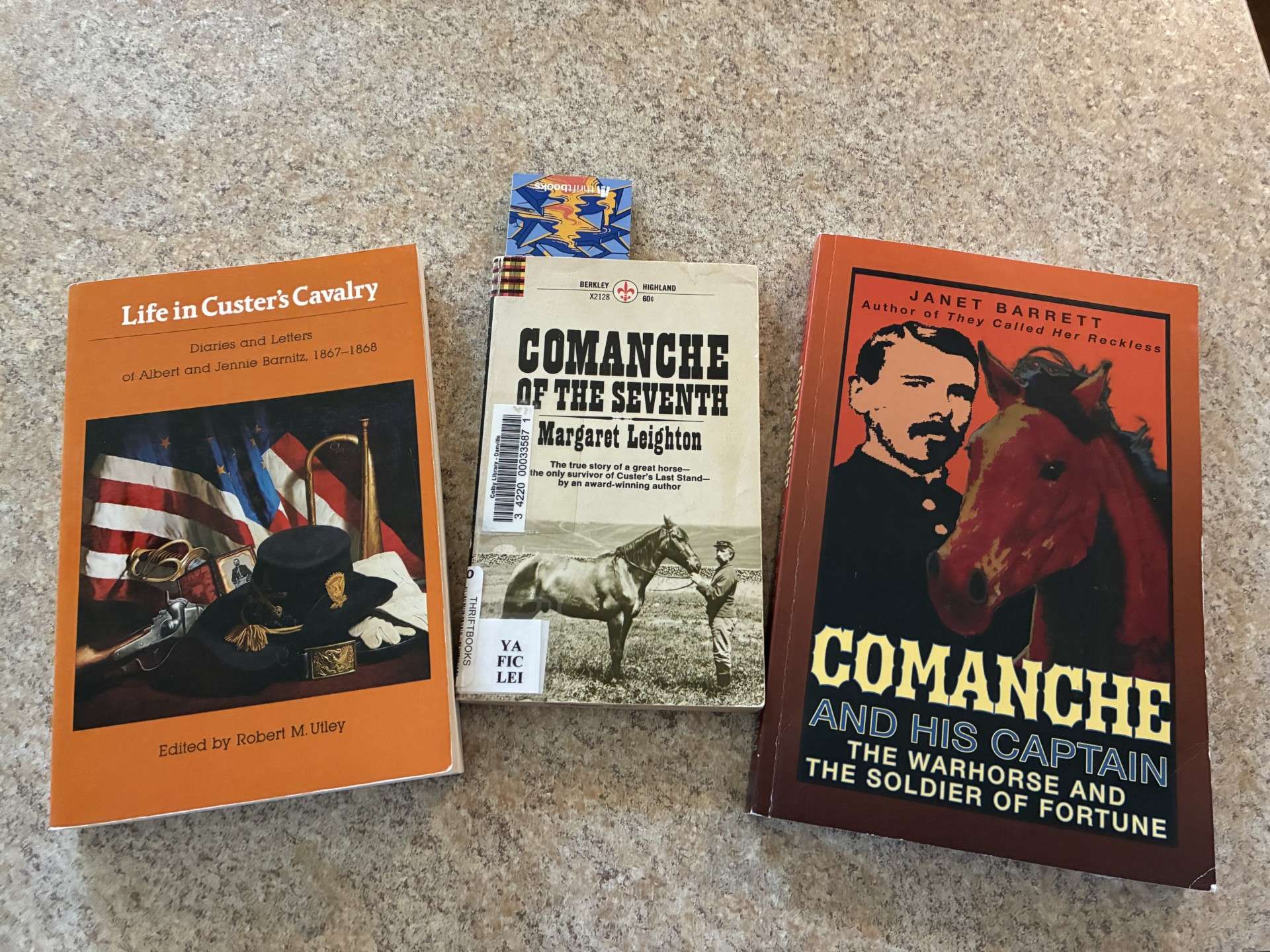
"Life in Custer’s Cavalry Diaries and Letters of Albert Jennie Barnitz 1867 – 1868" supplied a glimpse of military life along Big Creek and the Union Pacific Railroad west of Ellis from May through August. Margaret Leighton’s "Comanche of the Seventh" adds another dimension to the Barnitz letters.
Albert writes to Jennie describing Camp Alfred Gibbs situated on the north side of Big Creek west of what soon became Ellis, Kansas. He shared that troopers living in this outpost saw trains traveling from the east and added, “About one mile west of us, on the railroad, and beyond a little bend in the creek is a R.R. water station [Ellis Station], and wood pile, with a cheap and altogether desolate looking frame house; a small low structure of poles, covered with shelter tents; and a kind of dug-out in the bank.” He explained this was lodging for approximately 20 railroad employees when they weren’t working down the track.
He elaborates further on this military encampment near Big Creek east of Ellis Station. Under his command, troops built a bakery to supply approximately 300 officers and enlisted men with fresh bread daily. 7th Cavalry companies enjoyed the luxury of laundresses and a suttler store on site. For almost three months, cavalrymen under Elliot’s command prepared for roles in upcoming conflicts.
Historical dots connected when a friend shared Margaret Leighton’s young adult history "Comanche of the Seventh." While Leighton did not include works cited, details suggest she accessed primary sources. She writes that a bill of sale indicates a Missourian named Bates sold a horse herd of 40 or 41 to the U.S. Army in St. Louis on April 3, 1868. Tom Custer delivered those horses to Ft. Leavenworth where US was branded on their left shoulders about mid-May.
Troopers loaded this herd into train cars that delivered them to Ellis Station west of Camp Alfred Gibbs. After Major Elliot approved them, handlers led them to camp to begin training as cavalry mounts. Captain Miles Keough’s personal horse had been killed in recent battle. For $90 he purchased a claybank mustang later known as Comanche from this herd.
Back in camp, troops drilled these horses to carry 7th Cavalrymen through multiple battles and skirmishes across the Great Plains. Knowing well-trained mounts improved soldier survival, cavalrymen instructed these new inductees in performing multiple gaits, switching leads, reining, responding to leg pressure, jumping obstacles individually and in formation, remaining motionless on command, and staying focused during gun fire, trumpet blasts and waving blankets. Barnitz reported troops drilled several times a day.
In August, troops and horses from Camp Alfred Gibbs headed south to Forts Larned and Dodge, eventually arriving near Fort Supply in Oklahoma. During a skirmish along the way, Keough’s horse received an arrow wound that inspired the name Comanche. Depending on who reports the tale, the horse stoically fought despite its wound or it shrieked like a Comanche war cry upon receiving the injury.
Most of us enjoy 2026 amenities and don’t think about how we got here. This story about the claybank mustang Comanche arriving in a military camp on Big Creek west of Ellis and training to be Myles Keough’s top-notch cavalry mount that survived the Battle of Little Big Horn brings some of those early challenges to life.