


By KAREN MADORIN
This time of year is a bird watcher’s paradise.
After a long winter, every flying creature focuses on reproduction with each species decked out brighter colors or extra feathers to attract mates. Humans with time and inclination to watch can view strutting, bobbing, chest puffing, fancy foot work, rhythmic calls, drumming, rattling, intensified coloration, and tail fanning displays that put dandified men wearing powdered wigs, high heels, and knee breeches during the 1700s to shame.
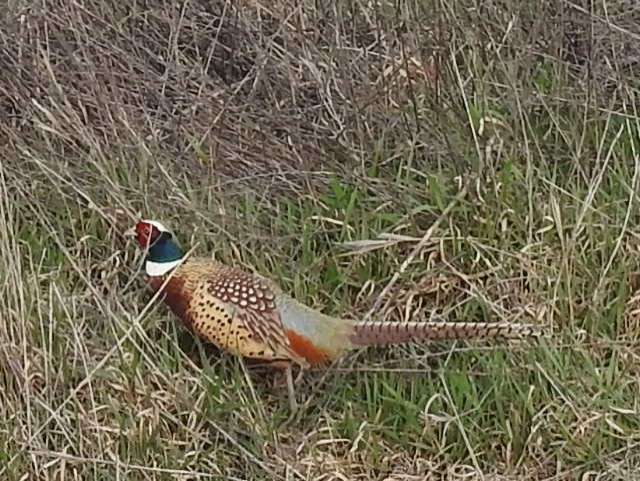
Hoping to spy some bird action, we recently set off on a morning drive and ran across a lone rooster pheasant scurrying through ditch weeds. I immediately scanned our surroundings, hoping to see another.
I learned four decades ago that during this time of year, I might spy hormonally overcharged ringnecks ready to rumble. That long-ago sighting set the bar high and left me always hoping for a do-over. In this recent case, my hopes were dashed by that lone bachelor looking for breakfast.
My spring bird watching interest began in the spring of 1978 when we took an after-supper drive southwest of Ellis to see what we could see. Keep in mind, my husband’s office was his state pick up and his job description required him to patrol rural areas regularly.
A bonus of this job included daily opportunities to watch wildlife up close. When he came home, he shared stories that made me want to see such sights, too. One fortuitous evening we loaded up in our personal vehicle and cruised dusty country roads, hoping wildlife would put on a show. We lucked out, and I squealed with glee to see two cock pheasants leaping, wings extended four feet in the air, to rake each other with their spurs.
I’m sure the hubs thought my reaction was over the top but stopped along the road ditch so I could watch those two duke it out in the previous season’s milo stubble. In those days there were no cell phones or digital cameras. I didn’t even have a Kodak Instamatic so the only place this event got recorded was in my brain.
I can still see spring pastel skies backlighting those wannabe Romeos as they leapt, puffed out chests, struck, flapped, pecked, and crowed weird squawks to claim their territory and let nearby hen pheasants understand they were objects of desire.
After several bloody assaults, one rooster signaled the other that he surrendered by some imperceptible-to-humans sign. Hiding his shame, he landed amongst dry stalks and scurried off to plan for the next encounter. As dusk descended, the winner crowed and strutted to celebrate his win.
Ever since that opportunity to see Darwin’s survival of the fittest in action, I’ve hoped for another chance with a camera in hand to enjoy a front row seat at a ringneck sparring match.
So far tom turkeys, sandhill cranes, great blue herons, and prairie chickens have accommodated my photographic aspirations, but those darn pheasants act like I had my chance and missed it.
Karen Madorin is a retired teacher, writer, photographer, outdoors lover, and sixth-generation Kansan.