


By KAREN MADORIN
It’s hard to recognize spring when we haven’t had much winter.
That said, after cleaning our flower beds the other day, I spent a delightful hour admiring swelling ash buds while resting on the deck in 78-degree temps. I watched and listened to robins, sparrows, and Eurasian doves as they poked about in last year’s garden seeking seeds and insects. It occurred to me that it won’t be long 'til that raspy, rusted-gatehinge song announces spring’s official harbinger—the yellow-headed blackbird or y-h-b-b.
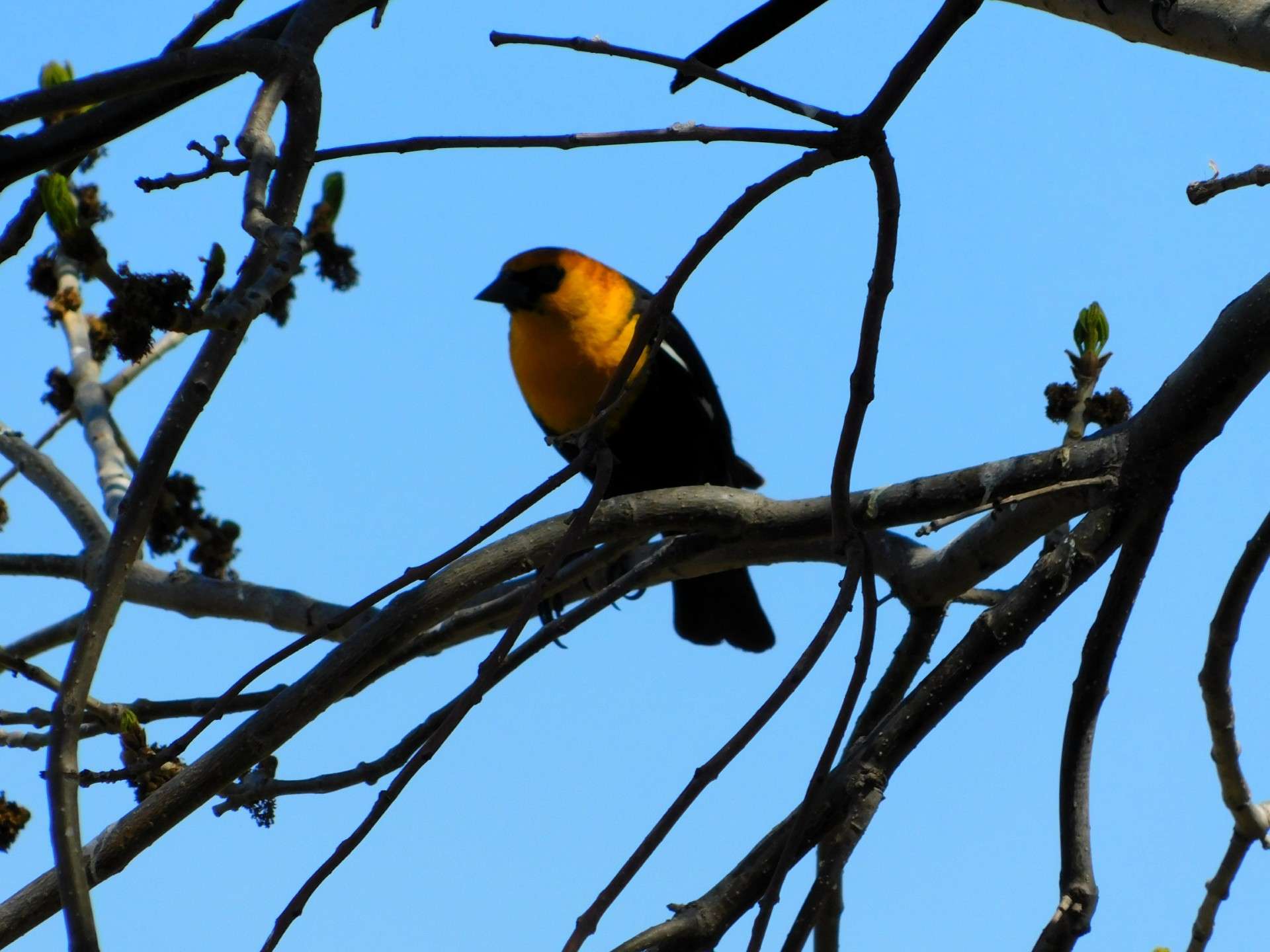
According to old-timers, these black birds with brilliant yellow heads and chests are a sure sign spring has sprung. I thought it was cranes flying over, but I’ve seen cranes arrive days or weeks before we have a dandy Great Plains blizzard. If generational prognosticators are right, then we can rely more on the arrival of these fancy black birds than my trusty Sandhills.
Yellow-headed blackbirds don’t live here year round. They winter in northern Mexico and the southern Southwest. A small population lives yearround along the border in southern California. Once these two-toned snowbirds get the mysterious communique declaring it’s time to head north to summer breeding grounds, they migrate in large flocks, stopping along their flight path to rest and refuel.
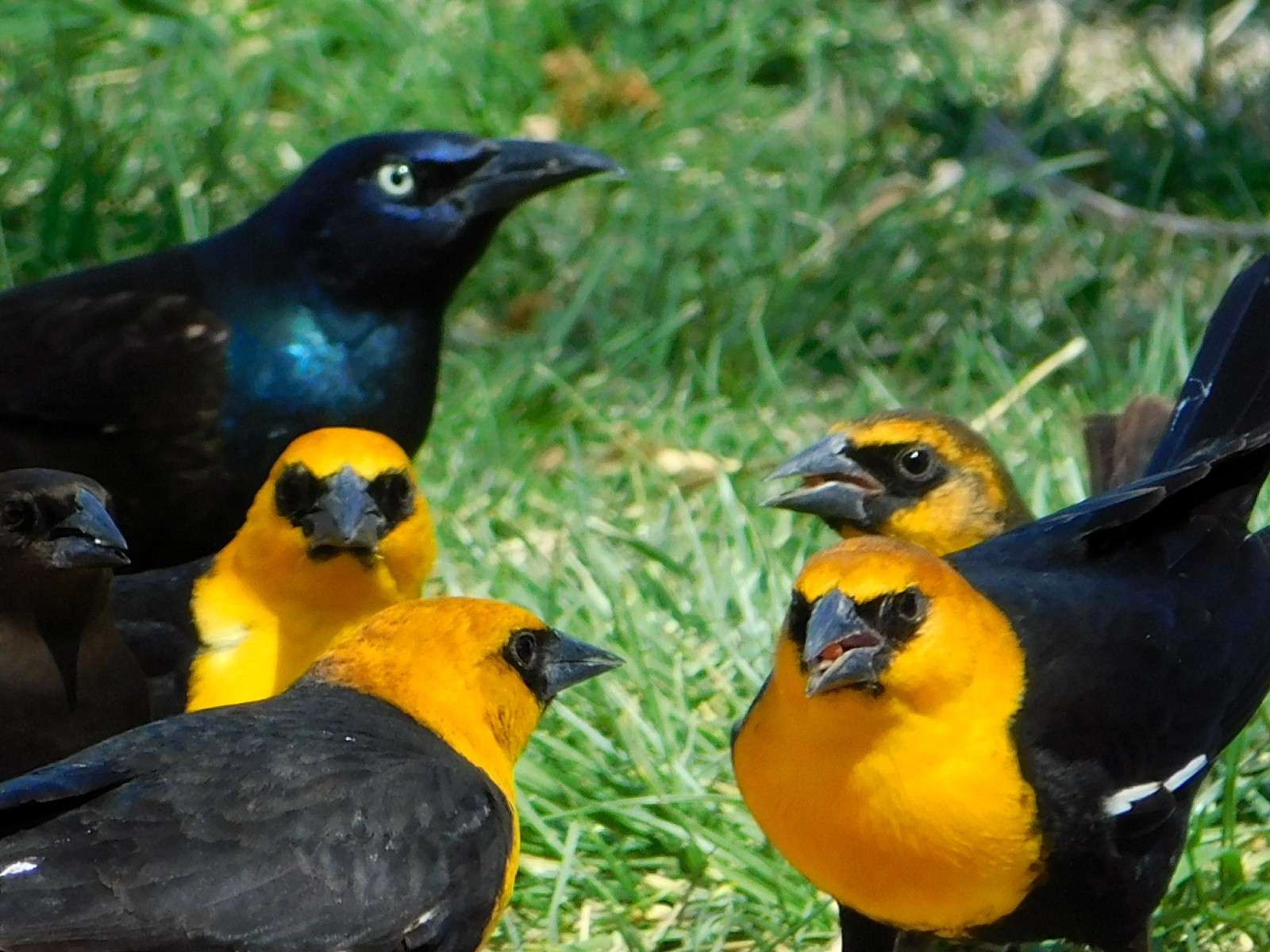
One afternoon last March, 125-plus picked our yard as a rest stop. Noisy y-h-b-b bobbed from branch to branch in our ash and pine trees, discussing the merits of emerging insects and quality of milo, cracked corn, and other grains we set out for their dining pleasure. With that many guests, we kept busy refilling feeders and multiple bird baths several times a day.
Depending on the y-h-b-b arrival date, trees may be just budding or unfolding early squirrel ear-sized leaves. If branches are mostly bare, I love sitting still as can be to watch what looks like lemons dancing along branches.
Keep in mind brilliant yellow heads and chests emerging from a shiny black body mark the fashionista males of the species. Females and juveniles tend to have dull brownish bodies and muted yellow heads that make it easy to overlook drab ladies and youngsters.
Among many species, adult females are larger than males. Not so in the case of yellow-headed blackbirds. Gals are smaller. Don’t write the plain dressers off. They’re part of the show.
One would expect such an attractive bird to sing a lovely spring song. Those who hear them before seeing them say they sound like a rusty gate hinge opening. Others report that yellow-headed blackbirds have the nastiest song of all avians.
When I taught in Kensington, I’d leave my window open in the spring and hear that raspy croak serenading from bushes outside my classroom. My students and I knew then that spring fever was official.
Western Kansas is in yellow-headed blackbird breeding range, but they nest in reed-filled swamps, so we won’t see their babies nurtured in our prairiegrass yard. I have spied their nests in swamps in Wyoming and along the Platte in Nebraska. Now I’ll have to explore local cattail patches along Big Creek to find some nesting closer to home. Perhaps, they’ll bless me with a photo op.
After a warmer winter than normal, I expect any day now to welcome colorful flocks of birds that sound like they desperately need a throat lozenge. Once you see them, celebrate because regardless of the calendar date, spring has arrived.
Karen Madorin is a retired teacher, writer, photographer, outdoors lover, and sixth-generation Kansan.