


By KAREN MADORIN
Mom loved collecting vintage Hull, Roseville, McCoy, and Coors pottery. Her interest led to our discovery of locally crafted Fort Hays State College Pottery. She treasured receiving it as a birthday or Christmas gift. Though quantities were made in the late '30s and early '40s, uncovering a piece at an auction or antique store requires effort and luck. Discovering the story behind this institutional pottery required even more.
Thanks to AI, key words—National Youth Administration (NYA) and John Strange—simplified the search. Both were critical components to the short-lived Fort Hays State College pottery tale.
Both the WPA and CCC, which hired only men, were integral to the survival of many Ellis Countians and western Kansans during the Great Depression.
During Clarence Rarick’s administration, he supported the NYA from its 1938 inception to its 1940 end. This New Deal concept made it possible for male and female high school and college students to master a vocation and graduate. Each Fort Hays participant received $24 a month out of which students paid $18.50 for tuition, room, and board. The remaining $5.50 supplied books and incidentals. Students enrolled in academics and assigned times to craft marketable pottery—practical and decorative.
According to Lyman Wooster’s 1961 History of Fort Hays State College, WPA and CCC crews improved the campus.
One 1937 upgrade was the addition valued at $3,000 of a pottery kiln on the north side of the Industrial Arts Building. The administration then hired Oklahoman John Milton Strange to teach pottery making to Fort Hays students.
Professor Strange not only instructed coursework, he completed his master’s degree during his 2 years serving Fort Hays State College. He wrote his thesis on the Pottery Making Possibilities of the Clays of Ellis County Kansas.
After reading it, I envisioned him wandering Ellis County, digging samples of native clays. Of his 100 tests, he deemed none ideal for high quality pottery making. One writer indicated he may have utilized Russell County clay. More research needed here.
According to Wooster’s research, one of Strange and his students’ accomplishments was manufacturing over 8,000 pieces of utilitarian pottery dishes. The college used and distributed these to other NYA residential food service centers.
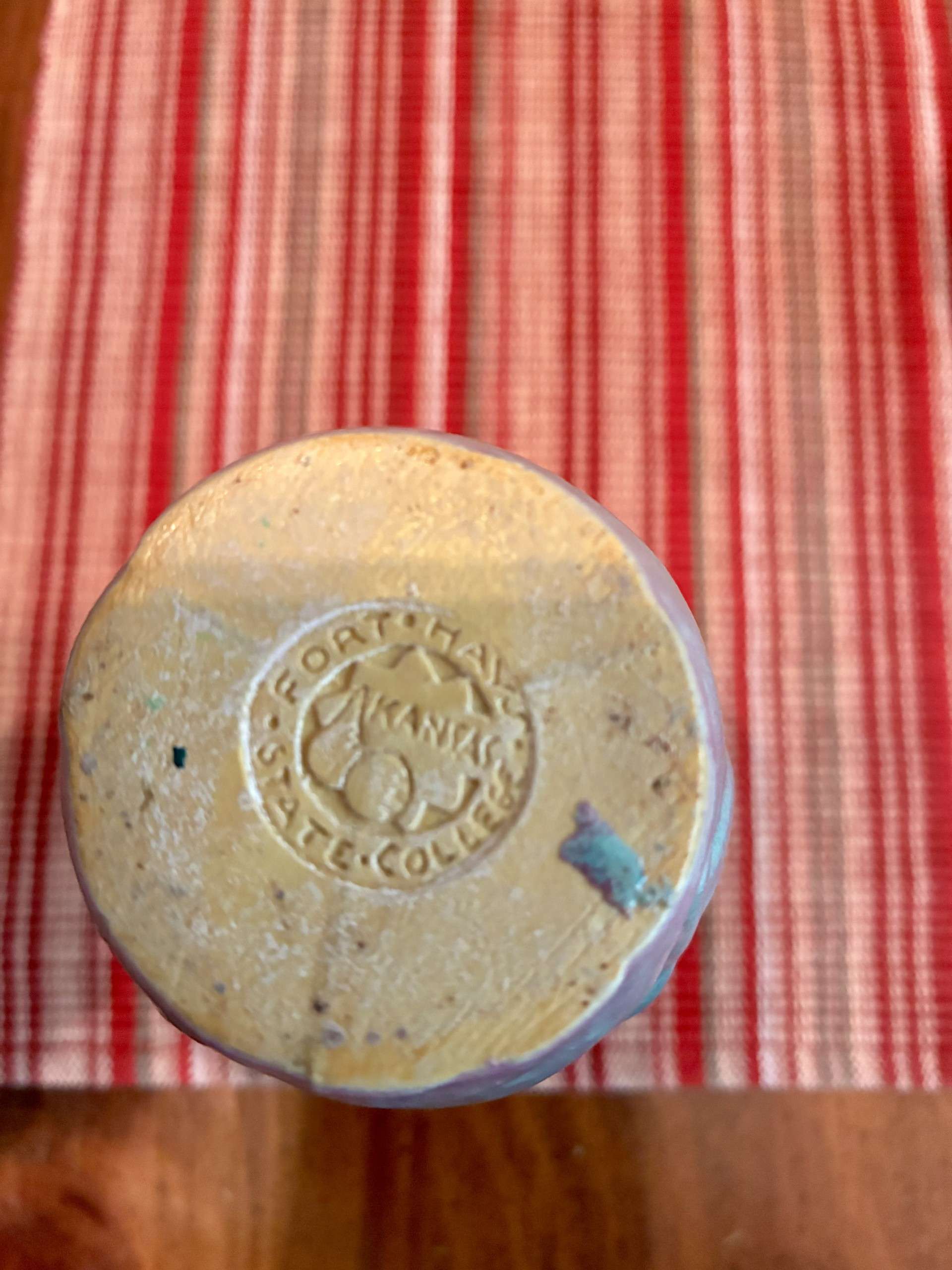
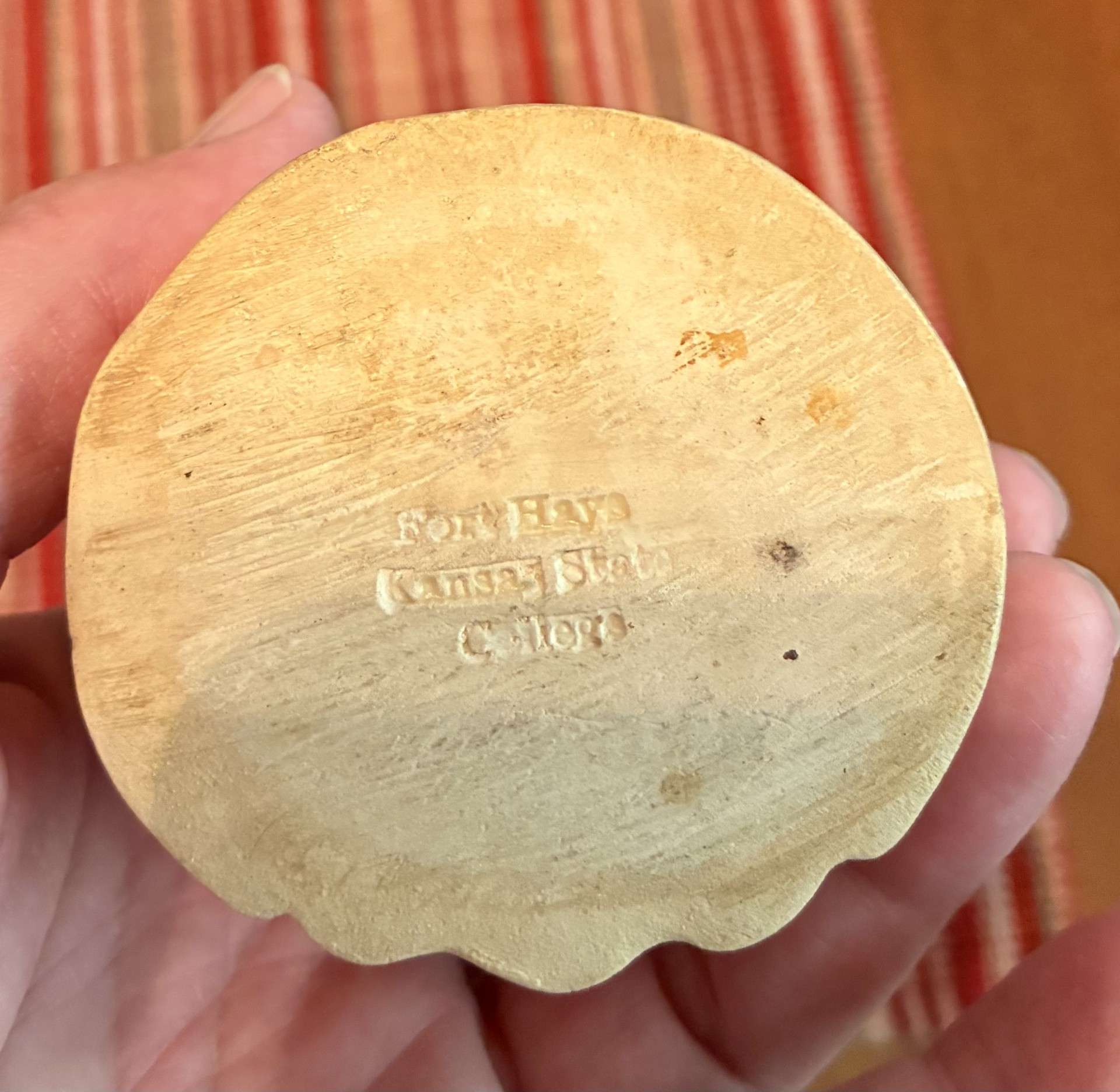
An internet search revealed photos of sturdy bowls and plates. In addition to creating pottery for practical use, Strange’s students made, glazed, and fired Toby Jugs, decorative vases, fraternal organization décor, and pendants. All have the Fort Hays College Pottery Hallmark stamped into their bases.
None of these infrequently found remaining pieces crafted by young people seeking a vocation and a college degree garner the amazing prices of Newcomb College or South Dakota School of Mines pottery, but they certainly earn more than they originally cost at their initial sale.
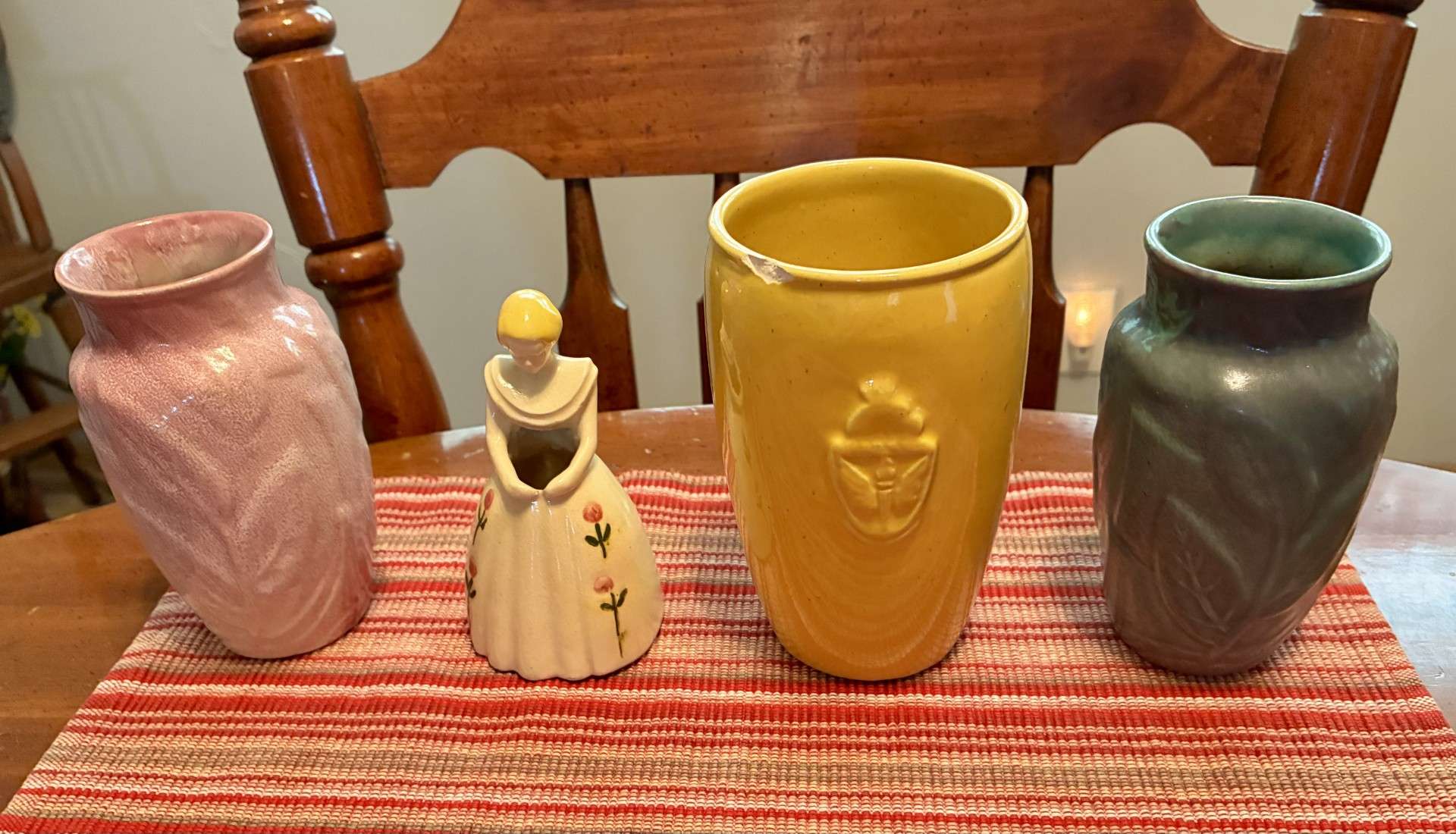
I found four local pieces for Mom and wish they could reveal their stories. Who crafted the two flower vases, one glazed teal and the other cranberry. How did artists select glazes? Who bought their work? Were they gifts or for displaying flowers from local gardens? Did the yellow lady vase once grace a sorority place setting? Tiny and delicate, it would make a treasured keepsake. A raised torch of knowledge emblazons a larger vase glazed bright yellow. Did this commemorate some scholastic event?
During one of the hardest times this region faced, young people earned college degrees and created pottery useful and decorative. These fragile monuments honor stalwart spirits of Kansas forebearers even if we don’t know specific details.
Karen Madorin is a retired teacher, writer, photographer, outdoors lover, and sixth-generation Kansan.