


By KAREN MADORIN
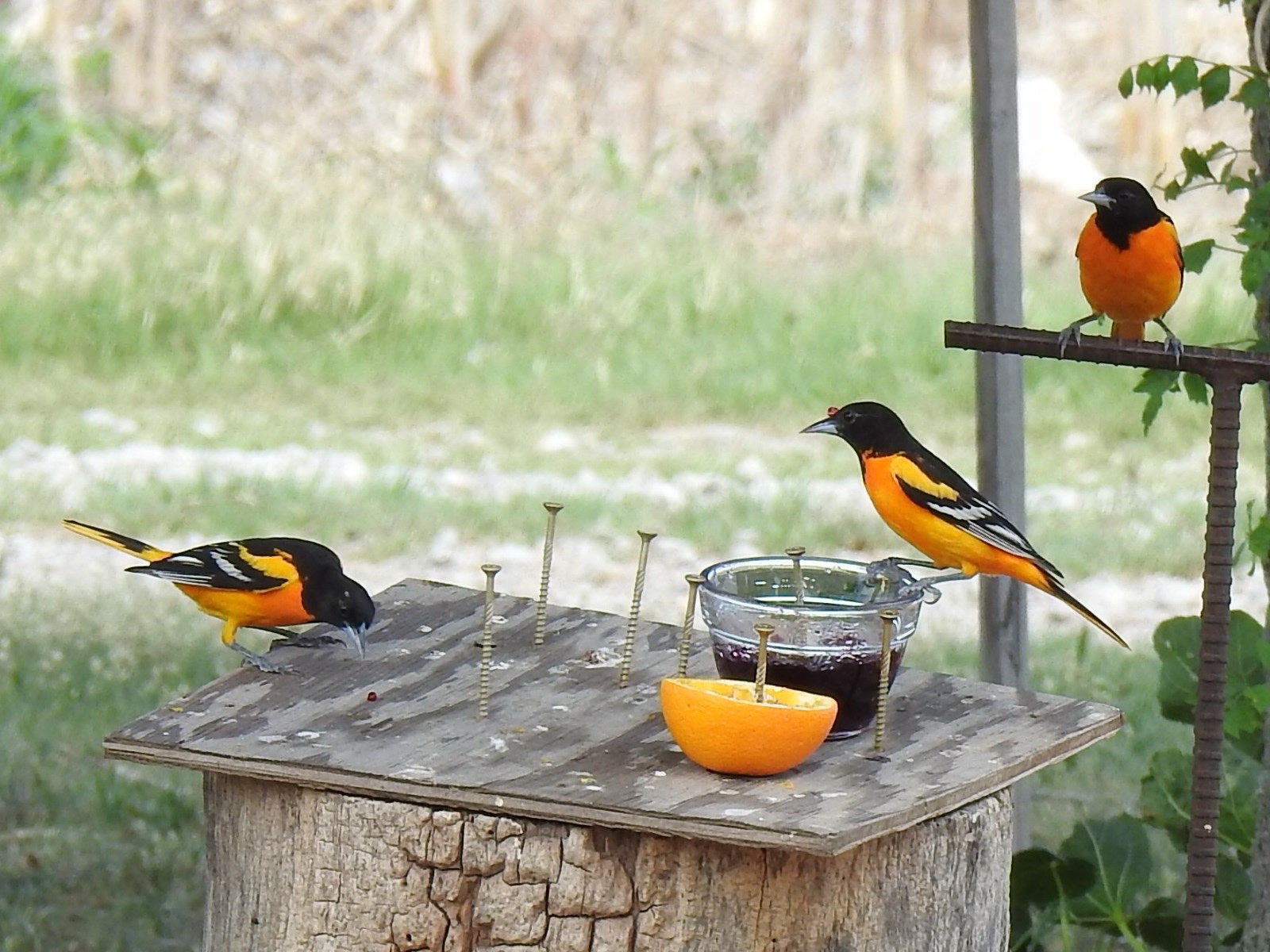
Retirement offers intriguing-observations. Bird watching has enriched our lives from the beginning, with feeders placed near windows so we could watch finches and cardinals as we enjoyed our meals. Once we were home more, we added a bonus feeding station at the edge of the yard to attract migrating orioles.
I’m not sure how birders discovered this, but orioles love grape jelly, oranges, and other fruit bits. Watch local grocery store shelves starting in May and observe inexpensive grape jelly sections emptying weekly. We’ve joined the ranks of those buying grape jelly and oranges in order to lure Baltimore, Bullock, and Orchard orioles to the yard.
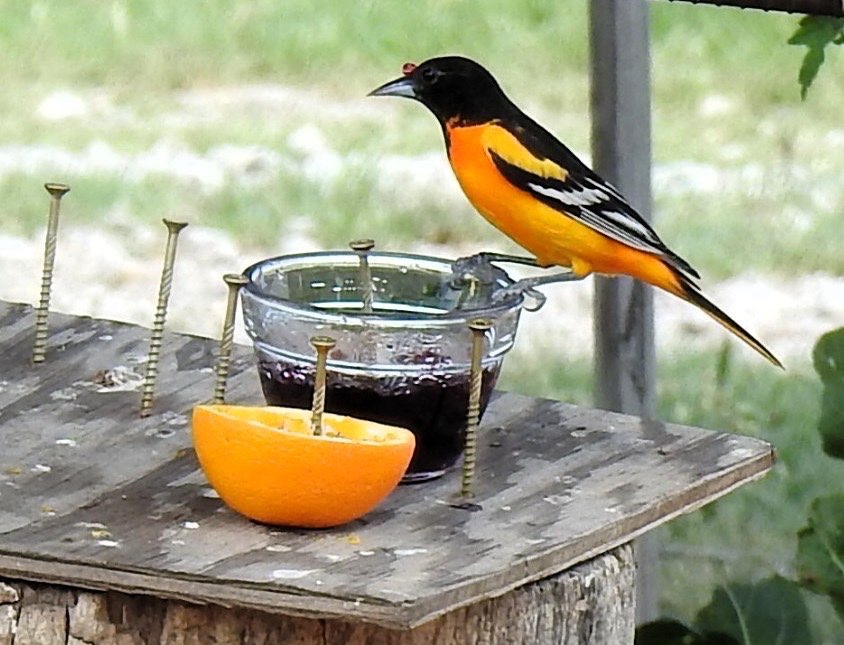
Keeping these guys in their delectables means we give up some of our own treats, but hours of fun hosting up to 25 of them claiming territory, squabbling, courting, and later teaching just-fledged young to access the goodies at the feeding station is well worth missing restaurant food a couple times a month. Certainly not oriole experts, we’re learning to identify not only breeds but also age ranges in each species. In addition, we discovered house finches also love raiding our feeders as do occasional robins and grackles.
This year offered an observation open to interpretation. When I go out each morning to bring in the empty jelly bowl for a wash and refill, I find either seeds or insects or maybe worms lying in the sticky remnants coating the dish. At first, I attributed this to greedy feeders not finishing a protein meal before they came for dessert.
However, as weeks passed, I noted posts on birding sites where observers utilize a camera feeder in order to see visitors up close. More than one of these reveal an oriole or other species carrying an insect in their beaks to the jelly bowl and dipping it repeatedly in sweet goo before flying off with it. Some speculate mom and dad take these condiment-coated meals back to nests to feed youngsters. Or, maybe they eat them themselves . . ..
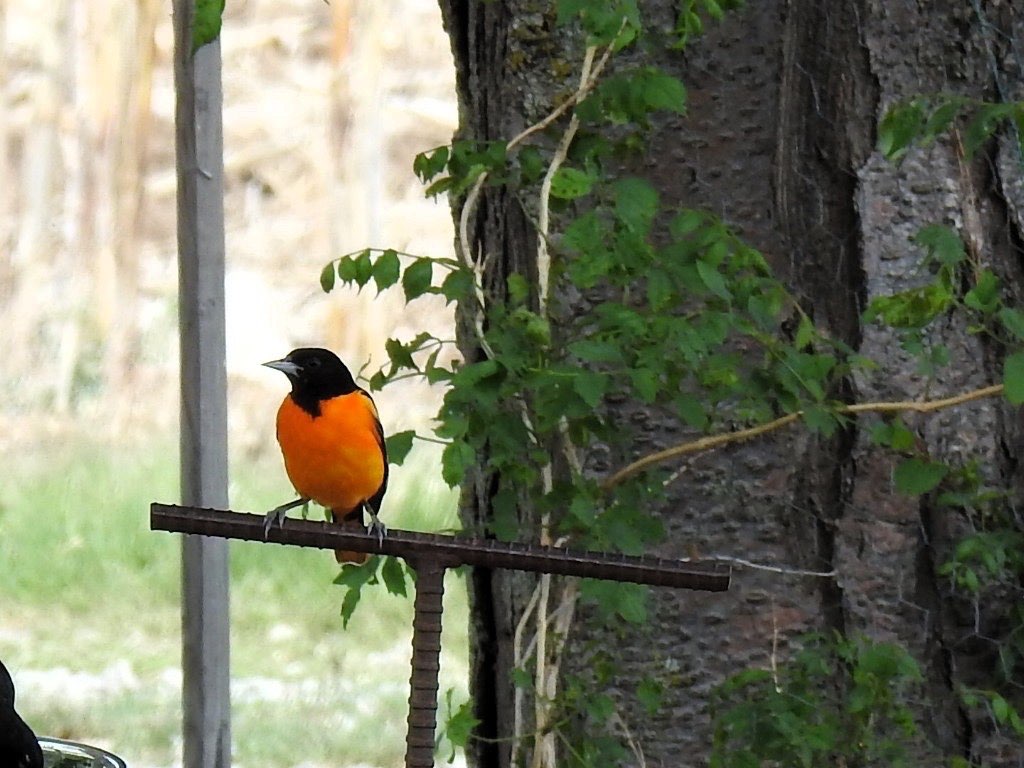
This might explain that spell when we could barely keep jelly in the bowl while birds went through more oranges than usual. If parents provided extra nutrition to freshly-hatched babes with donated high calories that didn’t require extra effort, they conserved energy for feeding themselves. Perhaps I should re-evaluate my response to effort required to launch fledglings.
After following these birding posts, I watched our feeding station more closely. Though we sit on the deck so we don’t scare our visitors, I swear I’ve seen adult birds holding something in their beaks to dip into jelly before flying off with it dripping glop. Occasionally, they lose their protein-filled treasure, leaving it for me to find in the bowl dregs the next day.
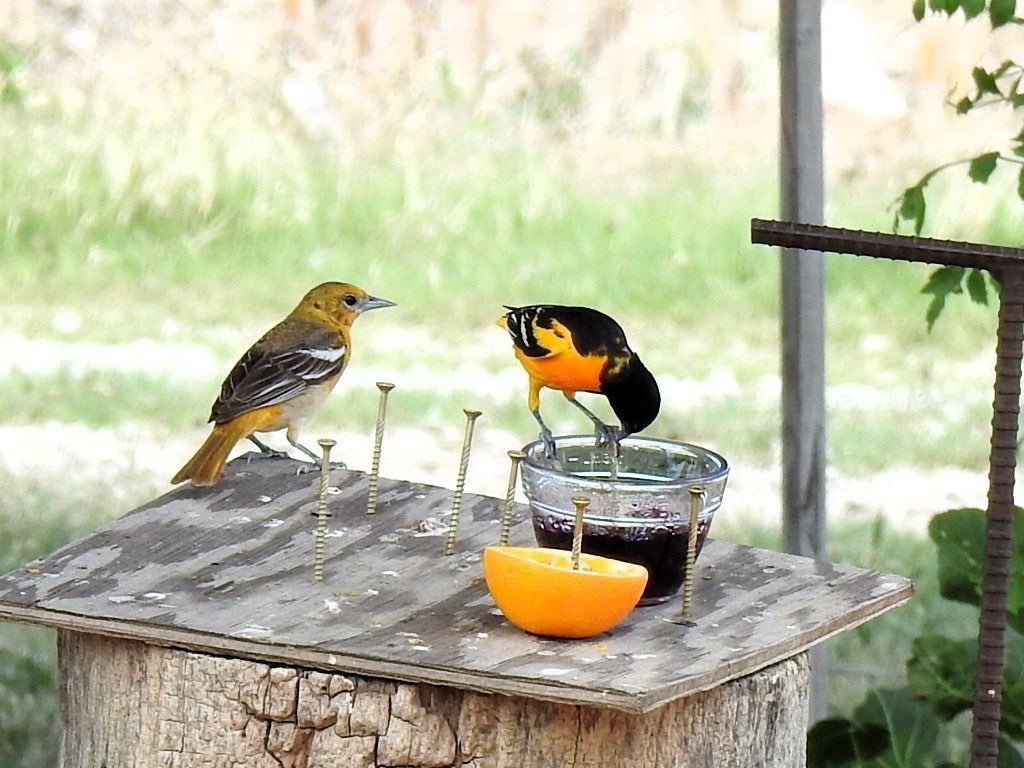
Over the years, researchers have posted about a particular finch in the Galapagos that utilizes a twig to dip into a hole in a tree or cactus to harvest insects. Perhaps our orioles, finches, robins, and grackles see our jelly bowl as a tool that allows them to enrich fledgling diets without wearing themselves to a frazzle.
If this keeps up, we’ll have to let our visitors know there’s a limit to free jelly and oranges.