


By Karen Madorin
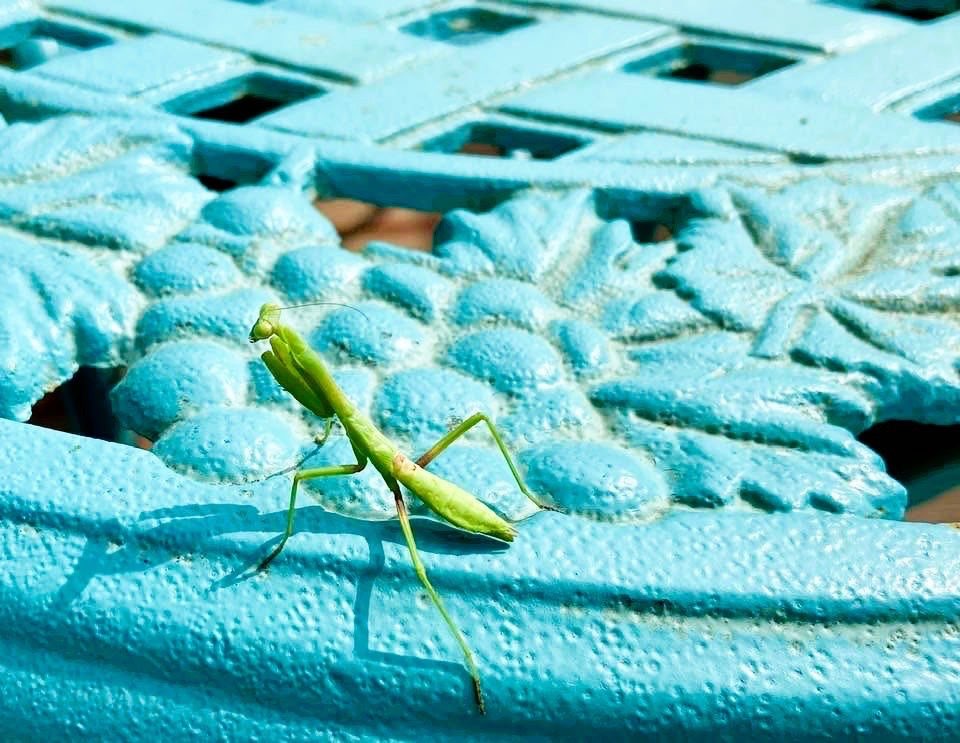
Summer gardeners look forward to reconnecting with ugly helpmates. In this case, assume Hollywood Special Effects creatives modeled more than one movie or TV alien after this creature with its round head, protruding eyes, pointy/fierce jaw, and spear-like front legs. First time viewers of praying mantises might wonder what planet it calls home and whether or not its bite is fatal.
Gardeners know crickets, grasshoppers, moths, beetles, caterpillars, as well as beneficial insects, hummingbirds, and lizards justifiably fear this imposing insect. Fortunately, mantids are harmless to humans. Kids safely dare one another to let miniature dinosaur-postured creatures crawl up and down legs and arms.
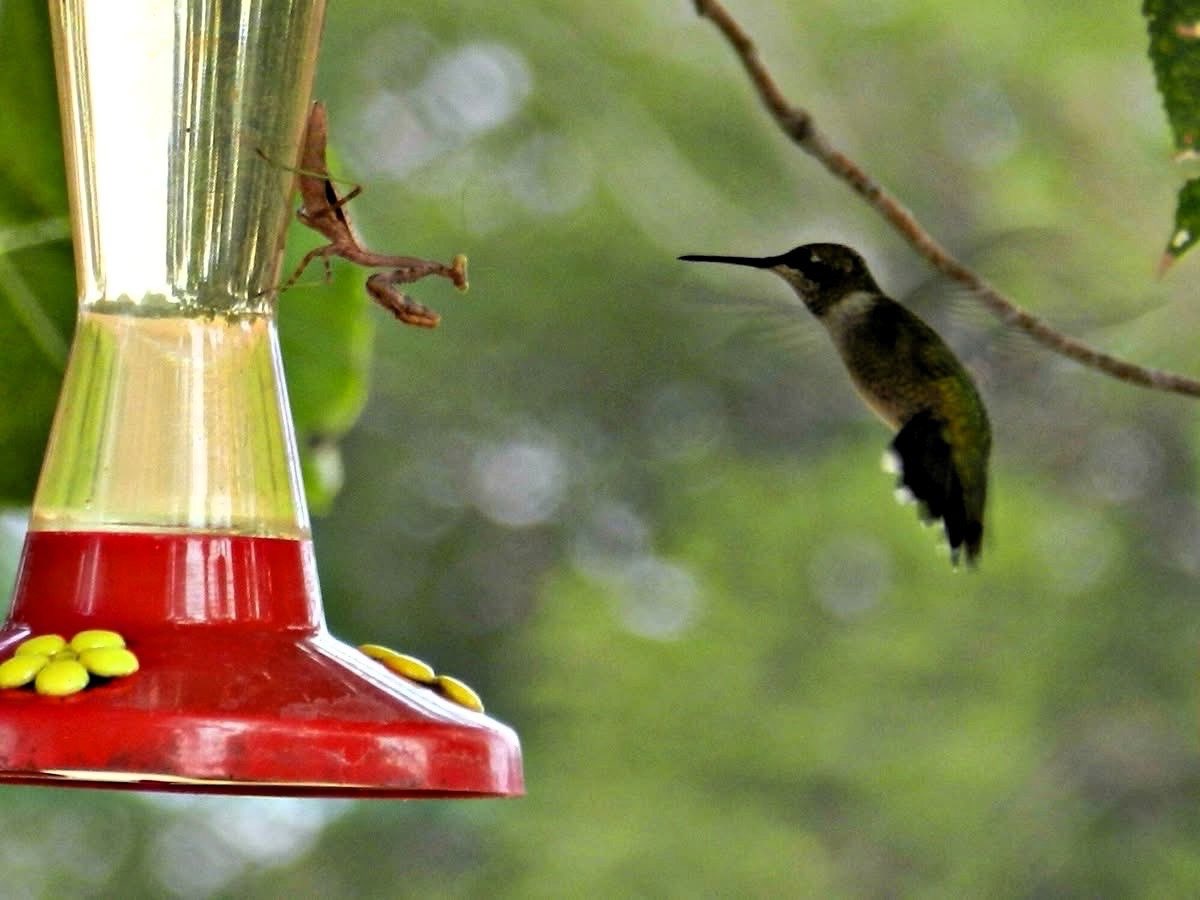
You read that previous paragraph correctly. Though they don’t attack humans, some mantids prey on small birds and reptiles. Native praying mantises are smaller than those from China and typically dine on insects. Chinese mantises are larger and capable of terrorizing and devouring hummingbirds or sunbathing lizards. Remove large mantises lurking near nectar stations.
Not only do these oddly constructed critters look like they’re assembled using various parts of nightmare-causing creatures, they have interesting adaptations. They are the only insect with 3 D vision offering unparalleled depth perception to nail their next meal. When I say nail, those long front legs with a pincer-like claw can thrust a considerable distance to grasp breakfast, lunch, or dinner. To compound their frightening appearance and skills, once they secure their target, they sometimes consume it alive.
While superior vision offers survival advantages, mantises have only one ear--located on their abdomen. Seemingly a disadvantage, it does enable them to hear hunting bats’ supersonic beeps, allowing mantises to escape these stealthy hunters. Gardeners appreciate this ability to remain among the living where they control pests.
Sociologically, praying mantises might be introverts. Loners, they don’t seek contact with other mantids until it’s time to reproduce. Unfortunately, for males, females give new meaning to bite his head off as they sometimes devour partners during or after mating. Researchers speculate this ensures eggs develop and hatch.
Speaking of eggs, curious observers find oddly textured oval egg cases about the size of a nickel plastered onto clay pots, wooden planters, metal frames, or cement walls. I’ve discovered several, and this spring, we had a hatch extra-ordinaire. Over the past 6 weeks or so, while working amongst my flowers, I observed scores of teensy, scampering praying mantises.
Though these look like miniature adults, technically they’re nymphs. They molt between 10 to 15 times before achieving adult exoskeletons. Each time they shed, they grow, so I expect to see more as they get bigger. They are welcome to all the beetles, fuzzy caterpillars, and crickets they can eat.
On that note, last summer I wrote about a yellow orb weaver who shares our deck. Praying mantises fear birds and rodents but don’t concern themselves with insects. However, spiders, especially yellow orb weavers, threaten them. They trap these alien-looking bugs in humongous webs, wrap them in cocoons, and leisurely devour them, which I happened to observe last summer.
Based on nymph numbers, my yellow orb weaver might outgrow her corner of my deck.