



By Karen Madorin
A friend recently sent a photo of a snake lying along a wall in her outbuilding. She asked for an ID. My first response was bull snake, but since she has littles I decided to consult my resident expert to avoid offering false security.
My hubs expanded the picture and analyzed it before saying he couldn’t give a definitive answer without a clearer view of the head and tail. Based on research on a favorite herpetology site, it was a rat snake, which, if he was correct, is non-venomous. This might raise blood pressure among those who fear snakes, but if he was correct its bite wouldn’t send someone to the emergency room.
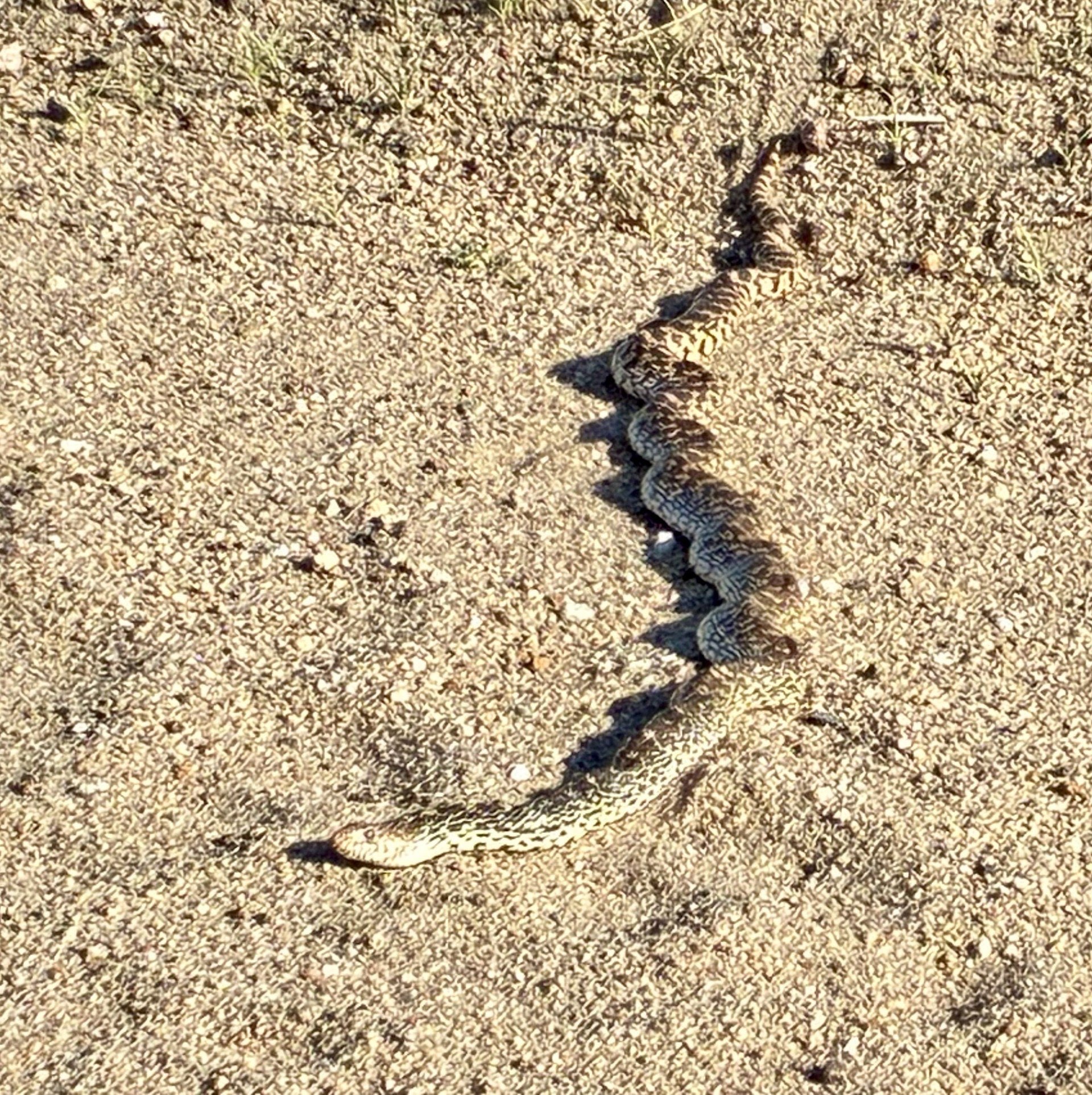
This friend grew up on a farm in central Kansas and knows people can’t make definitive IDs based on photos, so she told her kids to watch where they put their hands and practice caution. The family looked forward to the nope rope exiting their building.
Using this teachable moment, she explained most snakes are non-venomous, but until you know, transfer gun safety rules to snakes and treat them like they’re loaded. She further explained snakes help because they eat rodents like mice, rats, and packrats. That, of course, led to a discussion about how rodents spread disease so we don’t want to live with them.
As I listened to this mom guide her youngsters to understand that though many fear snakes, herps control rodent populations. Imagine questions popping up amongst her youngest about how cute mice cause more concern than a danger noodle.
That led to she and I discussing how humans innately fear snakes. Few feel comfortable amongst slithering reptiles. Part of it is they earned a bad rap in the Garden of Eden. I’d guess most of it has to do with lack of knowledge from an early age.
She told her kiddos snakes really don’t want to hang out with people so if they play noisily, most likely nearby reptiles would s slither away. Even fully-loaded venomous snakes don’t want to waste energy and toxin biting humans they can’t consume.
That reminded me of when I nearly stepped on a copperhead while hiking in Oklahoma. It was close enough to bite, but, upon seeing it, I backed up to offer a toxic creature wearing designer fashion the opportunity to glide away without leaving puncture wounds in me. It apparently appreciated my gesture and disappeared.
A few decades later, Mom and I hunted shark teeth among Western Kansas limestone bluffs one cold November day. Apparently that buzz buddy hadn’t heard it was time to den up. That reptile was so chilled, its rattling was on slo-mo. I saw it just in time to warn mom to halt and back-up. This was too close comfort, but that prairie rattler accommodated us and vanished in the opposite direction. I hope it ate one more good meal before it settled in for a long winter’s nap.
Follow my friend’s advice to her kiddos. Don’t be casual about snakes. Educate yourself and your loved ones to identify them and their habitat. They control rodent populations better than humans dispersing poisons with a broad kill-zone. No one will ask you to wear a snake around your neck or carry it in a pocket unless you want to. They aren’t apex predators waiting to ambush and eat someone walking through willows.