


By CRISTINA JANNEY
Hays Post
Sculptor Pete Felten would probably not come to a party thrown in his own honor, his friends said.
He was a humble man, but did what he wanted every day of his life—create art.
Mick Jilg, fellow Hays artist and friend, said, "He told me several times he lived every day of his life and did exactly what he wanted to do, and very few people can say that."
Felten, 92, of Hays died on Feb. 4 at Hays Medical Center.
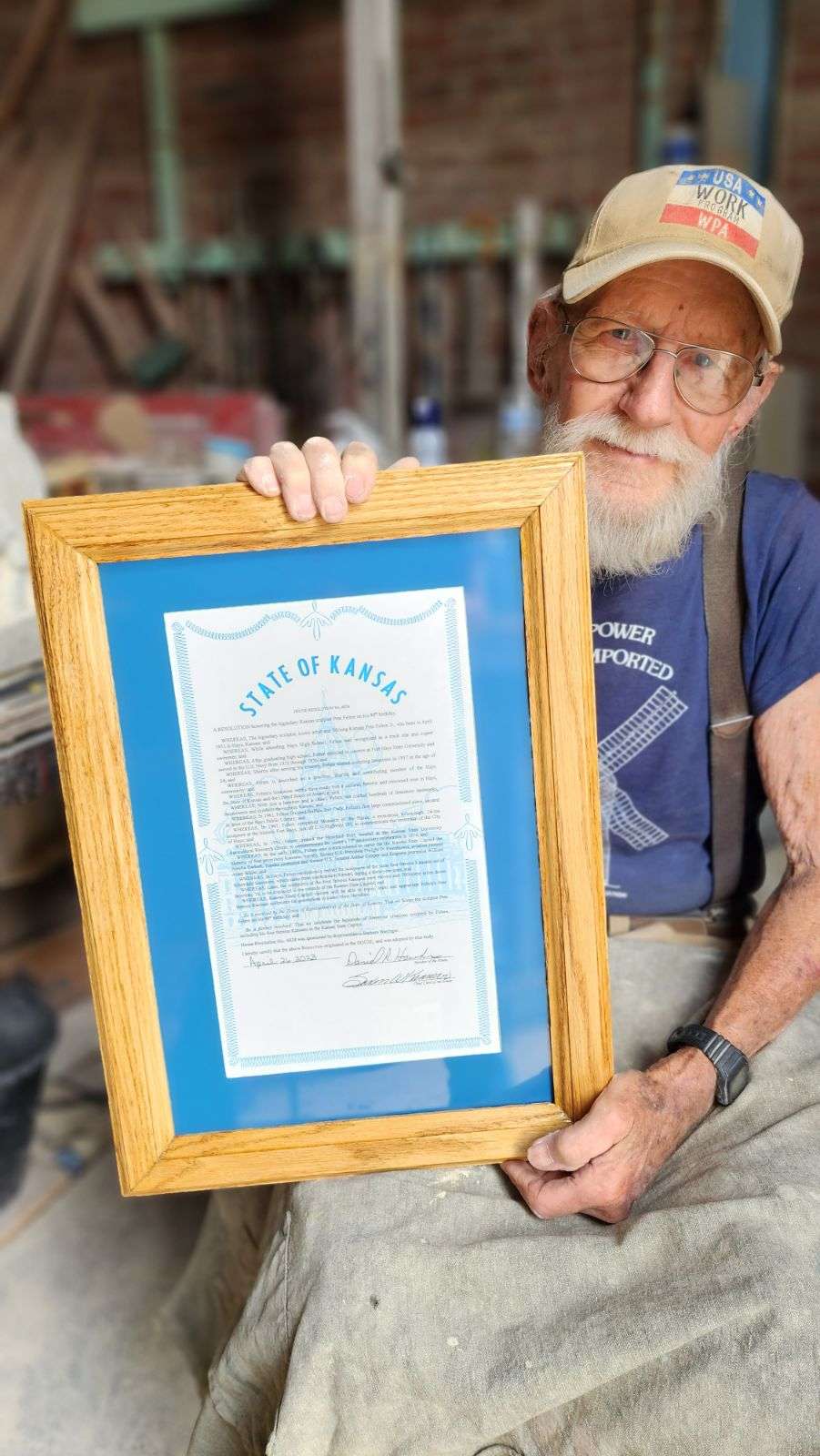
Just two days prior, he was honored with the 2026 Kansas Governor's Arts Legacy Award. Brenda Meder, former Hays Arts Council director, and Bruce Burkholder, close friend and fellow artist, accepted the award on Felten's behalf.
Meder said that when Felten won the Legacy Award last week, it was for the whole community.
"I truly feel that everyone who lives in Hays and Ellis County feels that Pete is one of theirs. He is ours. He is part of our family. He's my friend. Everybody had a Pete story," Meder said.
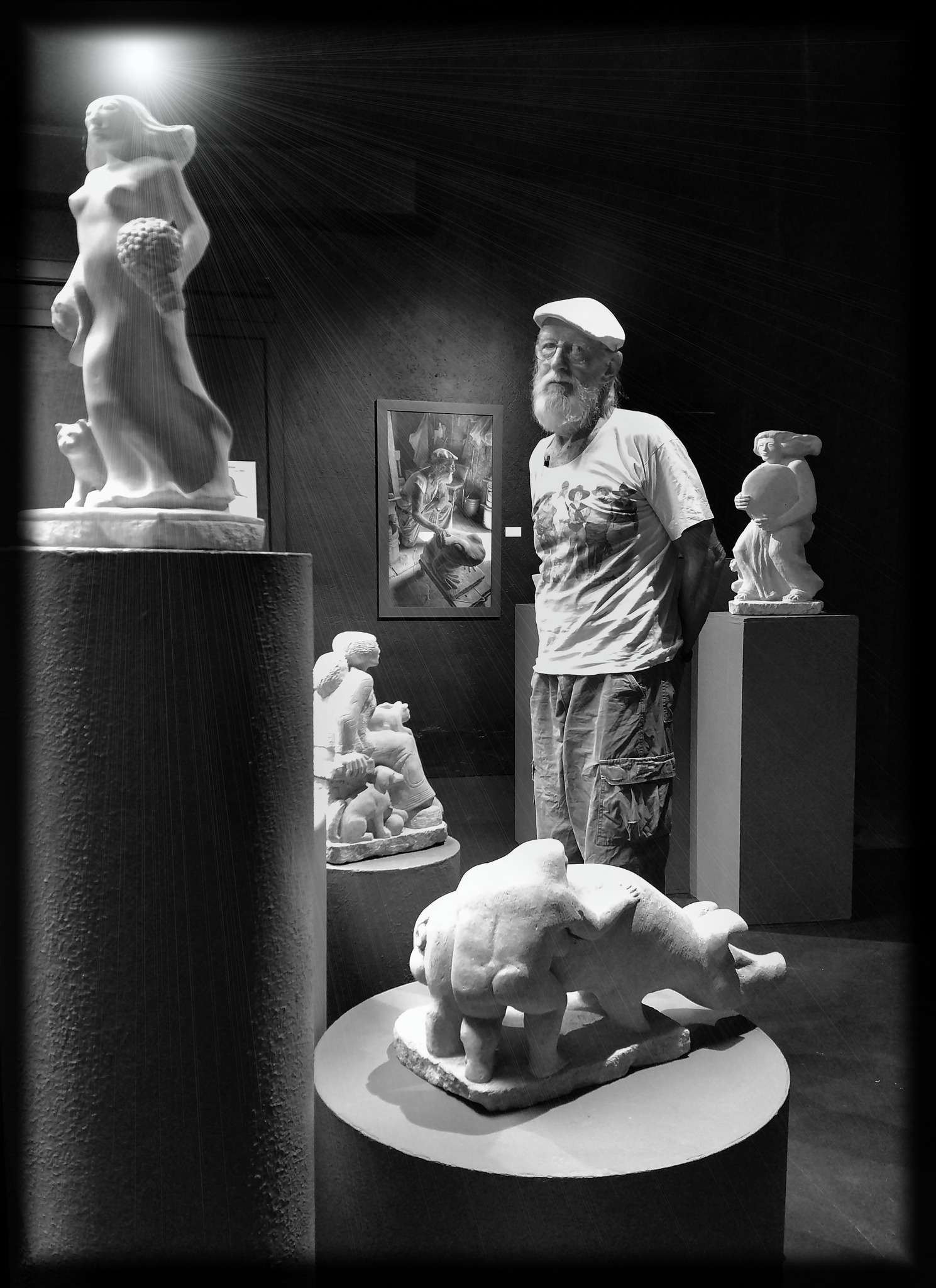
Felten carved almost daily, almost until his death, Burkholder said, even in cold temperatures, in his unheated studio.
Felten's father was a businessman in Hays. Felten Middle School was named for Peter Felten Sr., the artist's father.
Pete began carving in 1957 after leaving the U.S. Navy (1952-1956), during which he visited art museums on the East and West Coasts and in Hawaii. He briefly attended an art league school in New York, but Burkholder said Felten was largely self-taught.
A master carver
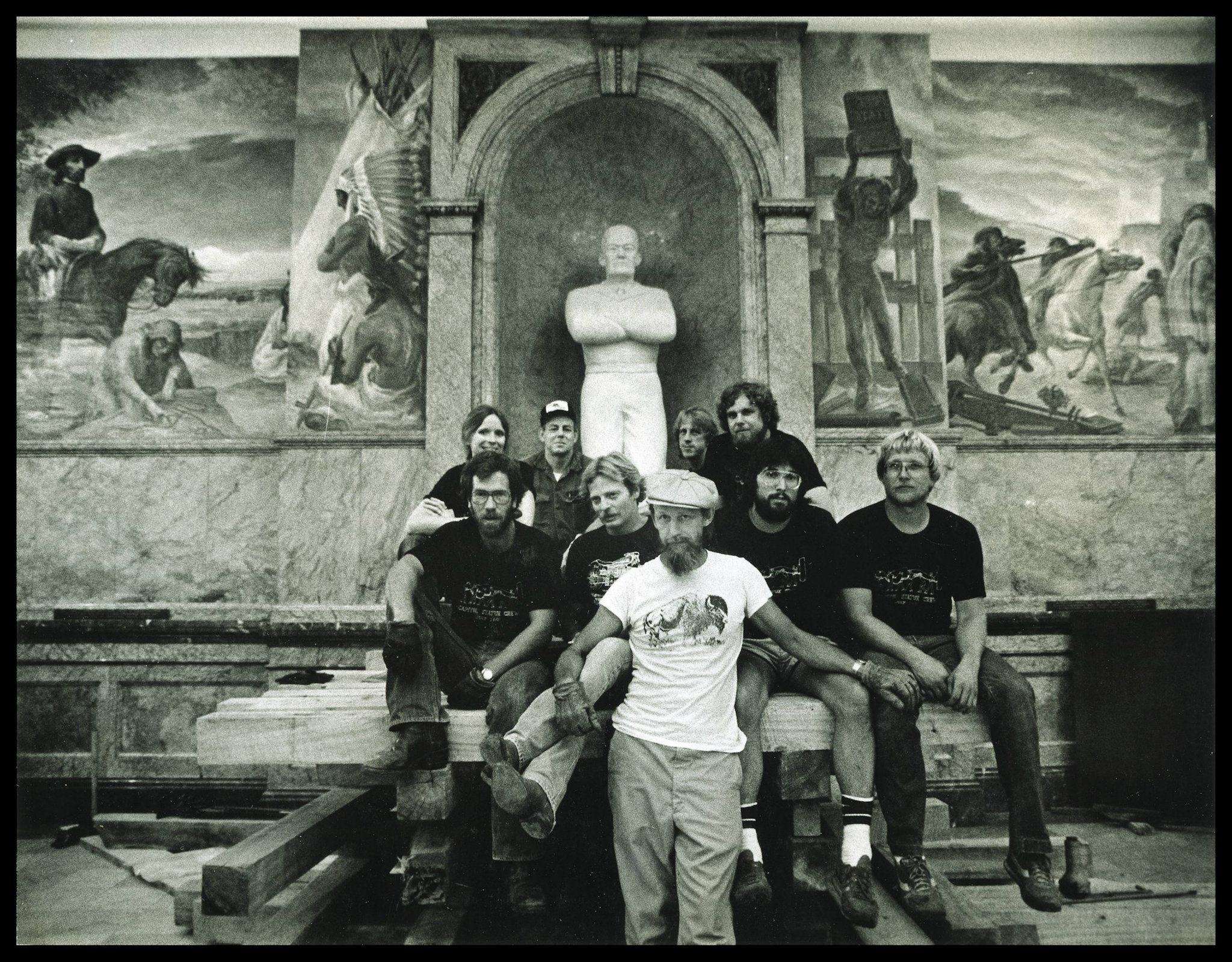
His most prominent work includes the 8-foot-tall, 2,000-pound limestone portraits of Amelia Earhart, William Allen White, Arthur Capper and Dwight Eisenhower that encircle the Kansas Capitol rotunda, installed in 1981.
However, many examples of his art can be seen publicly in Ellis County and across the state.
Ellis County alone contains more than 28 of his limestone sculptures, including well-known figures like Wild Bill Hickok and Buffalo Bill Cody.
His first large commissioned piece was a bust of Buffalo Bill Cody at the Hays Public Library (1961). The “Monarch of the Plains” buffalo sculpture at Fort Hays State Historic Site (completed 1967) stands 8 feet high and 10 feet long on an 8-foot base, starting from a 24-ton stone.
Felten was part of a co-op of artists who created The Arts Cellar at Eighth and Fort in Hays, which eventually became the Hays Arts Council.
"You can go almost anywhere in Hays and find anything that Pete has done," Burkholder said. "It's going to be there forever."
Meder said Felten delved deeply into the story behind each historical figure he carved.
"He was not only one of our community's most interesting citizens, but he was one of our most interested citizens," she said. "He was a lifelong learner. He never tired of learning just a little bit more about this community, tucking away its traditional history and cultural history."
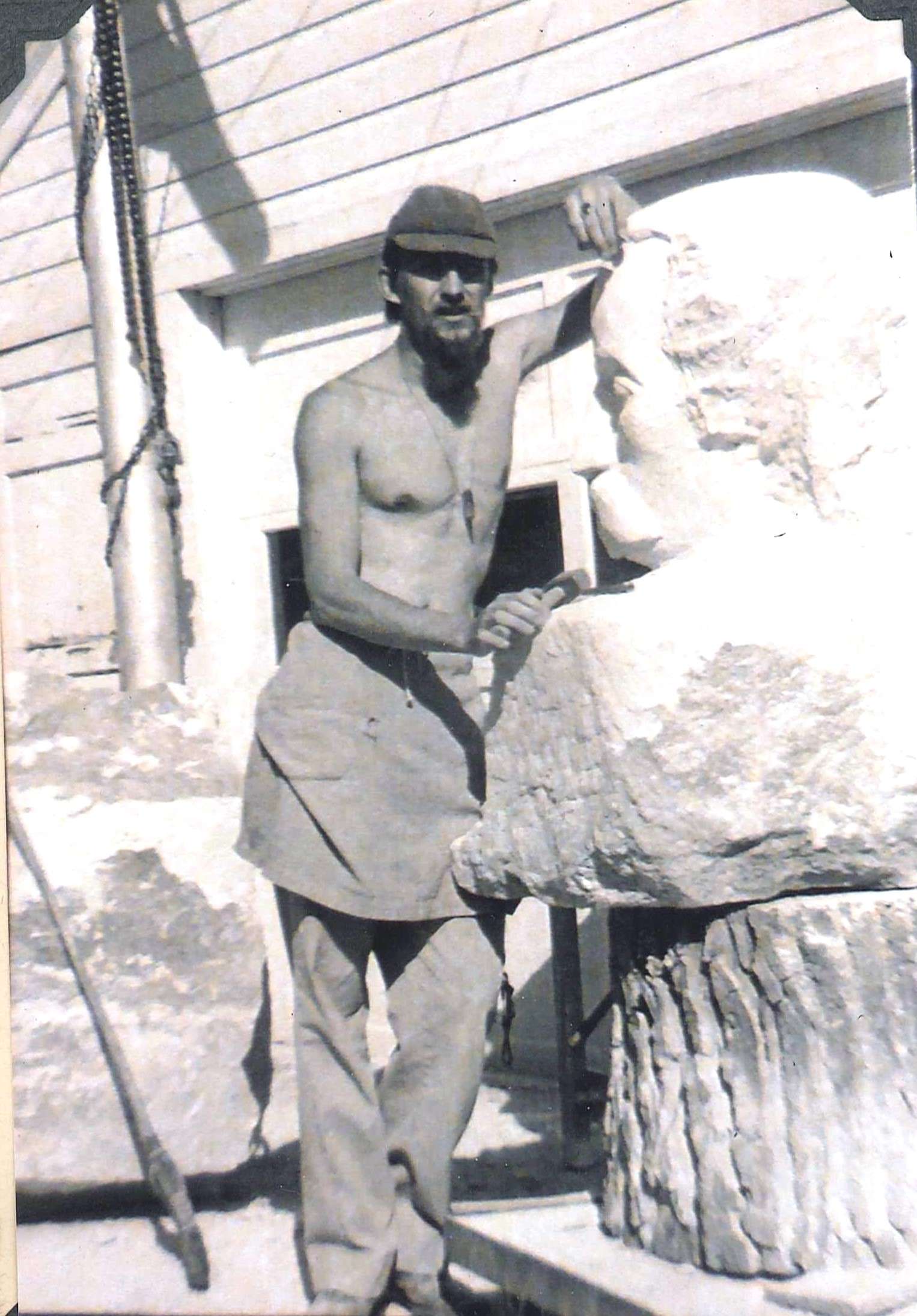
Jilg said Felten could look at a piece of stone and see the carving inside. He had to be fearless because you can't erase a mistake in limestone.
Burkholder said Felten called his carving the suicide method because once you took a piece of stone off, you couldn't put it back.
He was low-tech when compared to today's standards. He never adopted email or social media. He sketched his sculptures on large pieces of cardboard and used them to rough out the sculpture's outlines on the stones.
He knew his tools well, and his body was conditioned for hours of chiseling. Burkholder said he could hear where the rock would split by the way the tools sounded when they struck the stone.

Saving a life
Burkholder credited Felten with saving his life. Burkholder was going through a difficult divorce and had fallen into depression. He said he had taken out razor blades to take his life, but Felten happened to pop by for a visit.
"He said, 'Look, I want you to follow the creative art you've been doing. I don't want to see you like this. I want you to start carving with me.'"
Burkholder carved with Felten for five years, while continuing to pursue his painting.
"To me, Pete is my savior," he said," because I wouldn't be here without that. He was always like a brother to me."
The two had many adventures together, traveling across the country to visit other artists. Burkholder said Felten had a great thirst for knowledge and had a house full of books. He also loved movies and sometimes watched movies while he carved.
Felten would often read to him as they drove on one of their many trips.
Carefree
Burkholder recalled traveling with Felten and another artist and stopping at a hot spring.
There was another small group of people bathing in the hot spring, and Felten procallimained, "OK, boys, take off your clothes. This is where we're going." The men disrobed and switched places with the other nude bathers.
"Pete taught me just to let it go," Burkholder said. "Don't be afraid of expression that way. It was just the way he was, let your heart and follow your dreams wherever they are, and keep going at it."
Jilg, who has known Felten since the 1960s, said Felten was popular with the younger crowd years ago. He built scaffolding atop his Jeep so he could work on the bison sculpture at Historic Fort Hays.
"If you were one of the cool kids, you rode around in Pete's Jeep," he said. ... "All of the cute girls rode around in Pete's Jeep, so if you wanted to know the cute girls, you had to know Pete Felten," Jilg said, quoting another friend of Felten's.
A Pete Felten education
Jilg said Felten was one of the kindest people you could meet. He was an animal lover and fed many cats at his studio. He had been a force in the humane society.
"I think he liked animals better than people," Jilg said.
Although Felten spent many hours carving alone, Burkholder said he often greeted visitors who stopped by the studio to ask about his work. He was known to stop people on the street and ask to take their picture for reference in a future piece of art.
Felten kept photographs of other artists and their work and would regularly drop by to visit and support them, Jilg said.
"He was an adventure, and he had a very curious mind," Jilg said.
Jilg and Felten met for tea every Tuesday at Augustine's Bakery for 15 years after Jilg's retirement.
"I would learn something every Tuesday," he said. "It was a cheap education. I would buy him a cup of tea, and then I would learn something."
Donations being accepted to establish museum
The Heartland Community Foundation has established a Pete Felten Legacy Fund to support the restoration of his Stone Gallery, 107 1/2 Sixth St., Hays, and workshop into a museum.
Upon his death, his gallery and workshop were willed to Ellis County Historical Society.
Amanda Rupp, director of the Ellis County Historical Society, said the society would hold the property but intends for the Felten Museum to stand as its own nonprofit entity in the future.
If you would like to donate to the Felten Legacy Fund you can do so online at https://tinyurl.com/ywfpju6n or mail your gift to PO Box 1673, Hays, KS, 67601. Please note 'Pete Felten Legacy Fund' in the memo or Pete Felten Memorial.
Jilg said the community owes Felten a lot for all the tourism that his art brings to Hays.
Felten never lived a lavish life.
Jilg and Burkholder said Felten was paid very little for his public sculptures. Burkholder said he created them because he wanted the people to have something to represent this place.
"That's my life's work from here on out to make sure that Pete is remembered and people can see his work and appreciate it," Jilg said.
A celebration of life for Felten is planned for March at the Stone Gallery. More details will be released on that event soon.
More on Felten
SEE RELATED STORY: Senator Moran on the passing of artist, sculptor Pete Felten
SEE RELATED STORY: NWester Another Felten buffalo roams in hays museum
SEE RELATED STORY: Film Crew in Hays to produce "Meet Pete" Felten documentary
SEE RELATED STORY: Three men share generations of Hays history
SEE RELATED STORY: Felten train sculpture to have new home at Hays Downtown Pavilion
1993 interview with Pete Felten and Brenda Meder