


By KAREN MADORIN
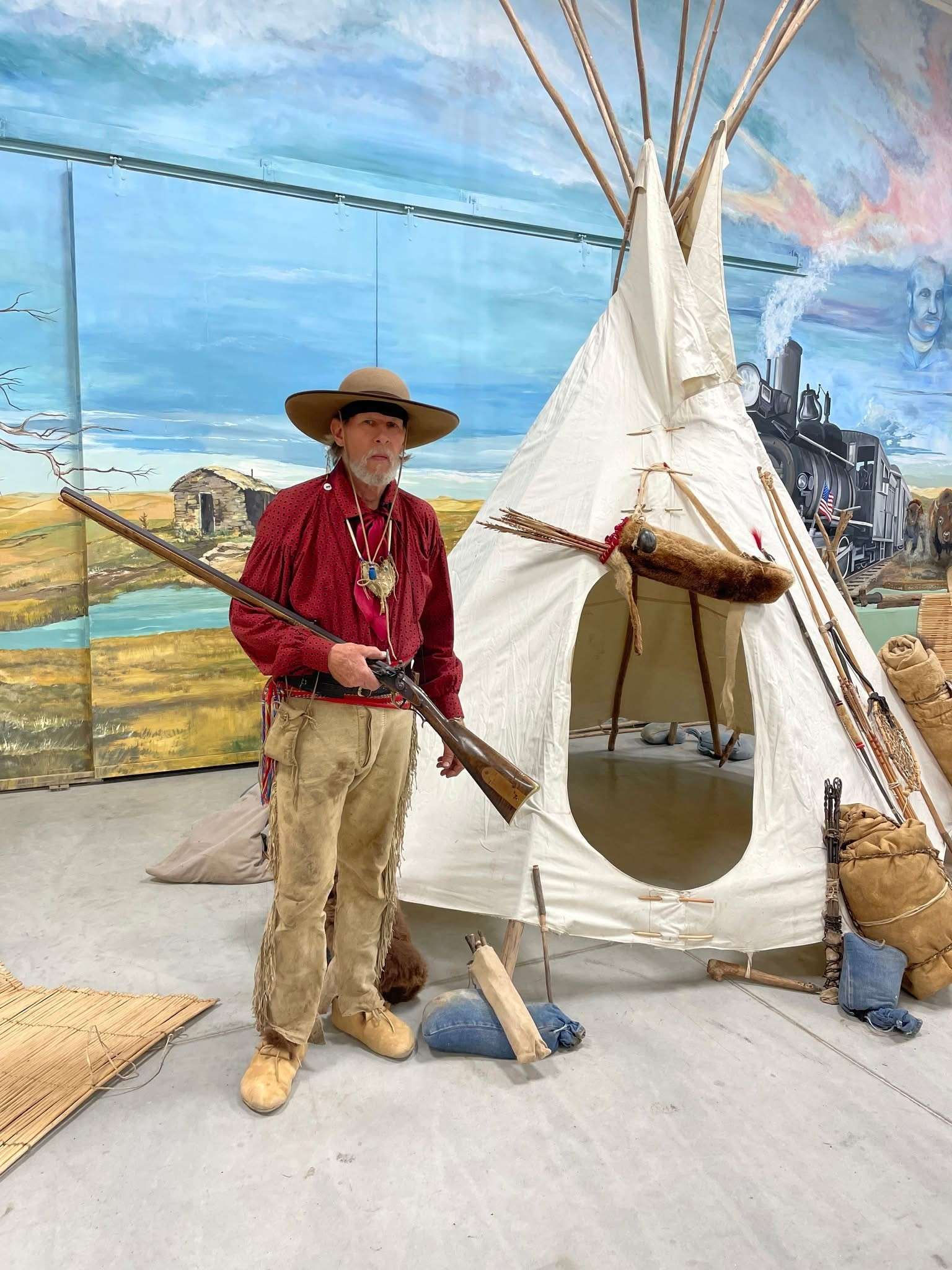
Keven Hiebert recently presented “Kansas Before Kansas” at Trego County Historical Society’s Kansas Day Celebration. He shared his lifetime collection of bison artifacts he’s found, bought, and made. This history lover has spent decades investigating plains tribes and fur trappers who occupied this landscape before statehood. The audience enjoyed the hour-long history/survivalist presentation and would’ve listened longer. After he explained preparing rawhide and buckskin, housing options, tools, travel supplies, weaponry, and more, I viewed bison as a 4-legged-Walmart/mobile home industry.
Keven has mastered skills including making a using atlatls, bows, and black powder guns that natives needed to survive in this region. He’s harvested big game and processed carcasses using various tribes’ practices. Early in his presentation, he detailed differences in rawhide and buckskin and exhibited handcrafted tools used to prepare them. He explained men hunted while women processed EVERYTHING including meat, hides, bones, hooves, sinews, bladders, stomachs, intestines, to pericardial sacs to feed, clothe, and house families.
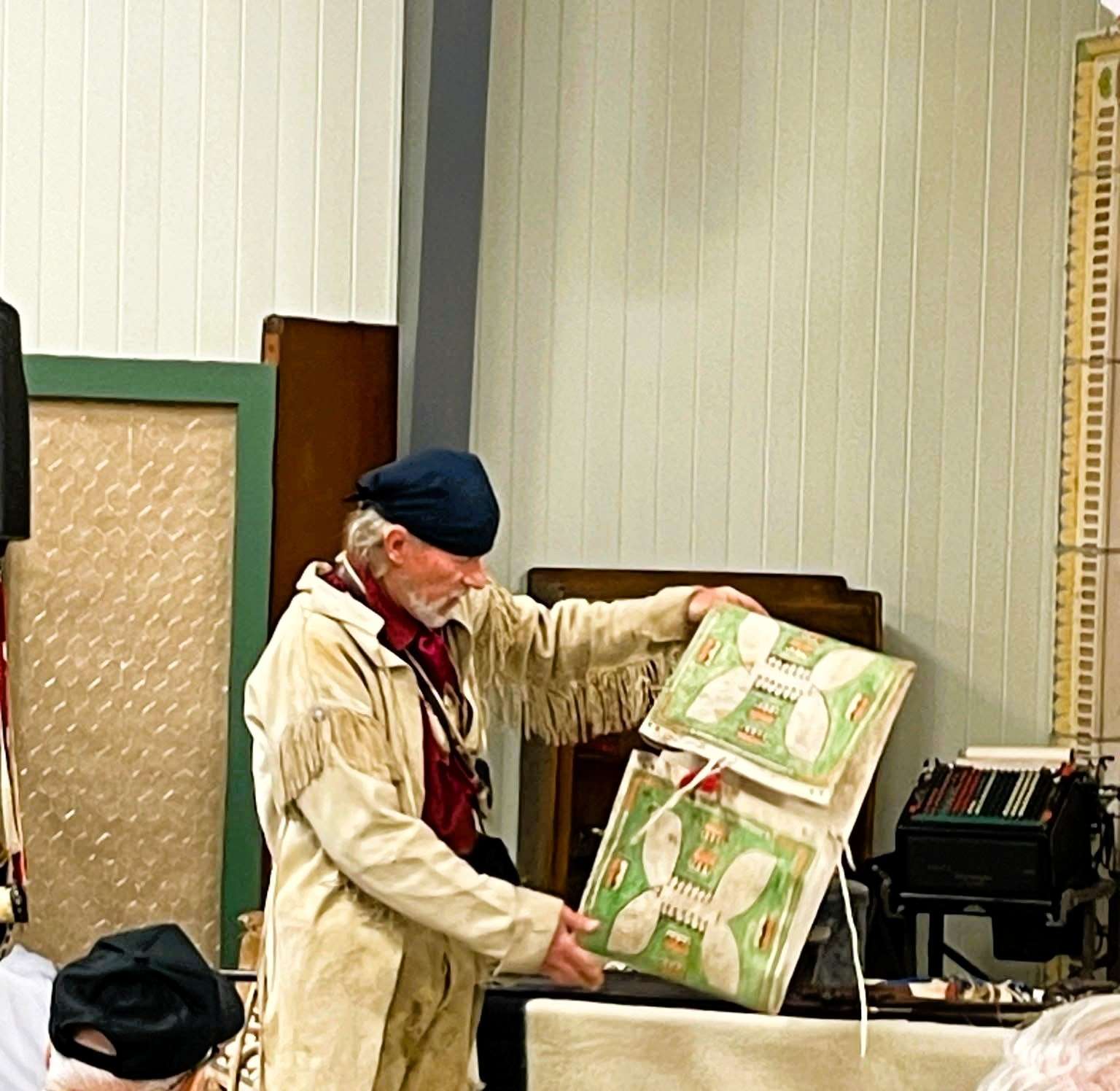
He elaborated that rawhide required less processing than buckskin but was essential for making cordage and parfleche bags to store everything from dried meat to ceremonial clothing. He showed parfleches he made, praising their practicality. For storage and transport, creators scraped, cleaned, and dried hides, folding each in thirds from side to side and top to bottom, creating containers small - large. They could attach sinews or cordage and ornament them with pigments and/or quills. Keven used pigment on his. I’ve also seen quill work in historical collections.
In addition to rawhide, Keven shared buckskin clothing he made or traded for. Buckskin is obviously softer and more malleable. Nobody would wear rawhide close to flesh where it would rub skin raw. Buckskin, requiring more processing, offers degrees of softness and can be utilitarian and sturdy or soft as a tender newborn.
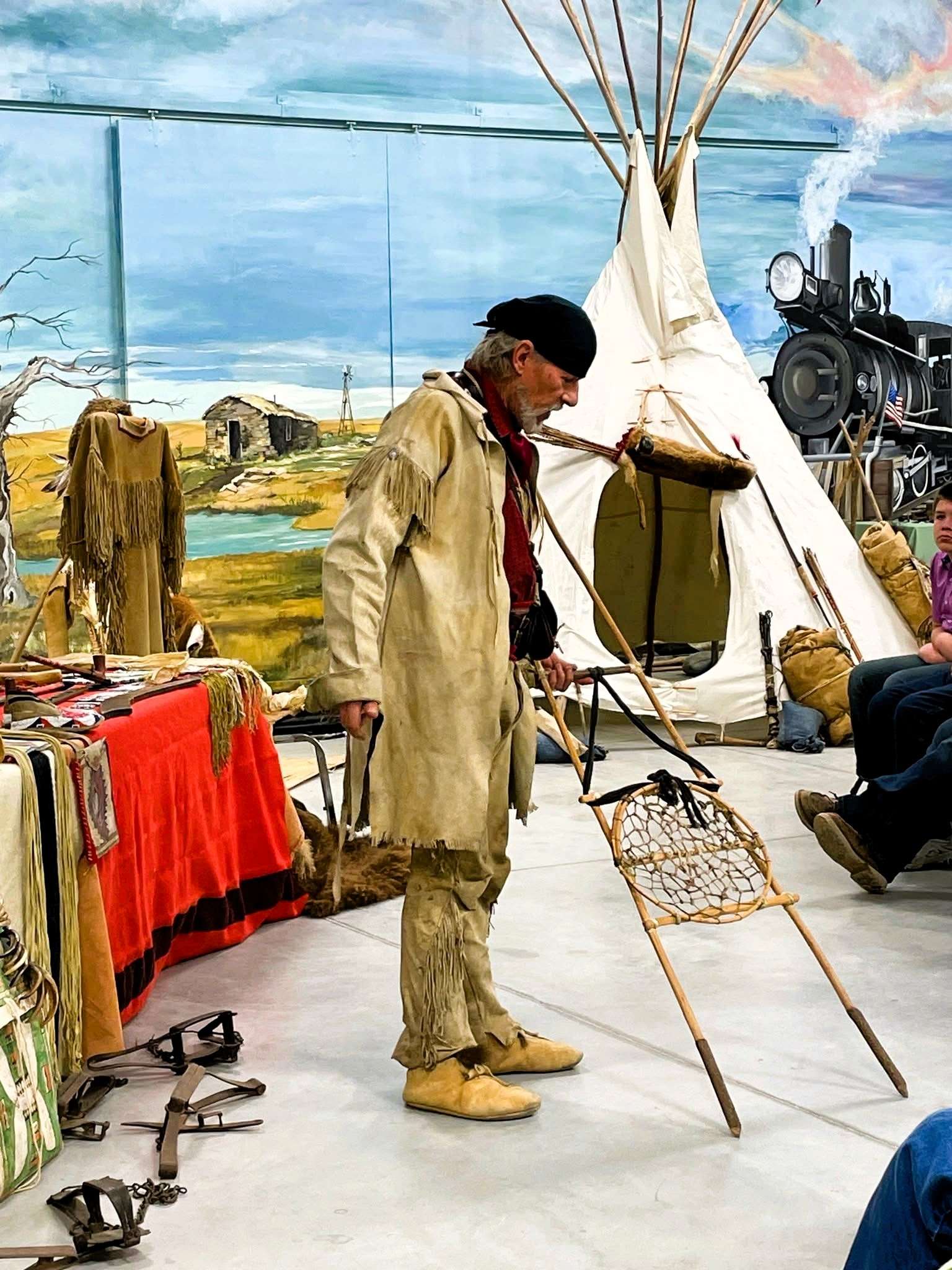
While Keven made a canvas tipi for personal use, he explained quantities of hides and poles natives required to house their families. He also constructed a small travois pulled by his mid-size dog to demonstrate transport for tipis, poles, and parfleches. Before horse culture changed their lives, plains tribes made smaller tipis that travois-bearing dogs drew from site to site. In camp, travois poles doubled as tipi supports. Imagine the tracks cutting into prairies when villages relocated to seek fresh resources.
Keven reminded his audience that humans can live solely off the land. He explained meat processing from drying jerky to making pemmican that supplied protein, fat, and carbohydrates from nuts and berries. When he revealed hide numbers necessary to construct tipis and clothing, it clarified tribal dependence on huge game herds. Drying and smoking meat for the year required women to create containers to protect and transport supplies. He offered examples of bags made from bison parts like bladders, testes, stomach, and pericardia. My mind wandered to the Baggy collection above my stove. I have various sizes for different purposes. Native women did too.
Practicality was the mantra of pre-Kansas residents, which Keven revealed by tugging off a handcrafted moccasin. This revealed he modeled native practices and left bison fur attached to the buckskin to better insulate his feet. He added he’d comfortably worn these in -15 degree temps. No wonder buffalo in Yellowstone don’t seem fazed by weather.
What an insightful Kansas Day Celebration!