By ALIN HETT
Hays Post
The Sternberg museum announced earlier this year that it planned to close in December.
Community support helped reverse that decision, but the funding challenges that led to the announcement have not gone away.
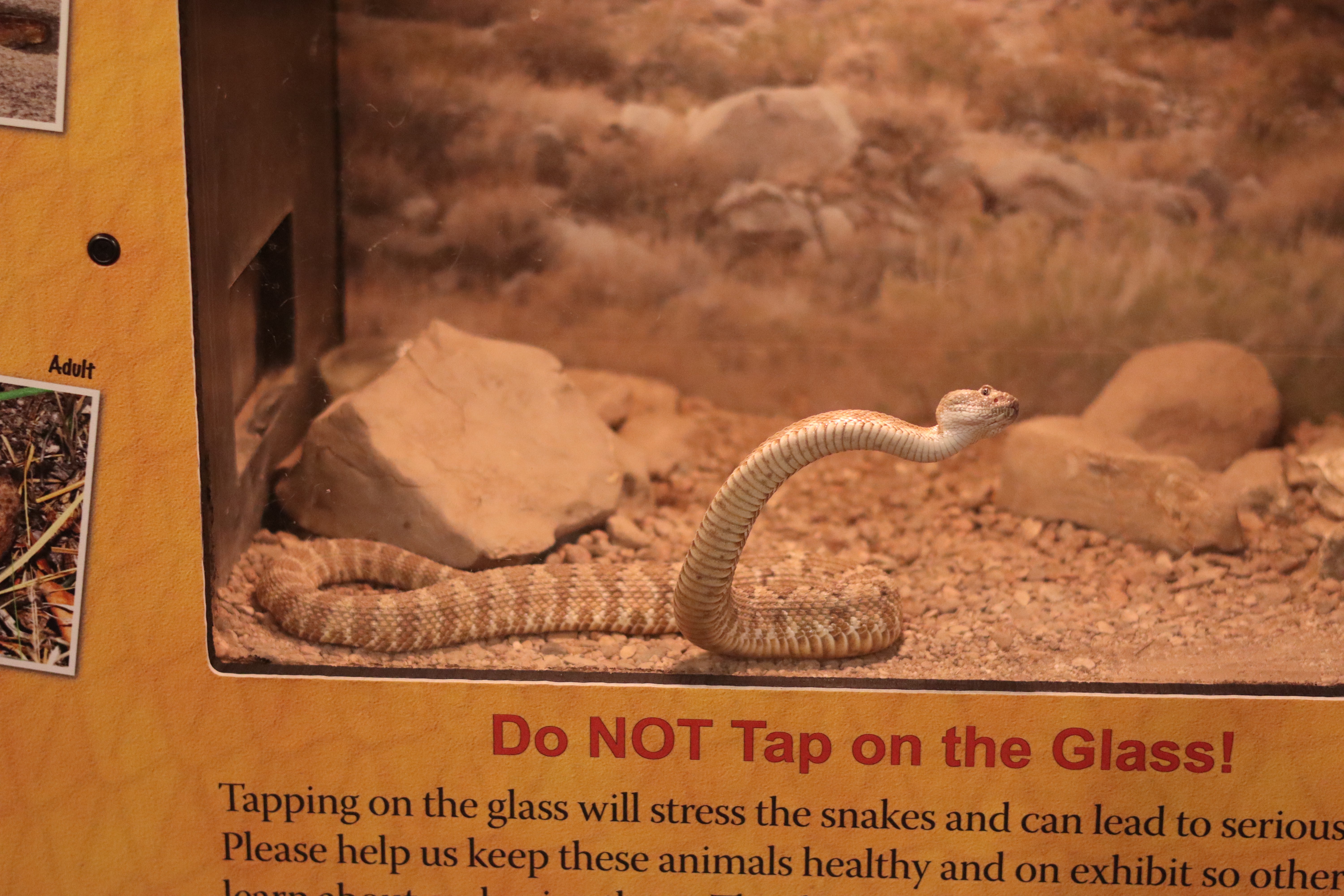
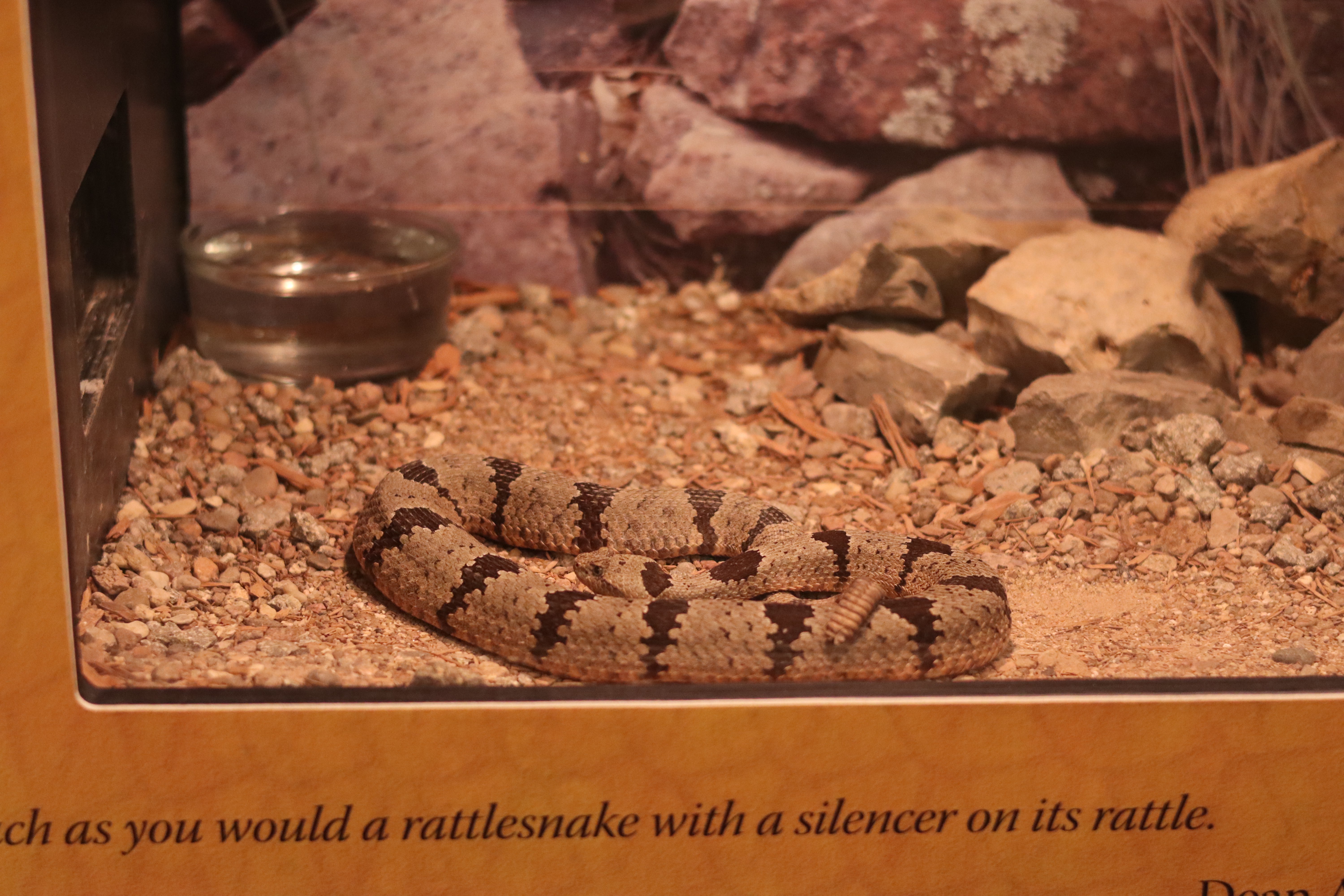
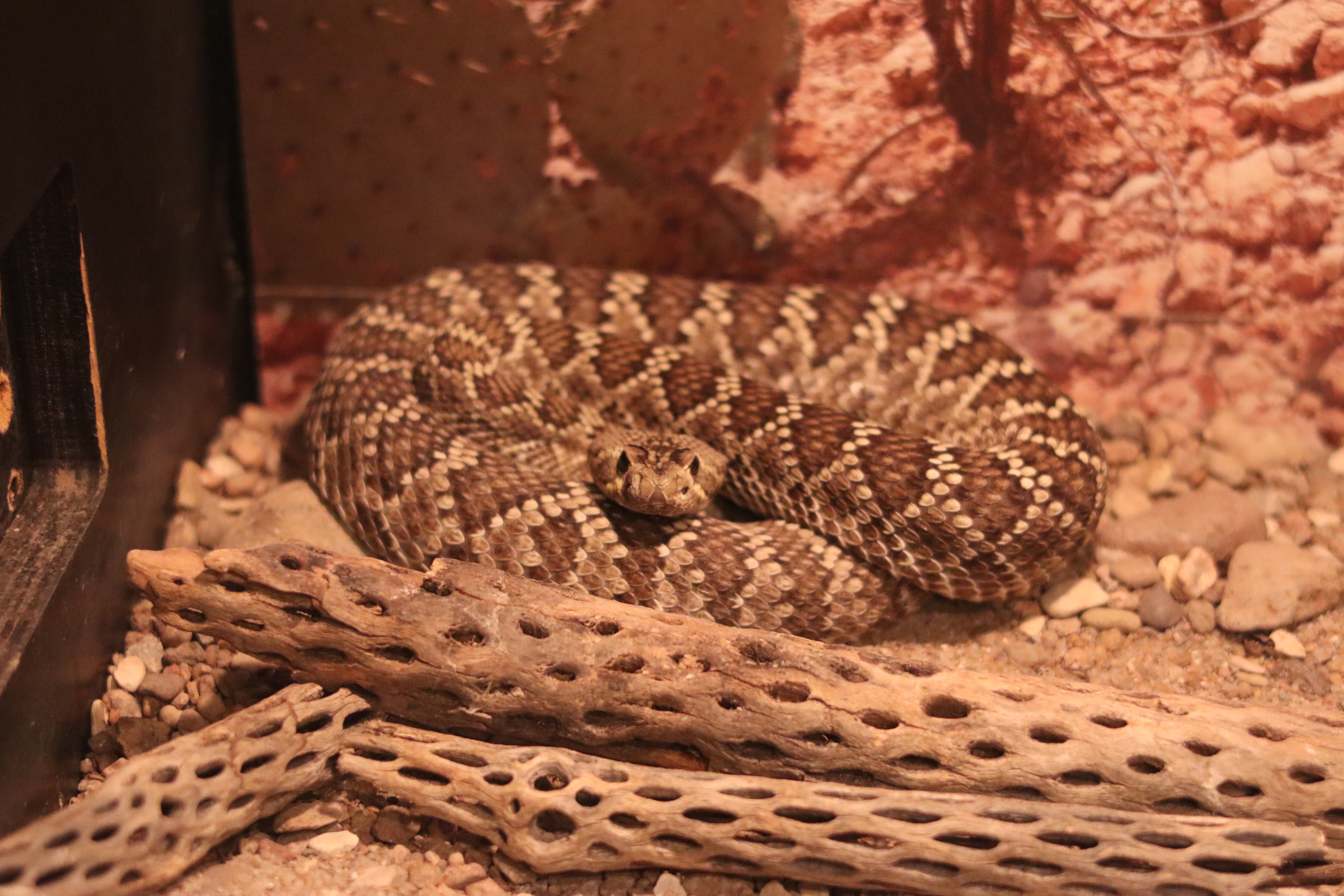
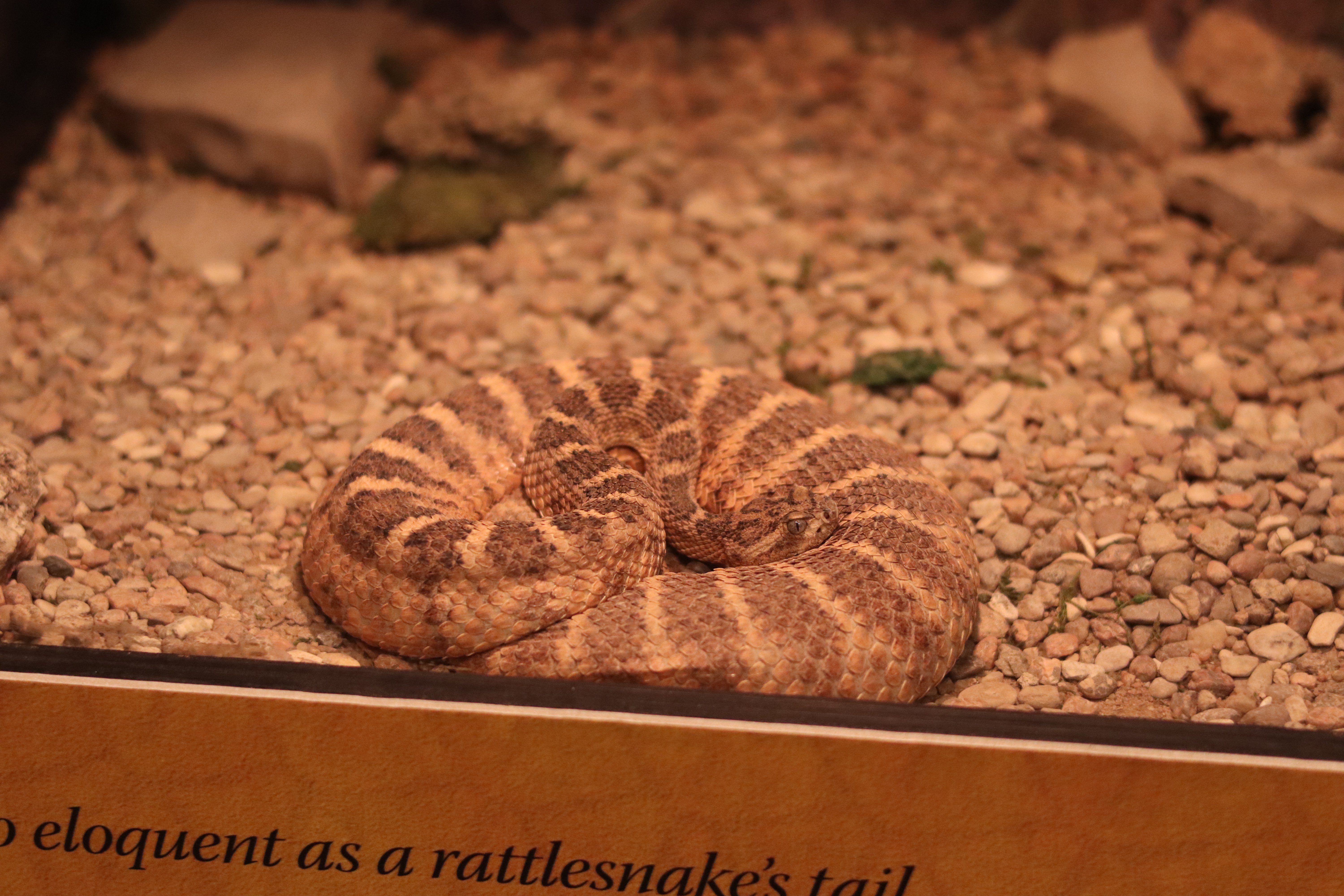
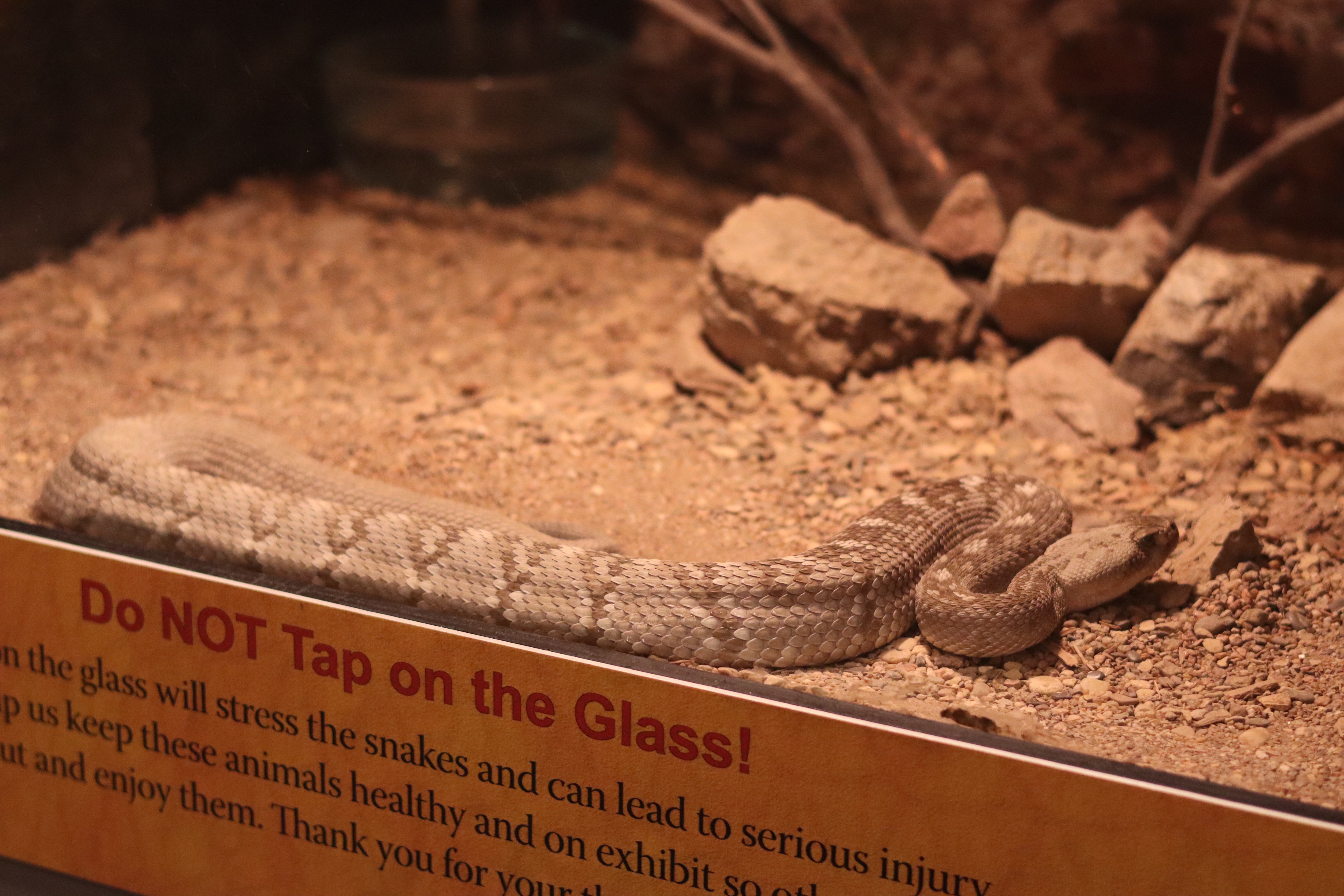
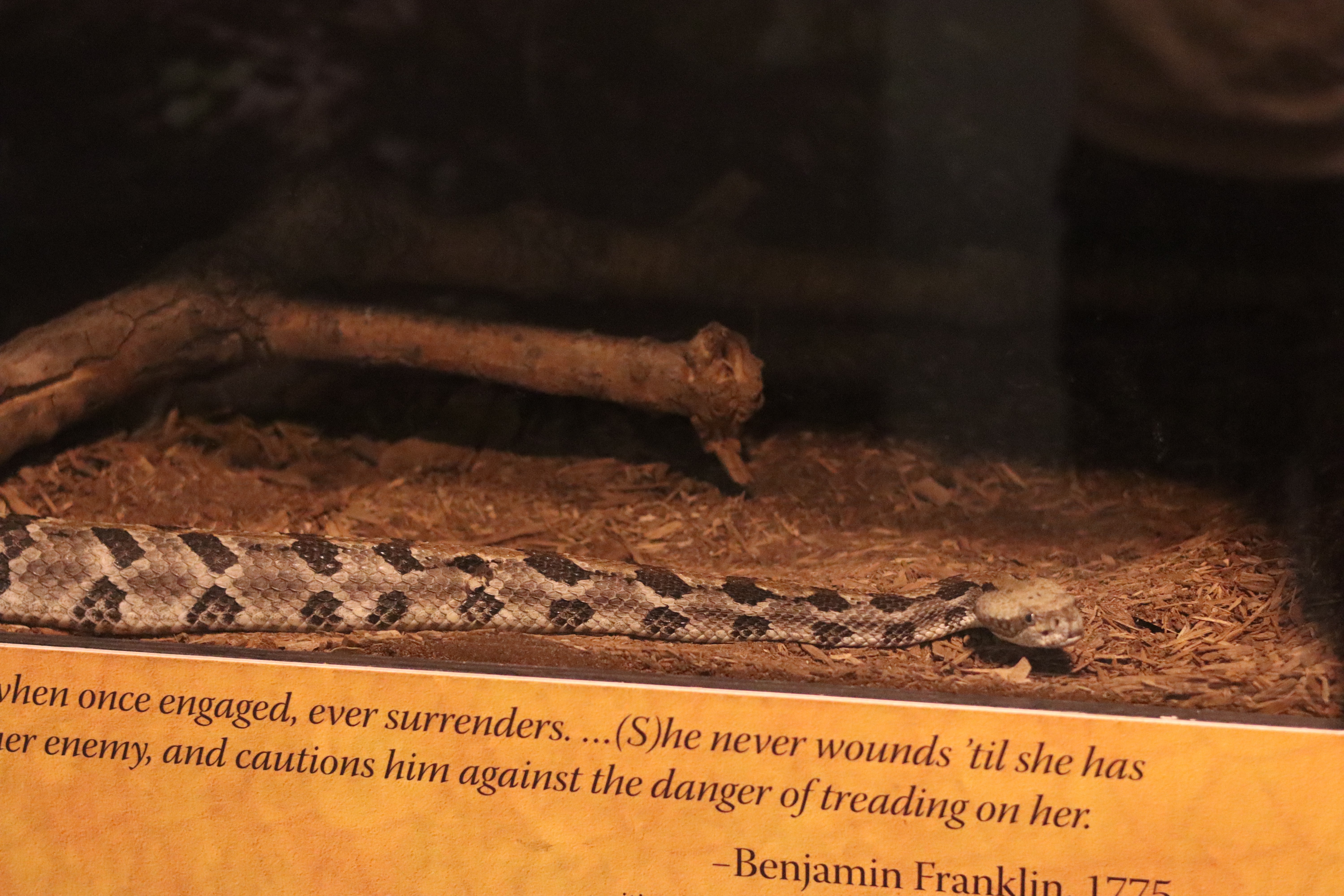
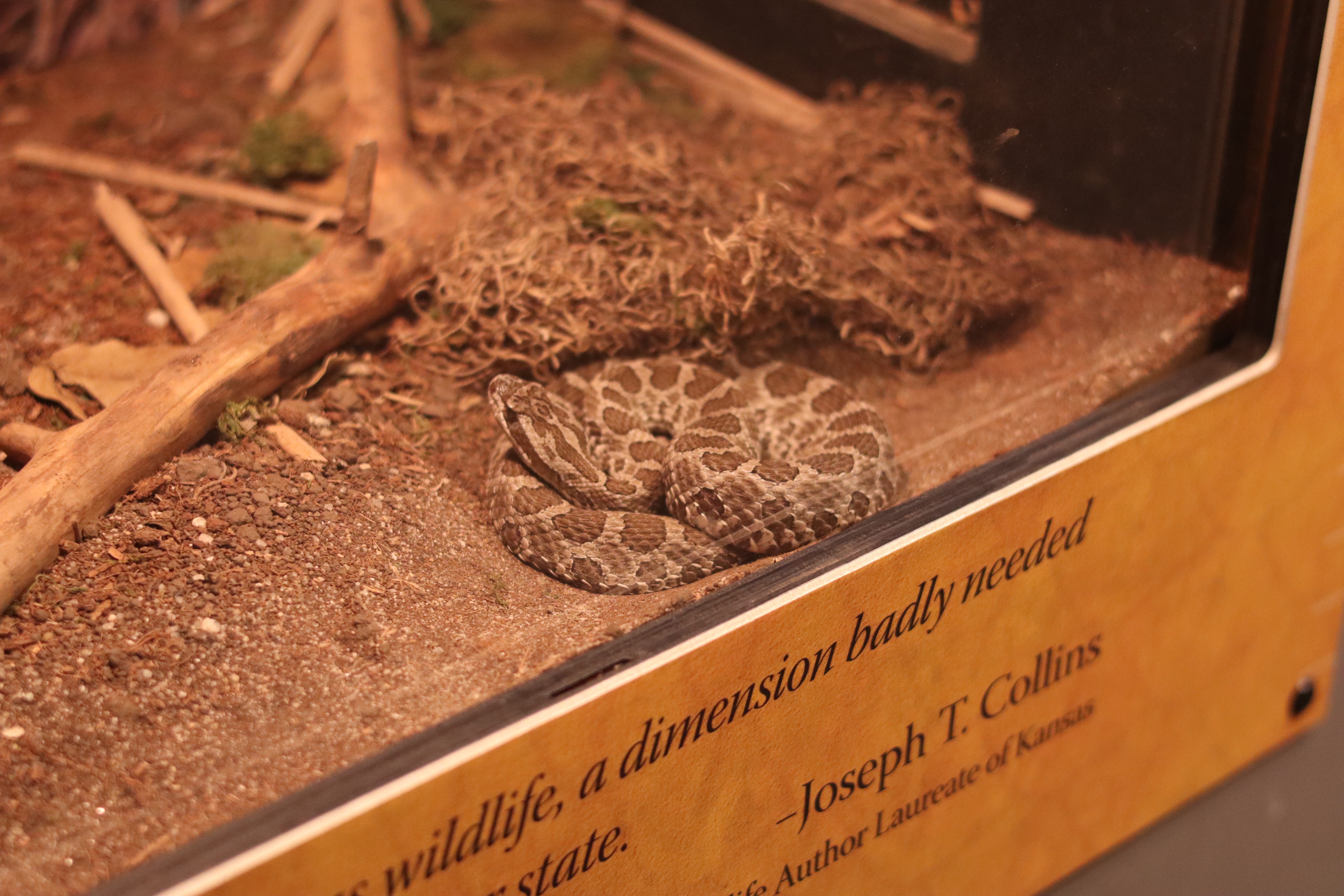
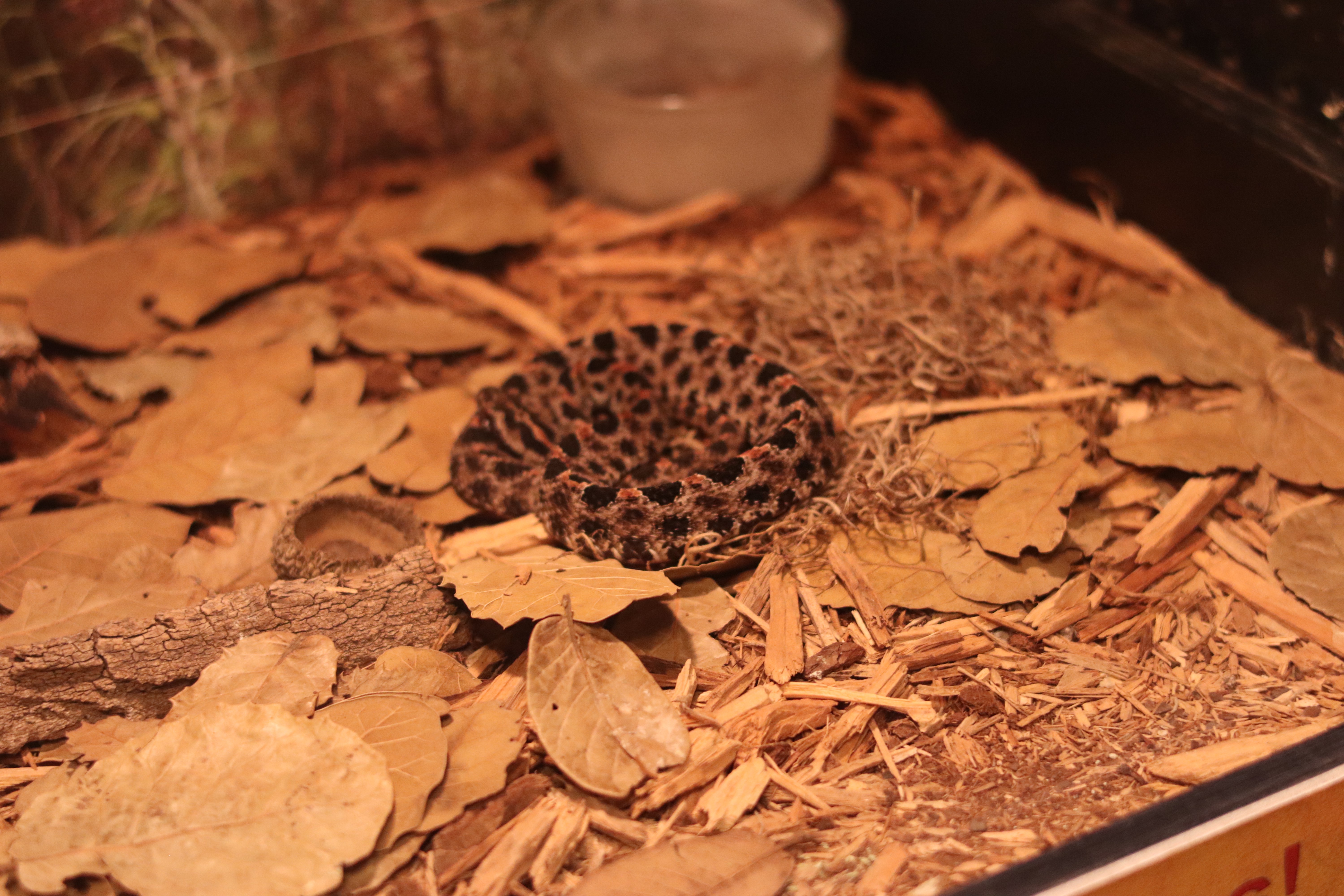
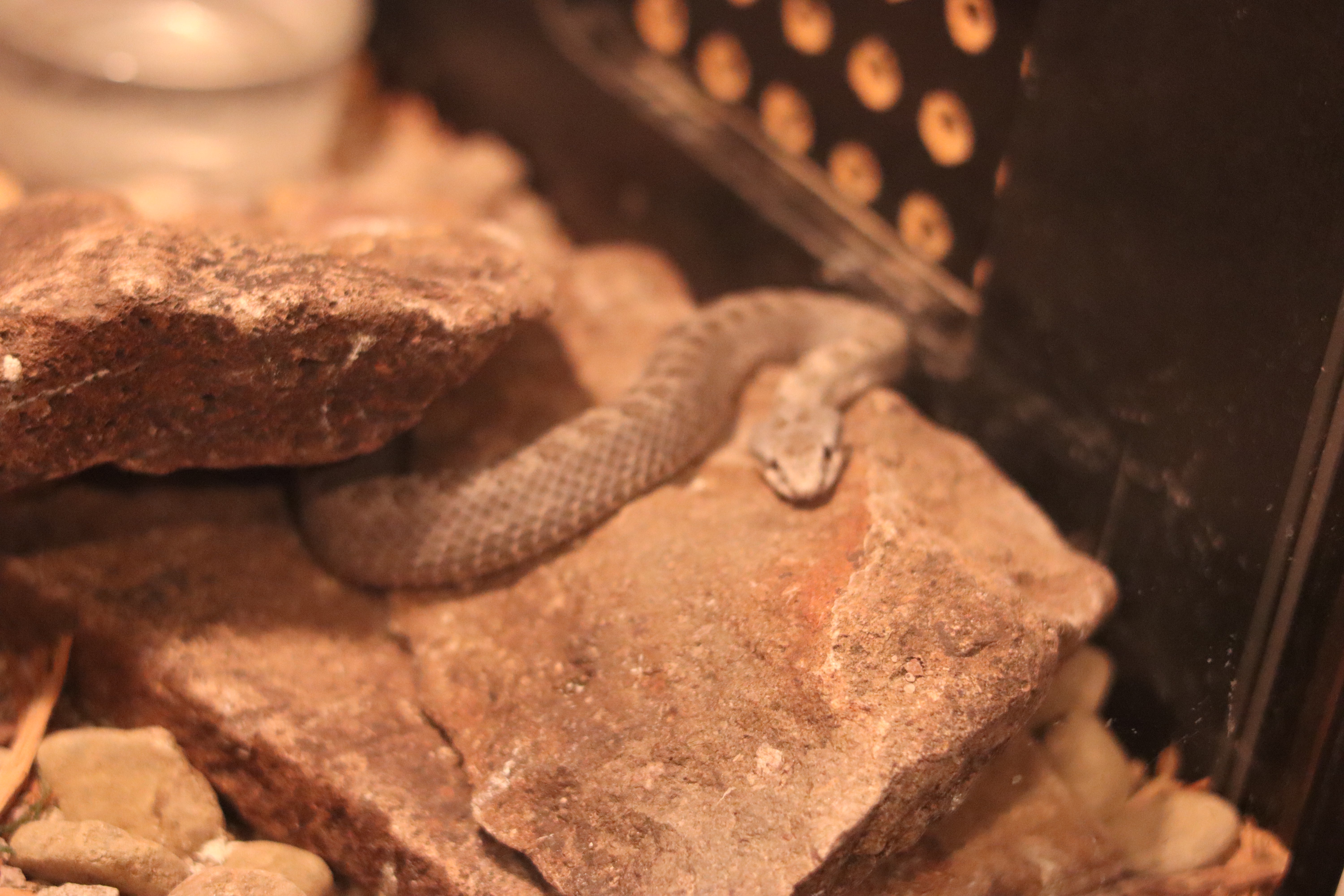
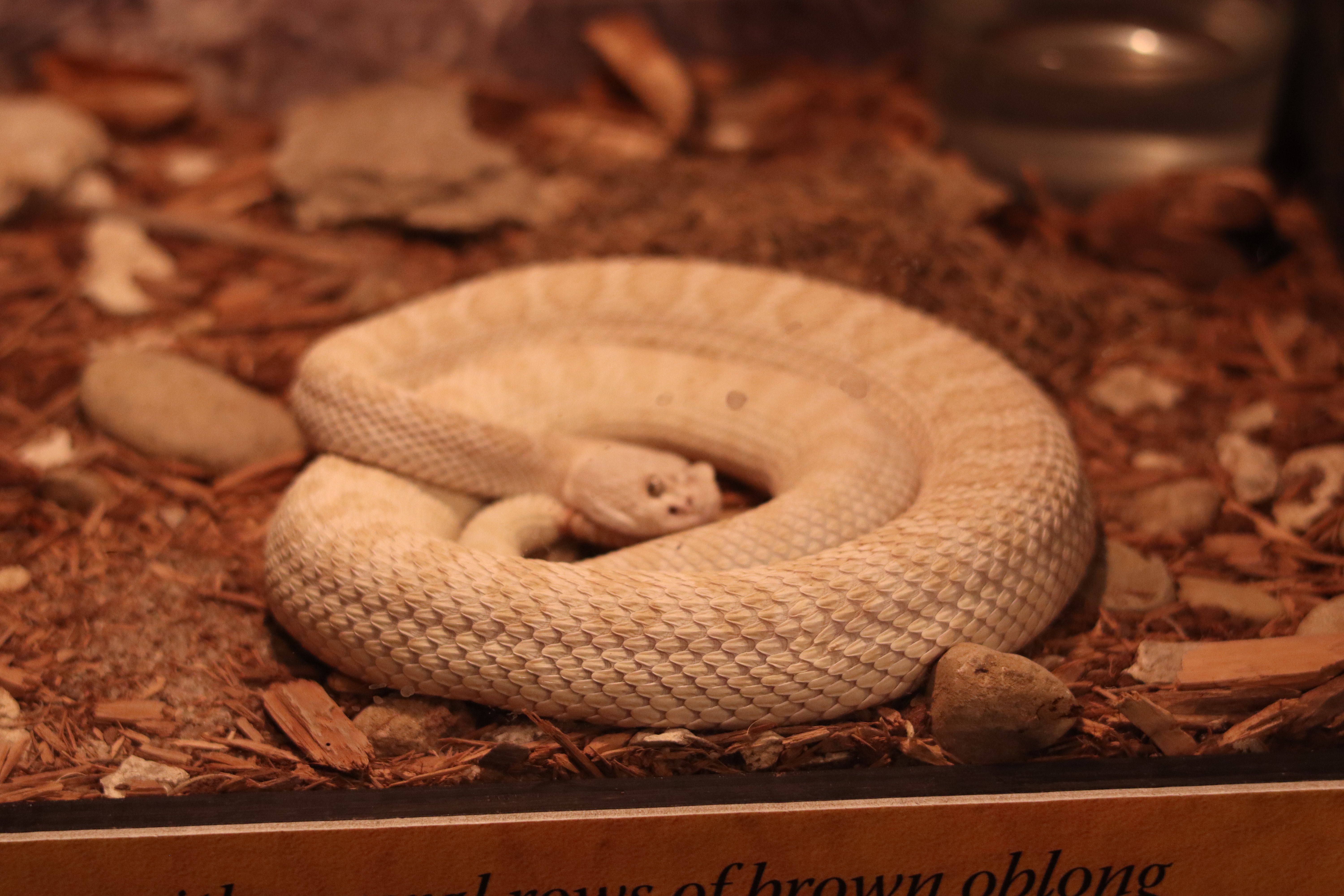
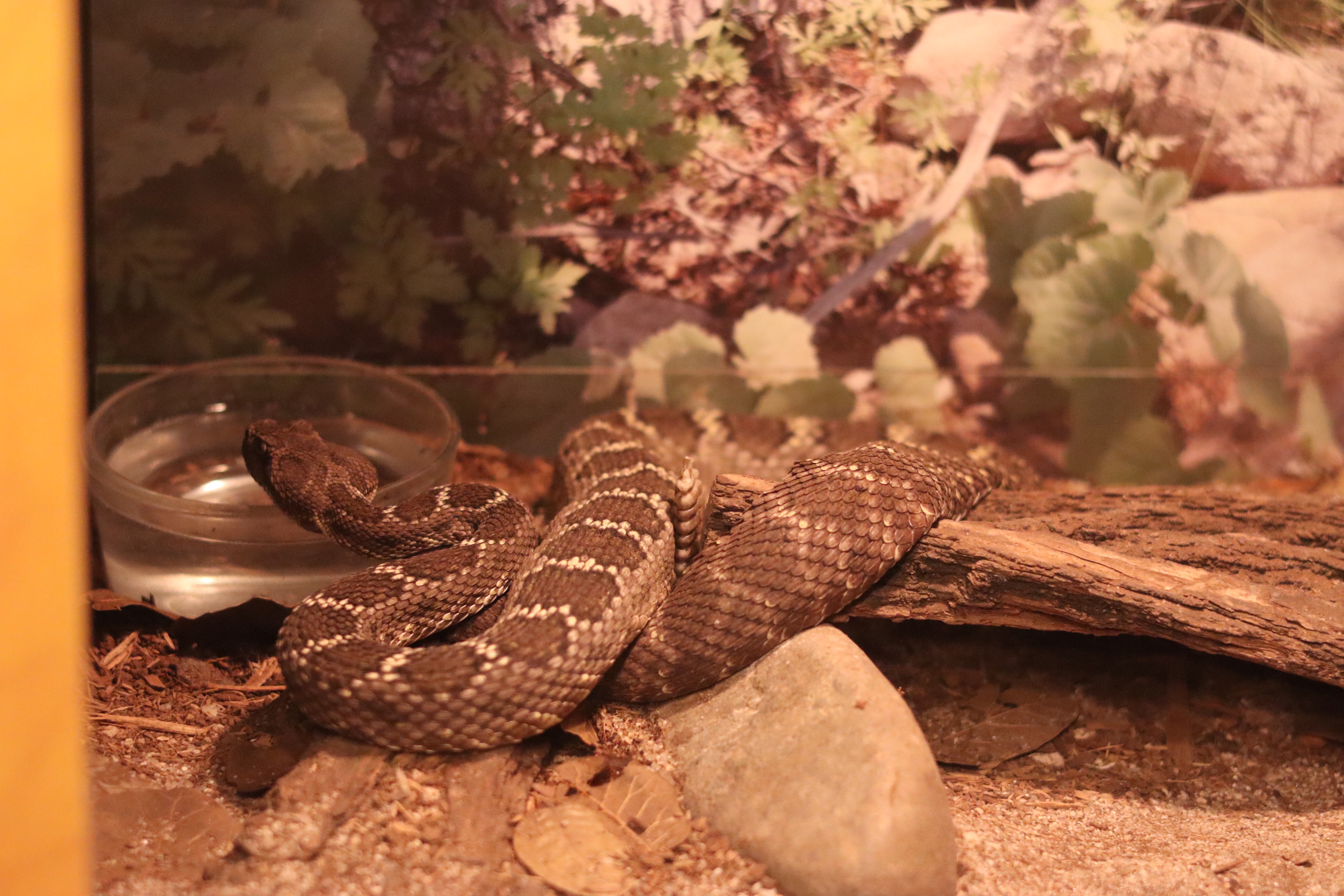
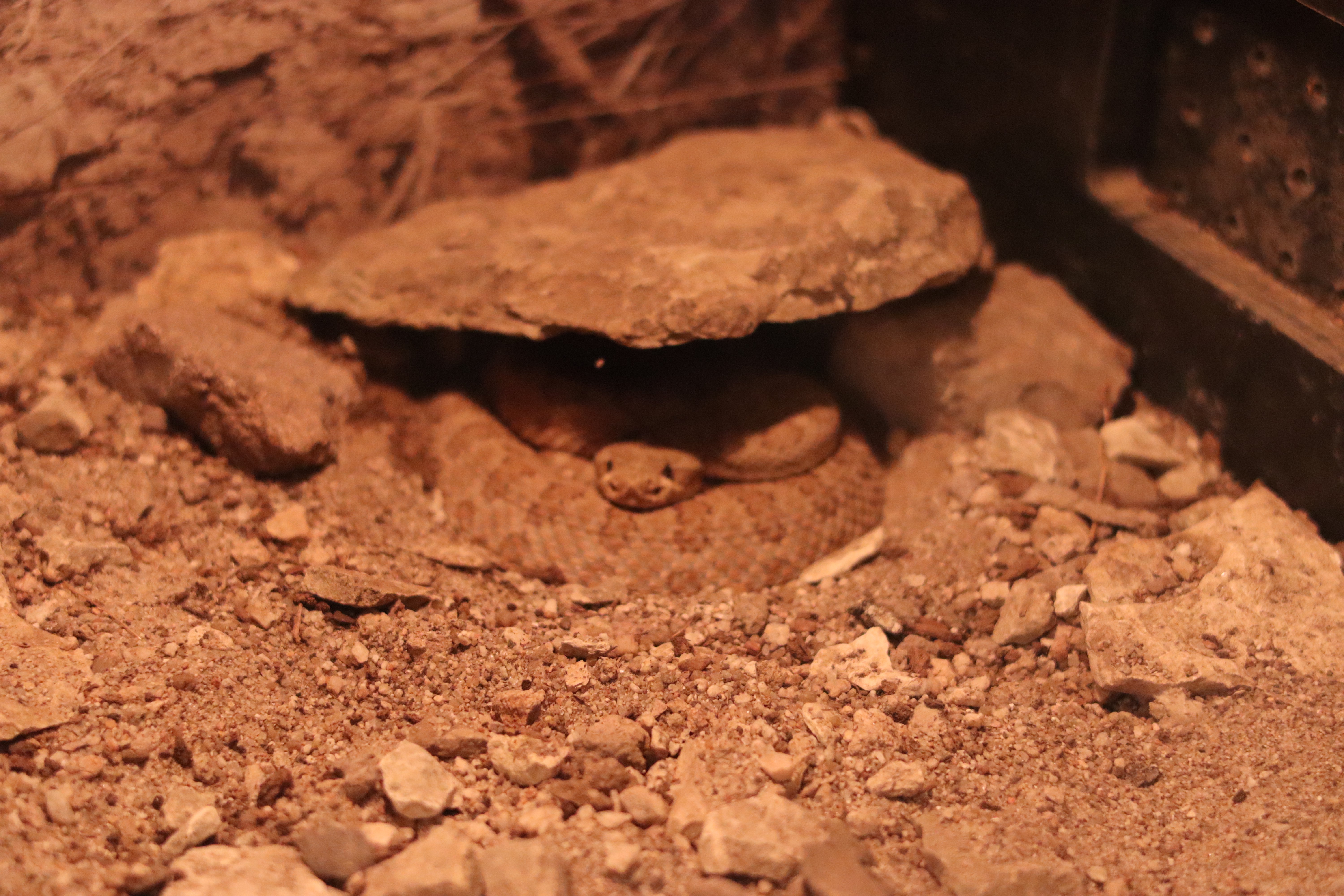
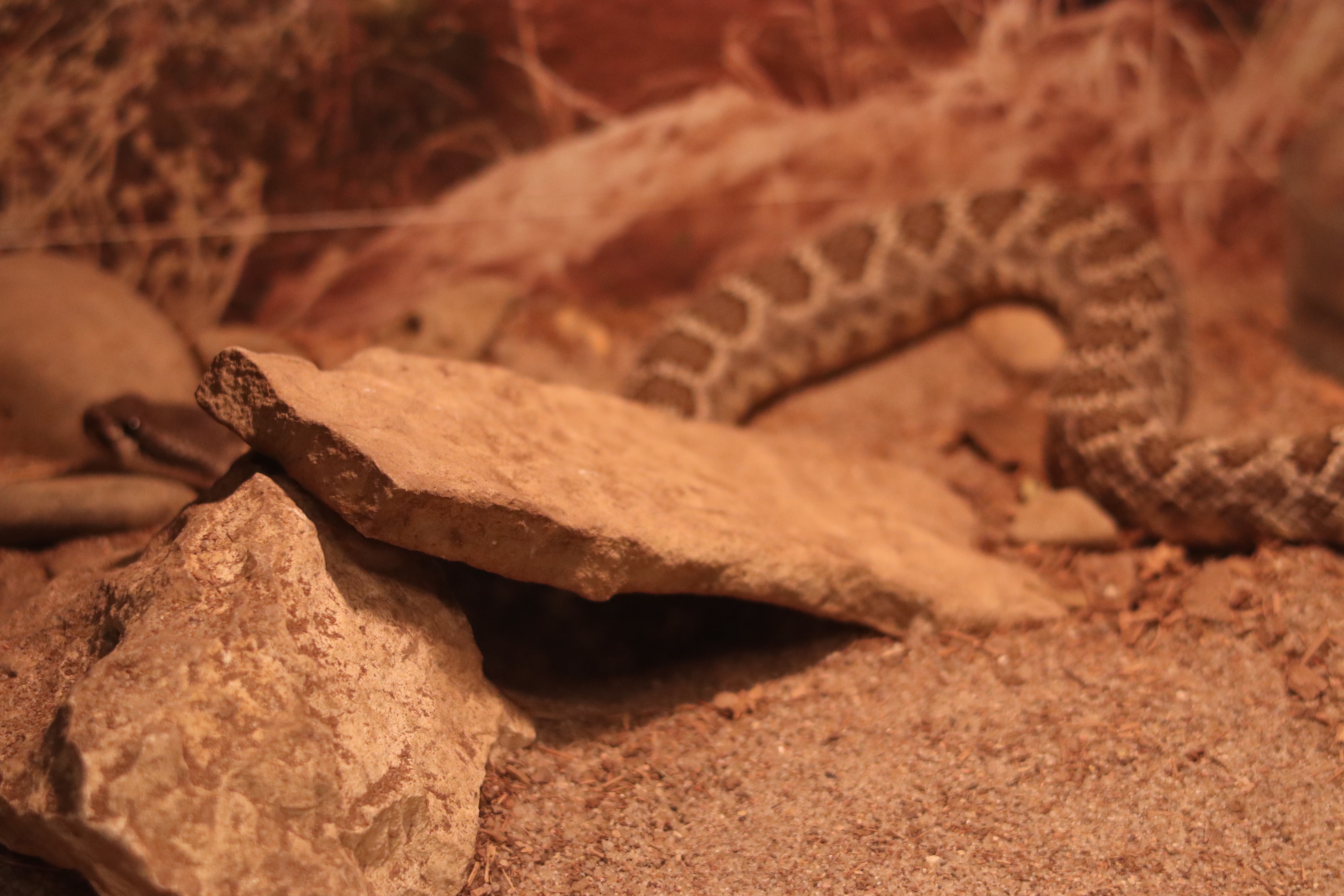
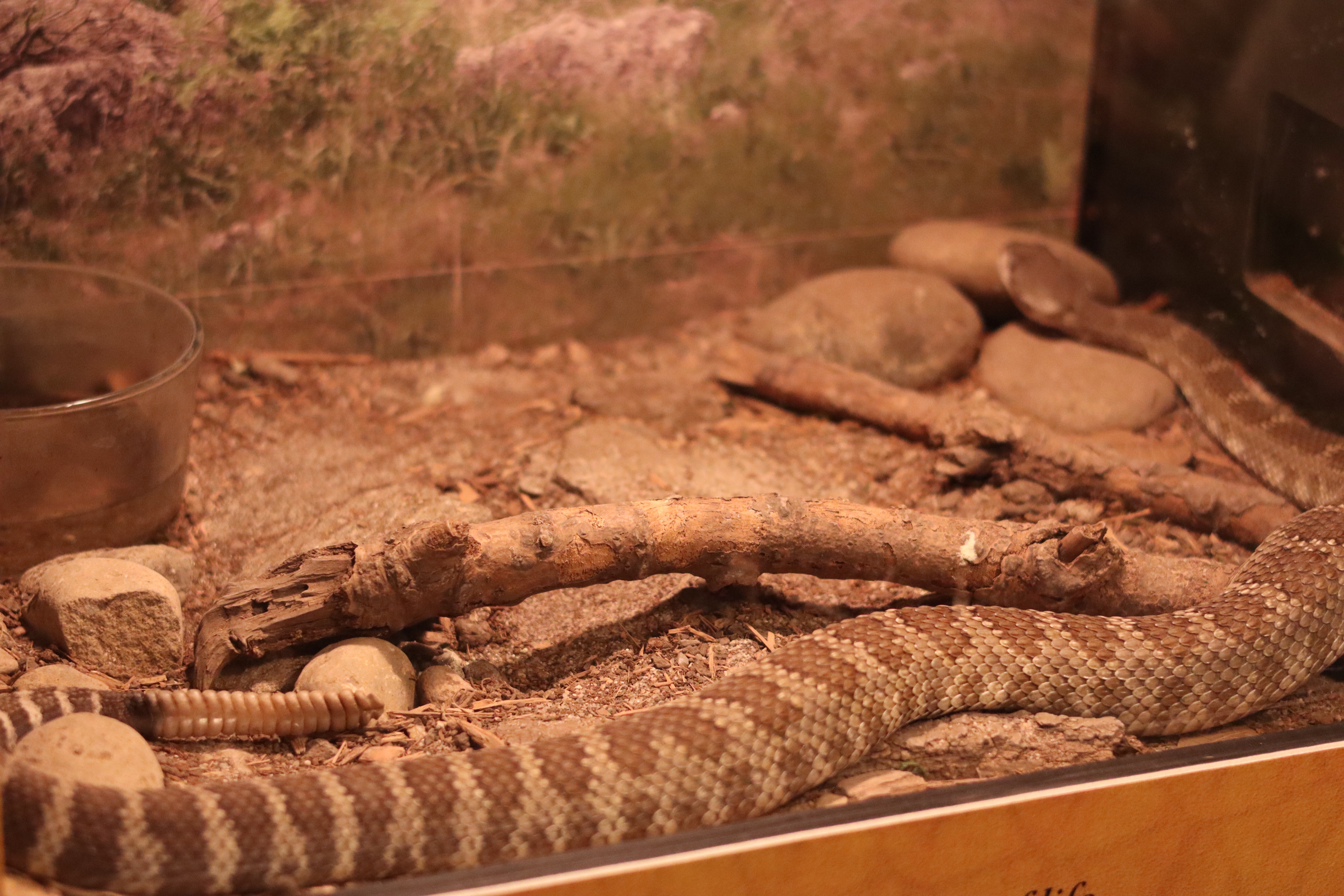
Alicia Gaede, naturalist for the Sternberg Museum of Natural History, said the rattlesnakes are still being relocated, with most of the exhibit’s snakes headed to a sanctuary in Phoenix that specializes in venomous snakes.
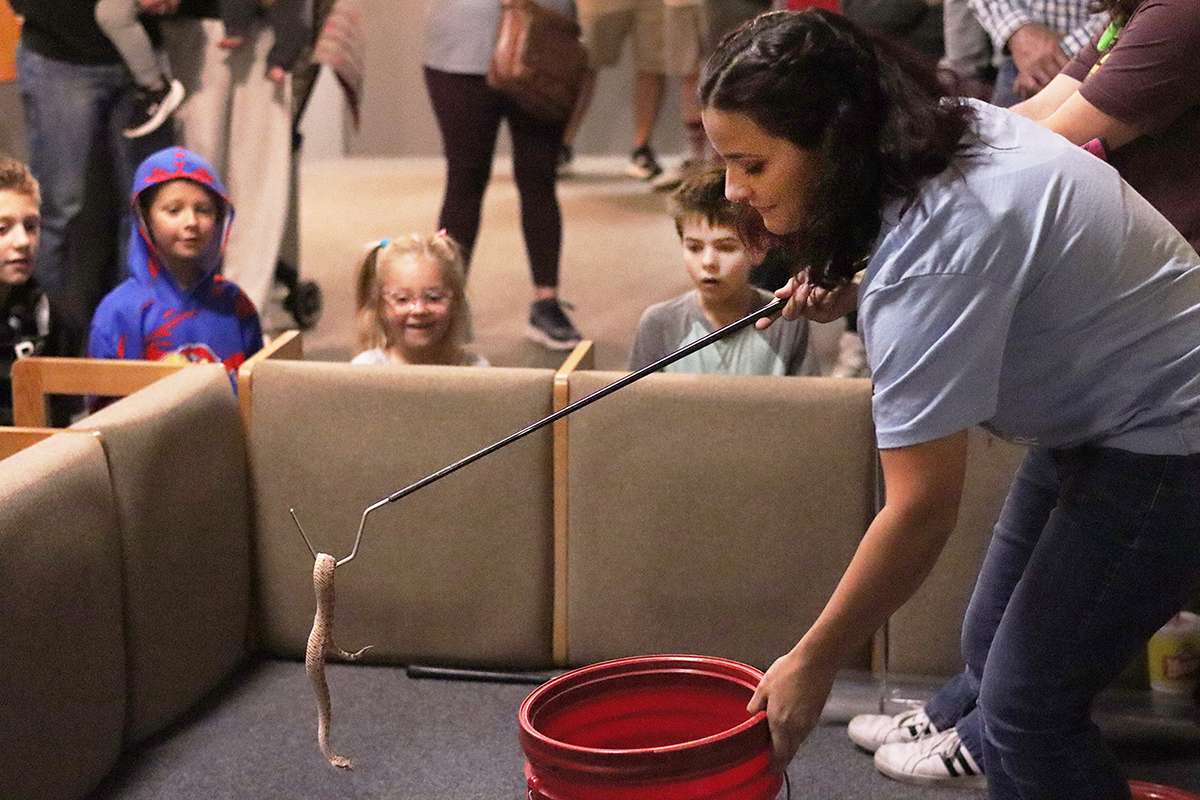
With the snakes leaving, this weekend was the last rattlesnake demonstration that Sternberg hosted for the foreseeable future. Gaede decided to bring out Spike, a sidewinder rattlesnake.
As Spike the sidewinder moved slowly across the demonstration table, Gaede reassured the audience the small rattlesnake was not looking for a fight.
“He’s not upset. He is not scared,” Gaede said. “He’s more of just a, ‘Why are you making me work? I’m an old man.’”
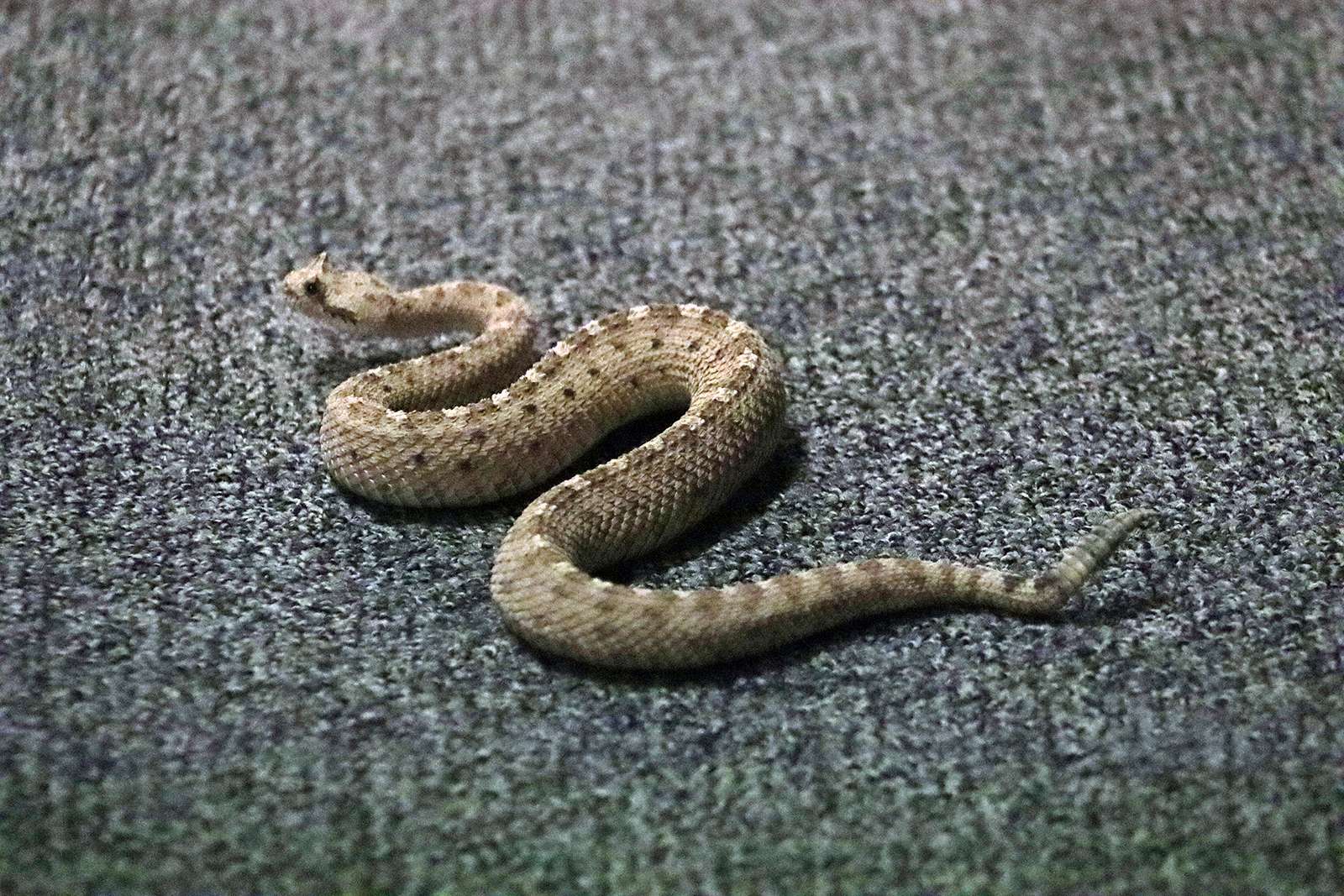
Spike is at least 13 years old, Gaede told the crowd. He arrived at the Sternberg Museum when its rattlesnake exhibit opened, and he was already grown, making him somewhere between 15-18 years old.
Gaede said rattlesnakes can live up to their early 20s.
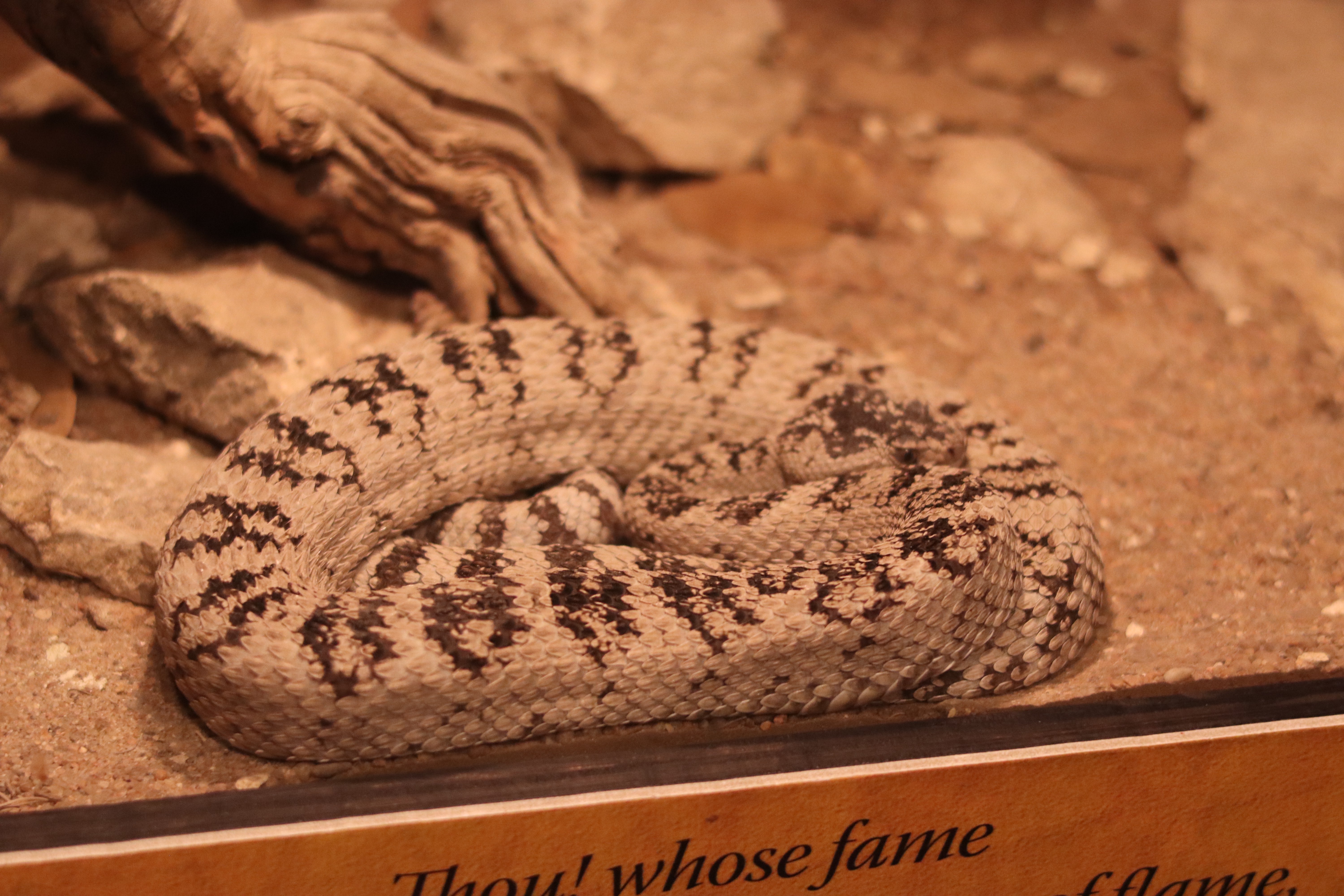
The demonstration, while teaching many about rattlesnakes, also offered visitors one last chance to learn about the snakes before the collection leaves the museum. Gaede and Jess Lamb, the museum’s assistant naturalist, brought out another snake along with Spike the rattlesnake. Freckles, a speckled rattlesnake made an appearance.
The exhibit opened 13 years ago. Many of the snakes have been part of Gaede and Lamb’s daily work for years. Gaede said their work together has earned the pair a nickname among coworkers: the “crazy snake lady” and the “assistant crazy snake lady.”
Gaede said she loves the animals, even though they are leaving the museum for the rest of their lives.
“I love these guys with all my whole heart,” Gaede said. “I’m going to do my very best not to cry today.”
During the demonstration, Gaede explained a rattlesnake’s rattle is made of overlapping scales. Another interesting fact she said was that snakes add a segment when they shed, but segments can break off, so the rattle does not tell you how old a snake is.
Snakes also do not hear the way people do. They can feel vibrations, Gaede said, which is why a snake may respond when someone stomps nearby but not when someone yells.
She explained the difference between venom and poison: Venom is injected, usually through a bite, while poison causes harm when it is swallowed or absorbed.
Gaede said rattlesnakes primarily use venom to catch prey. They may bite in defense, but they do not want to spend venom on something they cannot eat.
During the demonstration, she said most of the snakes at the museum only eat about twice a month. In addition, the snakes at Sternberg are fed only dead animals.
However, in the wild, rattlesnakes will eat rodents, birds and other animals they can catch to survive.
Freckles helped Gaede explain why the museum does not feed its snakes live mice. In the wild, a snake might bite prey, release it and follow it after the venom takes effect. Freckles tended to hold on, which could leave a mouse able to bite or scratch her.
Gaede also shared a memory of Freckles. She said she watched him swallow a live mouse and later regurgitate it. The mouse came back up alive. Gaede said a rattlesnake in the collection had previously been killed by a live mouse. She said that is why only dead animals are fed to the snakes at Sternberg.
“They’re not wild animals anymore,” Gaede said of the snakes. “They’re like, ‘Oh, hello, is it time to clean my cage?’”
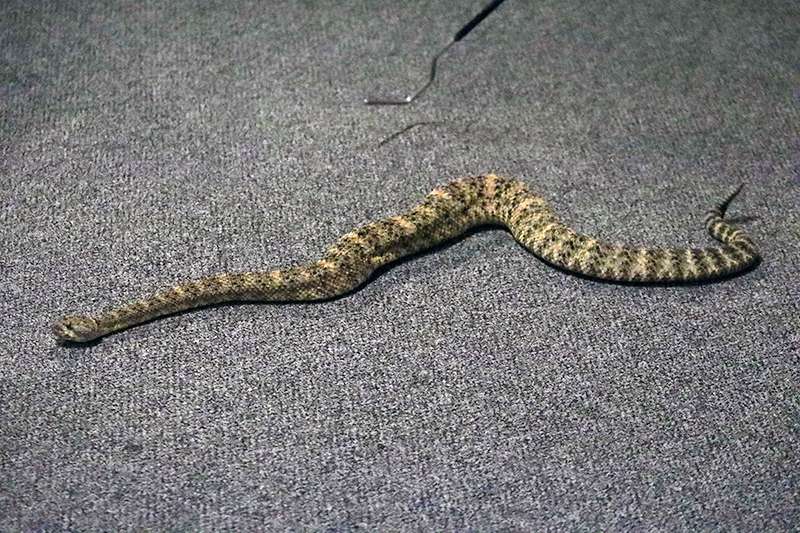
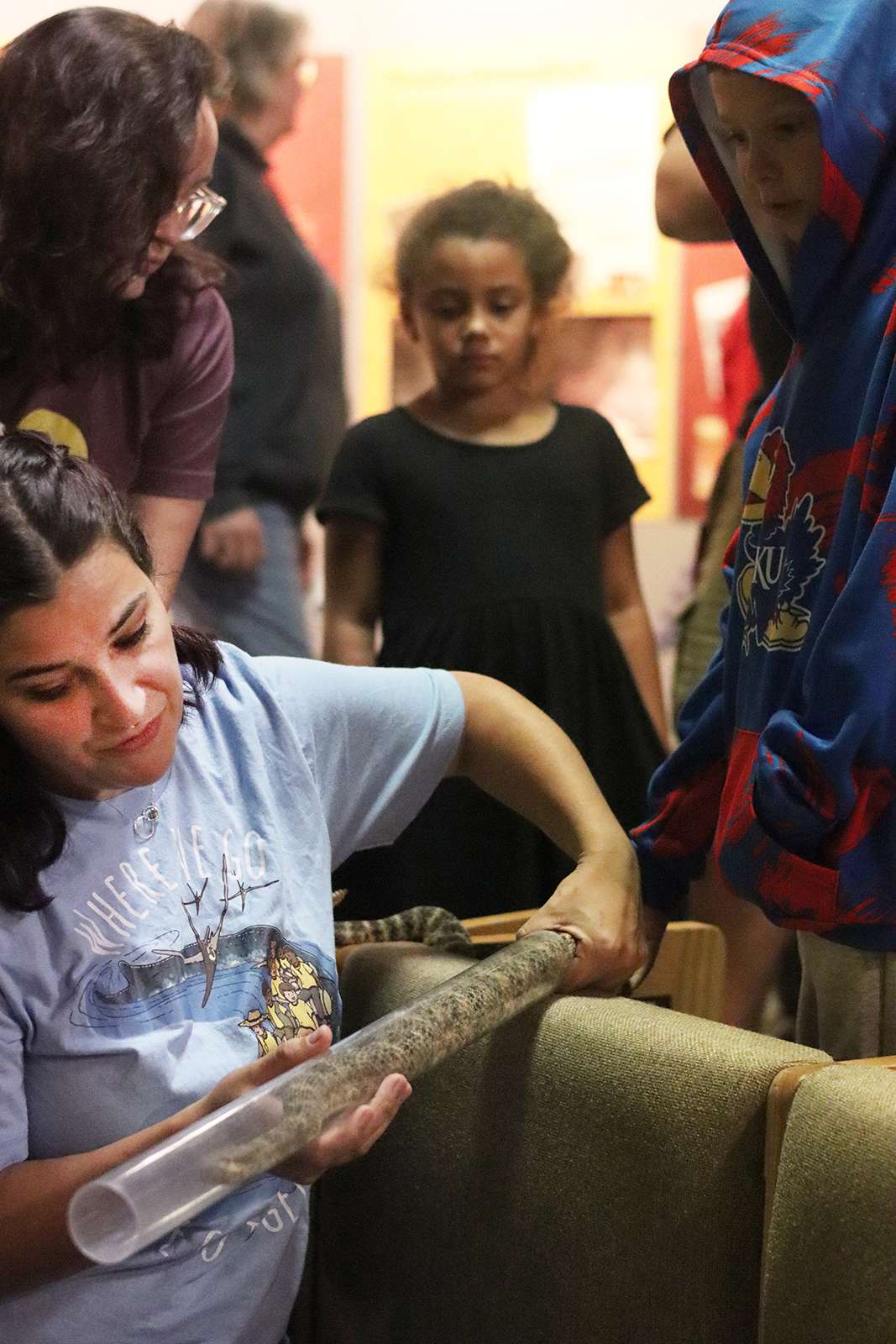
Freckles is large for her species, Gaede said, and her markings help her blend into the rocky habitat she would encounter in the wild.
She placed the snake in a clear tube so visitors could safely see her up close. Lamb helped monitor the demonstration as audience members took turns gently touching Freckles.
Gaede watched Freckles closely throughout. The snake remained calm, she told the group, though being handled and passed around could become stressful.
The demonstration showed the animals’ distinct habits and temperaments, but Gaede cautioned visitors not to expect a wild rattlesnake to behave like one raised in captivity.
“Most of our snakes are pretty chill,” she said. “That does not mean that snakes out in the wild are going to be chill.”
For Gaede, the move is difficult partly because she knows the animals and their routines so well.
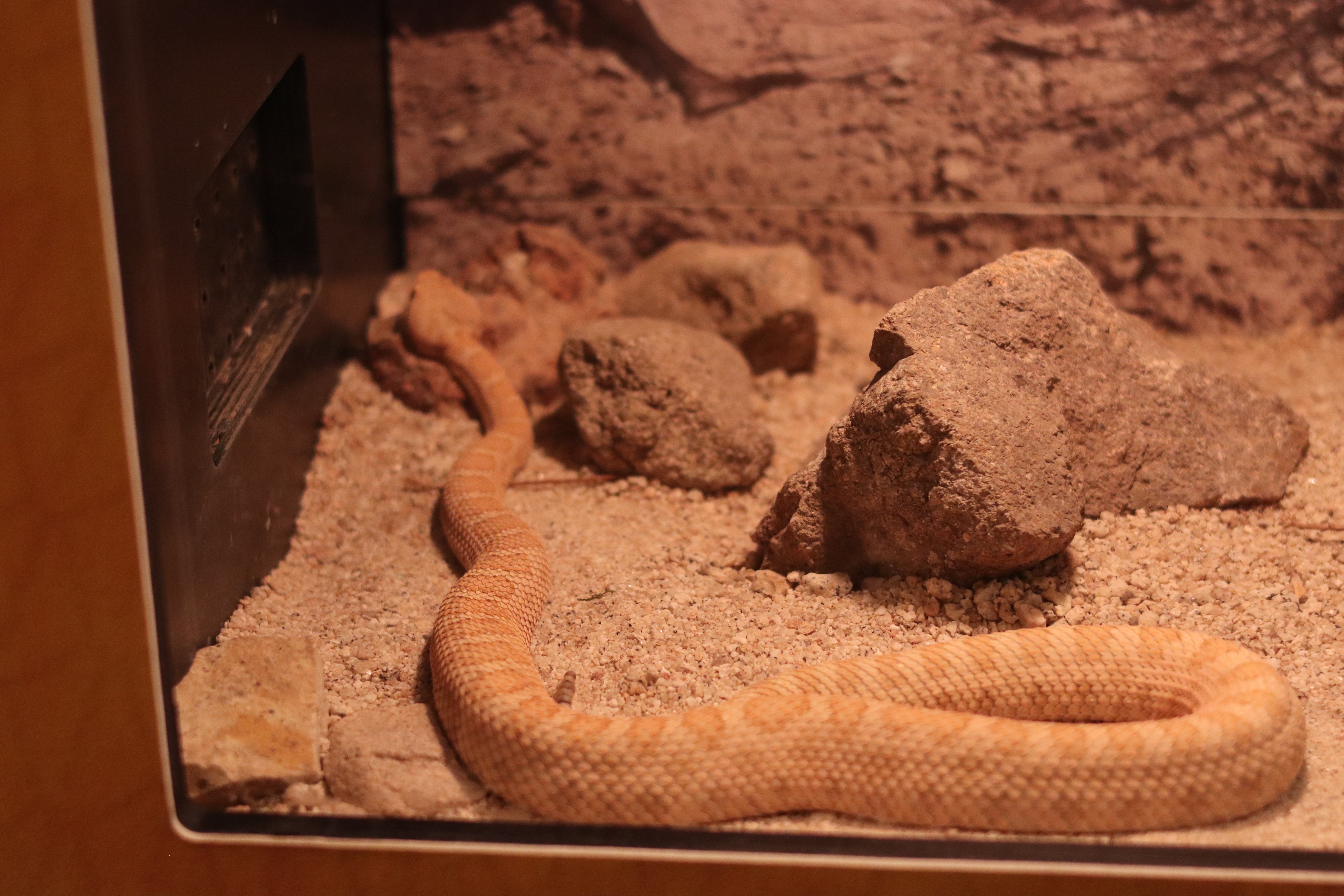
Gaede shared one of her favorite memories about one of the rattlesnakes that is leaving, the red diamond back snake, Red.
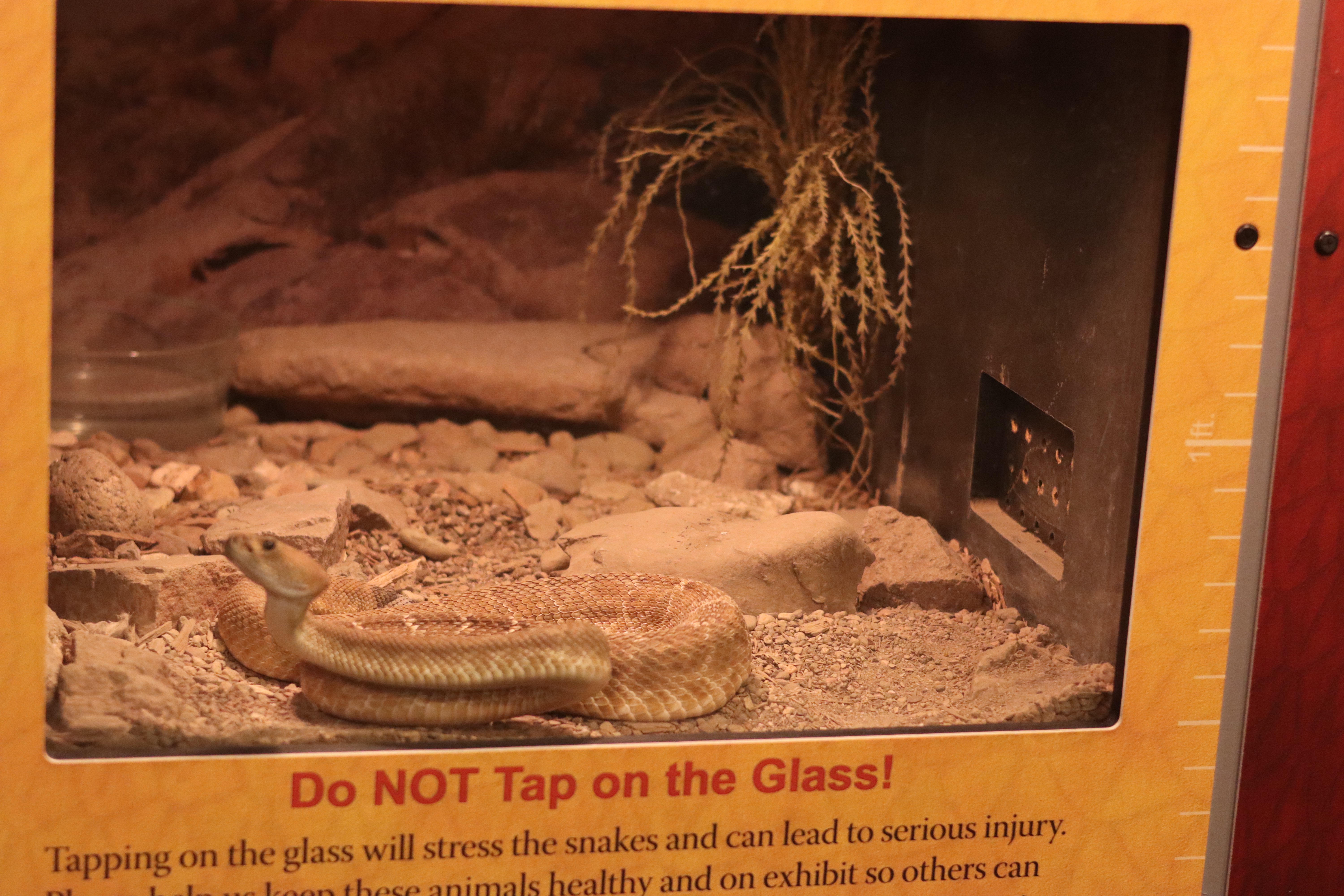
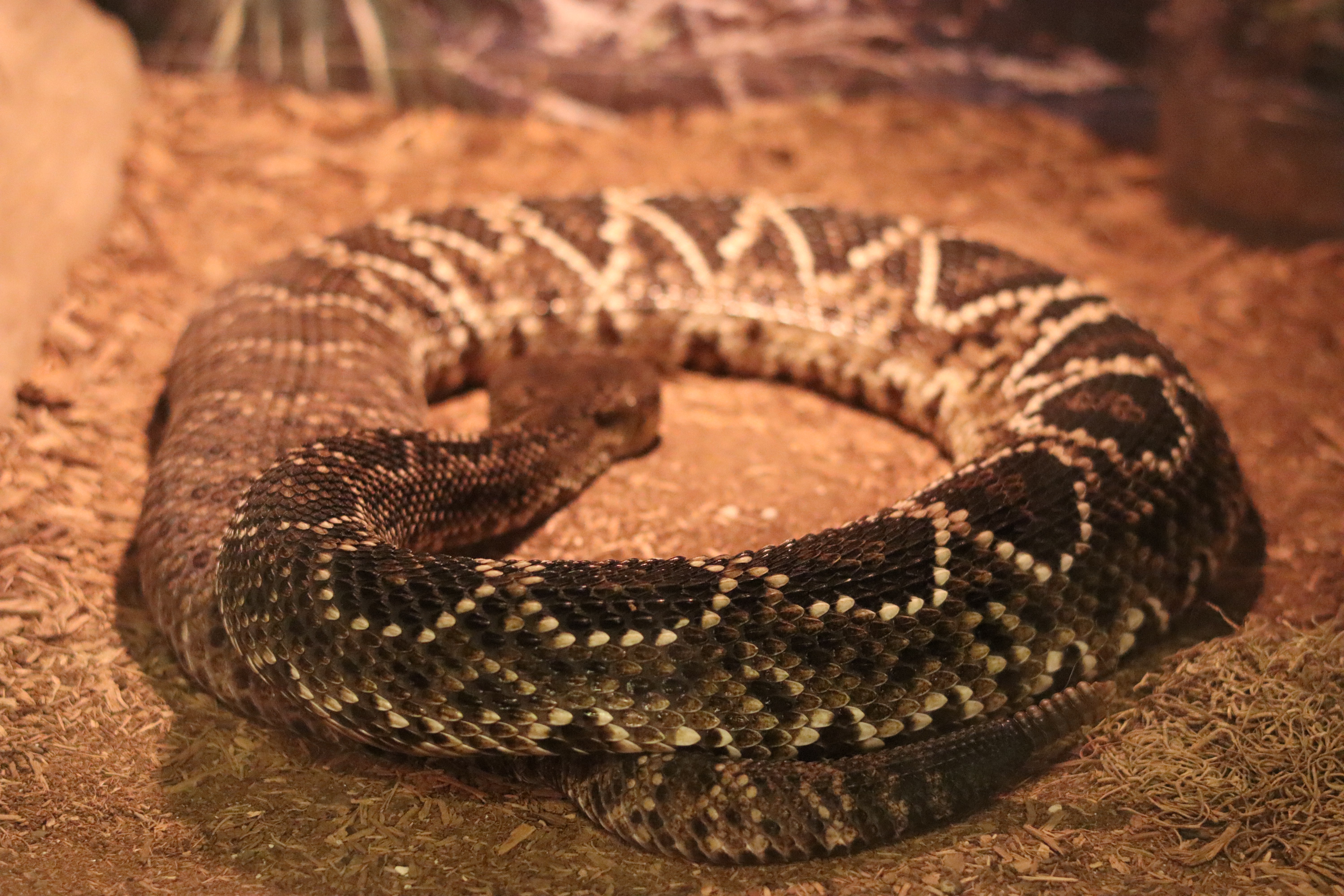
Red Diamond Back snakes are extremely endangered. Gaede said that once Red dies, there won't be many red diamondbacks left in captivity or even in the wild. She shared that while Red is a male, for some species of snakes, mating is very difficult because each parameter has to be met, and there are many parameters.
“One day I brought him out here (the museum floor) when we were closed, and I let him slither around for like an hour,” Gaede said. “He would come back and check on me, and then he'd go back to slithering again.
"Then at one point he just looks up at one of the cages, he looks back at me, he yawns, and then he sneezes. I got it all on camera, and it was the cutest thing ever, and I'm like, OK, I love these guys with my whole heart.”
Gaede said the receiving sanctuary in Phoenix, asked for detailed information about each rattlesnake's exact care preparations and prepared enclosures similar to the ones at Sternberg.
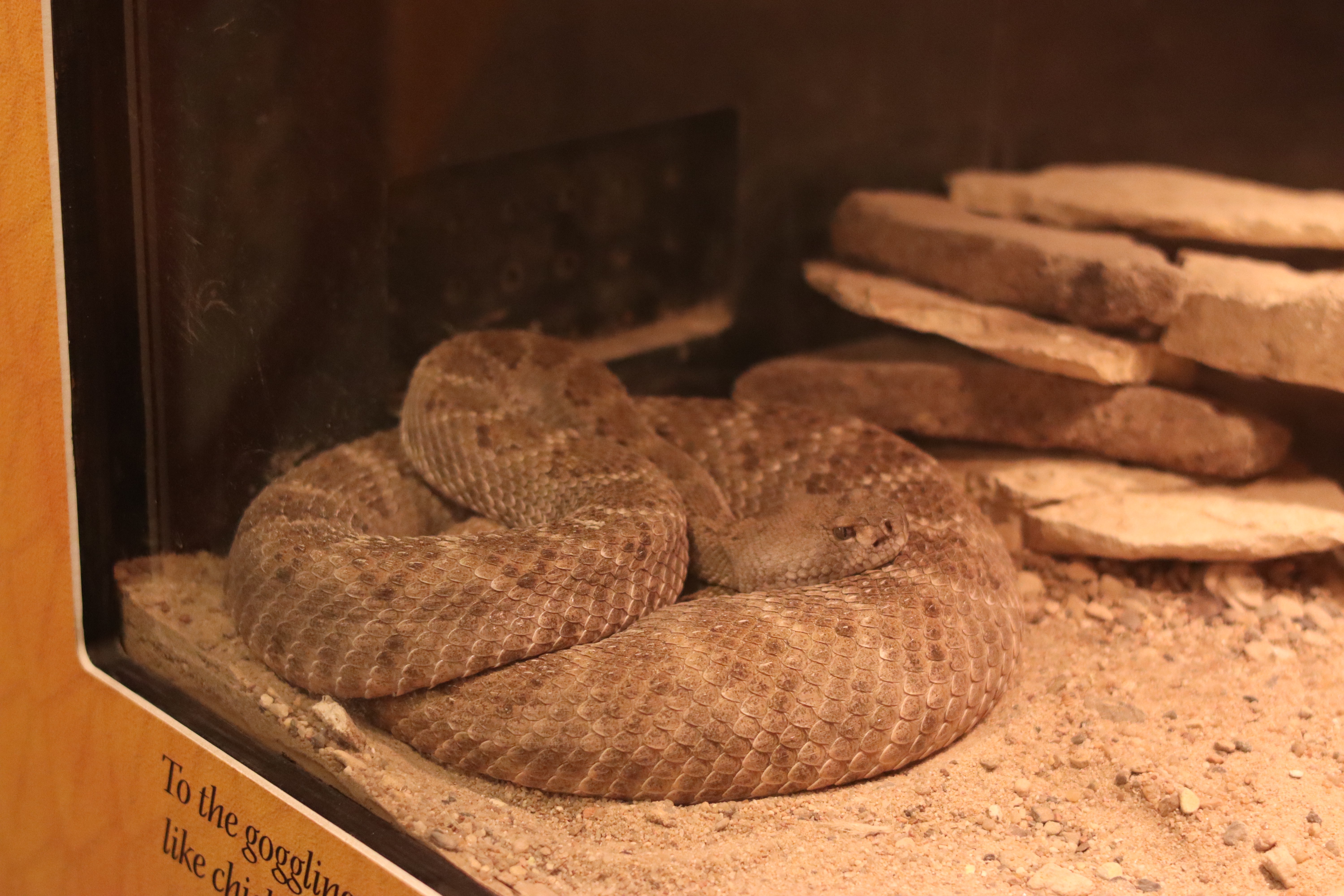
The snakes will also keep their feeding schedules, and Gaede hopes she and Lamb will receive updates about the snakes.
That reassurance matters as the Sternberg Museum works through an uncertain financial future.
Gaede mentioned the community support that kept Sternberg from closing in December has bought time, but the museum still needs a dependable way to fund its work.
Gaede also said the rattlesnake exhibit was originally intended to be temporary. However, after 13 years, saying goodbye means more than taking down a display.
While the snakes will leave Sternberg, they will continue to be cared for by people who understand their needs. Gaede said she hopes one day, she will be able to visit them in Phoenix.
“I will definitely miss them,” Gaede said. “All of them.”
Individuals and organizations interested in supporting the Save Sternberg campaign can visit foundation.fhsu.edu/save-sternberg.