By TONY GUERRERO
Hays Post
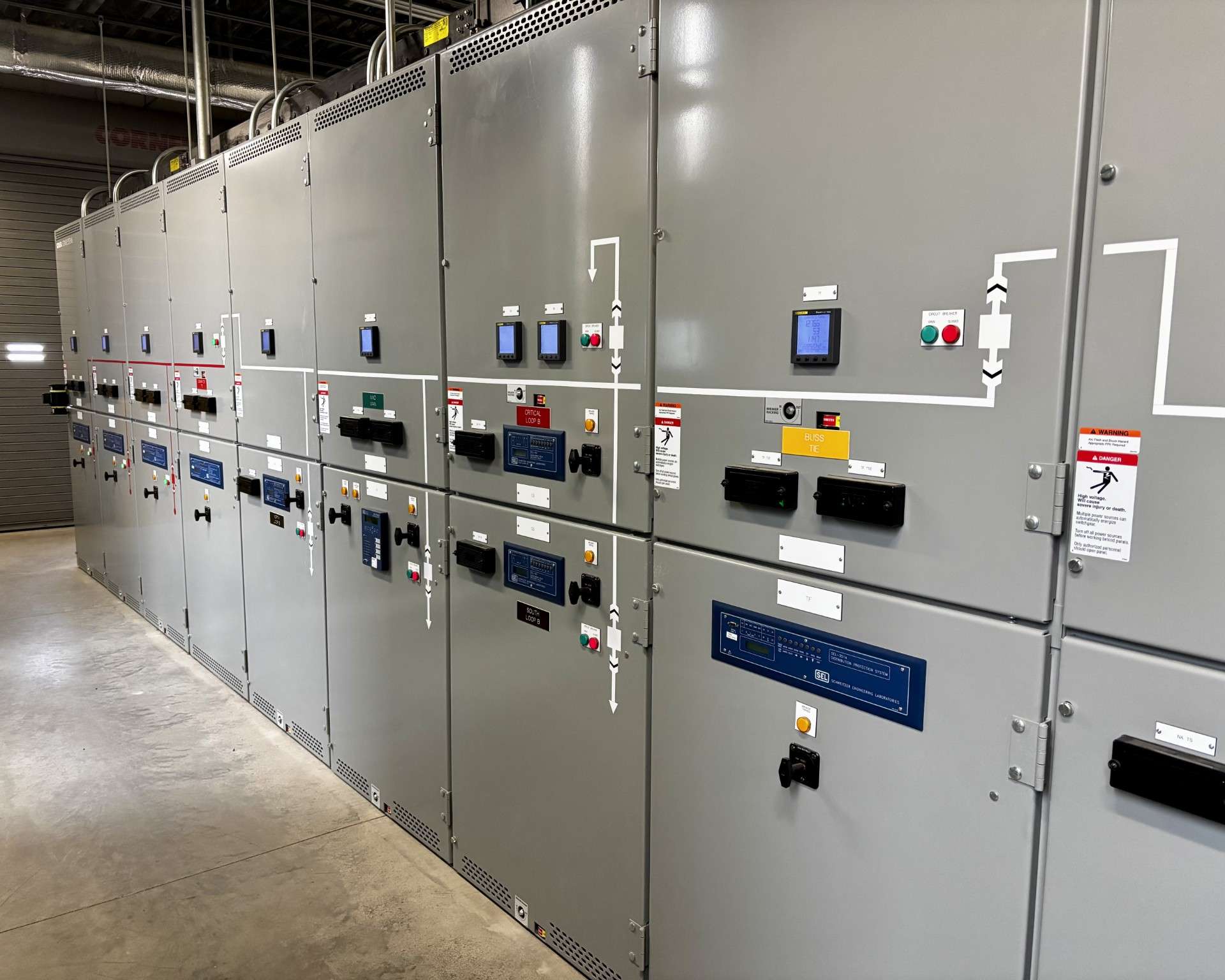
At Fort Hays State University, the power that heats buildings, cools arenas and runs classrooms comes from a mix of wind, diesel and even ice made overnight.
Keith Dreher, director of energy management at FHSU, has worked at the university for almost 35 years, starting in grounds maintenance before becoming director of the energy division. Early in his career, the university wanted to modernize how it controlled the power in its buildings.
"The director of that time asked me whether I'd be interested in doing digital controls for the campus," Dreher said. "They sent me to San Diego to train for a week. I came back, and he showed me a warehouse full of parts and told me to build the system for the campus."
Dreher then replaced what he described as an antiquated HVAC system with a modern building automation system built from the ground up.
In 2003, the department explored ways to offset the university’s peak demand and ultimately chose diesel generators. A decade later, with the help of former FHSU President Ed Hammond, the university took another major step.
"In 2013, we installed wind turbines, and that's really helped us out a bunch in savings. Basically, somewhere around $600,000 a year for the university."
Dreher said the energy division has saved the university more than $11 million to date through the use of wind turbines, diesel generators and building controls housed at the Akers Energy Center.
Dreher said the wind turbines produce about 16 million kilowatt-hours of electricity each year, with about 12 million used on campus and the remaining 4 million sent back to Midwest Energy.
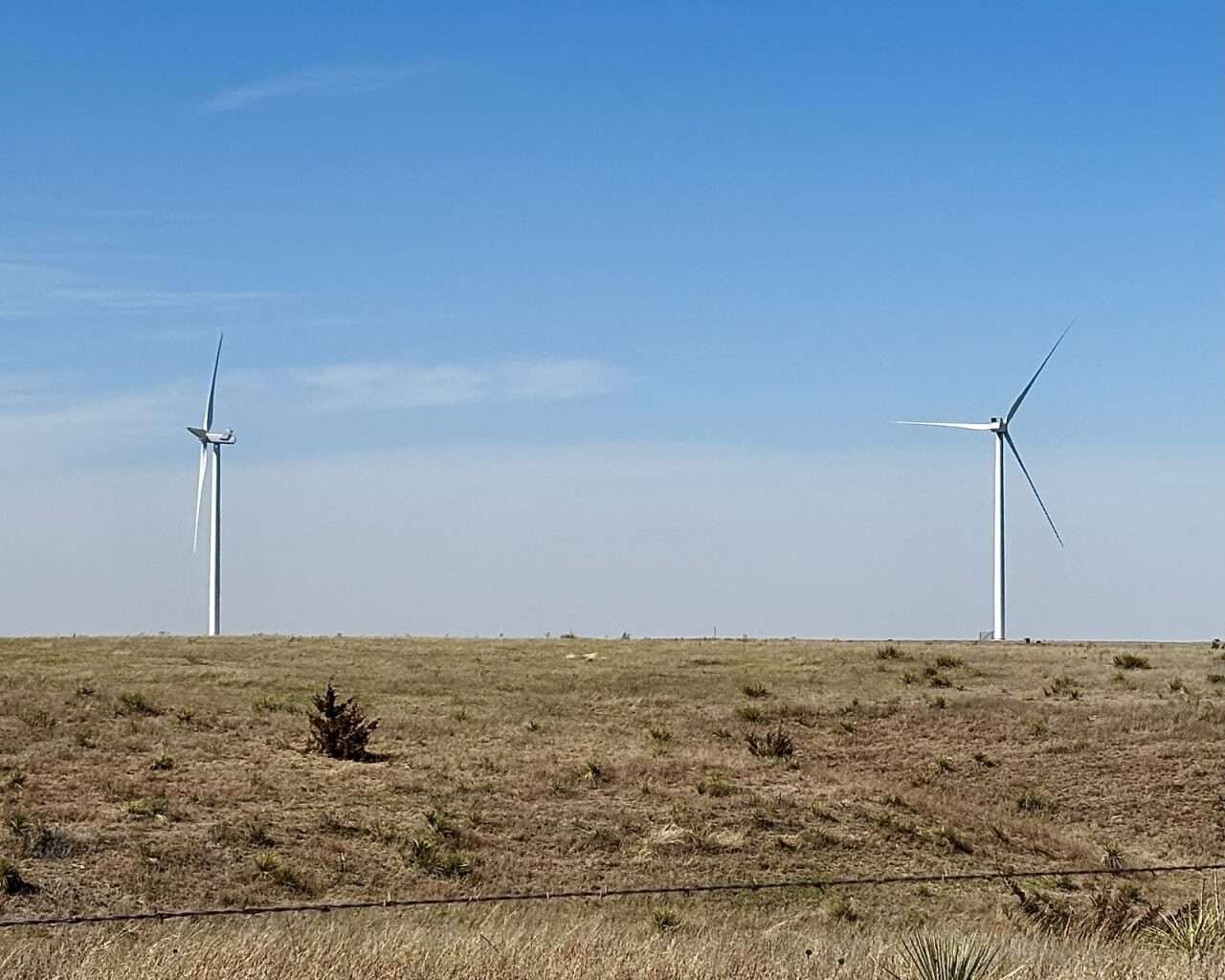
"[16 million kilowatt-hours annually] is basically all we are able to take internally," he said. "There are times when the wind is producing more power than the campus can even use, so that excess goes back to the grid."
Dreher said the wind turbines have produced 178 million kilowatt-hours since they were installed.
When wind production is low, Midwest Energy supplies the remaining electricity needed to power FHSU. On average, wind energy provides about 56% of the campus’s electrical use each year.
Diesel generators primarily serve as backup power if the university loses utility during storms, but they are also used to offset peak demand during the summer. Without managing peak demand, the university could face about $500,000 in annual utility penalty charges.
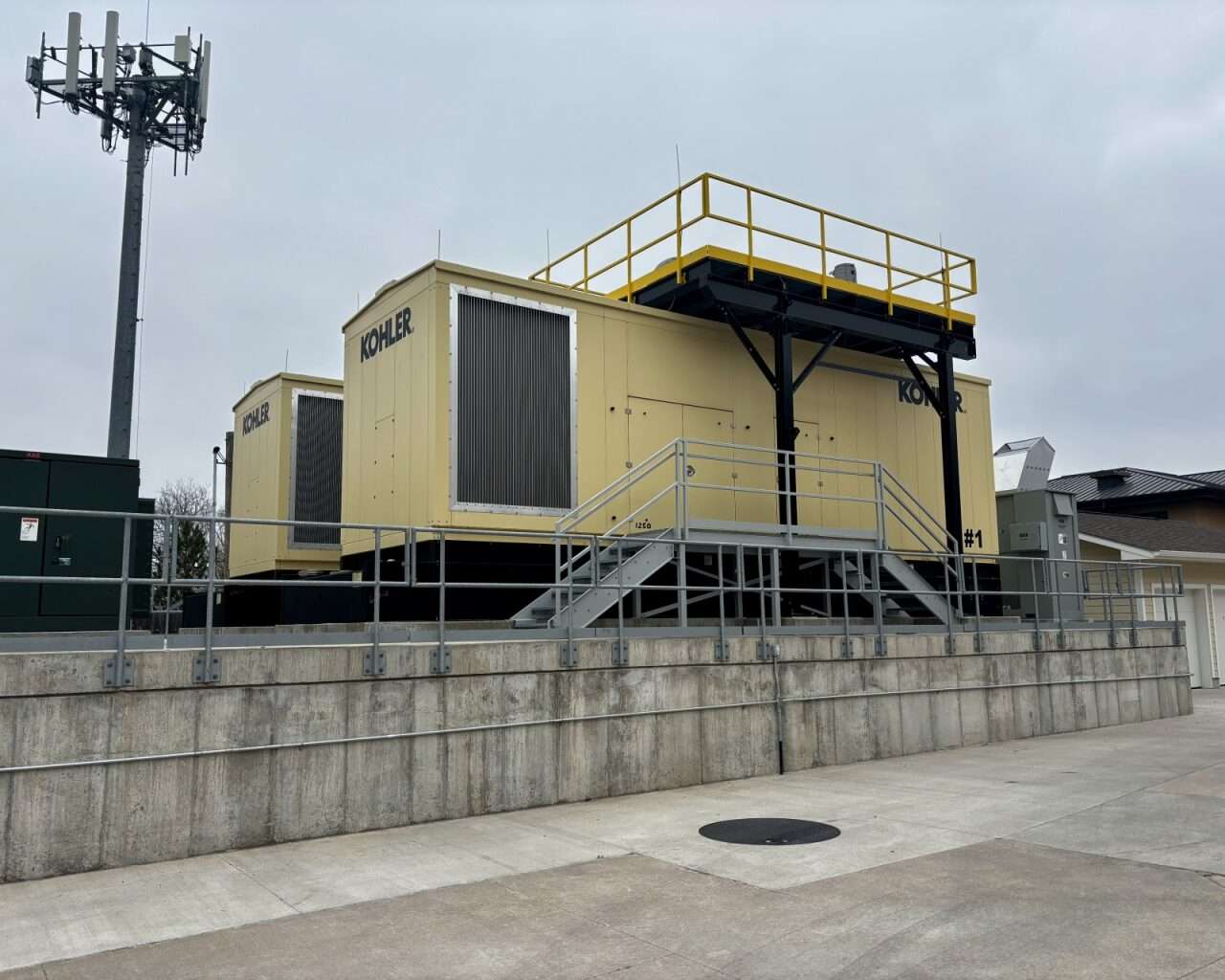
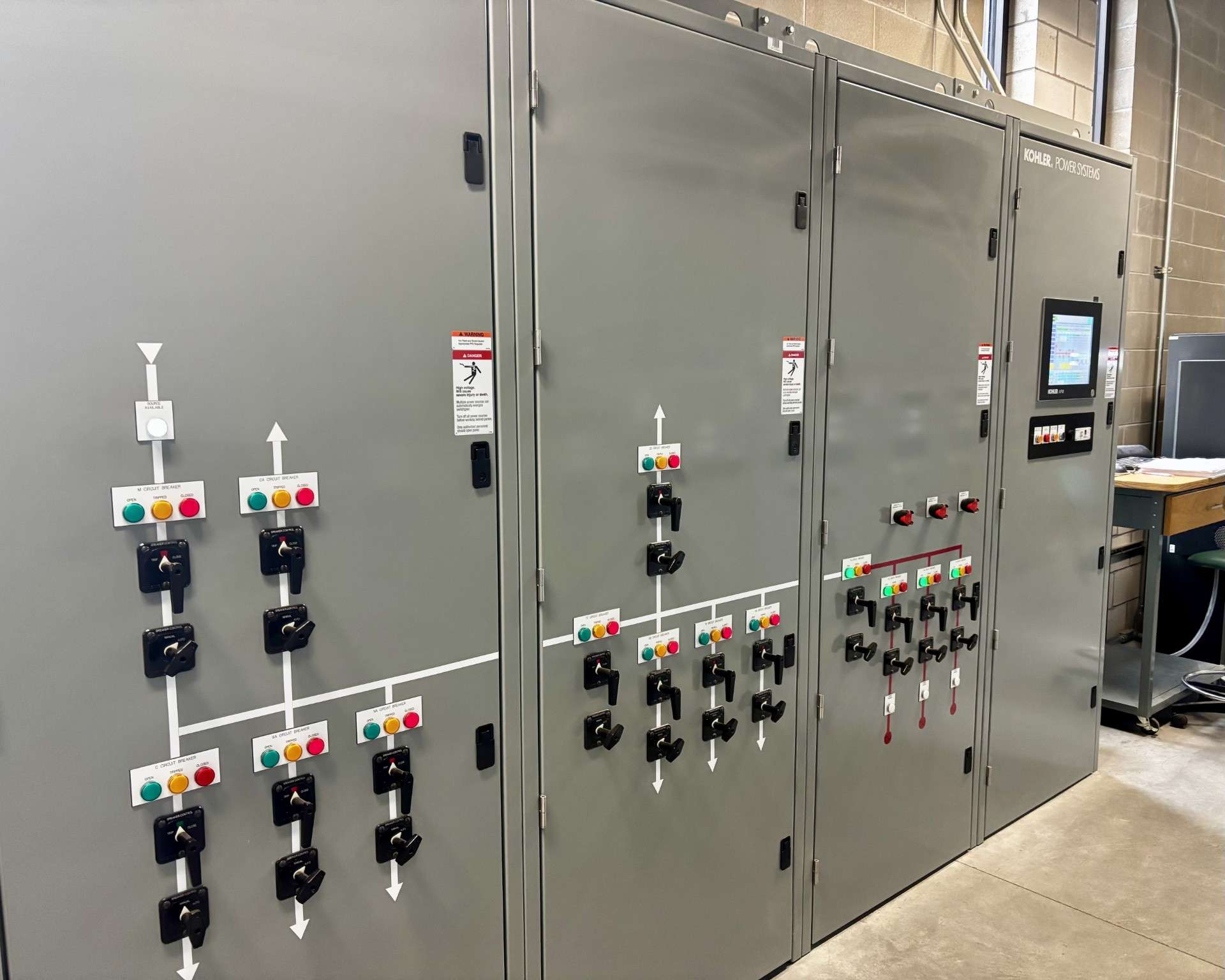
"By doing what we do with the diesel generators and wind turbines, we're able to cut that penalty in half," he said.
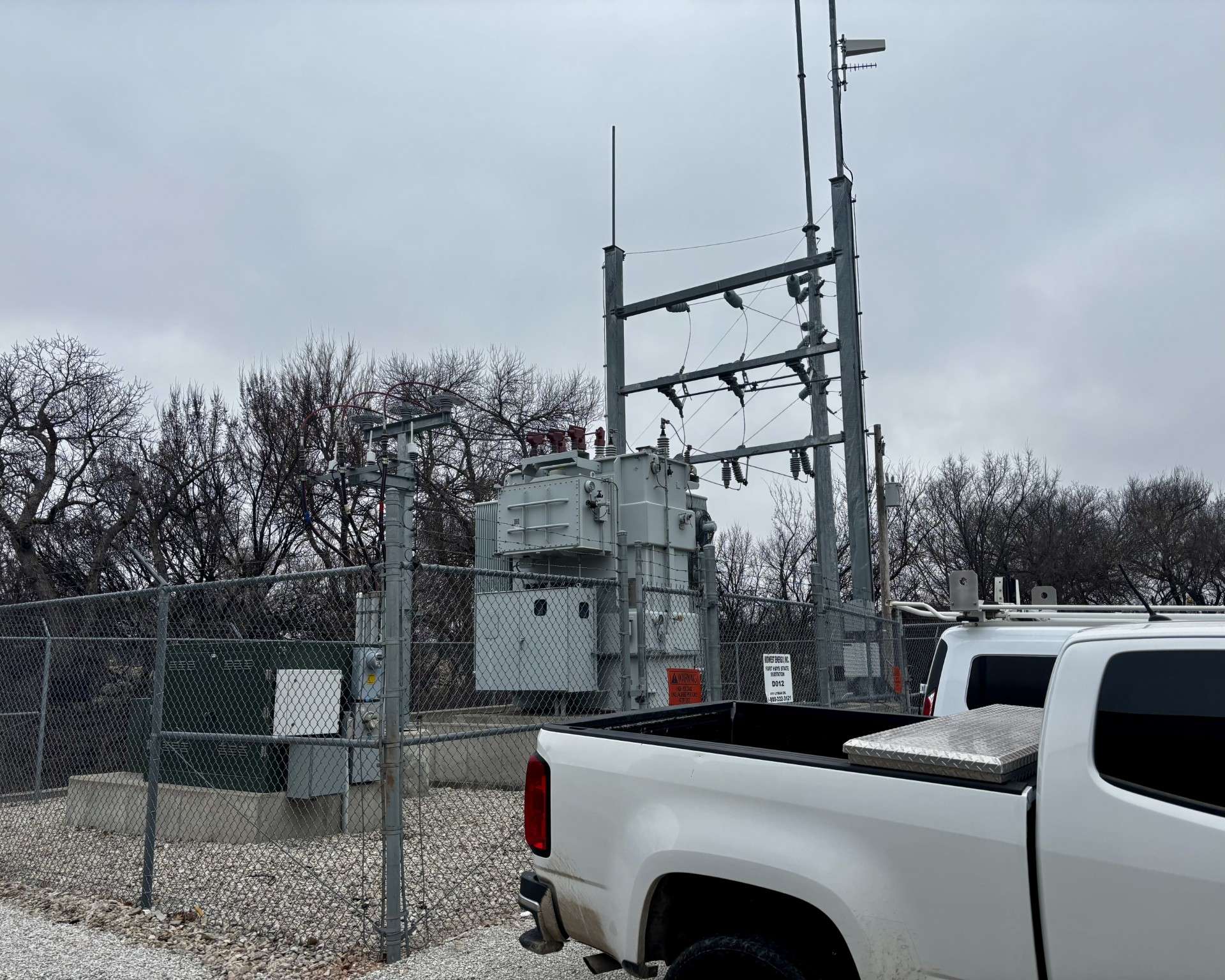
Excess wind energy can sometimes lead to financial penalties due to what Dreher described as negative prices in the regional electricity market, resulting from overproduction when there is no demand.
He said if the university is producing too much wind energy, others in the area will likely do the same.
Dreher said sending excess wind energy back to the utility offers no benefit if the university is penalized. As a result, the energy division developed a way to store that energy for later use. It implemented a system to reduce wind turbine output during times of unfavorable market pricing.
"What we had to do was come up with ideas on storage," he said. "A pet project of mine that I had for a number of years that I really wanted to try was ice storage."
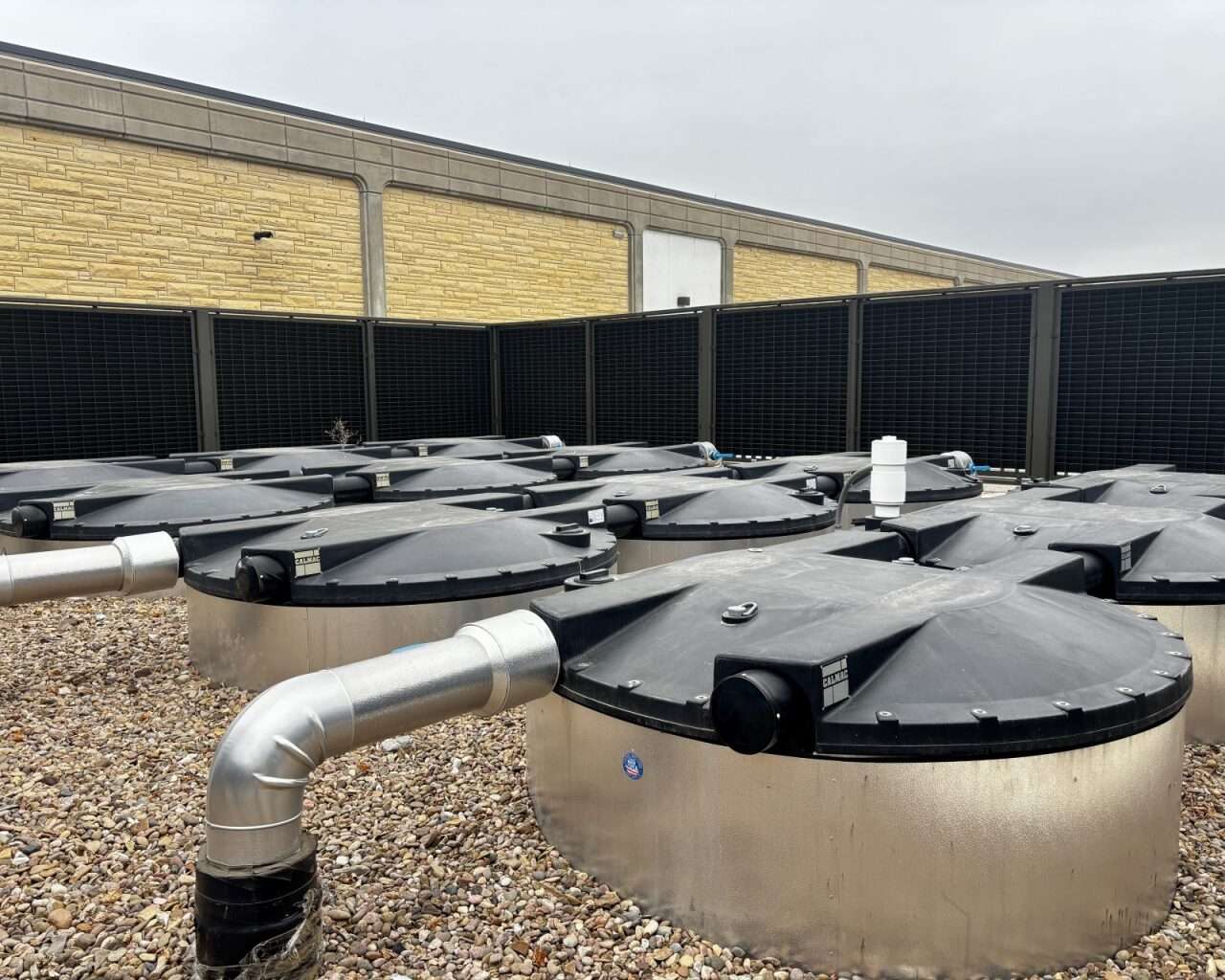
An ice-storage cooling system freezes water overnight using wind energy and uses the stored ice to cool buildings. The first system was installed on campus at Gross Memorial Coliseum in 2025.
"There are 12 tanks that are buried partially underground out there. This chiller at night is using wind energy to make ice, and that's what we use to cool the building with during the day," Dreher said.
"We are currently looking at another location on campus," Dreher said.
Dreher said FHSU President Tisa Mason supported the ice storage units and helped push for their implementation. Based on a training case study at Gross Memorial Coliseum, the cooling system is projected to save about $18,000 per year.
With a second building under consideration for an ice-cooling system, Dreher said the main challenge is the amount of space the system would occupy.
"Where do you put these 12 tanks and not create an eyesore for like, the middle of the quad or something. It's got to be tactful about where you're going to place an application like this," he said.
Dreher said buildings could run on ice during the day, significantly lowering peak demand, reducing reliance on diesel generators and saving fuel.
Dreher said the next campus building to receive an ice-cooling system will better demonstrate its full cost-saving potential by replacing existing electricity use at FHSU.
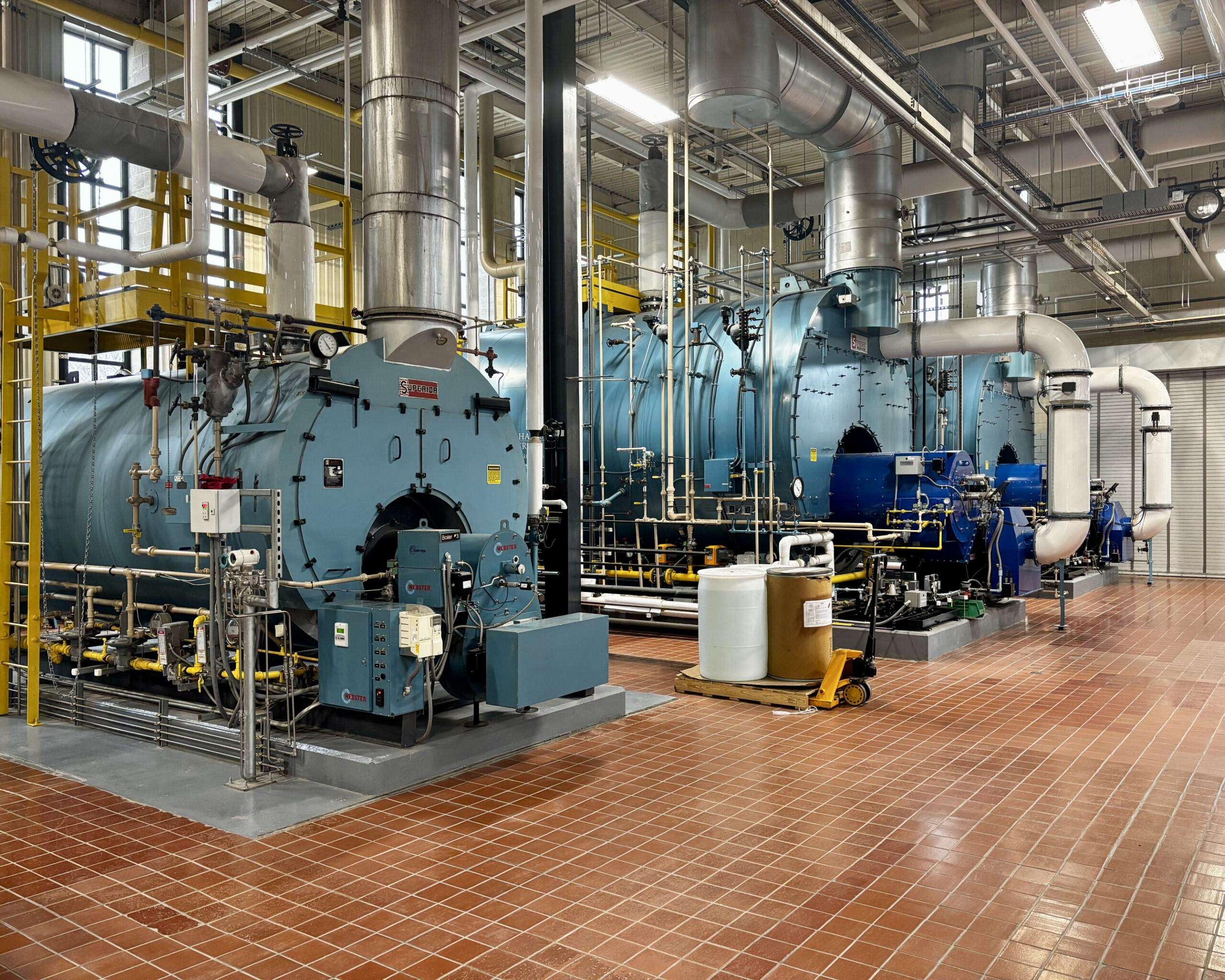
Akers Energy Center supplies steam across campus
Steam is also produced at Akers Energy Center and distributed through pipes across campus for multiple uses. It heats buildings during colder months and provides hot water for showers, sinks and kitchen equipment.
Dreher said most campus buildings rely on the steam plant, except for the newer dorm complexes Victor Village and Tiger Village, which have their own heating and hot water systems.
The large boilers are used during winter when heating demand is higher, while the smaller boiler is used when demand is lower, such as during the summer.