If you are a victim of domestic or sexual violence, find help here.
By TONY GUERRERO
Hays Post
On March 3, 1993, 19-year-old student Stacie Edgett-Minson was feeling under the weather and decided to take some NyQuil before going to bed.
Minson had just returned home from work that night and had a test the next morning, which she couldn’t afford to miss. She set an alarm for the middle of the night, then went to bed and eventually fell asleep.
The next thing she knew, a large man was on top of her, holding a knife to her throat and covering her mouth with his hand.
"He told me very quickly that if I listened and did what he said, I would be able to go to class the next day," Minson said. "I will probably say this once... he was very good at what he did."
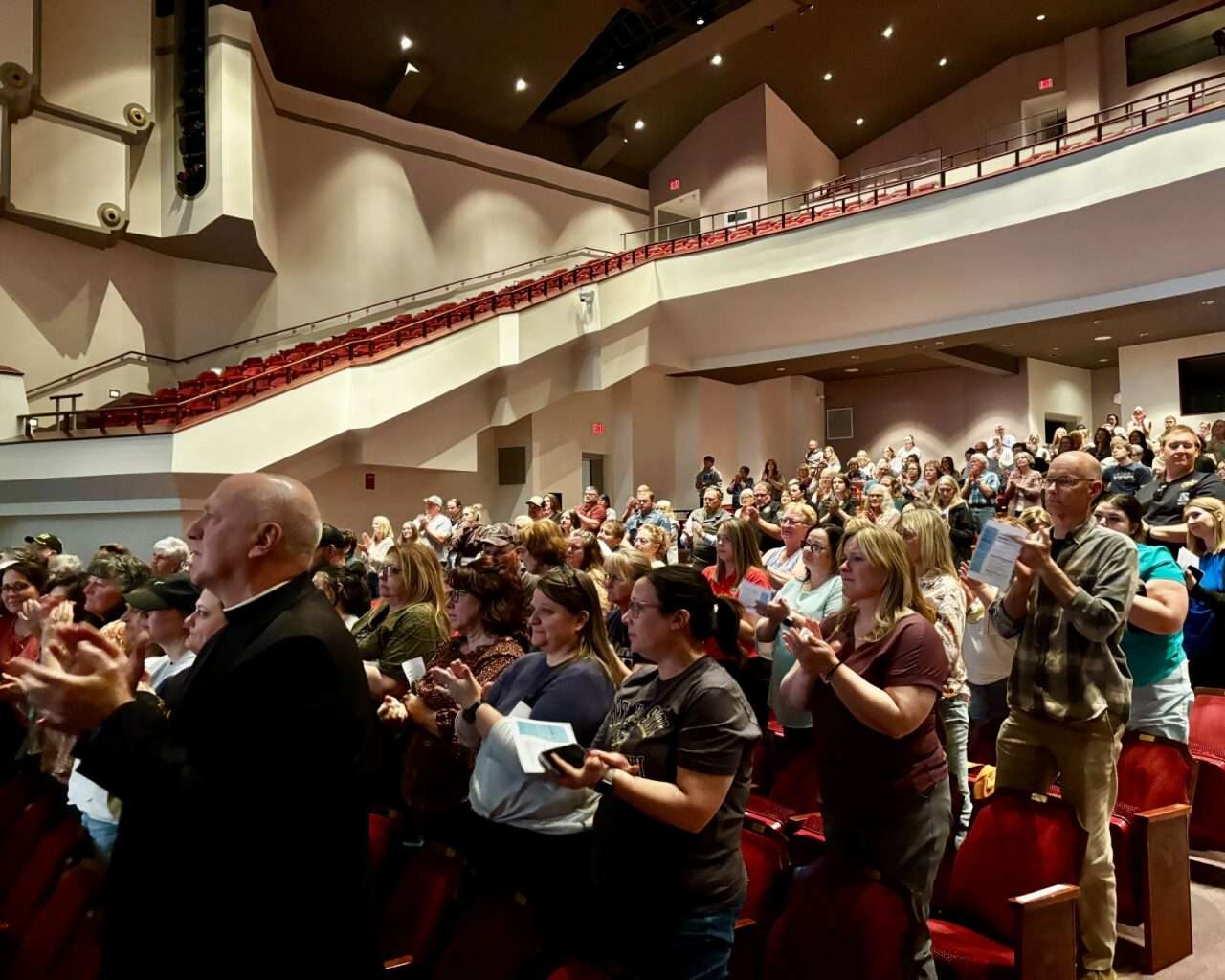
Minson is a survivor of a series of sexual assaults committed by Douglas Belt, known as the I-70 rapist. She shared her story of survival and healing in a rare public presentation on Monday at Fort Hays State University.
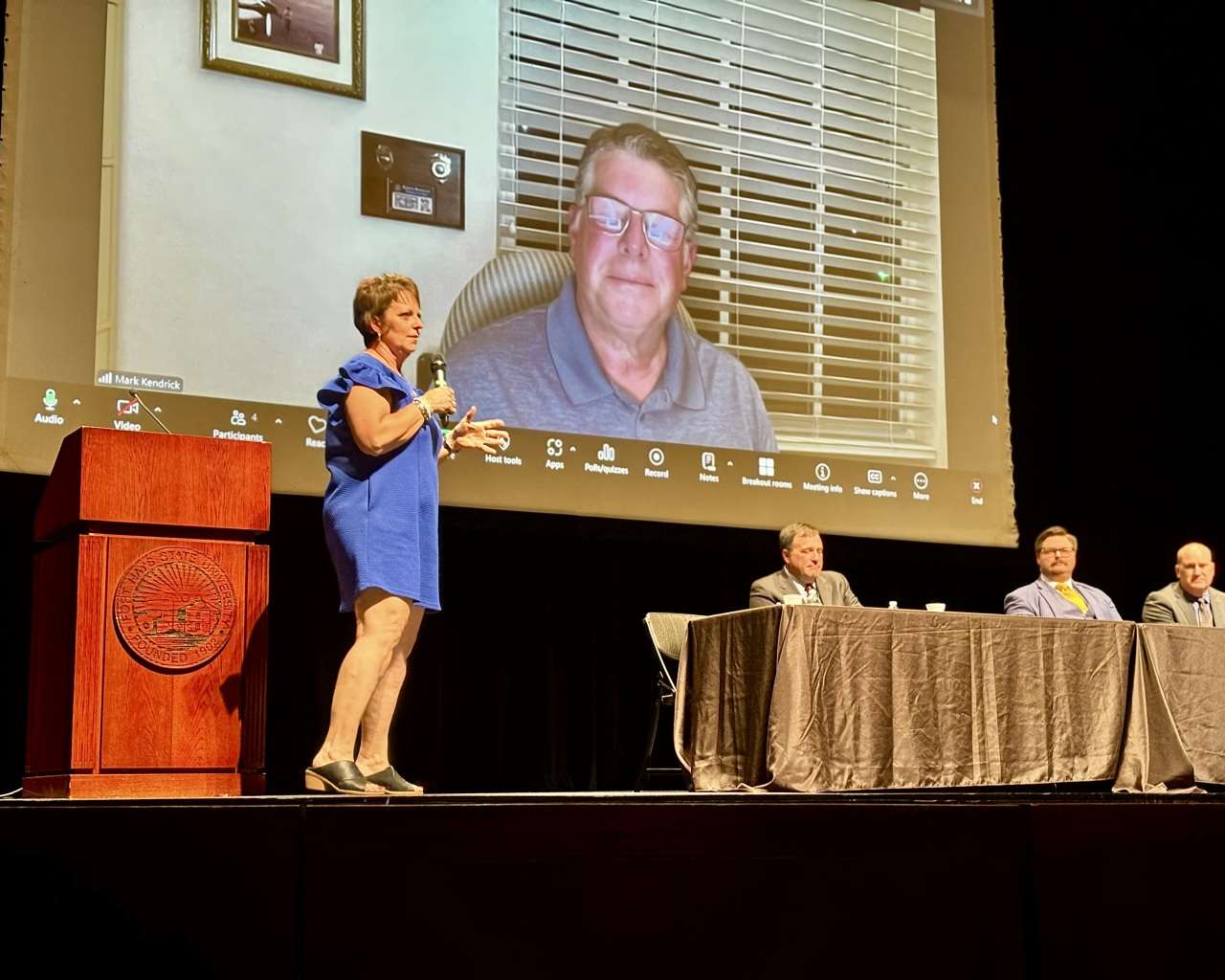
The Ellis County Sexual Assault Response Team and the Center for Empowering Victims of Gender-based Violence at FHSU hosted the event. Other key speakers included Mark Bennett, Sedgwick County district attorney, and Mark Kendrick, former KBI agent.
Both were involved in the investigation and prosecution and provided insight into the case involving Minson and several other victims targeted by Belt.
"Some of you know that I'm stubborn enough that he was not going to take my life," Minson said.
The night of the attack
Minson was born and raised in Norton as an only child. She attended Norton Community High School before enrolling at Colby Community College, where she ultimately earned her associate degree in spring 1993.
Before going to bed in her apartment, Minson said she noticed a shadow but didn’t think anything of it. With Belt now on top of her, he told her it had been him.
"I thought you saw me," Belt said to Minson.
Minson said Belt entered her apartment using a credit card. She had previously asked the complex to install a deadbolt because she did not feel the apartments were secure.
Belt covered her eyes with duct tape and bound her hands behind her back before sexually assaulting her multiple times. Minson said he never wore gloves, yet investigators would later recover only a partial fingerprint.
Minson said Belt remained in the apartment for hours, during which he drank four of her wine coolers and ate a can of chicken noodle soup.
Bennett, who later became involved in Belt’s case and his crime spree across Kansas, provided additional details about the night Minson was attacked.
"He was pretty good at cleaning up after himself," Bennett said. "He took her to the bathroom afterward, ran water, and tried to clean her off while she was still duct taped all up. She never saw his face."
Minson asked Belt to loosen her bindings slightly so she might be able to free herself, which he complied with. Bennett said Belt also took time to wash the wine cooler bottles in the sink and the spoon he used to eat the soup.
Throughout the ordeal, Minson said Belt was conversational, asking about her studies and her family before continuing the assaults.
"I asked him, 'Why me?' and he told me I was in the wrong place at the wrong time," Minson said. "It was my apartment."
Minson asked Belt if she would ever see him again, and he told her that once he walked out the door, she would never see him again.
Kendrick said Minson’s quick thinking and ability to listen to Belt helped save her life.
After Belt left the scene, the first people Minson called were her mom and her friends. Minson said her friends arrived to take her to the hospital during light snow conditions, which unintentionally compromised the crime scene as footprints and tire tracks in the area were no longer a viable lead for Kendrick.
"When I got to the ER, it was as if I was being raped all over again," Minson said.
Minson said she never questioned reporting the crime and credited investigators and prosecutors with helping her through the long wait for justice.
In the time that followed, Minson said she dealt with lasting effects from the assault, including fear, anger and difficulty with everyday triggers, as well as a lack of trauma resources available in 1993.
She sought counseling after what Bennett said was one of the worst experiences he has seen an adult endure in his career. Minson said the events of that night still affect her, leaving her constantly on guard.
Building the case
The investigation into Minson’s assault was part of a larger, years-long effort to identify Belt. At the time, investigators had no suspect name and limited physical evidence, making the case difficult to solve.
Minson said law enforcement began collecting evidence at the hospital right away. However, early DNA analysis sent investigators in the wrong direction, leading them to pursue multiple leads before later evidence identified the correct suspect.
Bennett said as more cases were linked through DNA, authorities realized they were dealing with a serial offender along the I-70 corridor who committed similar assaults in multiple Kansas communities.
Minson was the fifth of about 14 known victims linked to the I-70 rapist, Bennett said.
Bennett said even without DNA confirmation, the similarities in Belt’s methods were so consistent that investigators could have identified the same suspect.
"Each woman described literally the same ritualistic things he would do. From the pattern he would cut their shirts off with, the tape around the face and certain acts. It was kind of a check box. He would do the same thing to each woman," he said.
Bennett said one of the most unusual details shared by every victim was that Belt took them to the bathroom before the assaults and carefully shaved their pubic hair.
The Wichita homicide
Bennett said his involvement began June 25, 2002, when investigators in Wichita discovered the nude, decapitated body of Lucille Gallegos at an apartment complex. He said every available investigator worked the case over the next 12 to 15 hours.
An autopsy revealed multiple injuries, including stab wounds. Bennett said what stood out was that her genitalia had been stabbed roughly 60 to 70 times. Gallegos worked as a housekeeper at the complex.
"She had a wildly abusive boyfriend who was a wretched human being who beat her mercilessly all the time, but he was not the man who ultimately killed her," Bennet said.
Investigators conducted DNA testing on blood found outside the apartment, which led to a database match identifying Belt, already known as the I-70 rapist, as more cases were linked to him.
"That changed the equation," Bennett said.
Bennett said he contacted Belt’s victims across the state to testify in what had become a capital murder case as prosecutors sought the death penalty for Gallegos’ killing.
Six of more than a dozen victims, including Minson, agreed to testify.
In the courtroom
The 2004 trial lasted about 30 to 40 days and was in Sedgwick County. Bennett said each woman who testified reacted differently on the stand.
"One gal, I thought, if I'd given her a baseball bat, she would have walked up to him to beat him to death. She was so mad when she testified," he said.
Minson said she told Bennett during the trial, “I need him to look at me,” but Bennett said that was unlikely to happen.
In court, Belt avoided eye contact with his victims as they testified, instead “doodling” on paper during the proceedings.
Minson testified for about an hour, saying Belt ejaculated eight to 10 times during the assault, an estimate she gave because she had lost track.
Minson was near the end of her testimony when she was asked if there was anything else she wanted to share. She responded yes.
"I need you to know that you did not win. I graduated from college, I got married, I have a career and I have a child. You did not win," Minson said.
Minson said Belt stopped writing, dropped his pen and looked up at her.
"You did not win," Minson said once again. He picked up his pen and continued "doodling."
Bennett said each victim who testified against Belt was strong and impressive. After thousands of witnesses in felony jury trials, including rape and murder cases, he said Minson was the best witness he has ever seen.
The jury convicted Belt of capital murder and sentenced him to death by lethal injection. Bennett said he was never tried for the rapes, including Minson’s, because the statute of limitations had expired.
What followed the verdict
Belt was sent to prison, where he spent most of each day in solitary confinement. He later developed pancreatic cancer while incarcerated.
Bennett said as Belt neared death, police made a final attempt to resolve a lingering question from the Wichita killing of Gallegos. He said one of the most disturbing aspects of the case was that her decapitated head was not found in the apartment.
"I can't repeat to you what he said, but basically it was 'F the police, and F Bennett.' He went to his grave keeping a secret with him," Bennett said.
Gallegos’ head has never been found.
Belt died in April 2016, which Minson called karma.
"Pancreatic cancer is one of the worst cancers," she said. "Because he was in the Kansas Department of Corrections system, he would have received pain meds, but not have the same type of comfort and treatments that the average person would have."
Minson's life today
Minson earned a bachelor’s degree in animal science from Kansas State University in 1995, about two years after the assault. She worked for a year at ServiTech Inc. in Dodge City before becoming a K-State Research and Extension agricultural agent in WaKeeney.
Since 2003, Minson has worked as a watershed specialist with K-State, engaging farmers, landowners, businesses and local governments in water quality protection and efforts to improve resources in the Big Creek–Middle Smoky Hill River watershed.
She has been involved in numerous organizations over the years, including the WaKeeney Chamber of Commerce and the Trego County Hospital Auxiliary. Minson also served on the Northwest Kansas Juvenile Services board for more than 15 years, including as chairman.
Minson is also a member of Christ the King Catholic Church, where she taught religious education for years and now serves as a lector and Eucharistic minister.
Minson is now a mother to two adult sons. Her friends and family were in attendance for her presentation.
Following the presentation, a panel was available to answer questions about sexual assault response and survivor services in Ellis County. These included representatives from Options Domestic and Sexual Violence Services, Hays Medical Center, the Hays Police Department and the Ellis County Attorney’s Office.