By ALIN HETT
Hays Post
For generations, iron work in Kansas has been tied to the state’s development, from frontier blacksmith shops to railroad construction and agricultural expansion.
Today, that same tradition continues in a different form through artists who use welding, forging and metal fabrication to create sculptures and expressive designs.
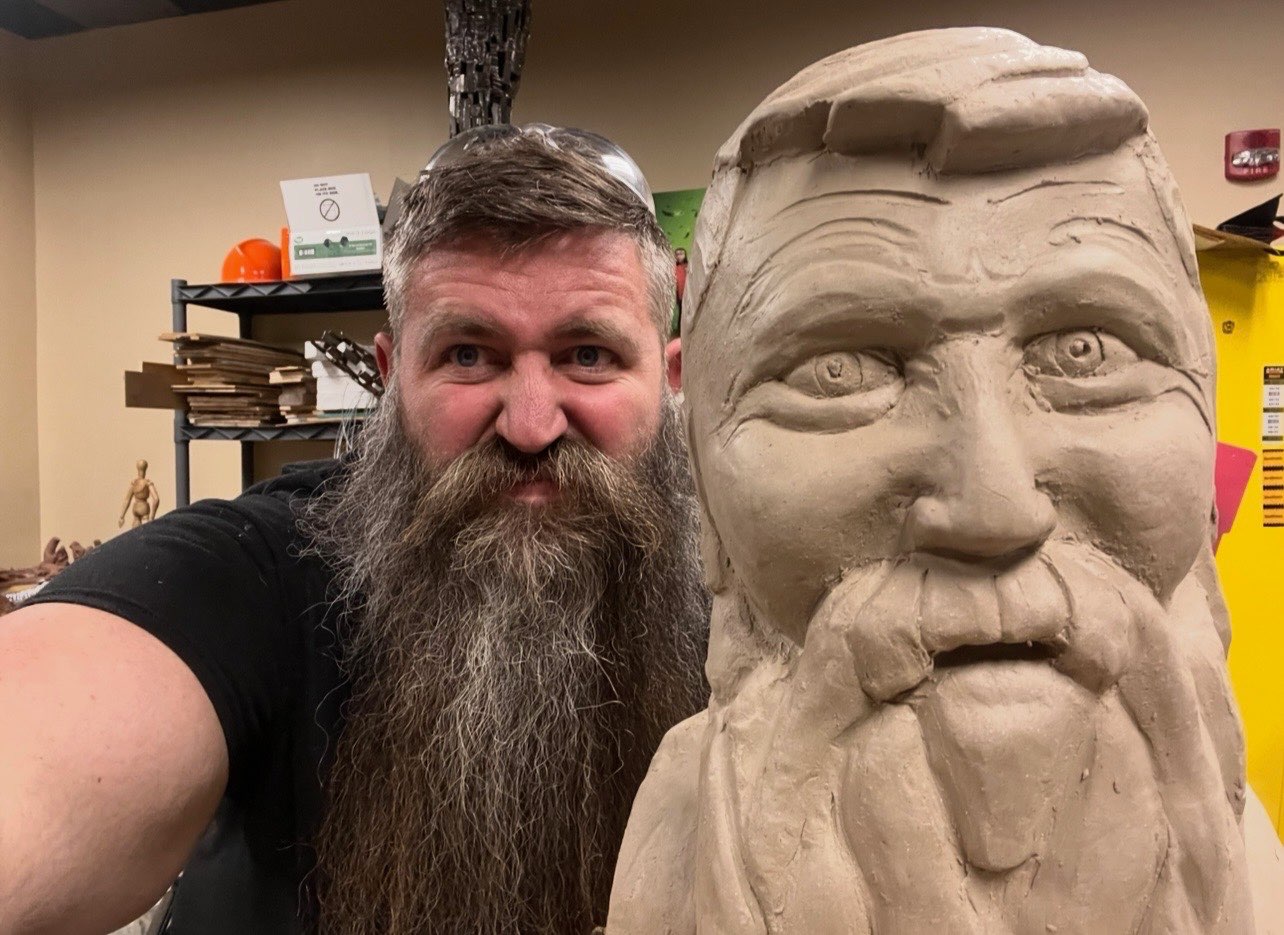
Charles Dan Schluckebier, a recent master's of fine arts graduate at Fort Hays State University, works within that evolving tradition.
In the sculpture workshop on campus, he transforms steel and iron into handcrafted pieces that blend technical skill with artistic exploration under the supervision of Toby Flores, professor of sculpture at FHSU.
“I was first drawn to iron and metalwork because of the physicality of it, the weight, the heat and the directness of the process,” Schluckebier said. “I grew up in a rural farming environment where working with materials and fixing things was just part of everyday life.
"My mother was an artist, and my father was a welder, so both creative thinking and hands-on making were part of my upbringing. That background shaped my approach to metalwork.”
That combination of rural labor and creative influence reflects a broader Kansas story. In early settlements, blacksmiths served as essential workers, repairing tools, shoeing horses and fabricating equipment needed for farming and transportation.
Schluckebier said the connection between labor and creativity continues to influence his own work today.
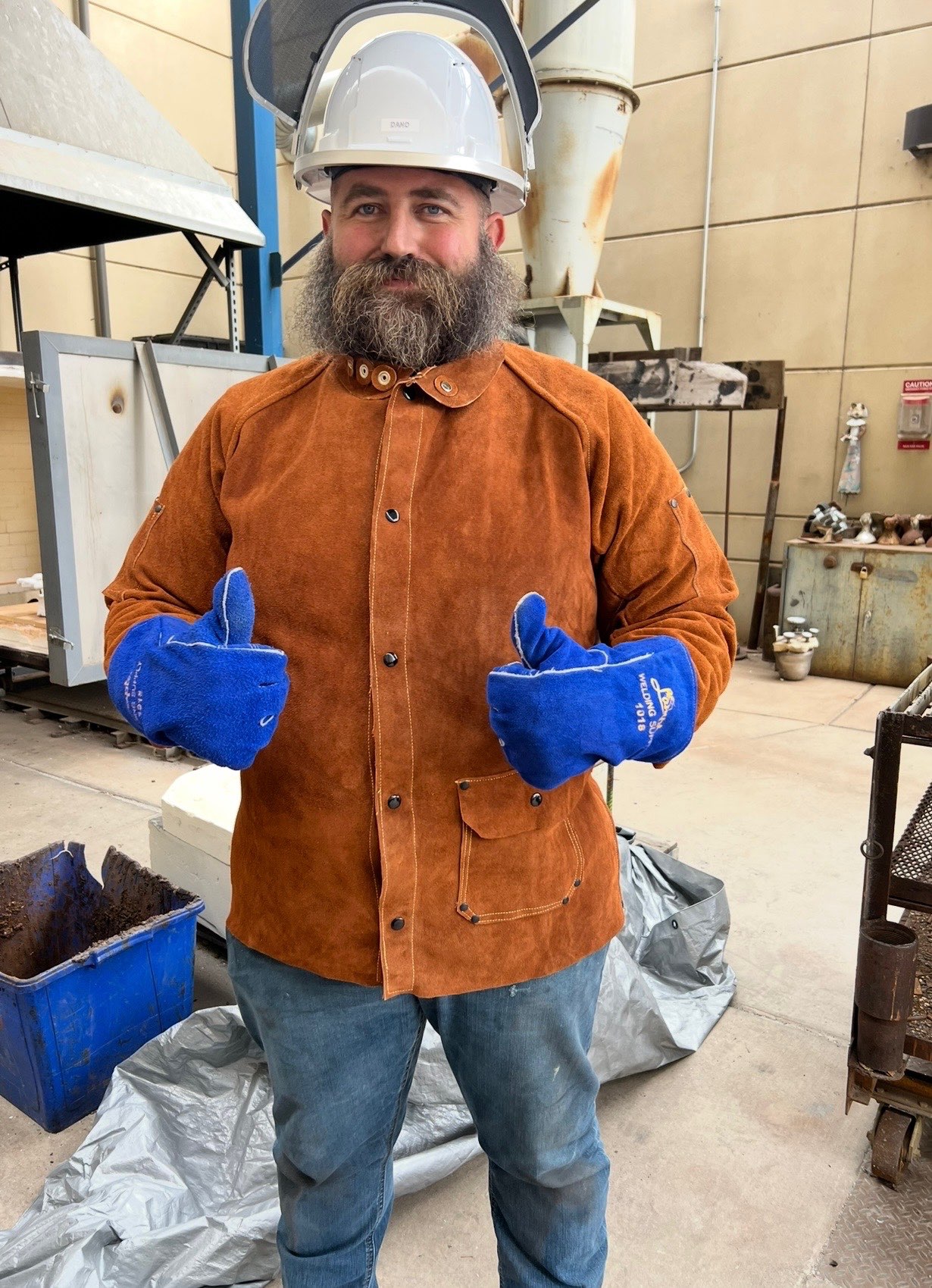
Iron work also remains physically and mentally demanding, requiring long attention spans and constant problem solving. For Schluckebier, that process is part of what keeps the work engaging.
“There is a long arc to each work, and I find it rewarding to stay with the process all the way through,” Schluckebier said. “I also appreciate how much attention the work demands at every stage, and that is what keeps me engaged.”
Although Schluckebier began working with iron during high school, his engagement with metalwork has accelerated in recent years. Before pursuing graduate studies at FHSU, he taught wood-shop, welding, art and wrestling at Wauneta-Palisade High School in southwest Nebraska.
He said teaching played a significant role in shaping his decision to pursue his own artistic path more fully.
Through that experience, Schluckebier developed a deeper understanding of technical instruction, creative problem solving and hands-on craftsmanship, all of which continue to influence his studio practice.
“My sculptures begin with a loose idea or question rather than a fully developed plan,” Schluckebier said. “I might sketch certain elements or build a small model but a lot of the decision making happens through the process of the make.”
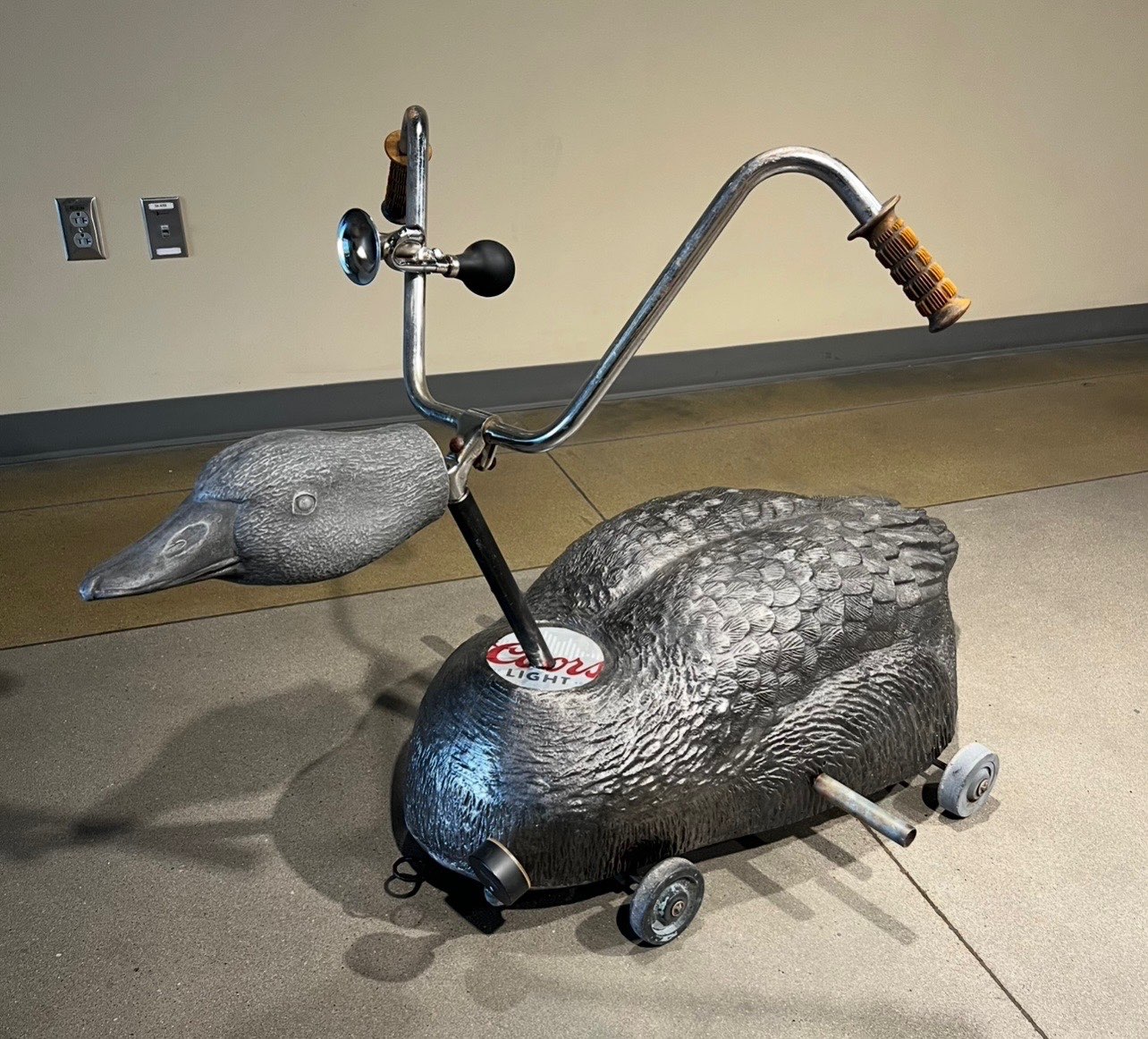
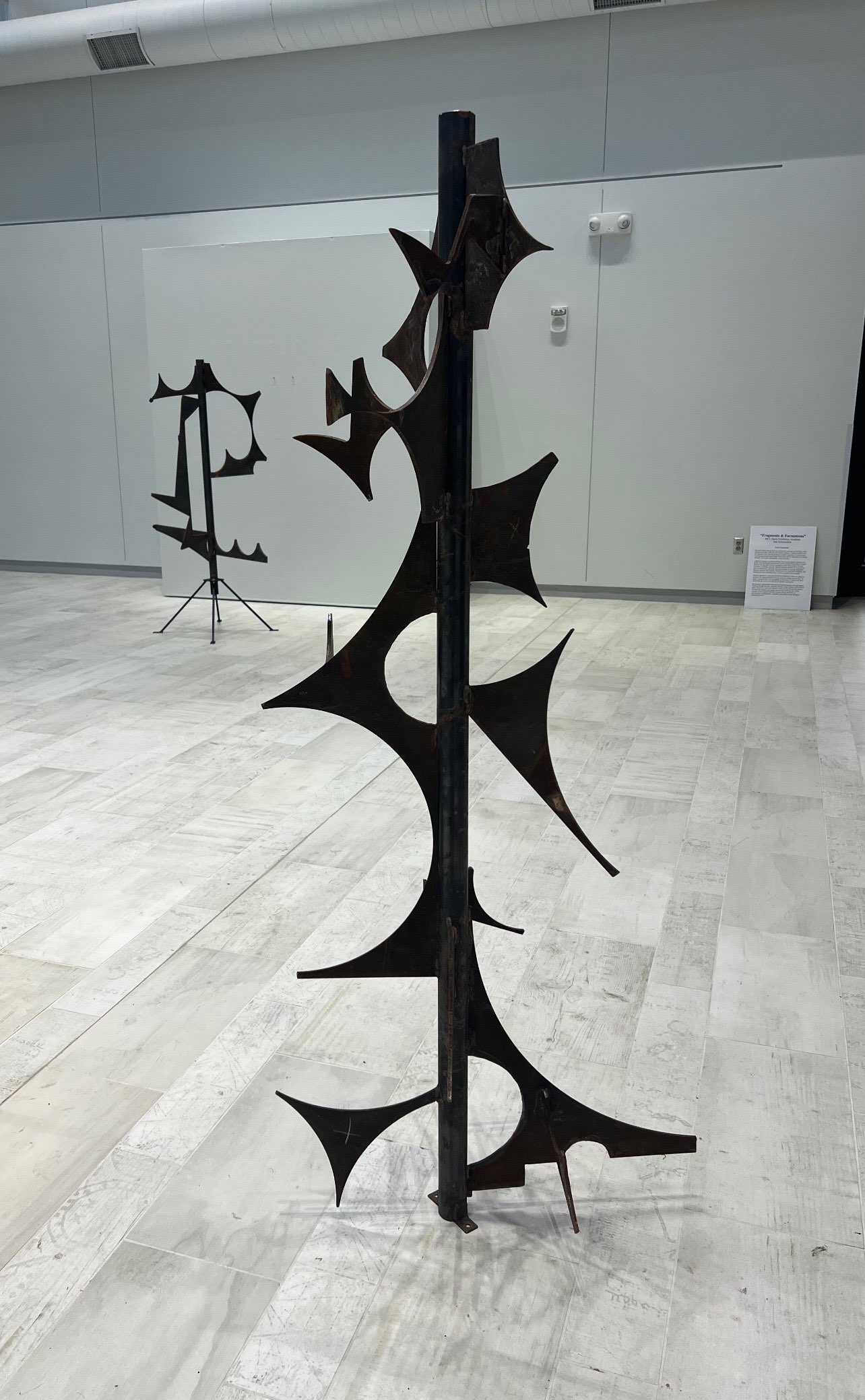
That process-driven approach also extends to public exhibitions. Schluckebier’s recent work displayed at FHSU introduced many viewers to his use of metal as both structural material and artistic medium.
“I hope viewers spend time looking and allow themselves to be curious,” Schluckebier said. “Much of my process involved responding to materials, solving problems and following unexpected directions as a sculpture develops, and I hope viewers experience some of that openness when they encounter the work.”
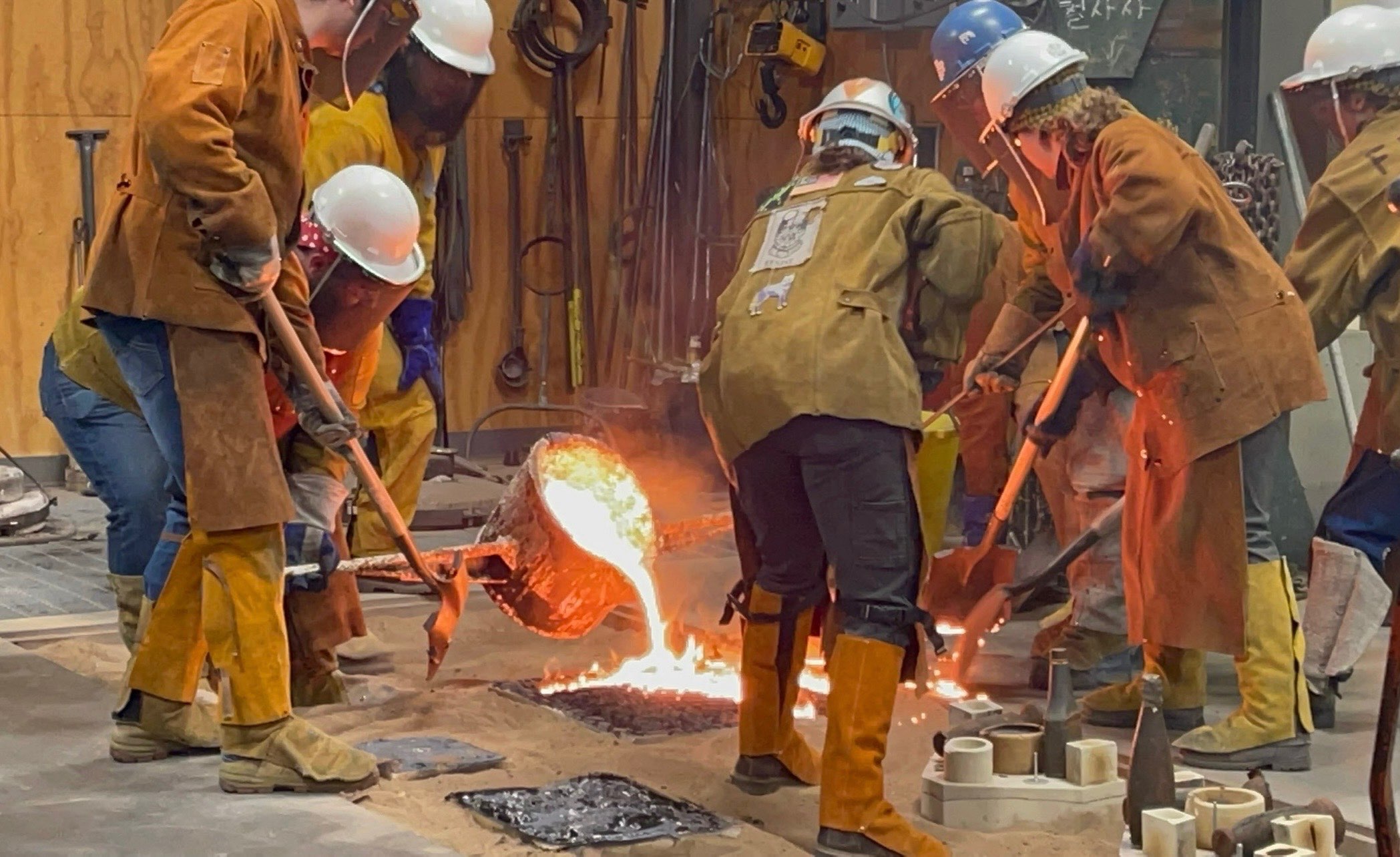
Iron pours, collaborative events where molten iron is heated and cast into molds, represent another major part of his practice. These events bring together artists, technicians and assistants in a coordinated environment.
“Iron pours are special to me because of the collaborative energy of everyone working toward the same moment,” Schluckebier said. “It is a shared problem solving environment in a way that's hard to replicate in the studio. All the preparation leads into a very short, critical moment when the iron is poured.”
While Schluckebier works within a long tradition of metal casting and fabrication, he said he does not aim to replicate historical forms. Instead, he focuses on how those techniques can be reinterpreted through his own artistic perspective.
“I think of my own work as coming out of a long history of metalworking and casting, and I'm aware of the tradition that influenced me, but I'm not trying to strictly follow or repeat it,” Schluckebier said. “I am more interested in how I can use those processes in my own way.”
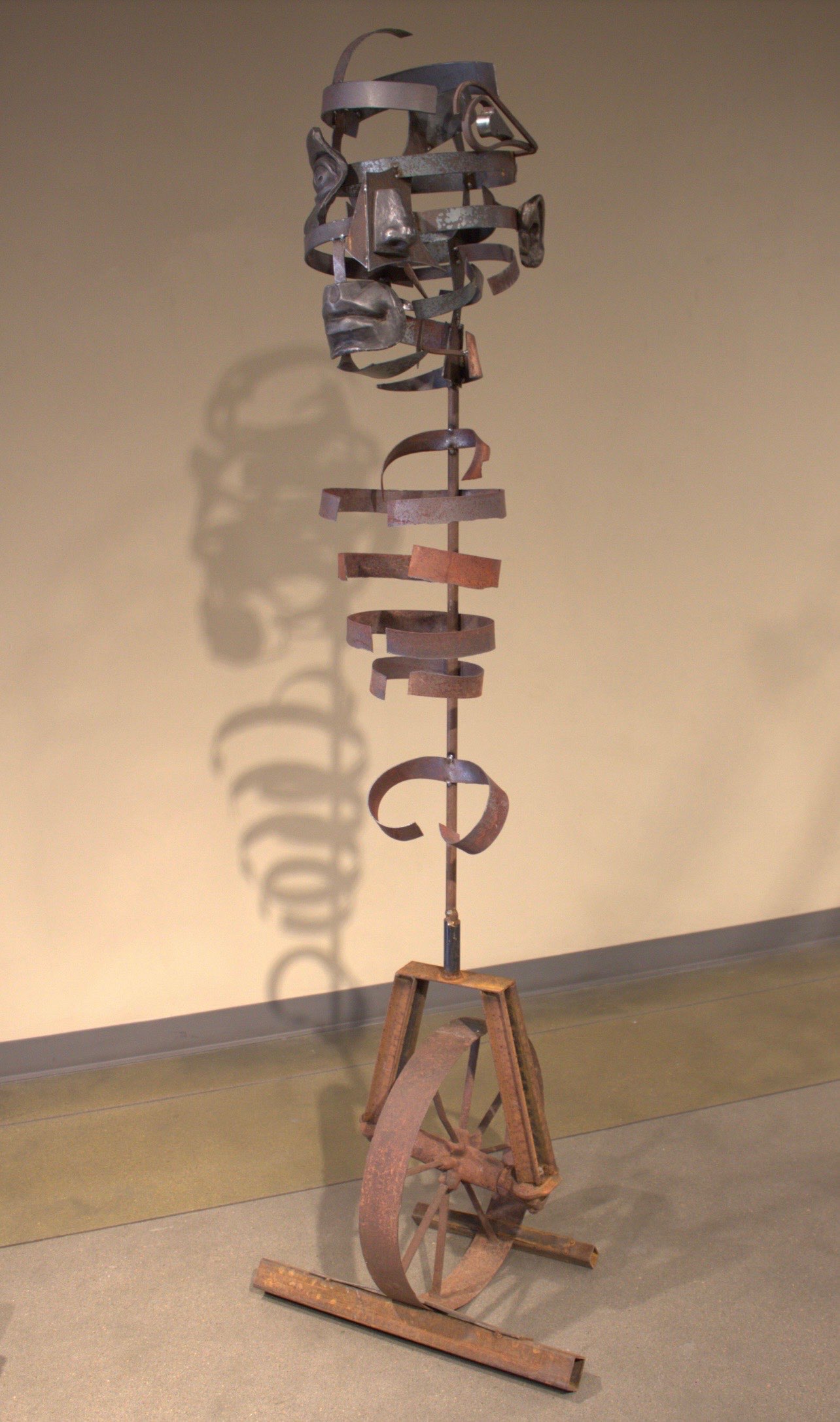
As Schluckebier continues developing his practice beyond graduate school, he plans to expand the scale of his work and pursue additional exhibition opportunities.
Schluckebier is currently still a student at FHSU studying sculpture and developing his artistic practice.
“I am planning to keep building new iron work and expanding the scale of what I'm doing as I move beyond my MFA,” Schluckebier said. “I want to continue showing in group exhibitions, especially spaces that are open to process-based sculpture and material driven work.”