


By ALIN HETT
Hays Post
A Hays resident who takes an ACCESS bus to work could soon finish a shift with no ride home.
Starting Dec. 1, ACCESS will end Saturday service and stop picking up riders after 6 p.m. on weekdays.
Sunday service in Hays ended July 1.
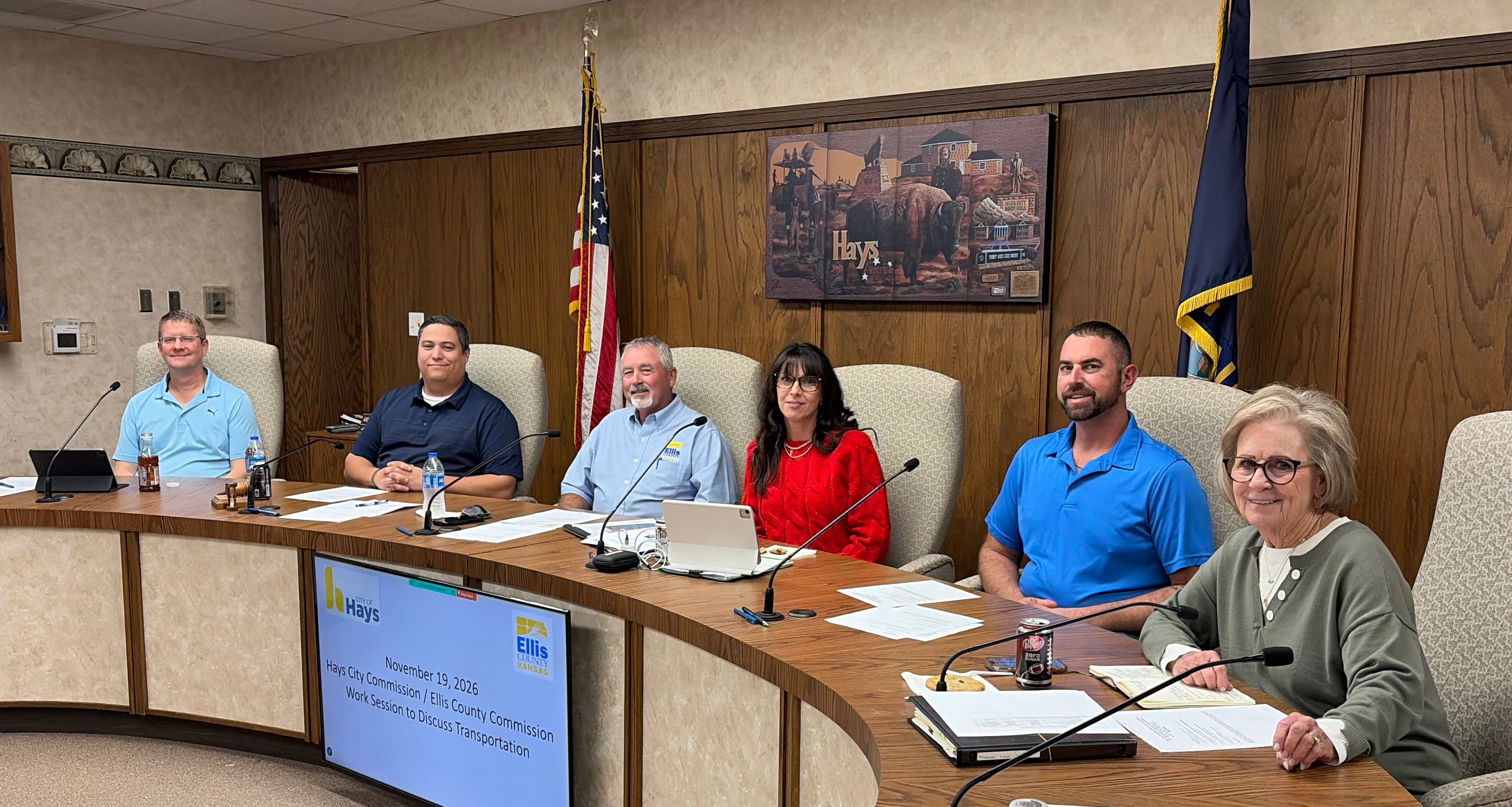
With these cuts approaching, Hays city commissioners and Ellis County commissioners met Thursday night at Hays City Hall to discuss who should run public transportation and how the community will pay for it.
Developmental Services of Northwest Kansas, which has operated ACCESS for more than 30 years, has committed to running it through June 2028.
Officials have considerably less time to decide what comes next. By October 2027, preparations for the next state transportation grant will need to be underway.
Neither commission took a vote Thursday. Members asked for an estimate of what it would cost the city or county to take over ACCESS and discussed meeting again Jan. 7.
Sandy Jacobs, Hays city commissioner and a member of the ACCESS Transportation Task Force, said that despite living in the community her entire life, she knew little about its transportation system before joining the group. She said the two commissions needed to understand what riders depend on before they could decide the service’s future.
“Sustainability is the word that I’m looking for,” Jacobs said. “We have to find a way to be sustainable because there is a need in this community and in this county. This isn’t an overnight fix.”
What does this mean for riders?
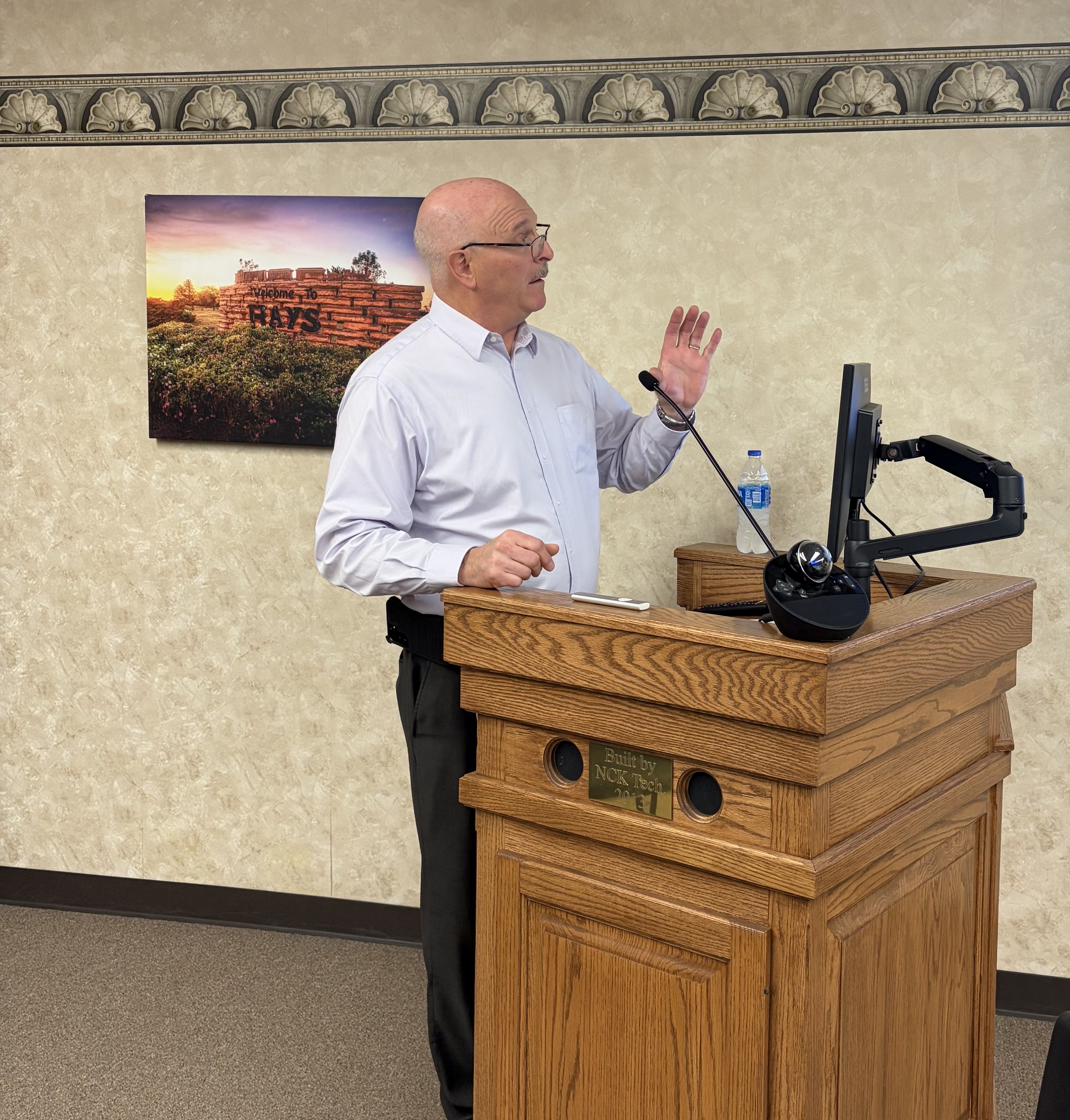
Jerry Michaud, DSNWK president and CEO, said one misunderstanding has followed ACCESS for years.
While DSNWK’s mission is to serve people with intellectual and developmental disabilities, Michaud said anyone in Hays or Ellis County can schedule an ACCESS ride. Michaud said a one-way trip costs $3 within Hays or $5 for a county trip, such as a ride from Ellis to Hays.
A task force survey drew about 485 responses. Riders use ACCESS to get to work, buy groceries, attend school and reach medical appointments, according to the survey.
Commissioners heard that some passengers depend on the service for dialysis three times a week. ACCESS staff also reported an increase in trips from Ellis to Hays after the grocery store in Ellis closed.
Michaud said some people ACCESS serves who work weekends had already begun looking for other ways to get to their jobs after Sunday service ended.
The upcoming December cuts will also affect riders who work a Monday-through-Friday schedule. Someone who gets off at 5 p.m. will have an hour to get groceries and catch a ride home before service ends, with no Saturday pickup to fall back on.
Wade Kruse, transportation manager for ACCESS, reinforced Michaud's statement in how many users depend on the public transportation to get to work.
“I would say probably 60% of our people, maybe 50 to 60% of the people go to work,” Kruse said.
Kruse did say one Saturday option will remain. Tiger Transport, the free Fort Hays State University shuttle, will continue its fixed route between campus, Big Creek Crossing and Walmart. Kruse said FHSU pays toward the service, which is open to students.
Riders who need an ACCESS pickup at home or a ride to another destination will have to schedule it during the new weekday hours of 6 a.m. to 6 p.m.
Why funding falls short
DSNWK reported an estimated $112,000 shortfall earlier this year. Michaud told commissioners that in 2025, before the service cuts, ACCESS recorded an operating loss of about $117,000. Michaud said the agency used remaining pandemic relief funds to cover that gap.
Alaina Cunningham, Hays vice mayor and a member of the task force, said, “Obviously, public transportation shows that it’s valuable to our community currently, and there’s a need for it in the future,” Cunningham said.
Michaud said DSNWK submitted its fiscal year 2028 grant application to the Kansas Department of Transportation on Thursday.
Even with the additional local support and reduced hours, the proposed budget leaves DSNWK with nearly $38,000 to cover if the state approves the full request. That figure also leaves out the cost of replacing vehicles as they wear out.
Jarrod Kuckelman, Hays assistant city manager, compared local government spending on transit in Hays with spending in Dodge City, Garden City, Liberal and Emporia, calling them peer communities. The presentation showed currently that all four contribute more than Hays and Ellis County had originally budgeted.
Kuckelman cautioned that his comparison used figures from before the city and county added funding this year and that the communities operate different kinds of transit systems.
Dodge City, for example, operates its own system and contributes about $300,000 a year from its general fund. In Garden City, a nonprofit operates transit with about $525,000 in combined city and county support.
Who's responsible for public transportation and ACCESS
Last month on Oct. 20, Ellis County commissioners voted 3-0 to provide an additional $22,500 for ACCESS’ 2027 budget.
Nathan Leiker, Ellis County commissioner and a member of the task force, said the additional money bought time. He questioned whether DSNWK should continue covering losses on a service used by the entire community when those dollars could otherwise support the people the nonprofit was created to serve.
“I think with increased funding from city and county, probably comes increased oversight as well,” Leiker said.
The task force recommended moving general public transportation out from under DSNWK. Commissioners discussed whether the city or county could operate it, whether both could fund it together or whether a separate nonprofit could take it on.
A change in operators would also raise questions about the jobs and benefits of about 20 employees, as well as who would take responsibility for the vehicles, dispatch and equipment.
Jacobs asked for figures showing what another operator would actually have to spend. Officials discussed estimating the cost of staffing, vehicle replacement and restoring the hours ACCESS has cut, then subtracting fares, grant money and other existing support.
The amount left over would give commissioners a clearer picture of what local taxpayers or other partners would need to provide.
Commissioners also asked to see a 2017 study that found a fixed route was not feasible in Hays, along with newer maps showing where ACCESS passengers begin and end their trips. Those maps could help officials see whether enough people now travel between the same destinations to warrant another look.
Commissioners discussed Jan. 7 for their next joint work session so they could review the figures before budget discussions begin in the spring.
For riders, the more immediate date is Dec. 1, when the shorter schedule takes effect.
Any member of the public can ride ACCESS, as the service is a public transportation. Rides can be scheduled by calling ACCESS at 785-628-1052.