


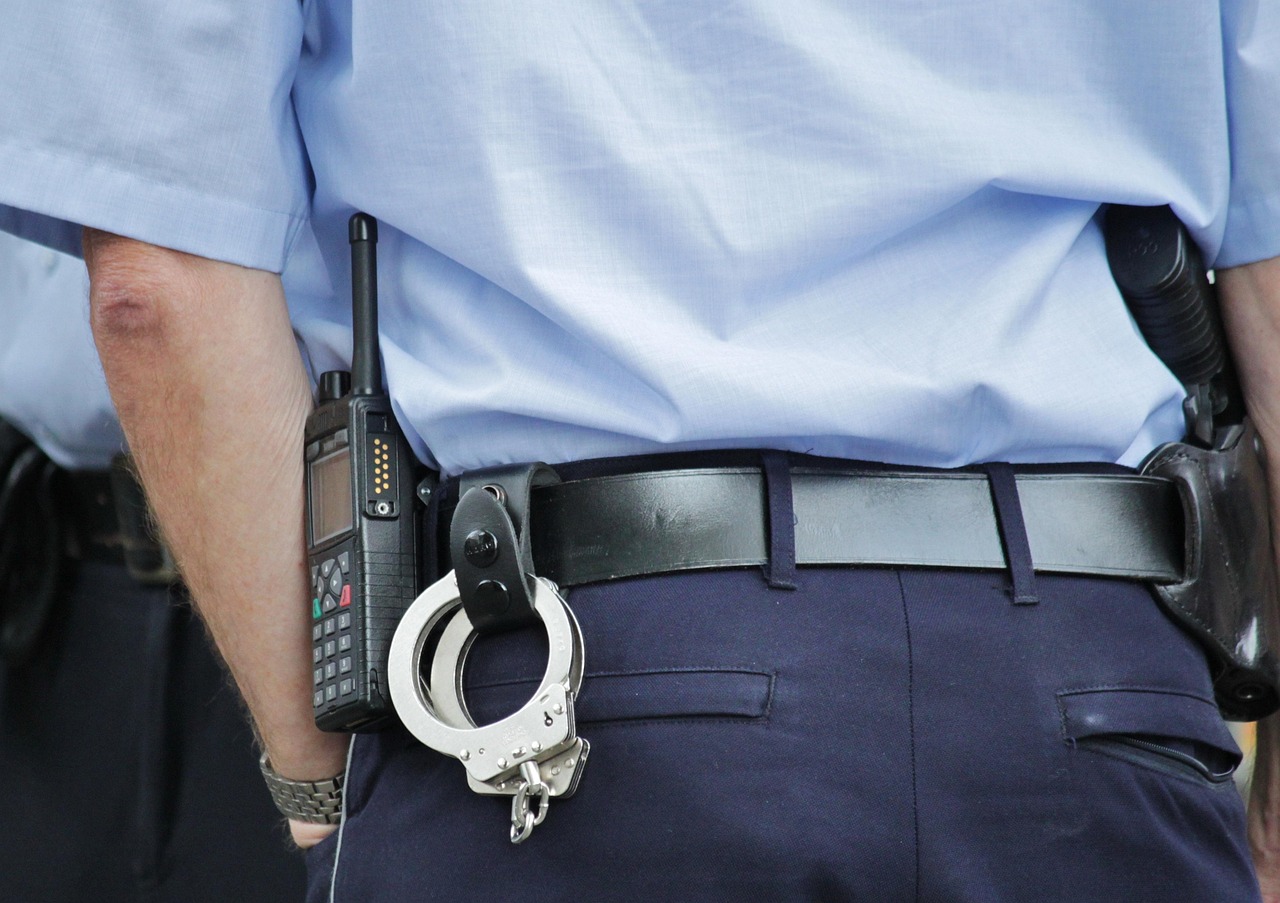
FHSU base for officer de-escalation training
By CRISTINA JANNEY
Hays Post
Fort Hays State University hosted law enforcement officers on Friday to recertify as trainers in de-escalation techniques.
The FHSU Criminal Justice program is home to the Central Regional Training Center of the National De-Escalation Training Center.
The center staff has trained more than 5,000 law enforcement officers across the United States.
As a result of the training, almost 60% of officers were better able to identify and respond to escalated situations, according to the center.
Following de-escalation training, 95% of the officers involved demonstrated high skill in applying de-escalation techniques (compared with 30% before training), the center reported.
Participants in the class shared their thoughts on the importance of the training and how it helps them in their work.
"The why, simply put, is to give better tools to first responders across the country so they can be more effective in de-escalation. We just want to make everyone safer—law enforcement, civilians, everybody," said David Vilaysing, former Hays Police officer and owner of DXI Training Solutions.
Steven Herold, Transylvania University police chief and former Racine, Wisconsin, officer, said the training allows officers to learn in days what could take years to learn on the streets.
Vilaysing said, "I think that's one of the reasons the instructors in here love this course, because they all have that light bulb moment they can think back on their career—the things they had learned the hard way."
Ryan Rogers, an Oklahoma State trooper, said the training helped him think about how he approached situations and regulate his own responses.
"If I can control myself, it helps a lot," he said.
Vilaysing said, "We preach in every class that the most important factor in de-escalation is an officer's self-control. It's easier said than done.
"We give tools and resources to the students so they actually understand themselves and why they tend to communicate in certain ways. ... Only when we understand ourselves can we begin to understand others. That is the foundation of emotional intelligence," he said.
Vilaysing said people's natural tendency is to treat others as they are treated. The training helps officers adapt their responses, even when faced with disrespect from others.
Herold said that when he entered law enforcement in the 1990s, he was taught to engage suspects at one level higher than they were.
Herold said that while he was working in Wisconsin, he had a citizen complaint lodged against him. He said he didn't violate the law, but he could have heard the person out.
"Had I taken a few more minutes to listen to him on the scene, I probably would have avoided that complaint altogether," he said.
Vilaysing said before he left the Hays Police Department, he was on a call during which the Kansas Highway Patrol chased a man going 130 mph into Hays. The chase ended with the suspect up on a roof.
"It was me and two other officers on the roof that were able to de-escalate that situation, talk to that individual, and get him to come down the ladder of his own accord," he said. "As opposed to getting into a physical confrontation with him on a rooftop or worst case scenario, him jumping off the roof as he had threatened, as soon as we stepped on the roof.
"We prevented a potentially serious injury from happening to that individual because I recognized what was going on and, thanks to this training, what approach needed to be taken," Vilaysing said.
Rogers, a former Marine, said using force was not a problem for him. He said force can always be an option, and there are situations you won't be able to talk your way out of.
However, de-escalation gives you other techniques and options.
"Here are some things that I can do to keep this from going higher," Rogers said. "It means less paperwork for me, less stress on my job, less stress on people around me."
Rogers gave the example of a driver stopping in the middle of the road during a traffic stop. This is likely to heighten his response, as the driver has put him at risk of being struck by another vehicle during the stop.
"This training has helped me process things a little bit differently," Rogers said. "Normally, I would have probably yelled at them for stopping in the middle of the road. ... Now, I'm giving her a reason why I'm a human and why I lost my cool. Here's why you can't do what you just did."
De-escalation trainers on ICE
Vilaysing said all departments and officers, including ICE officers, could benefit from the de-escalation training.
"There are still agencies out there that aren't doing any de-escalation training," he said. "We will get sent to agencies and be told this is the first de-escalation training I've had in a decade. Some of them don't even remember if they had it at the academy. It is very much needed across the country."
However, Vilaysing said nothing works 100% of the time.
"The situation is going to dictate," he said. "When things are that extreme and that out of control, we always say force must be an available option. At the end of the day, police officers are going to go home.
"At no point do we tell a police officer or a first responder to jeopardize their safety or the safety of another person so they can de-escalate," he said.
Rogers, who said he has been through riots as an officer, said the situation in Minneapolis is so heightened that it may be difficult to de-escalate through talk.
Rogers said, "If you are at a level of heightened aggression, if I try to talk to you and reason with you and work some of these avenues that we teach, it's still not going to reach out to you.
"If I'm talking to a person who is of a clear mind, it might work, but most of them are so agitated, they are not listening to rational thought anyway."
Rogers said it helps if both sides can give grace.
"We don't get it right 100% of the time, but we're going through training and offering training so other officers can better themselves," he said.