


By KAREN MADORIN
In addition to planting vegetables and fruits in our garden, we sow sunflowers, zinnias, cosmos, and marigolds. They add eye appeal to vining melons and squash, peppers, tomatoes, okra, and cabbages. In addition, they attract pollinators to increase our harvest, and provide seedheads to feed birds. It’s win win for us, insects, and birds. This year, a dastardly interloper we never heard of invaded our sunflower patch.
The first hint of trouble was finding ready-to-bloom buds dangling lifelessly from mature plants. We’d anticipated enjoying bright blossoms waving in Kansas breezes until something occurred overnight, leaving multiple blooms lifeless against sturdy stalks. First guesses had us wondering if a heavy-bodied bird perched and broke them. No evidence supported that. Upon closer look, something girdled stems about two inches under the bud. We looked for caterpillars or beetles but saw nothing to prove that hypothesis. Our detective department now batted zero vs. the bud destroyer.
Speculation increased. Two avocational gardeners wandered the garden minus Sherlock Holmes hats and magnifying glasses, tossing about possible assassins. We’d had a crossbill irruption locally and found ourselves hosting an adult male, female, and 3 juveniles. Those hooked, crossed bills looked like they could do serious damage. However, research indicated they used their intriguingly crossed beaks to access seeds from cones dangling from our 5 pines. Not the perpetrator….
Usual suspects joined the lists, but we’d seen nothing to suggest friendly little house finches had skills or tools to completely sever stems up to ½ inch in diameter. As light as they are, they don’t damage plants they utilize as landing zones. As annoying as grackles act, they never touched down on the sunflowers. Robins and thrashers prefer bugs so they hunt our lawn or the base of our garden plants, not sunflowers.
Our next strategy involved Google combined with AI. I wrote everything that might help an artificial brain solve this mystery. Within minutes up popped the answer—Sunflower head clipping weevils. Seedlike weevils have invaded my flour which led to waste, but I’d never heard of much larger sunflower head clipping weevils. In this case, their modus operandi matched our sunflower damage.
The female of the species lays her eggs on the bud, girdles the stems so it eventually drops to the ground, and moves on to see how many more potential bird-feeding stations she can wipe out while she lays more eggs. Her offspring later hatch and dine on the dead flower.
Despite searching dawn to dusk, we couldn’t find one of these criminals though we found continued evidence of these bud annihilators’ nefarious activity. One afternoon, we positioned ourselves on the deck and scanned the garden. One sunflower opened as we watched, an unexpected bonus.
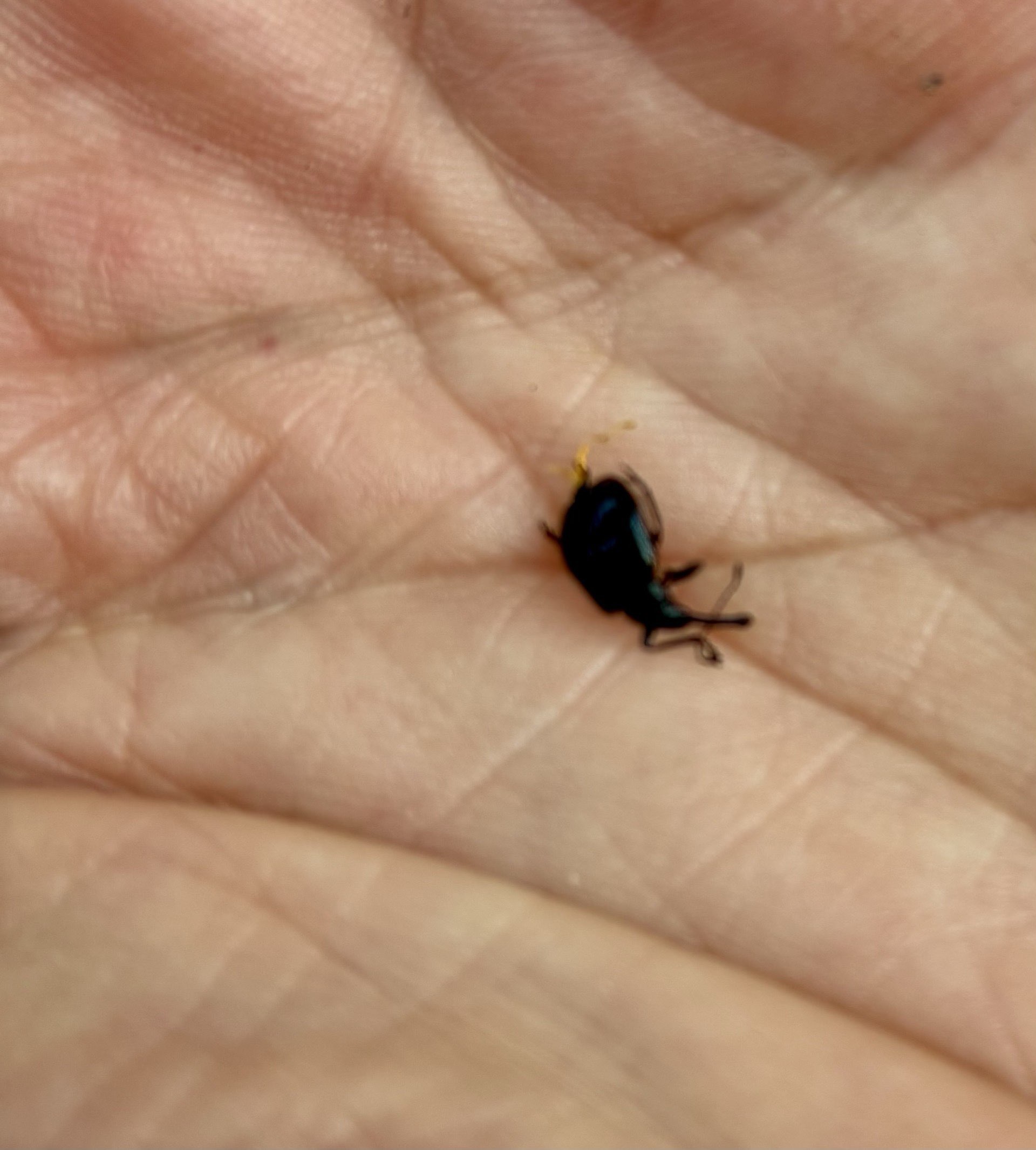
In the meantime, birds splashing and squabbling in the bird bath distracted us. When that show ended, I glanced at the opening sunflower to discover it now dangled lifeless. My hubs swiftly crossed the yard and caught that culprit in action. He returned holding a squished, long-snouted, dark 5/16th inch weevil--one of several wreaking havoc amongst our blossoms.
Unfortunately, we face a learning curve to figure out how to control this invader without poisoning our garden food and birds. If only we could inspire the flocks we feed and water to join forces to hunt and devour such destructive insects.