



By STACY CAMPBELL
Cottonwood Extension District
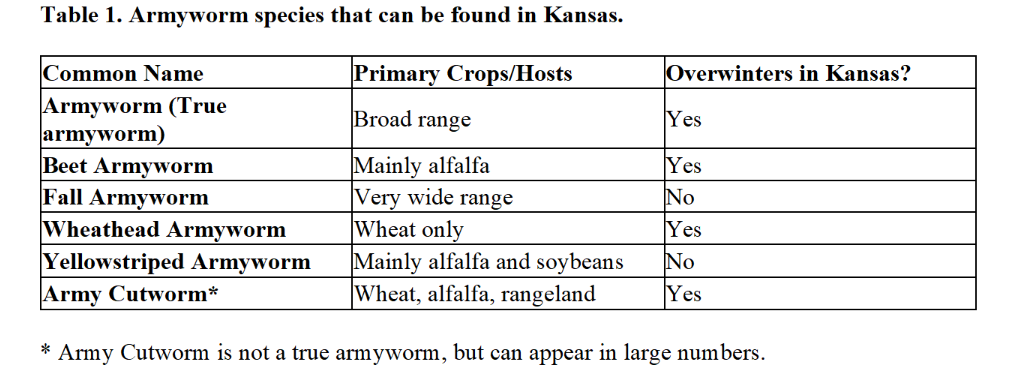
Armyworms are a recurring pest issue across Kansas, but several different species fall under the “armyworm” umbrella. Each species varies in its host plants, seasonal activity, and whether it overwinters in the state (Table 1). This article prepared by Jeff Whitworth, K-State Extension Entomology Specialist provides an overview of the major species of concern, with emphasis on the Fall Armyworm and Armyworm, which were the primary issues for Kansas producers in 2025. A brief summary of the Army Cutworm, which is not a true armyworm, is also included.
Major Concerns in 2025:
The two species that caused the greatest concern to Kansas producers in 2025 were: Fall armyworm & armyworm (true armyworm). Summaries for each species follow.
Fall Armyworm key characteristics:
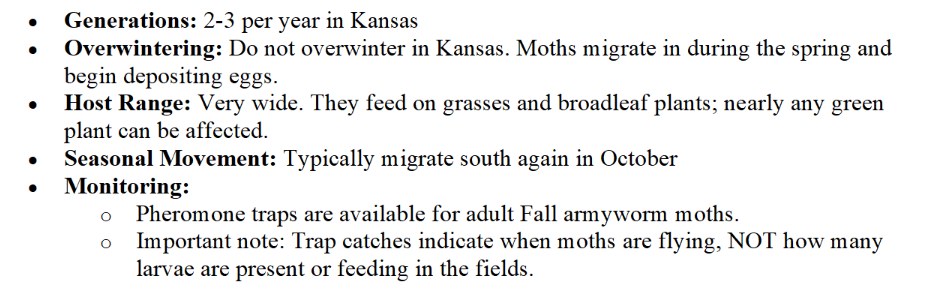
Identification: Inverted Y on head capsule and four dark spots on the last abdominal segment.
Armyworm key characteristics
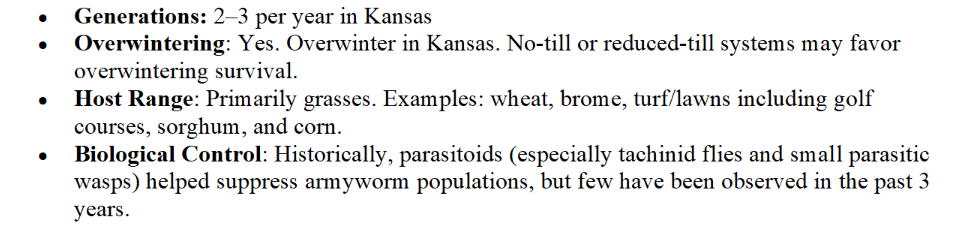
Identification: Larvae are green to black with stripes of various colors. Head capsule is medium brown with dark markings.
ARMY CUTWORM (not a true Armyworm)
Biology and Seasonal Behavior

Identification: Small larvae are light-colored with few distinguishable markings. As they grow, larvae become darker brown or grayish with varying degrees of mottling and several pale, dorsal stripes. The head capsule is darker brown with some mottling.
Damage - Army cutworms can severely thin or eliminate stands of wheat, alfalfa, and rangeland grasses. Army cutworms were present in large numbers in 2020 and decimated areas of wheat fields and alfalfa fields in parts of Kansas. However, this was not the case in 2021, and only a few were reported in 2022. Army cutworms develop into “miller” moths, which were a nuisance in spring 2024 and a smaller nuisance in spring 2025.
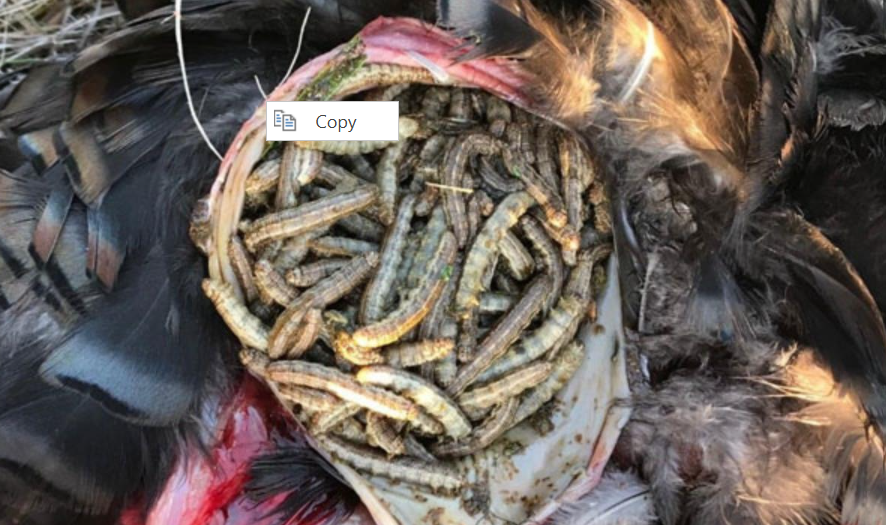
Turkeys often feed heavily on army cutworm larvae, sometimes with crops full of larvae (Figure 11).
Stacy Campbell is a Crop Production Extension agent in the Cottonwood District (which includes Barton and Ellis counties) for K-State Research and Extension. You can contact him by e-mail at scampbel@ksu.edu or by calling 785-628-9430.