


By ALICIA BOOR
Cottonwood Extension
It’s crunch time for homeowners and others who manage warm-season grasses in Kansas.
“Turfgrasses should be fertilized when they are actively growing,” said K-State horticulture expert Matt McKernan. “For warm-season grasses, that time is here.”
McKernan said late spring and early summer fertilizer applications are ideal for bermudagrass, buffalograss and zoysiagrass. Fertilizing too early, he said, does not help warm-season grasses, but rather encourages cool season weeds to grow.
“Northern and northwest Kansas can wait until May 30 or after to fertilize warm-season grasses,” McKernan said. “Those in other areas of the state can fertilize beginning now (mid-May). Fertilizing too late in the season can increase the turfgrass’ vulnerability to winter damage.”
McKernan said homeowners should avoid fertilizing warm-season turf with nitrogen after Aug. 15
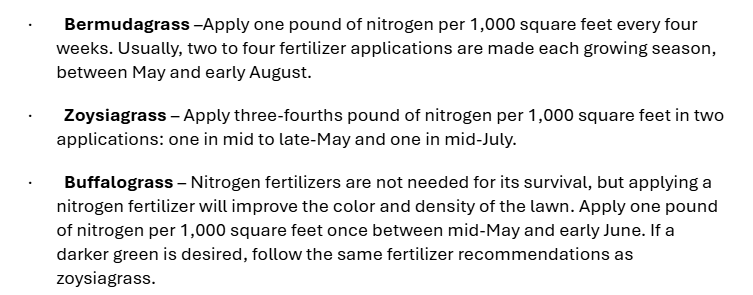
.Some recommendations for fertilizing the three most common warm-season varieties include
“Warm season lawns will naturally thrive on less nitrogen fertilizer and water than tall fescue or Kentucky bluegrass in Kansas,” McKernan added. “Keep in mind the more fertilizer and irrigation you apply, the more these grasses will need to be mowed. It is important to strike a good balance between how much you fertilize and how much you are willing to mow.”
More information on fertilizing a warm-season lawn is available in the K-State Extension publication, Fertilizing Kansas Lawns.
Alicia Boor is an Agriculture and Natural Resources agent in the Cottonwood District (which includes Barton and Ellis counties) for K-State Extension. You can contact her by e-mail at aboor@ksu.edu or calling 620-793-1910.