By CRISTINA JANNEY
Hays Post
The Midwest Energy board of directors approved an average 5.4% annual increase in residential customer electric rates each year for three years during a meeting on Monday.
The rate change will take effect Feb. 1.
The utility proposed the rate change to raise funds for infrastructure improvements, Mike Morley, director of corporate communications, said during a community meeting on the rate increases on Wednesday in Hays.
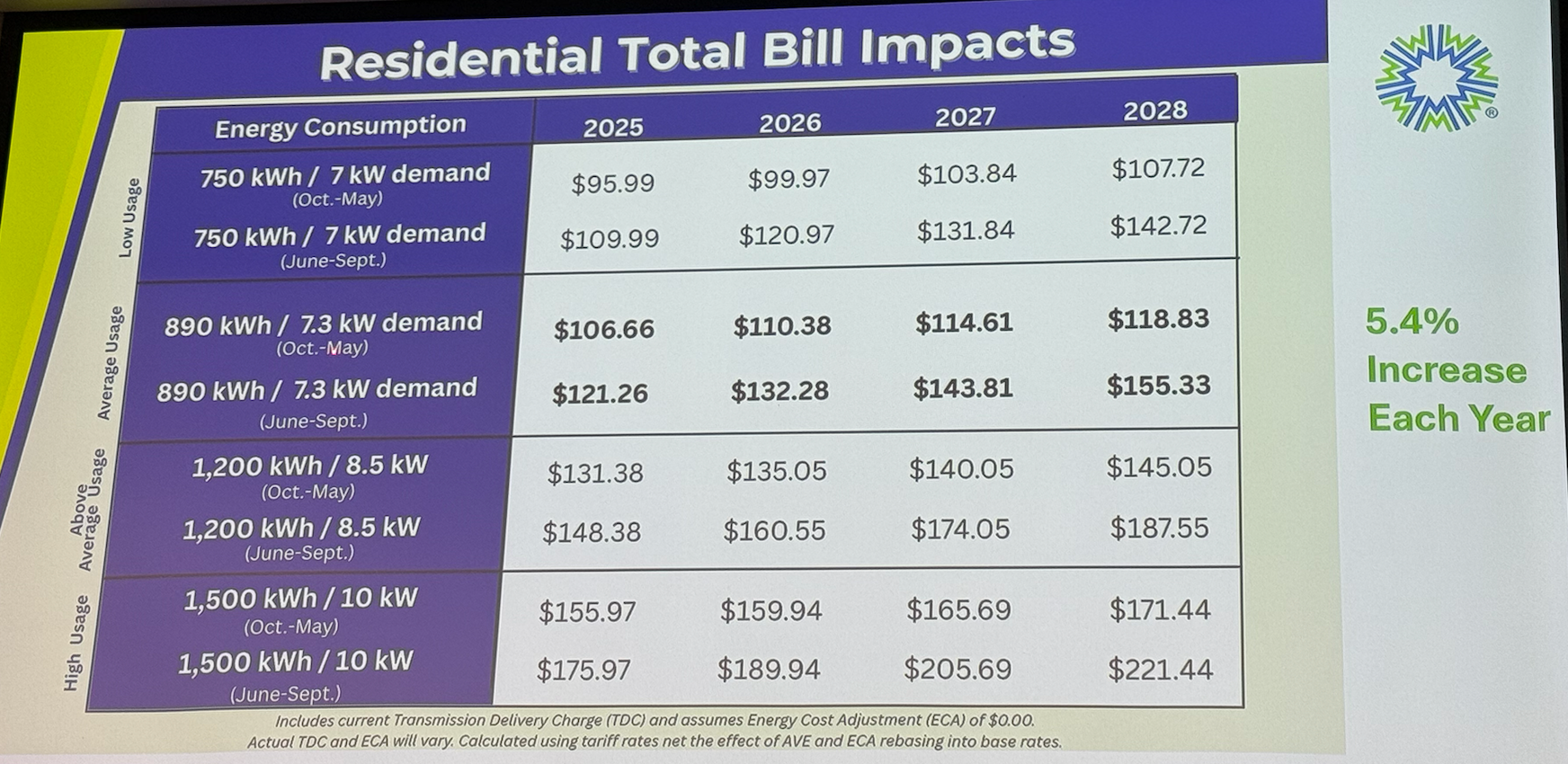
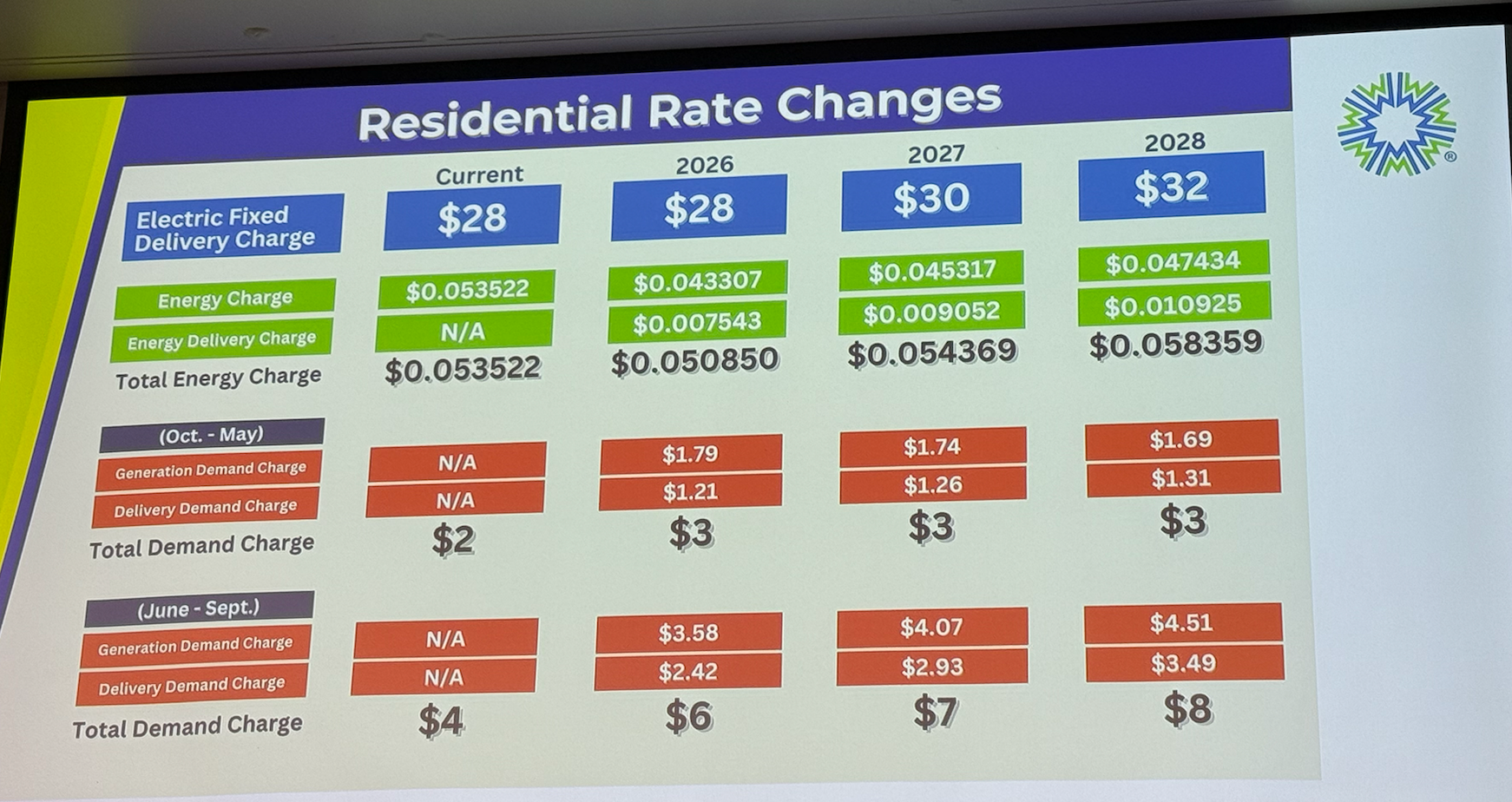
An average residential customer would see about a $12 increase per month by 2028, with a $34 per month increase in their utility bill in the peak months of June through September.
Morley shared several slides showing sample bills and how the rate changes might affect those households.
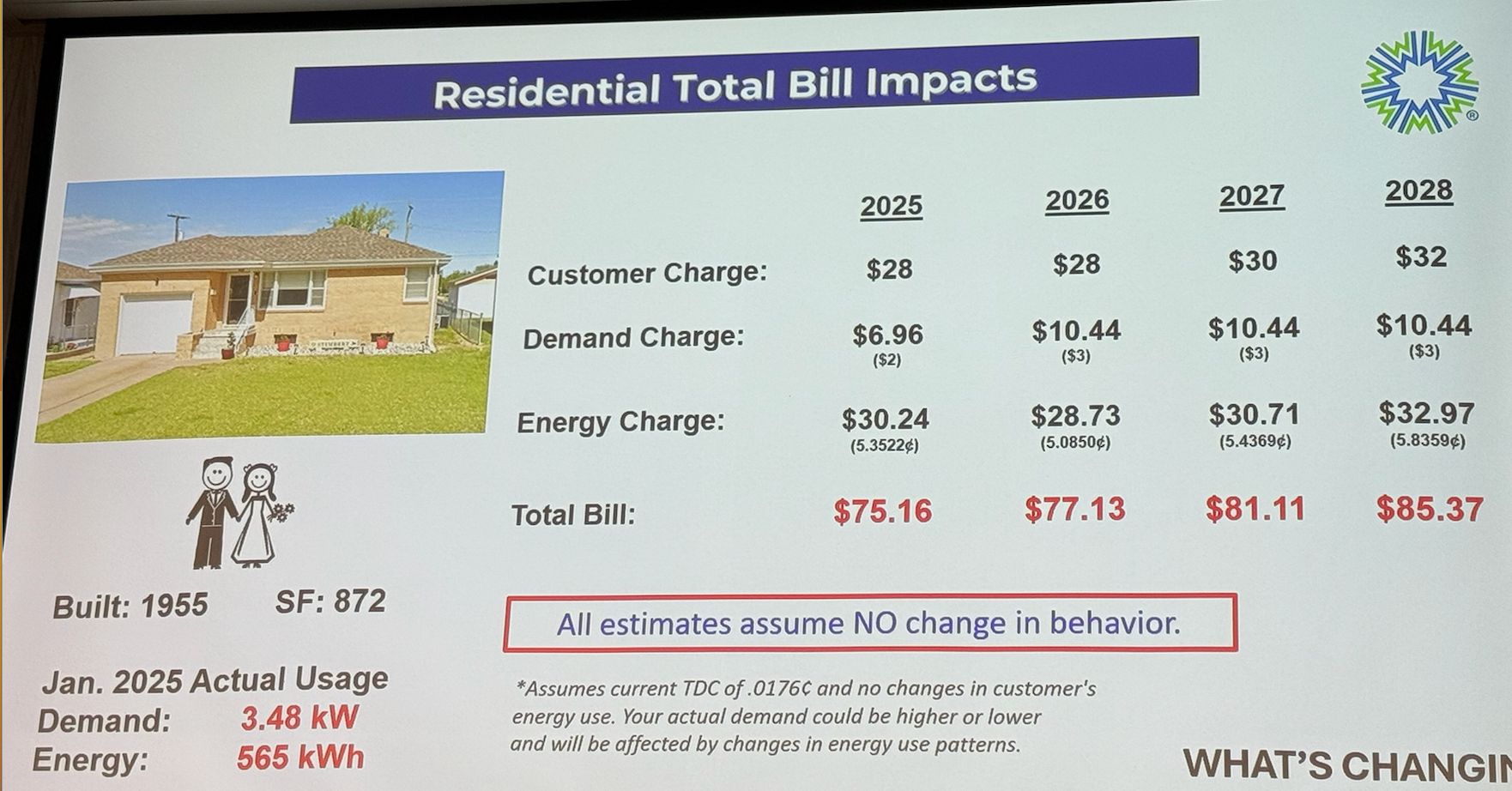
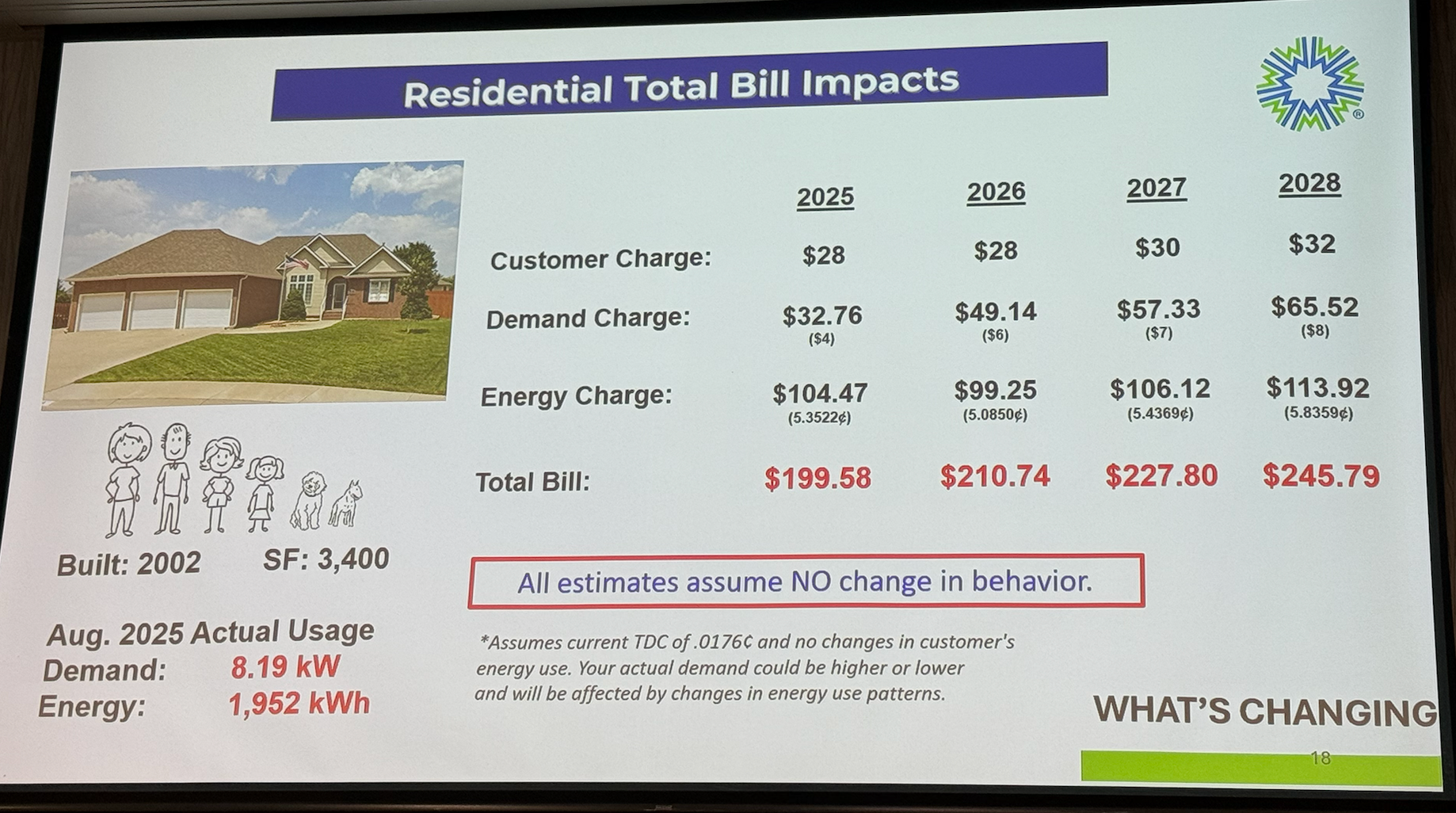
Morley said the sample bills above assume no changes in behavior. Reducing the use of high-energy appliances, such as electric ovens and dryers, during the summer demand hours between 3 and 7 p.m. can lower demand charges.
Morley said his family dropped their demand rate from 12 to 8 by not running their clothes dryer between 3 and 7 p.m. in the summer. A clothes dryer is about a 5kWh appliance. Running that appliance just once during peak demand times during the summer will raise your bill by $40, Morley said.
"If you do that one thing, you'll save over $100 a year on your bill," he said.
One audience member at the Wednesday community presentation said the increase will be significant and challenging for seniors to afford.
Another resident asked why the increase was not phased in earlier and spread out over time.
Morley referred back to the need to make infrastructure improvements.
Upon request, Midwest Energy will provide a forecast bill showing your probable increase based on your 2024 usage, Morley said.
You can also access usage broken down in 15-minute increments on Customer Connect on the Midwest Energy website. This can help customers see where their usage may have increased their demand rates, Morley said.
Other classes of electricity users will also see changes. Small commercial users would see a 2.6% increase per year for three years. Medium commercial users would see a 1.2% decrease each year for three years.
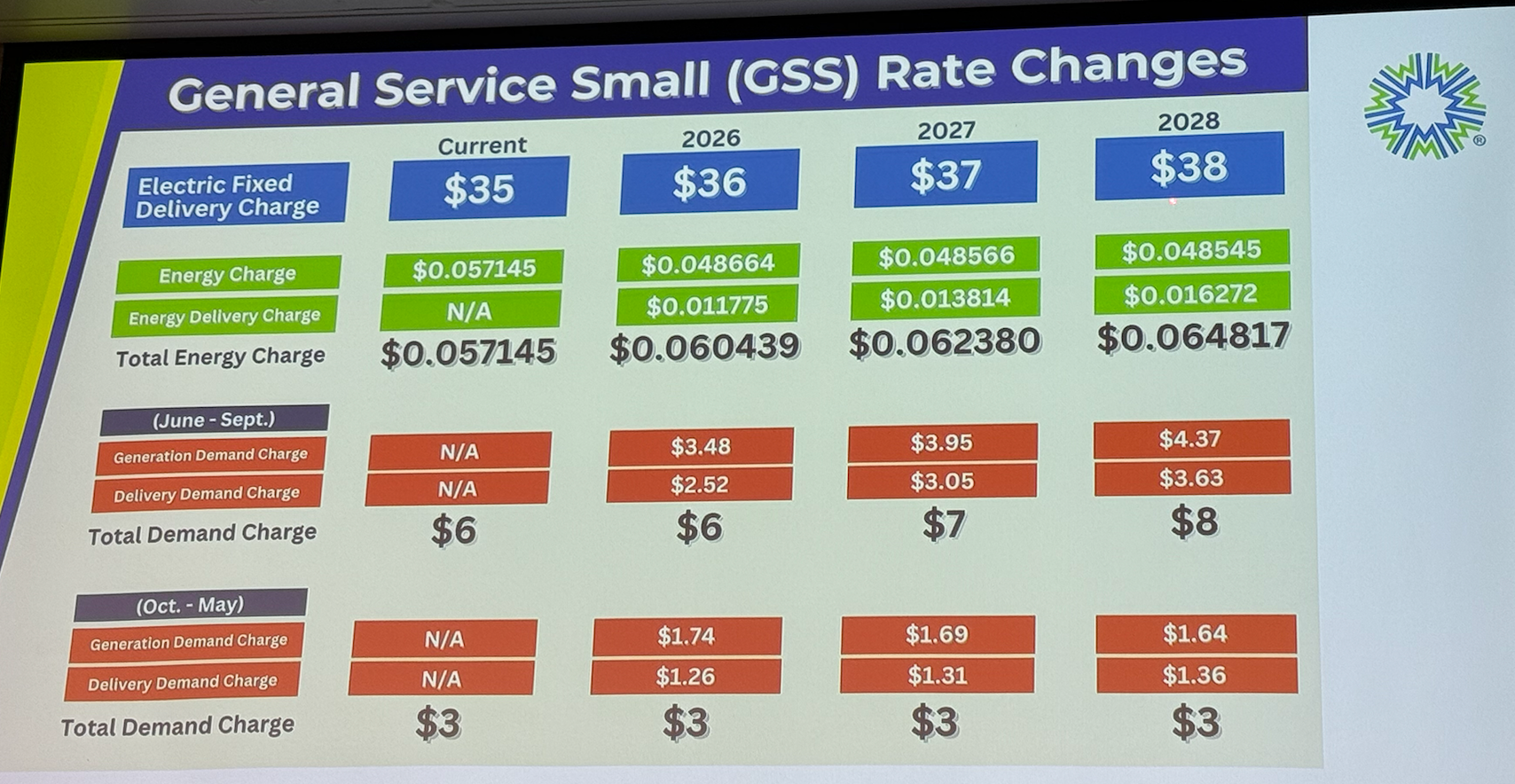
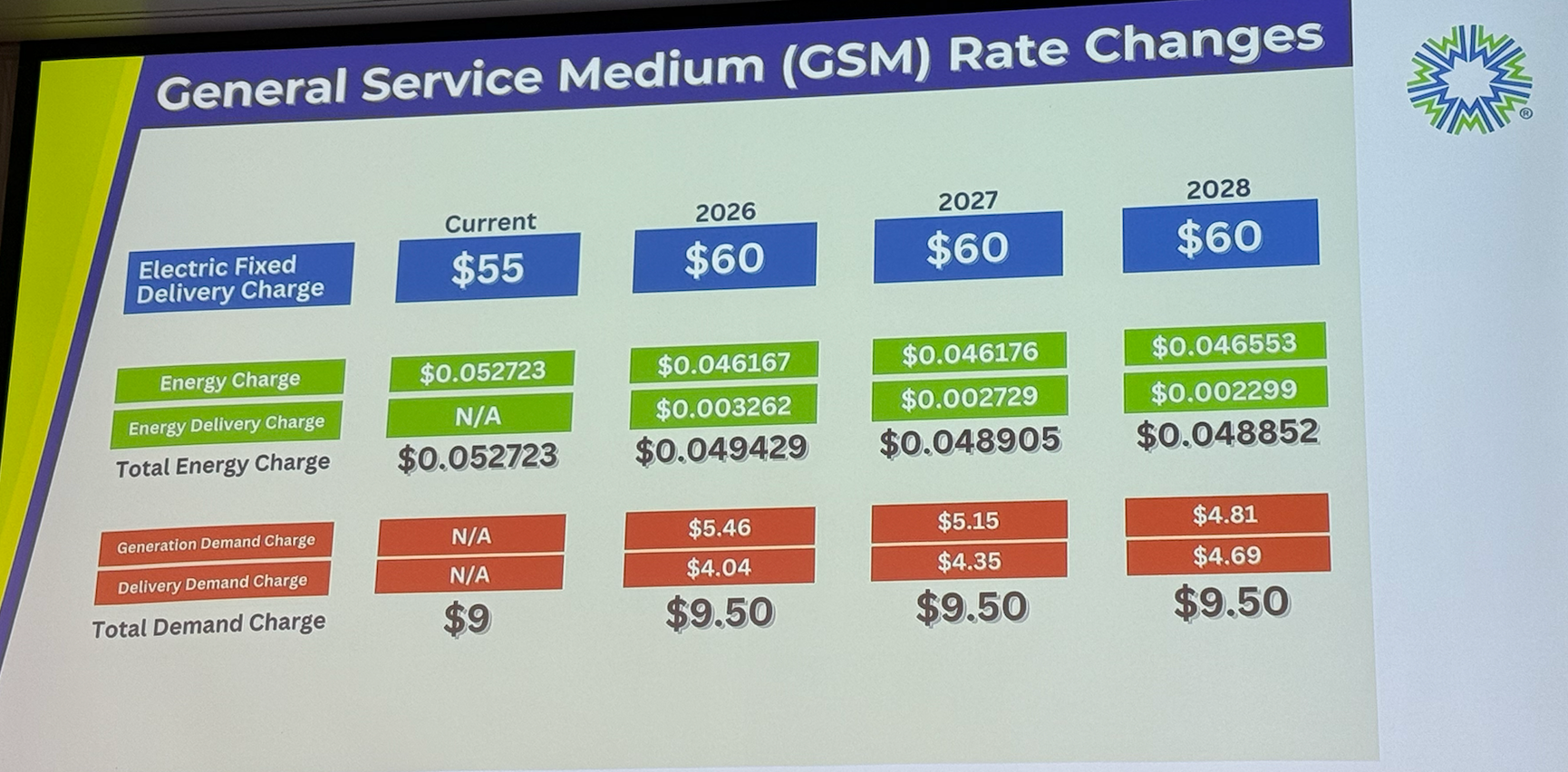
The rate change will also affect irrigation and oil customers. You can learn more about those changes by visiting the Midwest Energy website.
Morley said Midwest Energy is trying to equalize rates, which is why residential rates are increasing more than commercial rates.
Morley said it is the result of a cost-of-service study.
The study examines the amount of revenue required to sustain the utility's operations and then investigates disparities in how that revenue is collected and allocated among different customer classes.
"It is basically meant to rebalance your costs with your revenues in each class to make sure you're not overcollecting from one class or undercollecting from one class," Morley said.
Although the utility has not had a residential increase in the cost per kilowatt hour in years, it introduced demand rates in 2022.
Morley said reducing Midwest Energy's peak demand could potentially save millions of dollars, which could be passed on to customers as lower rates. However, the utility is facing regulations that require it to increase the amount of reserve capacity it has beyond its peak, which is also increasing costs.
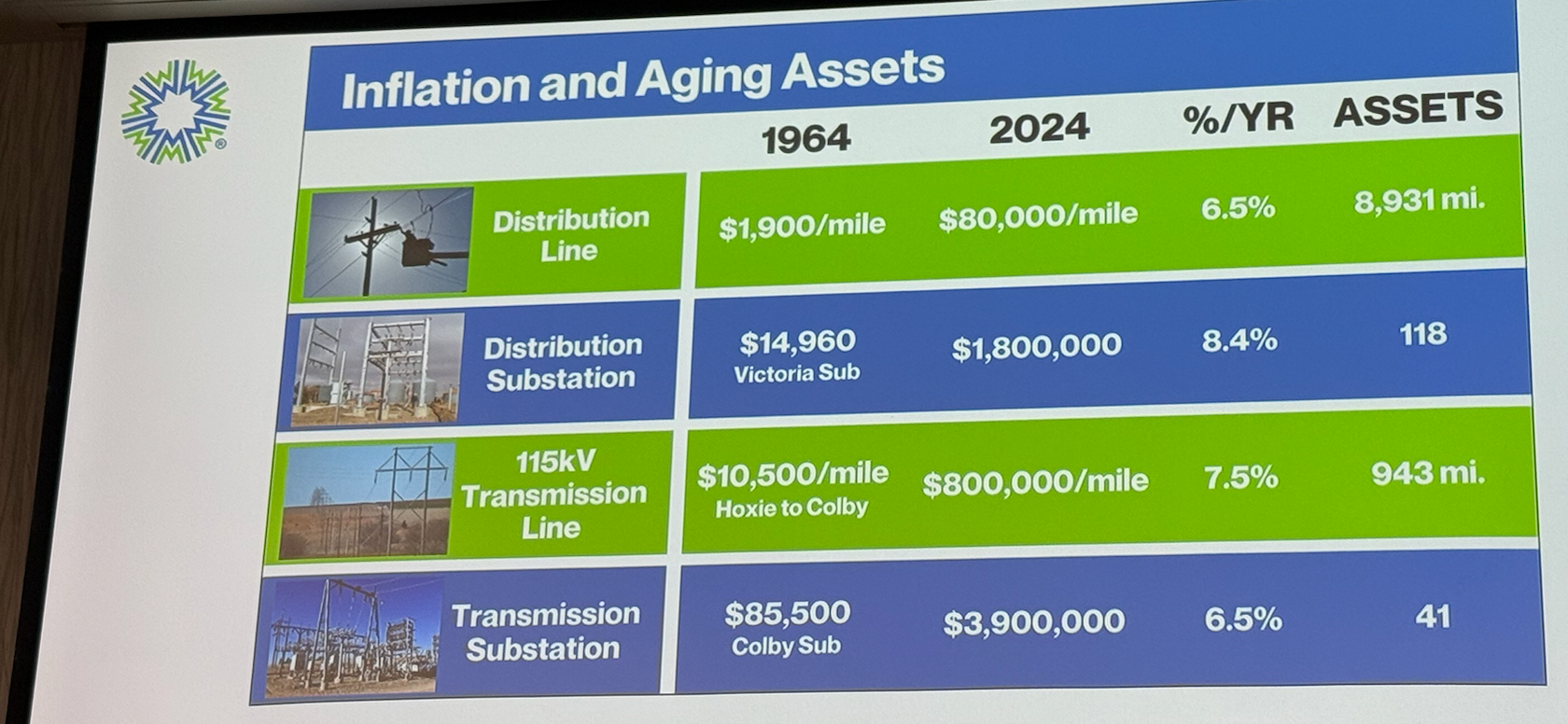
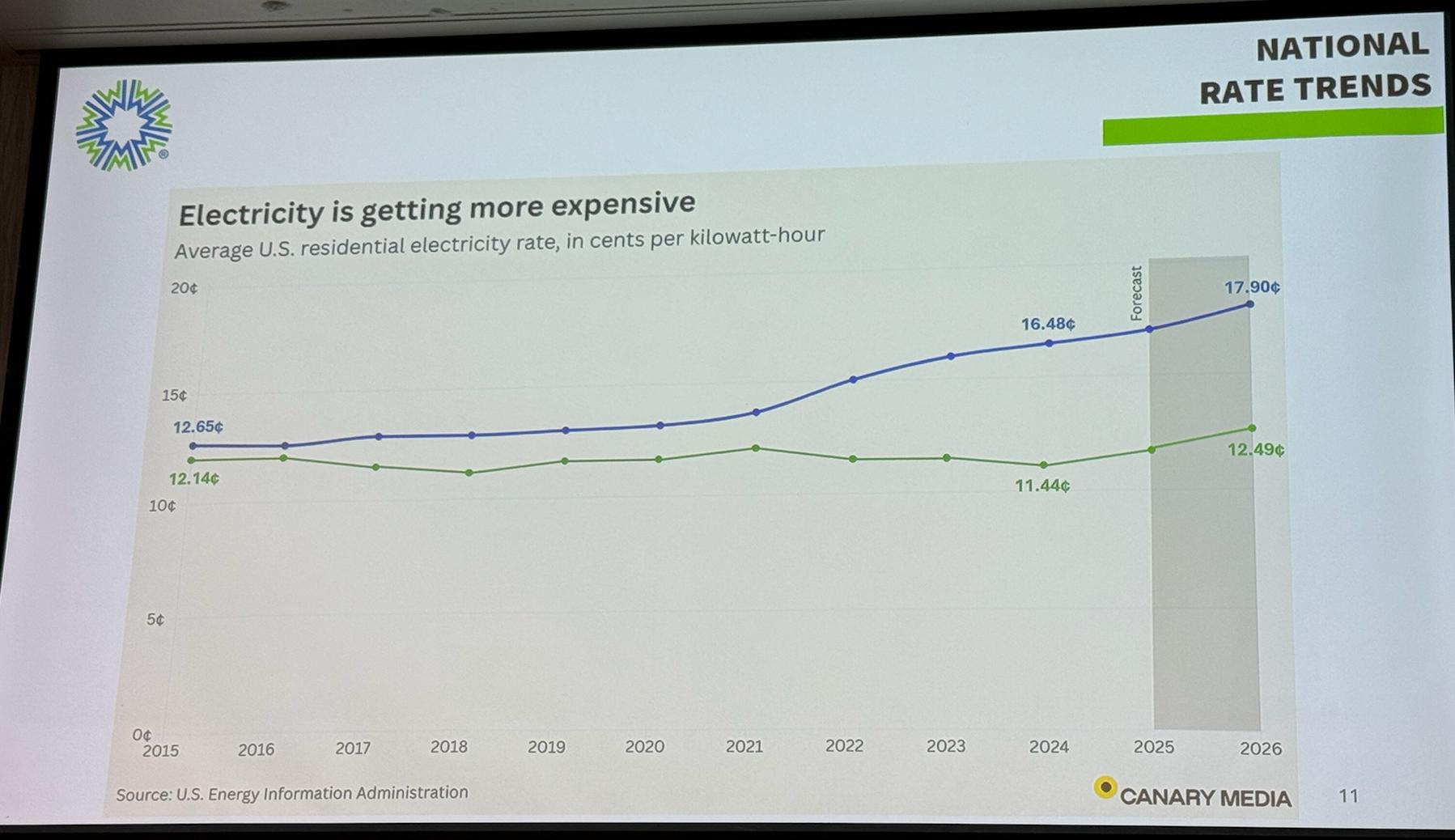
Morley said aging infrastructure, combined with an increase in costs to maintain that infrastructure, is driving up utility rates across the country.
The rate change is expected to raise $14.7 million over three years, Morley said. The funds raised through the rate increase will be used to fund electric distribution upgrades throughout the Midwest Energy system.
The primary repairs will focus on improvements within communities, rather than the large transmission system.
A significant portion of Midwest Energy’s infrastructure was installed in the 1950s through ‘70s. Poles have been replaced because of storm damage, but many of the conductors have not, Morley said.
FEMA has contributed to repairs after natural disasters in the past, but Midwest Energy can’t rely on those funds moving forward, Morley said.
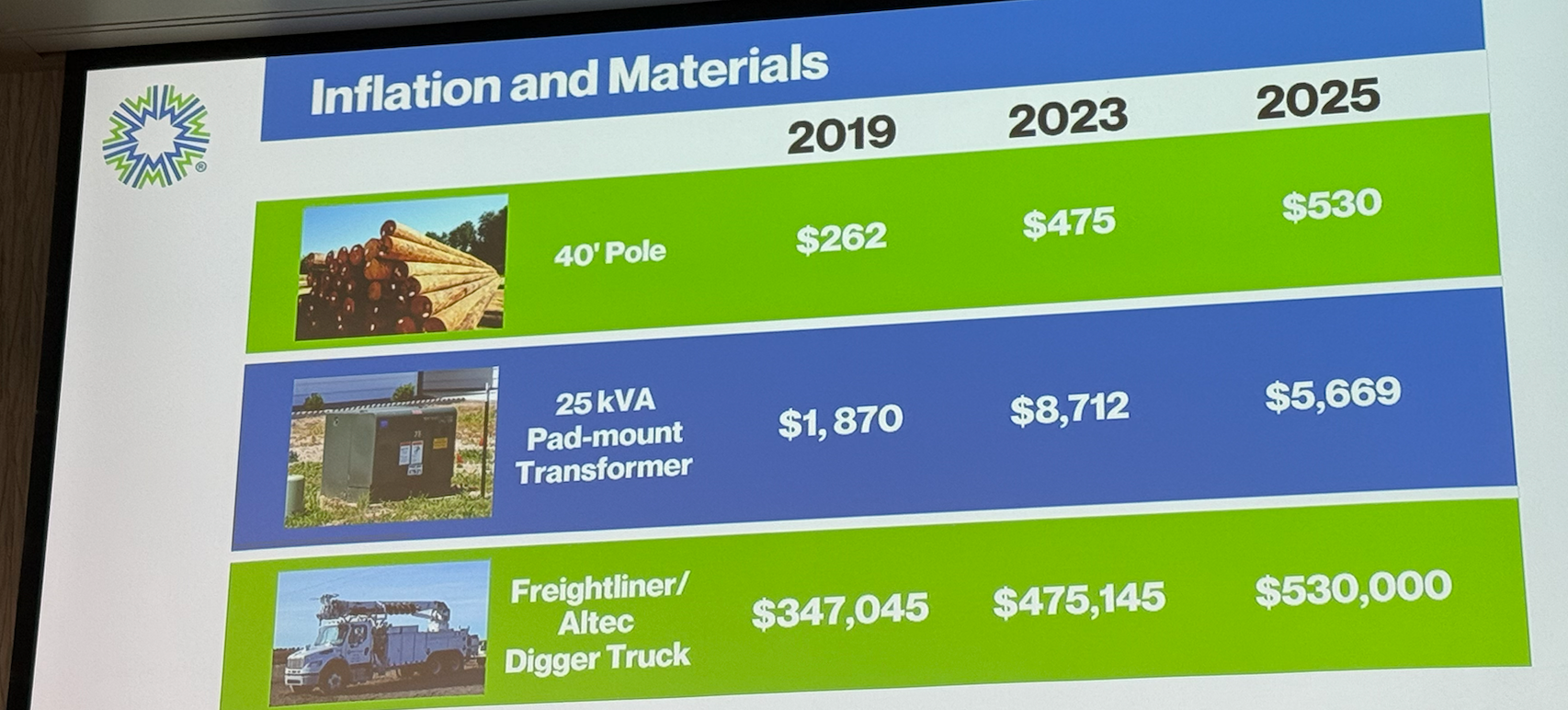
The utility has seen very significant increases in the cost to replace distribution lines, substations, transmission lines, poles, transformers and utility trucks.
Morley said Midwest Energy’s rates will still be lower than the national average. He attributed that in part to access to affordable wholesale energy, some of which comes from wind.
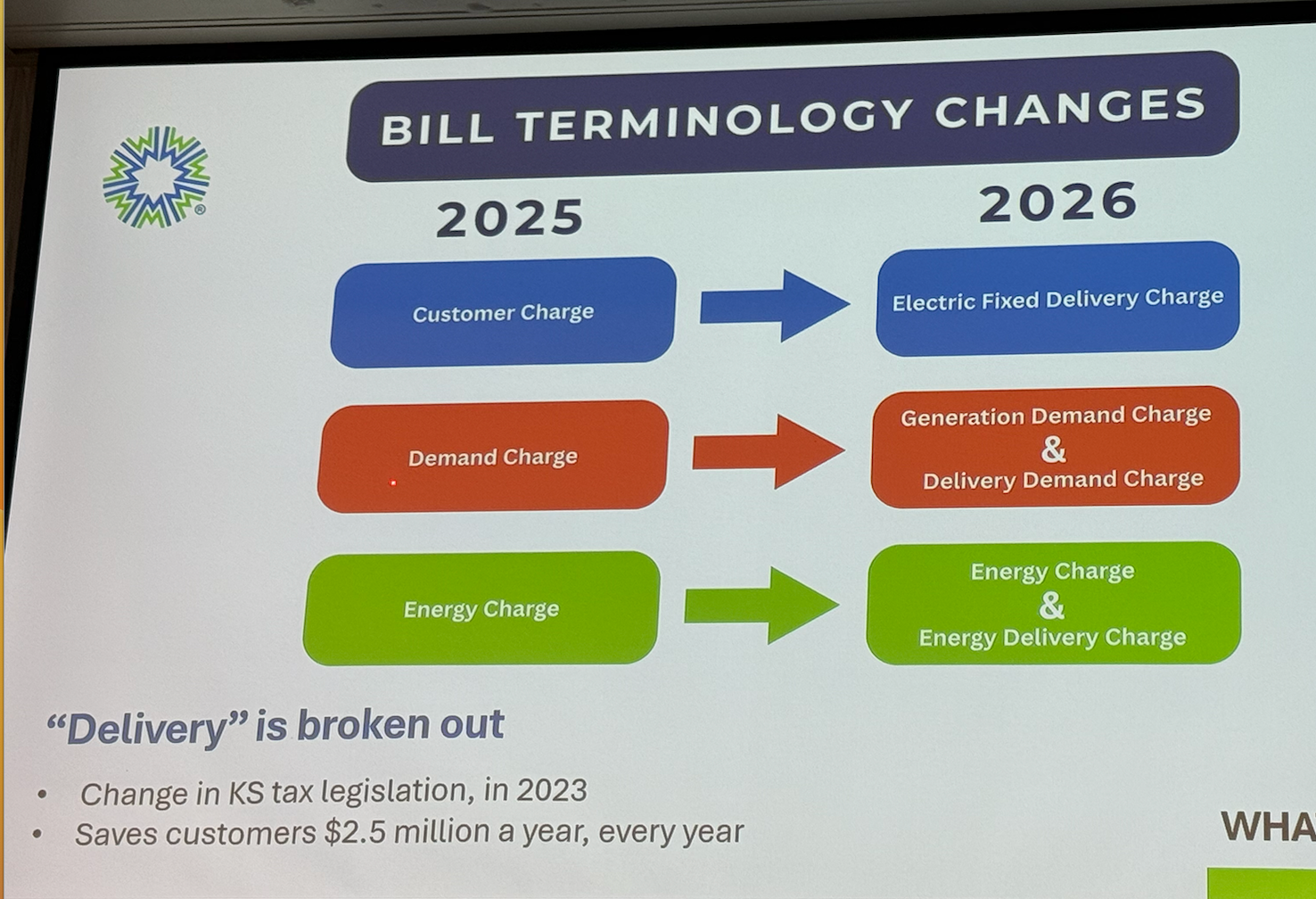
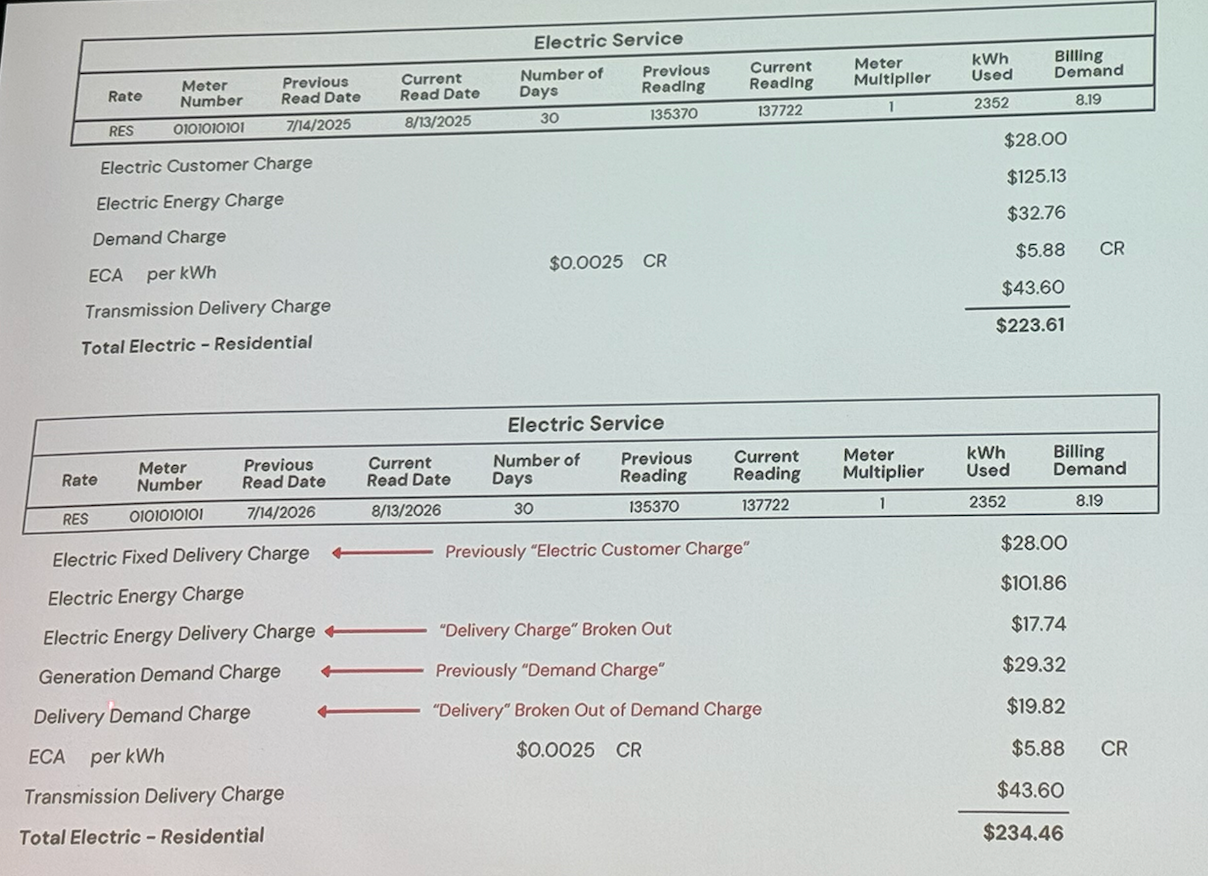
Midwest Energy will also be changing some terminology on its bills, listing customer, demand and energy charges as delivery charges. This change will exempt those charges from state sales tax, Morley said.
This will save customers $2.5 million per year.