


By CRISTINA JANNEY
Hays Post
The Hays USD 489 school board heard a report on its at-risk accountability plan on Monday.
The district has four years to help at-risk students improve their assessment scores, or it can lose up to $4.1 million in state funding.
“That seems counterintuitive,” Jayme Goetz, school board member, said.
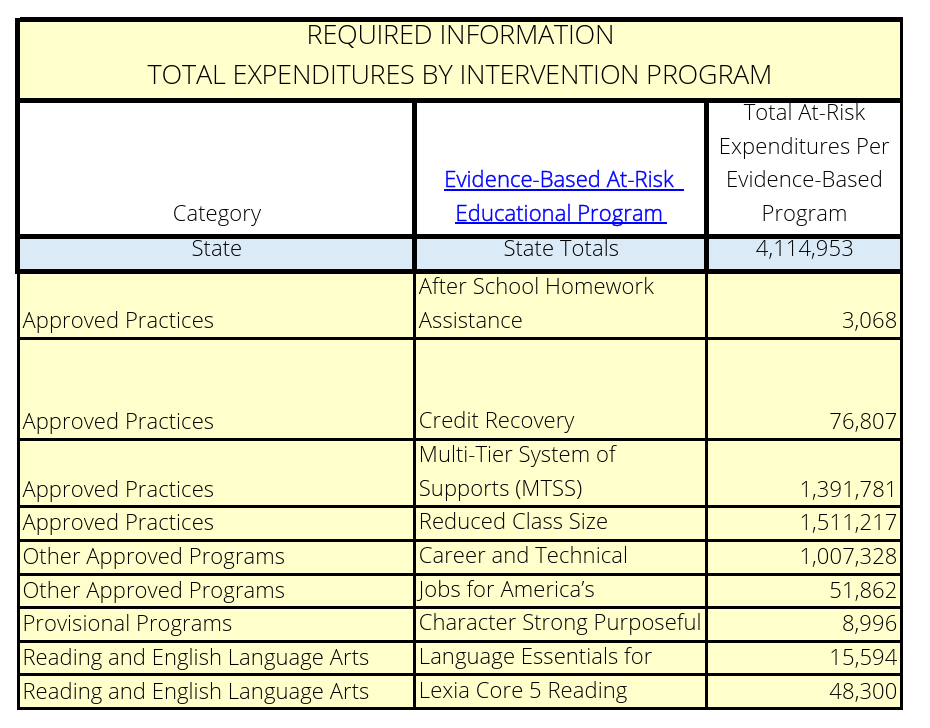
The Kansas Legislature passed a law in 2024 that establishes requirements to create at-risk student accountability plans, annually report on at-risk student performance, show longitudinal academic improvement for those students and report annually to the Kansas Board of Education on the progress of such plans.
Hays USD 489 has participated in a pilot program. All public districts must participate beginning this year.
If school districts don’t have 75% of students scoring proficient on the state assessment, they must participate. Only two school systems in the state meet the 75% requirements, said Shanna Dinkel, assistant superintendent.
Dinkel said the legislation requires school districts to choose two groups to focus on.
Hays chose third-grade and fourth-grade students, who are at-risk but are not special-education students. The third-grade group will have 70 students, and the fourth-grade group will have 83 students.
See the chart below for the students who qualify as at-risk.
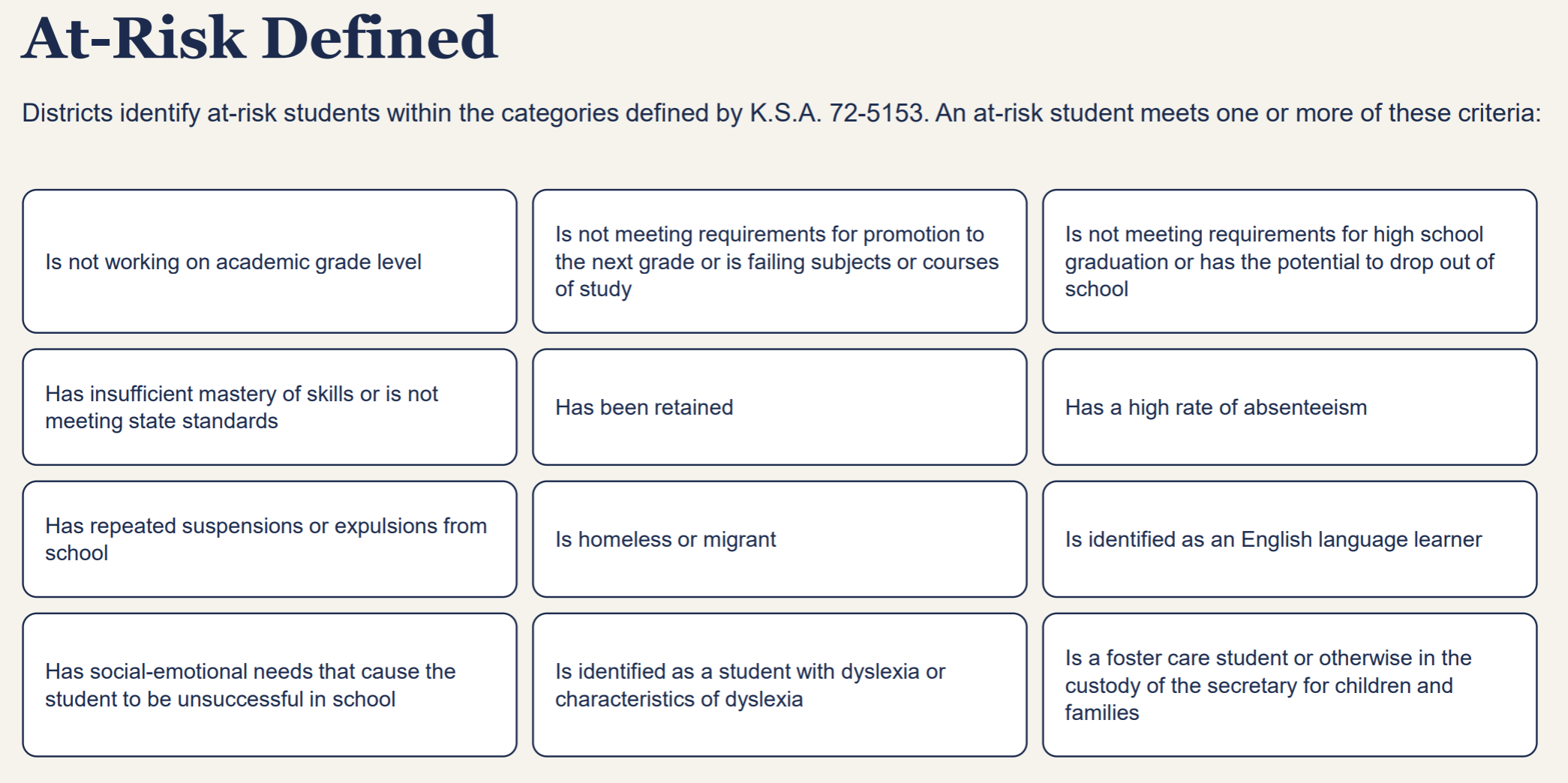
Dinkel said 2,000 of the district’s 3,000 students qualify as at-risk.
The district will focus on reducing the number of students in both groups scoring at the lowest level (level 1) on state assessment tests.
Dinkel said the district will test students in the fall to gauge what academic interventions they need. In year four of the plan, when students are in sixth and seventh grade, the district will have to report their assessment scores to the state.
Dinkel said not all of the students in these two groups are scoring non-proficient on their state assessments.
However, Dinkel said an at-risk student who is chronically absent might be scoring at grade level now, but might slip without intervention by the time they reach the sixth grade.
“Above all, we want to move all kids forward,” Dinkel said.
Board member Ruth Ruder asked what the Legislature’s reasoning was for requiring the plans.
Dinkel said it was a desire to require more accountability for at-risk funding.
Parking lot work
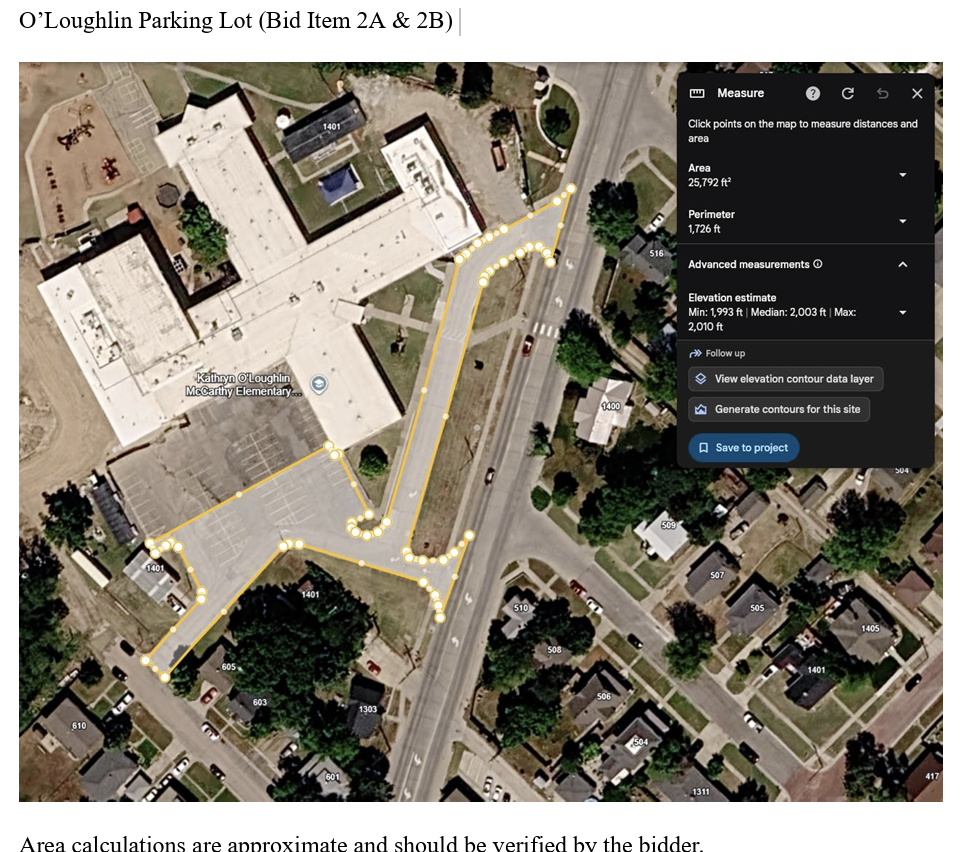
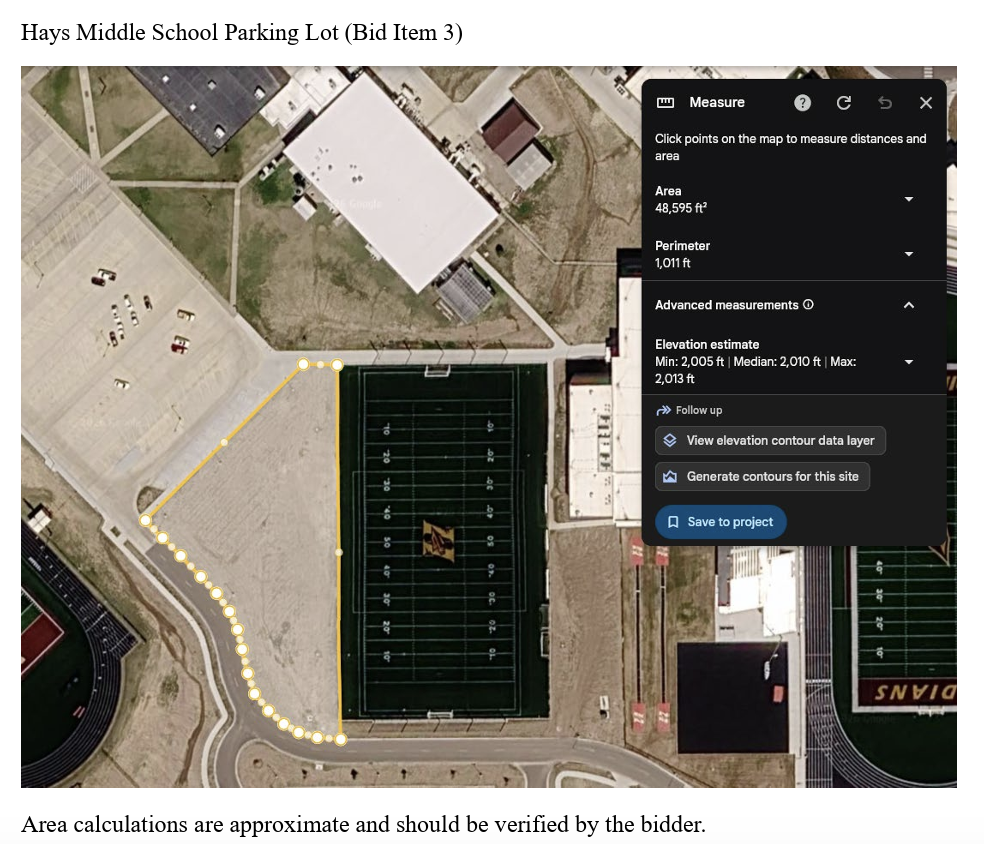
The board approved bids to add handicap, staff and visitor parking spaces at Hays High School and mill and overlay of staff parking and circle drive at O'Loughlin Elementary School.
The 10 handicap parking spots at Hays High School will be added on the south side of the building. A sidewalk will connect them to the gym entrance nearest the elevator.
Crushed rock will be added near the practice field for overflow parking. A concrete pad will also be laid for bleachers.
Half of the O’Loughlin parking lot has already been redone as part of the bond project. This will repair the other half of the staff parking lot and front circle drive.
Commercial Builders of Hays submitted a $172,590 bid for the Hays High handicap parking. PWC submitted a $115,000 bid for Hays High activities/events overflow parking and a bleacher pad. Sweeney's Pavement Maintenance submitted a bid for $107,697 for mill and overlay of the asphalt parking at O'Loughlin. The total for all three bids is $395,287.
All three projects will be paid with unallocated bond funds.
Chris Hipp, assistant superintendent for business, said after these three projects, $15,000 will remain in unallocated bond funds.
Board member Allen Park said he would vote against the bids because he received them on Friday and did not have enough time to review them.
Board member Derek Yarmer said he thought $100,000 for 10 handicap spaces was too much to spend when there is already handicap parking on other sides of the school. He also said he thought he needed more time to review the bids.
The bids passed 5-2, with Park and Yarmer voting against.