


By CRISTINA JANNEY
Hays Post
With the Hays USD 489 budget hearing scheduled for next month, the district’s director of finance reviewed the budget with school board members at the district's annual retreat on Monday.
Chris Hipp, assistant superintendent of business services, told the board it has already dedicated 75 percent of its budget to employee pay and benefits.
He said budgeting is an 18-month process that starts with tax collections, and the district projects through January of the next year.
From the remaining 25% of the budget, about half goes to operational costs tied to inflation, such as utilities and work comp renewals.
The remaining funds are for projects that the school board approves throughout the year.
Hipp said the district budgets conservatively. It has to account for possible unknowns such as paying deductibles for hail storms.
The budget published and approved by the board is the maximum the district is allowed to spend without republishing it and having another public hearing.
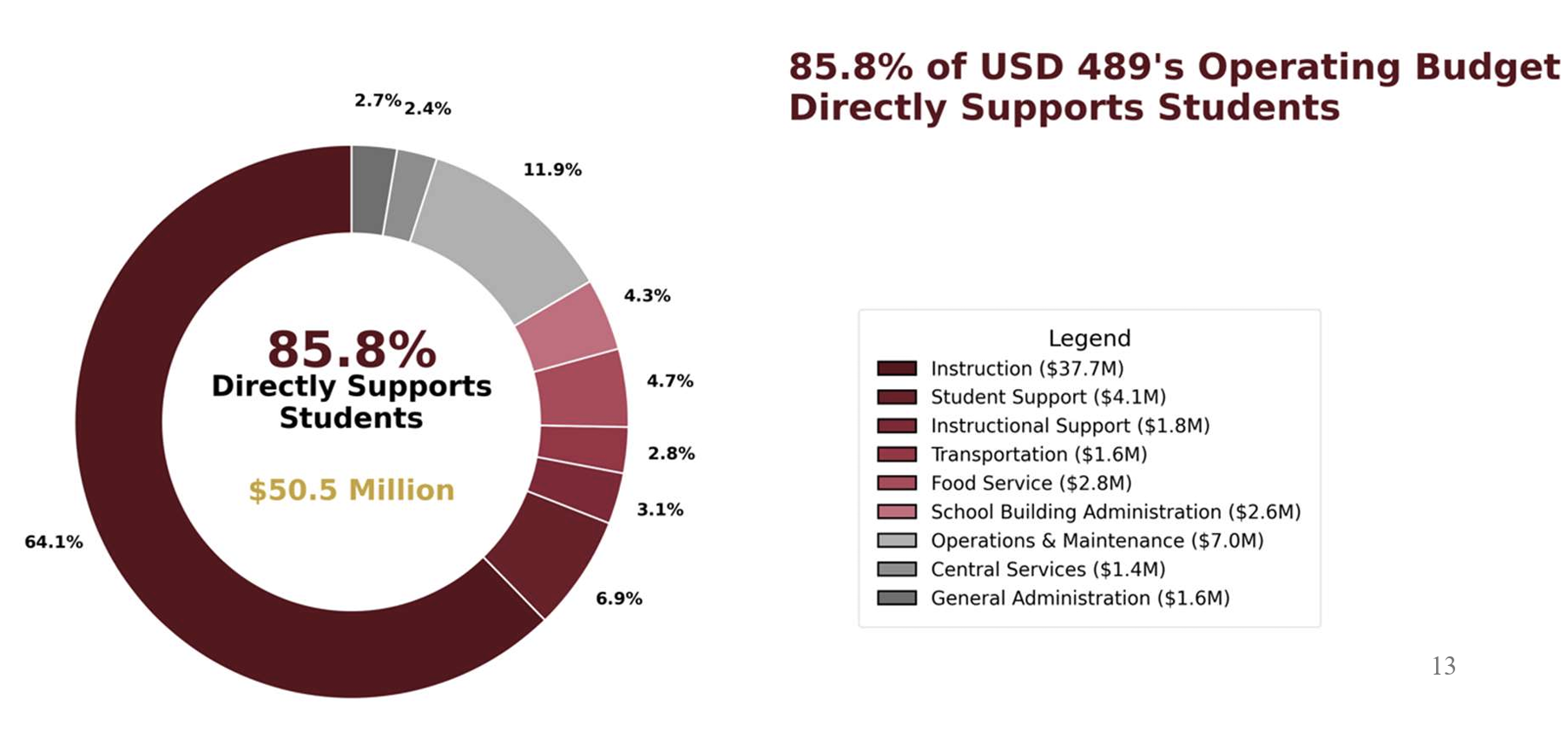
Hipp shared a pie graph with the board members that shows the breakdown of expenses. Forty-nine percent of the budget goes to instruction. He said this is primarily related to paying for expenses, including teachers, paraprofessionals and textbooks.
Librarians and counselors, who also directly deal with students, fall under a different budget code and account for another 6% of the budget.
Transportation, nutrition, principals and school secretaries account for another section of the pie.
Once these other services are added in, almost 86% of the budget goes to direct student support, Hipp said.
The remaining funds fall into general maintenance and operations, central services, and general administration.
Future budget concerns/enrollment
Districts across the state are seeing enrollment declines as children born during the pandemic start kindergarten.
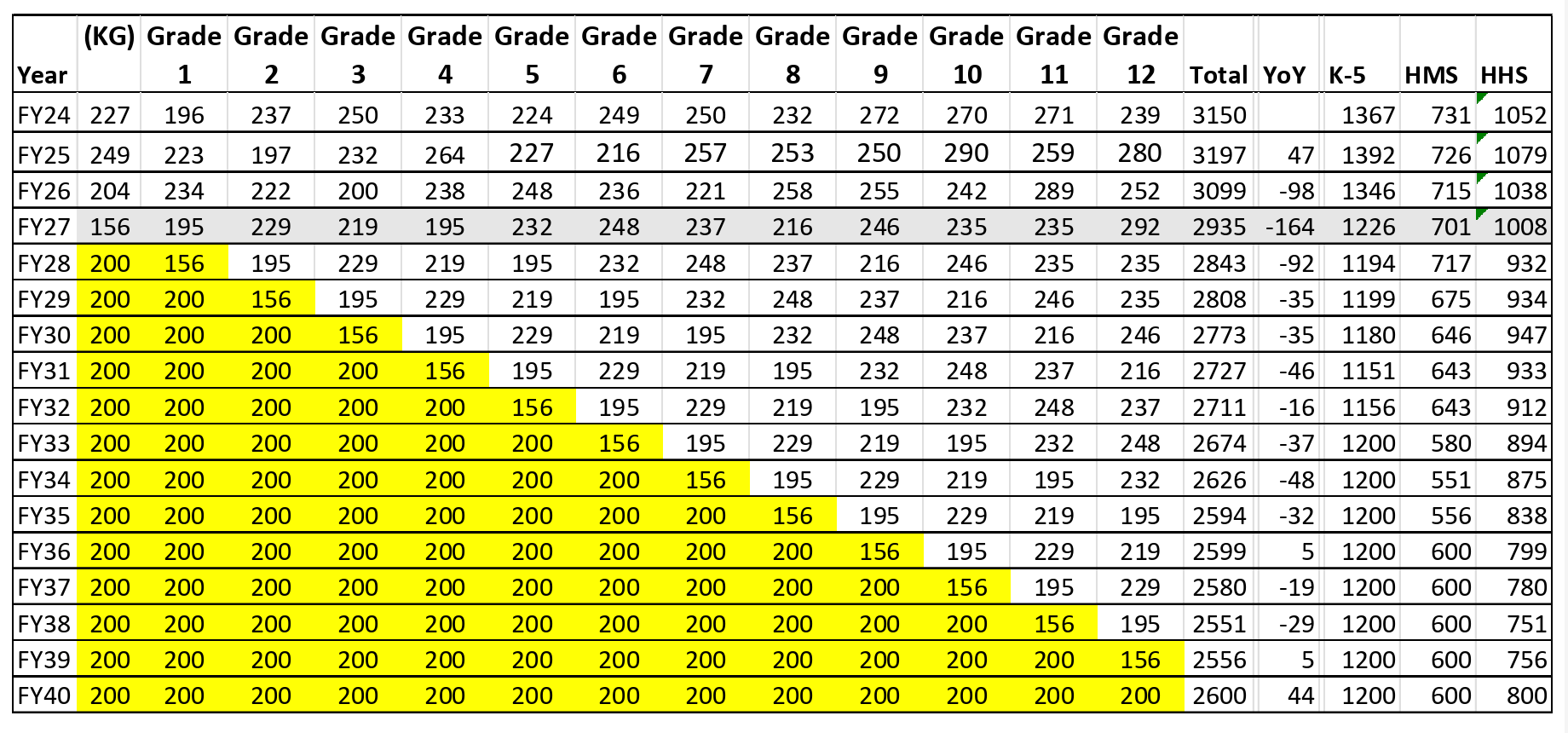
The district’s full-time equivalent enrollment was 3,099 last year. That included a senior class of 252 students.
This fall, the district anticipates a kindergarten class of 156 students, a decrease of 50 from its 2026 kindergarten class and almost 100 fewer students than the graduating class.
The district is anticipating an enrollment of 2,935 for the upcoming school year. However, Shanna Dinkel, assistant superintendent for curriculum, said enrollment is ongoing.
The district’s state funding is based on enrollment.
School districts can use the highest enrollment from the last two years, so Hays will likely use its 2025-26 enrollment for state funding for the 2026-27 school year.
However, if enrollment continues to decline, the district will see decreases in funding, Hipp said.
The decrease in kindergarten enrollment will mean smaller class sizes for now, but not substantial savings to the district, Hipp said.
“If our kindergartens go from having 20 kids in them to 18. We really don't spend any less. You still have the same teacher. You still have the same para. You still have the same textbooks. … “ he said.
Bond repayment
Hipp said the mill levy for the bond repayment is based on what is needed to pay the upcoming bond payments. He said the cash balance in the bond fund is starting to grow.
Within the next seven years, the school board will likely be able to decide if it wants to lower the mill levy or start calling bonds and paying them off early, Hipp said.
The district budget was published this week, and the budget hearing is scheduled for Sept. 8.