


By CHRISTINA KNOTT
KU News
LAWRENCE — From small, rural districts across the state of Kansas to complex districts in major population centers, improving statewide literacy can’t follow a one-size-fits-all mandate or approach.
That’s one of the initial conclusions of researchers at the University of Kansas who have partnered with the Kansas Board of Regents (KBOR) to fulfill the goals of the Blueprint for Literacy, a statewide initiative signed by Gov. Laura Kelly in 2024 focused on improving literacy rates among K-12 students.
Blueprint for Literacy aims to address declining literacy rates in Kansas schools, where just 33% of students achieve grade-level reading proficiency. Blueprint for Literacy aims to nearly triple that number to reach a goal of 90% proficiency.
Researchers from the KU Life Span Institute, who presented their findings to the Board of Regents in March (PDF), pursued four areas of research in the first year of the partnership. One area of research funded by a $616,670 contract with KBOR was a statewide needs assessment.
Researchers visited teachers, school administrators, families and students across the state to better understand their community’s concerns about reading, literacy and their local schools.
The visits, which were to Crawford, Dickinson, Harper, Jefferson, Logan, Neosho, Stafford and Wallace counties, included classroom observations and evaluations of school readiness and infrastructure to improve literacy.
Understanding individual district needs is important when developing literacy tools that educators will be able to use within their classroom environment, said Suzanne Myers, co-director of the KU Center for Research on Learning.
“So often we want to apply a single fix or single strategy to meeting people’s needs,” Myers said. However, she added, “No one solution is going to work for everyone. We have to design solutions that can be flexible to meet the needs of every community and group of families that we are serving there.”
USD 341 in Oskaloosa, a rural district about an hour west of Kansas City, was among those that participated in the needs assessment phase of the project. Principal Pat Foster, who leads the district’s elementary school, said working with the KU researchers was a good opportunity to highlight issues his rural school district struggles with.
The city of Oskaloosa has a population of around 1,000, but Foster said his district faces many of the same kind of challenges educators see in urban school districts — from obstacles in staff recruitment to the impact of families living in poverty.
In recent years, Foster said he has seen a greater number of students starting kindergarten without foundational pre-literacy skills. “So right off the get-go, we have kids that are starting behind,” Foster said, “and then it’s our job to try to make sure that they catch up, which is really difficult for some students.”
Myers and Jocelyn Washburn, also co-director of the KU Center for Research on Learning and involved in visiting schools for the project, said that most of the work to improve literacy has been focused on the elementary level, but often these early delays continue into higher grades.
Literacy is critical for academic learning and lifelong success. Those who struggle to read and write are more likely to earn less, work less and vote less — and are more likely to be involved in the justice system, Washburn said.
Students who still lag in achieving literacy benchmarks in middle or high school are a focus in Blueprint for Literacy as it moves into its second phase.
“Older students still need support,” Myers said.
During the needs assessment, many educators shared a desire for professional learning opportunities, which can be limited by staffing and organizational factors. Families surveyed during the assessment also expressed concern that teachers do not have the resources they need.
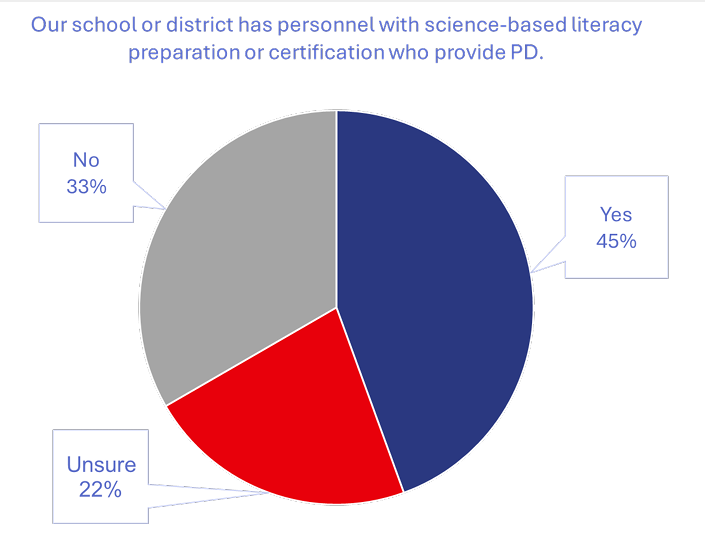
Less than half of those surveyed (45%) said that their school or district had personnel with science-based literacy preparation or certification.
Kansas ranks last in the nation for professional learning spending per teacher, according to 2025 data cited in the report to KBOR.
As a rural district, Oskaloosa has even fewer resources, such as instructional coaches or curriculum leaders, than larger or wealthier districts in the state. Foster said this means educators often have to wear multiple hats.
“You really have to be kind of a jack of all trades,” he said.
The Blueprint for Literacy calls for 100% of elementary teachers to earn credentials in reading and literacy by 2030. As part of the first phase of the partnership with KBOR, Myers and Washburn, along with their colleague Haiying Long at the Center for Research Methods Consultation, are working to validate a pre-service educator assessment by gathering and analyzing feedback from expert reviewers at universities within and outside of Kansas. They are also collaborating with partners at Washburn University to evaluate the impact of coursework and one-on-one coaching that is part of a professional development course designed to help educators earn their Seal of Literacy, called Foundations of Science of Reading.
The KU research team is combining literacy and implementation research with what they have learned so far through the statewide assessment in a new venture called Literacy Bridges, an online repository of literacy solutions and resources that will be accessible to Kansans across the state. Literacy Bridges is set to launch June 30 and will contain tools and information tailored to the needs of Kansas schools, students and families.
“The needs assessment work will inform what any literacy-focused organization in Kansas can do that will be meaningful, well-received and actually address the literacy needs that we’re seeing across the state,” Myers said.
This focus on stated needs of target user groups is important to ensure literacy resources will address real needs, answer real questions and provide utility throughout the state. Online availability is also key, given Kansas’ rurality and some districts’ geographic distance from population centers.
“Our dream is to create amazing resources aligned with the latest literacy research for educators, families and students to use, regardless of where they are,” Myers said.
Research results from the first year will support future funding programming requests by the KBOR Office of Literacy, and they will inform literacy support services provided by the regent universities, school districts and other organizations with literacy initiatives.
In the ongoing partnership with KBOR, Myers said, “We will also be continuing the validation work for the undergraduate literacy performance assessment, and the validation work for the structured literacy school infrastructure tool to support planning and implementation of evidence-based literacy instruction in schools and districts.”