


How to get help
Anyone who has been a victim of domestic violence and is seeking support can visit Options Domestic and Sexual Violences Servie website or text HOPE to 847411 to start a private chat with an advocate, available 24 hours a day.
By ALIN HETT
Hays Post
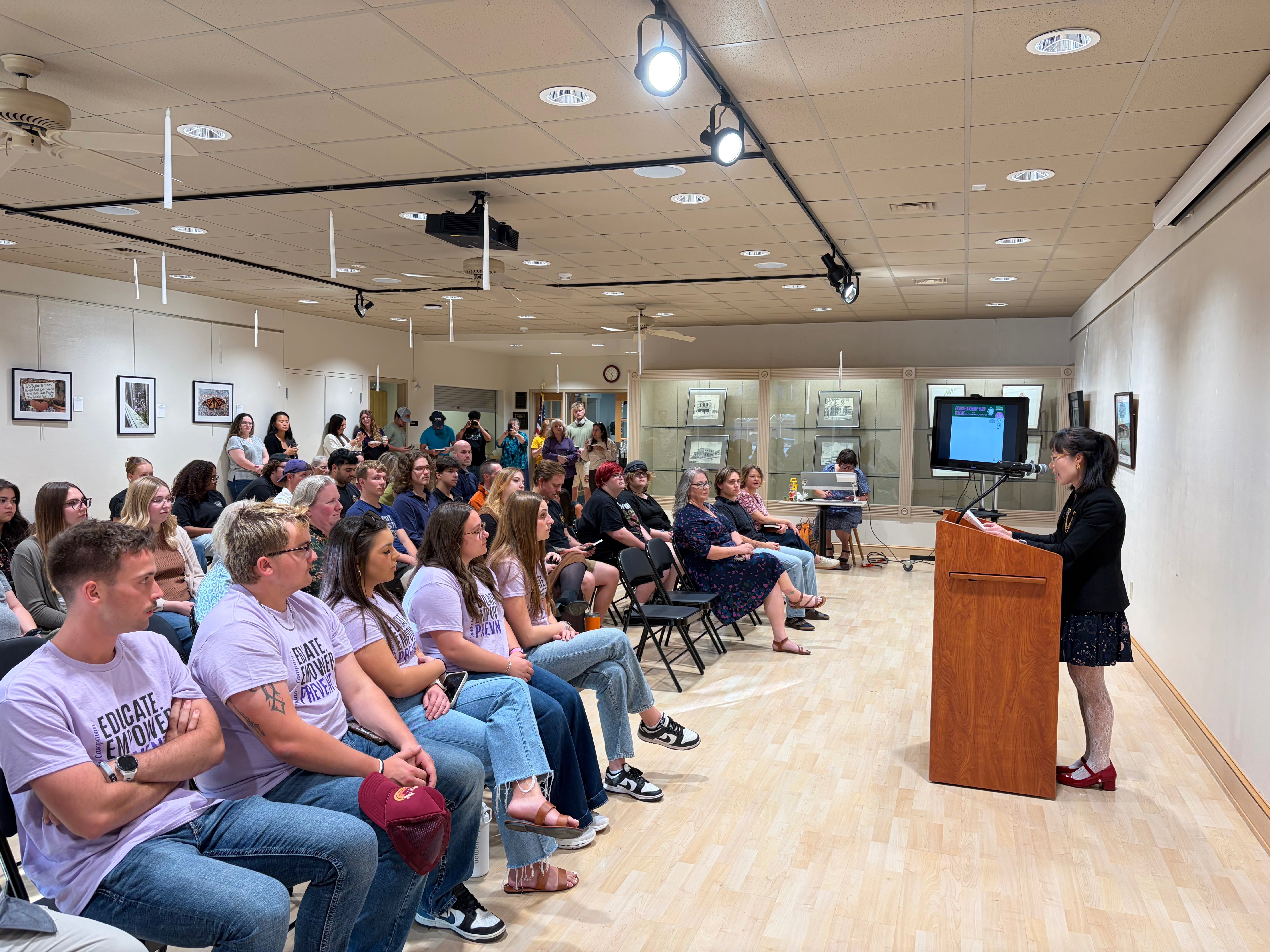
A new book launched Thursday at Hays Public Library brings together stories of relationship-based violence in rural Kansas, along with the work of the students, educators and community organizations who helped bring those stories to the page.
"Facing Relationship-Based Violence-A Rural Kansas Initiative," was created through a partnership among Fort Hays State University, The Facing Project, Options Domestic & Sexual Violence Services and Jana’s Campaign.
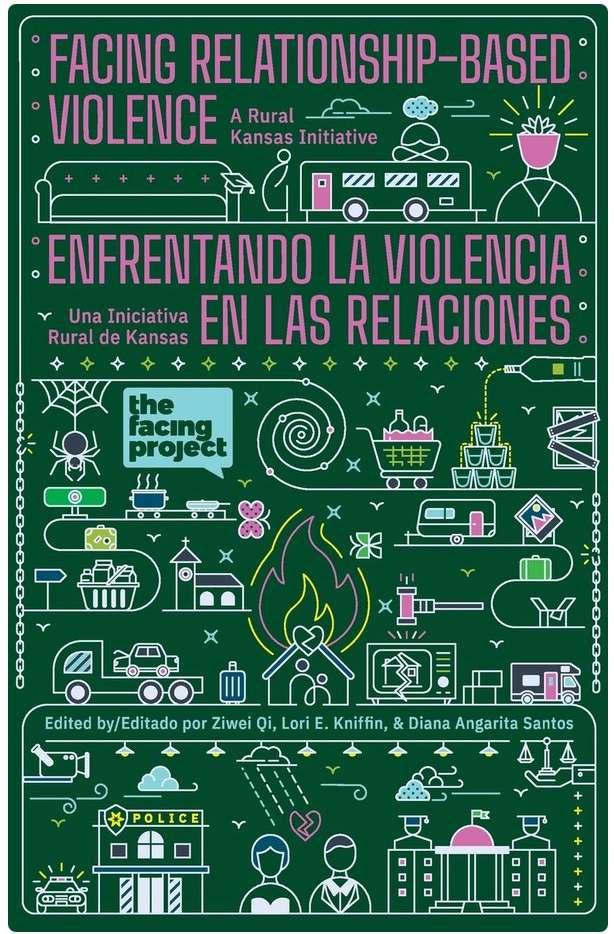
The project paired storytellers with trained listeners and writers, then invited the community to hear the stories and consider how to respond.
FHSU students were under the guidance of Lori E. Kniffin, Voss Distinguished Professor of Leadership and director of civic learning and engagement, and Ziewi Qi, FHSU associate professor of criminal justice who holds a doctorate, who was also the co-editor for the book.
“For me, this project has always been about more than producing a book,” Qi said. “It’s about creating a space for experiences of relationship-based violence to be shared with care, and then asking what those stories invite us to notice, understand and do differently.”
The book includes stories about abuse involving partners, family members, friends and people in professional settings. The stories are not retold here, instead the book offers readers the opportunity to encounter them in the storytellers’ own words.
“The stories are not easy,” the foreword says. “They speak of abuse, isolation, fear, silence, control, generational trauma and the painful ways people sometimes learn to deny their own hurt in order to keep going.”
The foreword also points to the central overall theme of the book: Strength. Not the strength that helps you lift objects, but the strength that helps someone get through one more day.
Learning to listen with The Facing Project
The project used a model developed by The Facing Project, a storytelling organization co-founded by J.R. Jamison. The model pairs a storyteller with a listener who helps capture that person’s experience in writing, keeping the storyteller involved in shaping the final story.
Jamison said The Facing Project began in Muncie, Indiana, in 2012, 14 years ago, after he and his co-founder wanted to help their community look beyond a poverty statistic to the people behind it.
They initially taught people how to write their own stories, then added listeners when they realized not everyone could or wanted to write. As other organizations asked for help telling stories about different issues, Jamison said, the project shifted toward training local groups to lead the work themselves.
“We decided regardless if you could write your own story or not, everybody would get a story listener who would sit with you, walk you through that experience, talk to you about your story and help capture your voice on the page,” Jamison said. “But you, as a storyteller, are still navigating that story and that process and the final product.”
Jamison said the model has since been used in more than 100 communities across 20 states and adapted in 11 countries, with more than 8,000 people sharing their stories.
“The work of the Facing Project is really an opportunity to say, ‘Now that I know, what am I going to do about it?' That's a chance to have conversations like tonight.” Jamison said.
Stepping into someone else's shoes with FHSU senior
The students learned how to listen to storytellers and help shape their accounts without taking ownership of them.
For Benjamin Wilkerson, an FHSU senior who worked as a listener and writer, that was one of the project’s biggest challenges.
“One of the first things that I learned was how difficult it is to tell someone else’s story without speaking for them,” Wilkerson said.
Wilkerson said one of the challenges he faced was having to find a way to make the writing clear while honoring the seriousness of what the storyteller had experienced.
"“It was almost like I had to live through what they had gone through,” Wilkerson said. “If that makes any sense.”
He said the process involved practice sessions, a lengthy interview, a first draft, revisions with the storyteller and a final meeting in person. Listening to his recordings repeatedly as he wrote could be difficult, he said.
Wilkerson said the first meets were through Zoom calls as his interviewee was not located in Hays. Wilkerson shared that to him, one of the most memorable moments was meeting the person's story he was writing in person.
“It was very impactful to see the personal story you're writing actually in person at the very end,” Wilkerson said. “It was very rewarding.”
Wilkerson listened and wrote the personal story of a woman who grew up in both Colorado and Kansas. Her story starts in Colorado, where she met her abuser in high school. The boyfriend at the time was in a gang and doing copious amounts of drugs. Shortly after, the violence began. Her story then goes on to describe a situation where she was being choked to the point of passing out. When she woke up...the next morning, the only feeling she felt, was shame, and decided to not tell anyone at the time.
As the months went on, the boyfriend would randomly find her in the house and hit her just because she was "always doing something wrong." From there, it only got worse. Every night, she was being forced to have sexual relations.
She decided to leave but the boyfriend found her and started to stalk her, no matter where she was in the United States.
Fast forward to 2026, and the boyfriend still lives in Colorado, but does not have any information about the woman. The woman and her three kids have been in therapy for a few years now and are gradually becoming better.
Her story ends with a quote and the driving reason behind her strength,
"I will never let a man treat my children the way he treats me," the woman told Wilkerson.
Wilkerson said the most impactful way to get through the process was to take constant breaks and remember why the work mattered.
“It was worth being uncomfortable for a little bit,” Wilkerson said.
The project also changed how Wilkerson thinks about rural communities. He said they can face limited resources and stigma around relationship-based violence, while close-knit communities can also make people more willing to listen and help.
Wilkerson’s story that he wrote can be found on page 31, and is titled "They Could Not See It, But They Could Hear It."
Wilkerson then stood up in front of an audience and read another story from the book from another student.
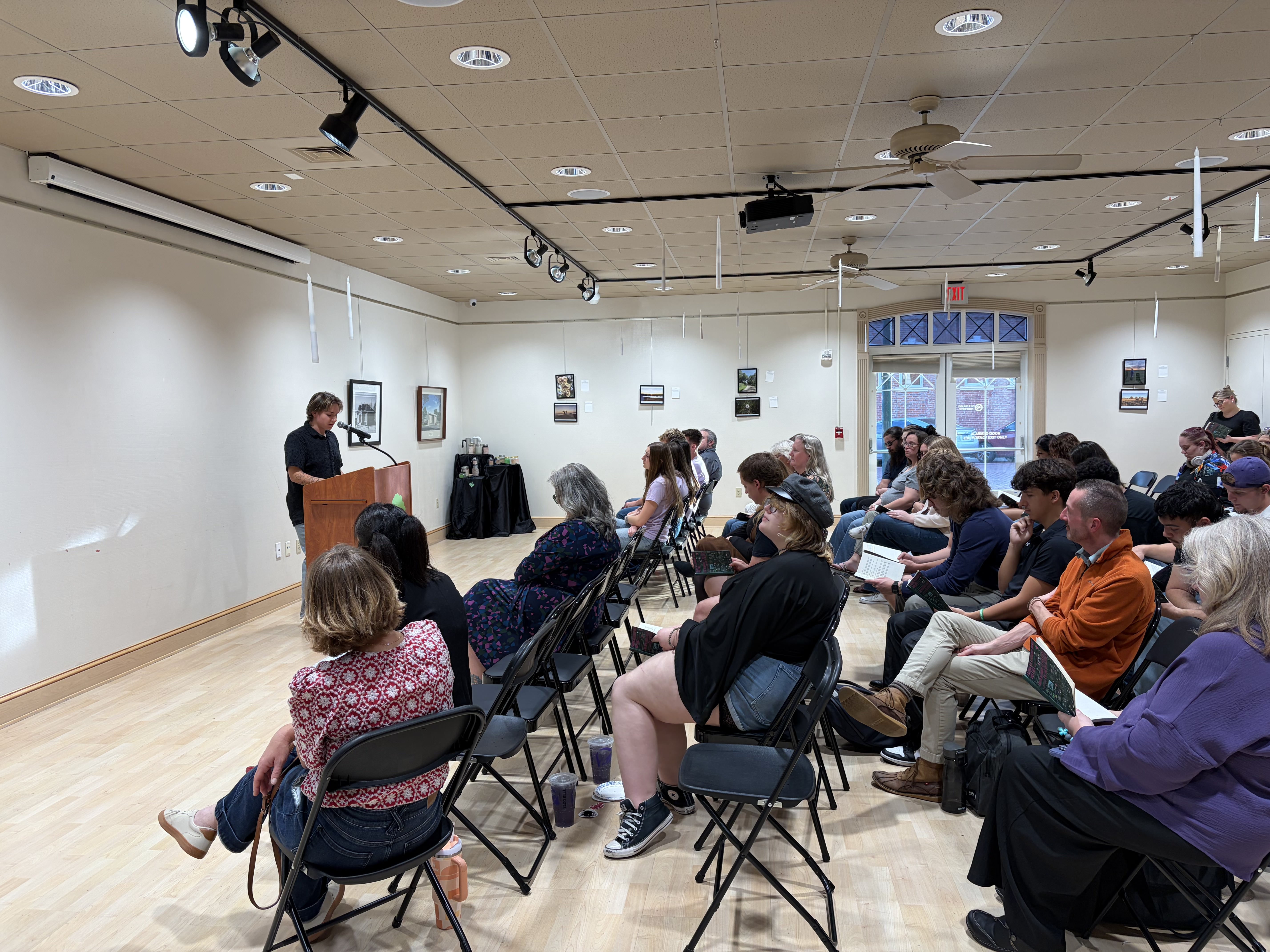
Visibly, the room shifted and some people had to step out of the room as they listened.
Promoting inclusivity
One interesting aspect about "Facing Relationship-Based Violence-A Rural Kansas Initiative," is it includes Spanish-language work as well.
Dianna Angarita, an FHSU alumni with a master’s degree in organizational leadership and a co-editor of the book, was the driving force behind the Spanish translations.
Angarita said two stories were written in Spanish only, because the storytellers spoke only Spanish and everyone’s story matters.
“This is the first step to being inclusive,” Qi said. “We want to be able to include everyone’s story.”
Sharing others stories to create change
Jana’s Campaign, the Hays-based organization, which works to prevent relationship-based violence through education, contributed to the project.
Jana Mackey, the woman who the organization was created in honor of, was killed by her ex-boyfriend and her story is also shared in the book.
Kaiti Blackburn, the organization’s executive director, said Jana’s Campaign believes these stories help create change.
“By being in a published book, stories can be shared further and reach more people,” Blackburn said. ”That can create more change over time as well.”
Options Domestic and Sexual Violence Services also partnered on the project and supported the event.
Jennifer Hecker, executive director, said the collaboration offered an opportunity to bring stories out of the silence that often surrounds abuse.
“The more we get those stories out, the more voices of victims are heard,” Hecker said. “The more healing is going to happen in our community, and the more we’ll be able to do to stop violence.”
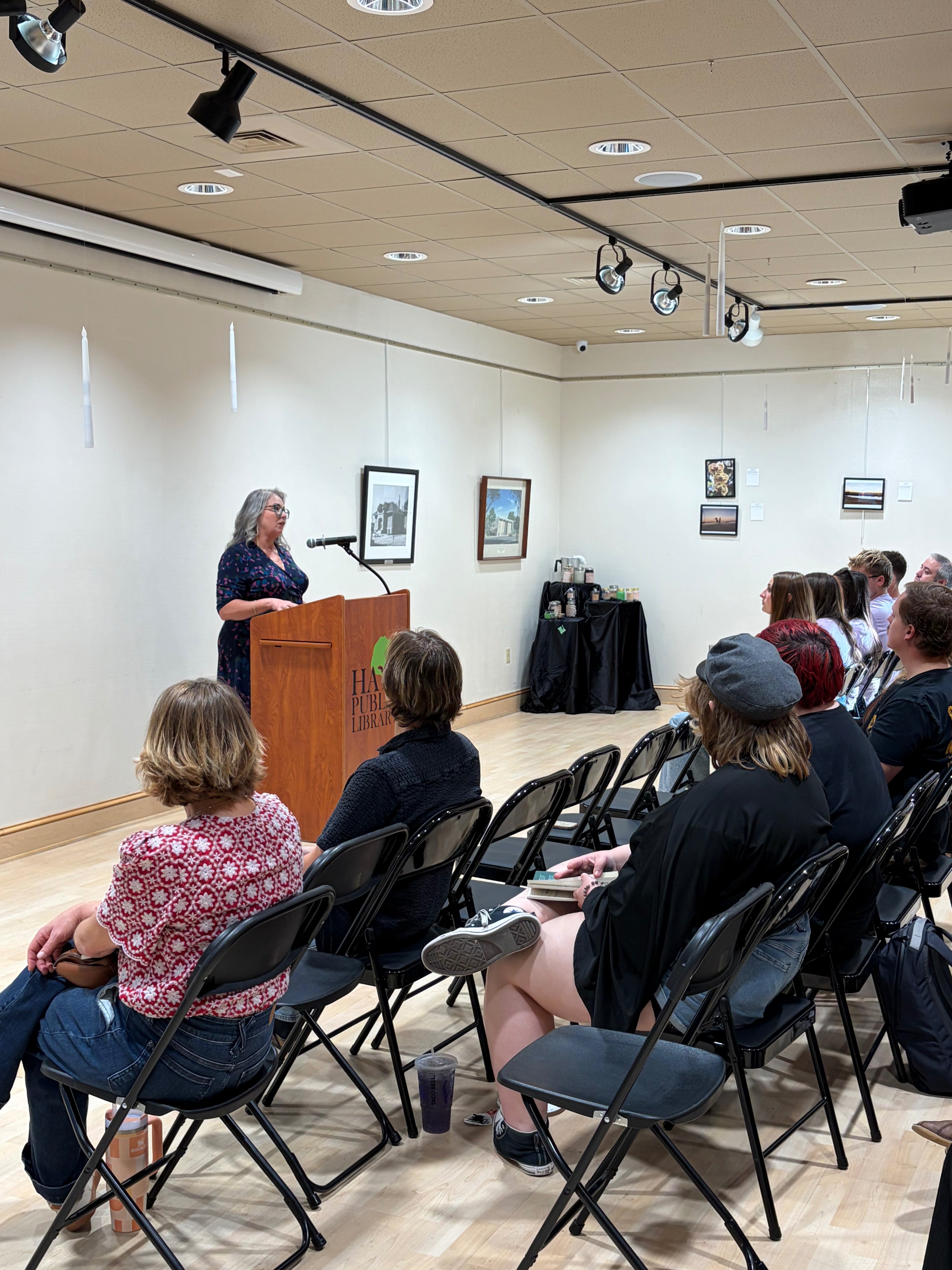
Options serves 18 counties in north-central and northwest Kansas and provides free, voluntary and confidential services, including advocacy, shelter, safety planning and help connecting with resources.
Carrying the conversation forward
Three stories from the book were read aloud at Thursday’s event. FHSU students read stories written by classmates, rather than reading stories they had worked on themselves.
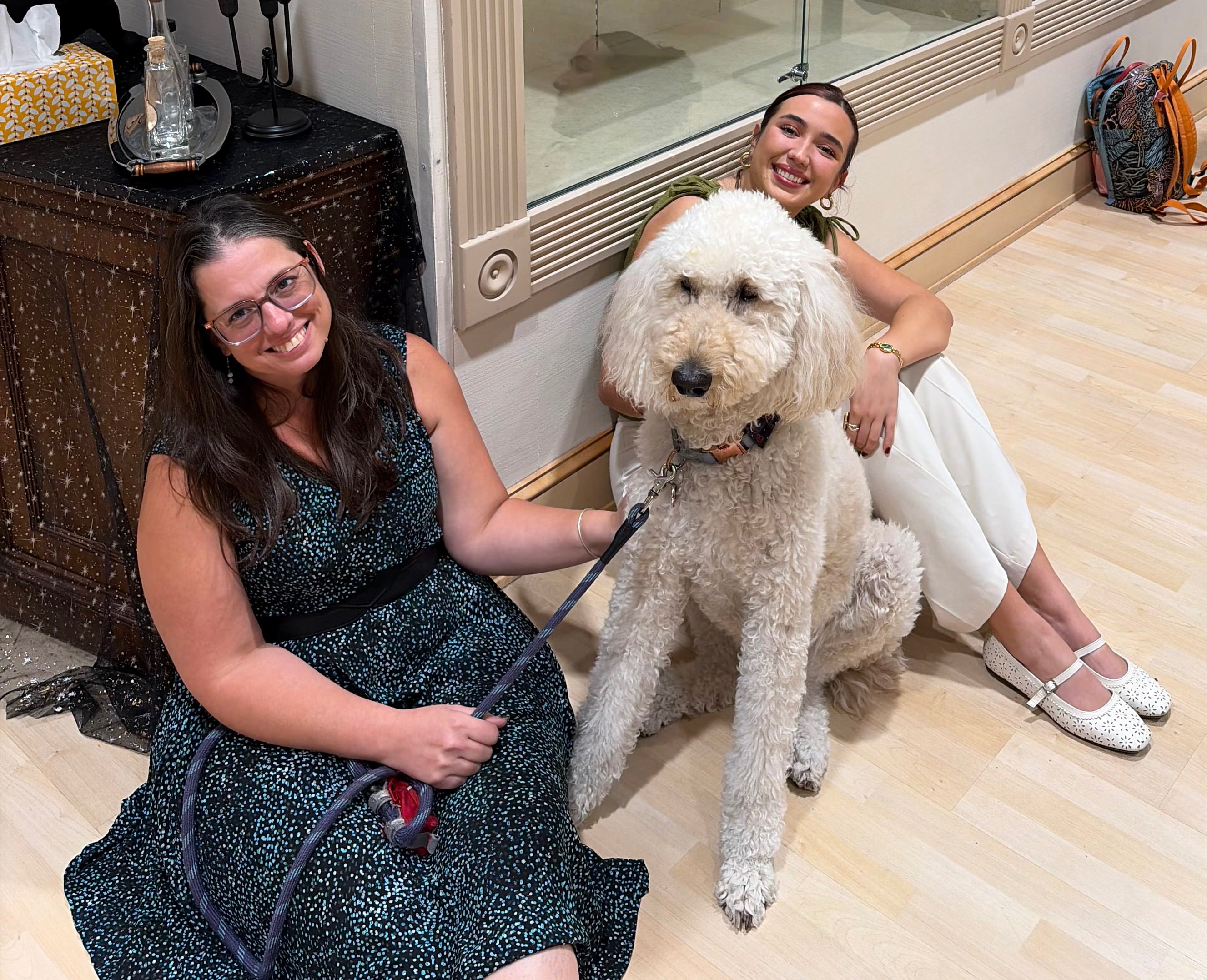
The organizers invited attendees to step out or take a break as needed, and Options brought a therapy dog, Arthur Fonzarelli, known as Fonzie, for people who wanted comfort during the readings.
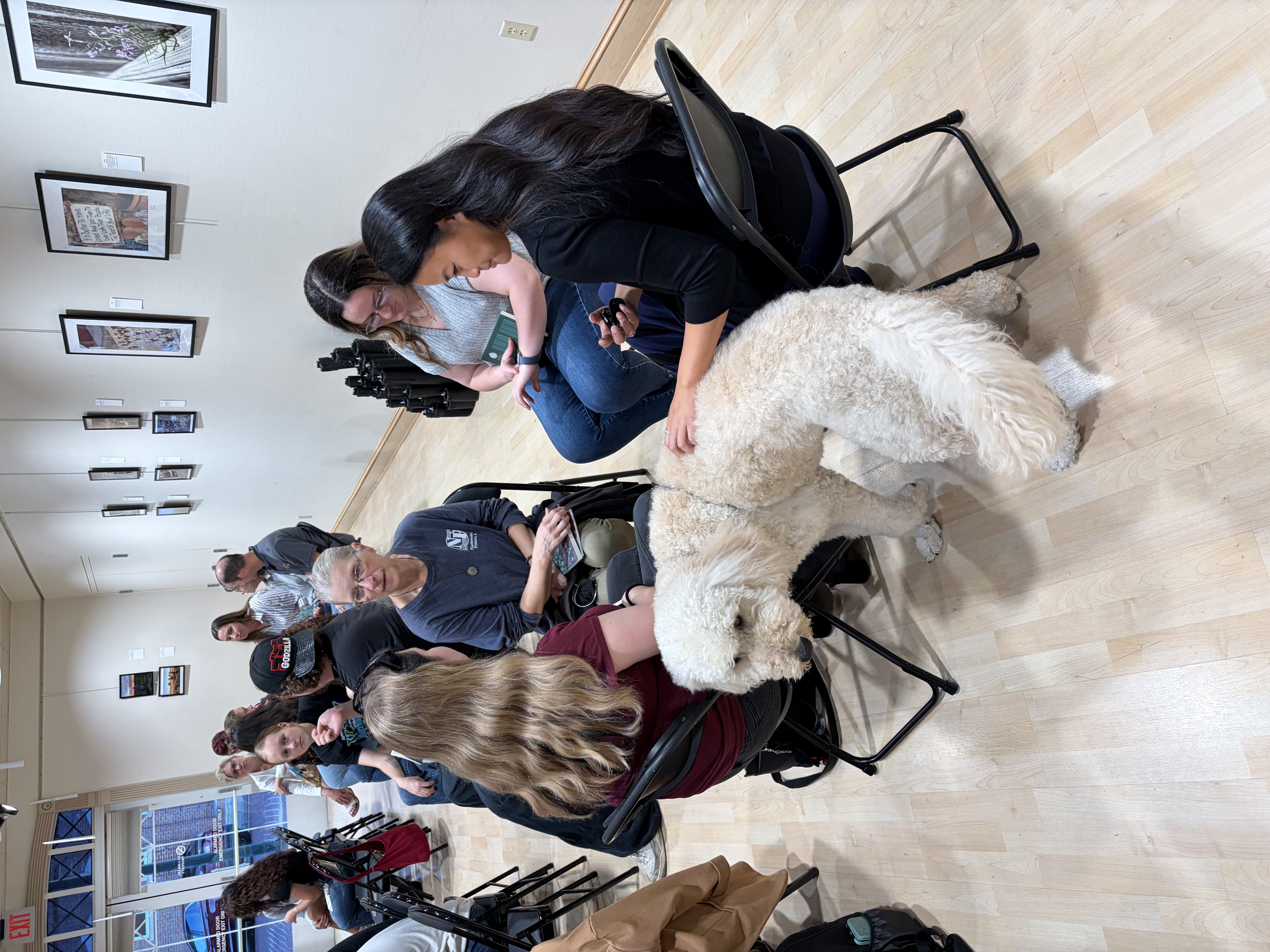
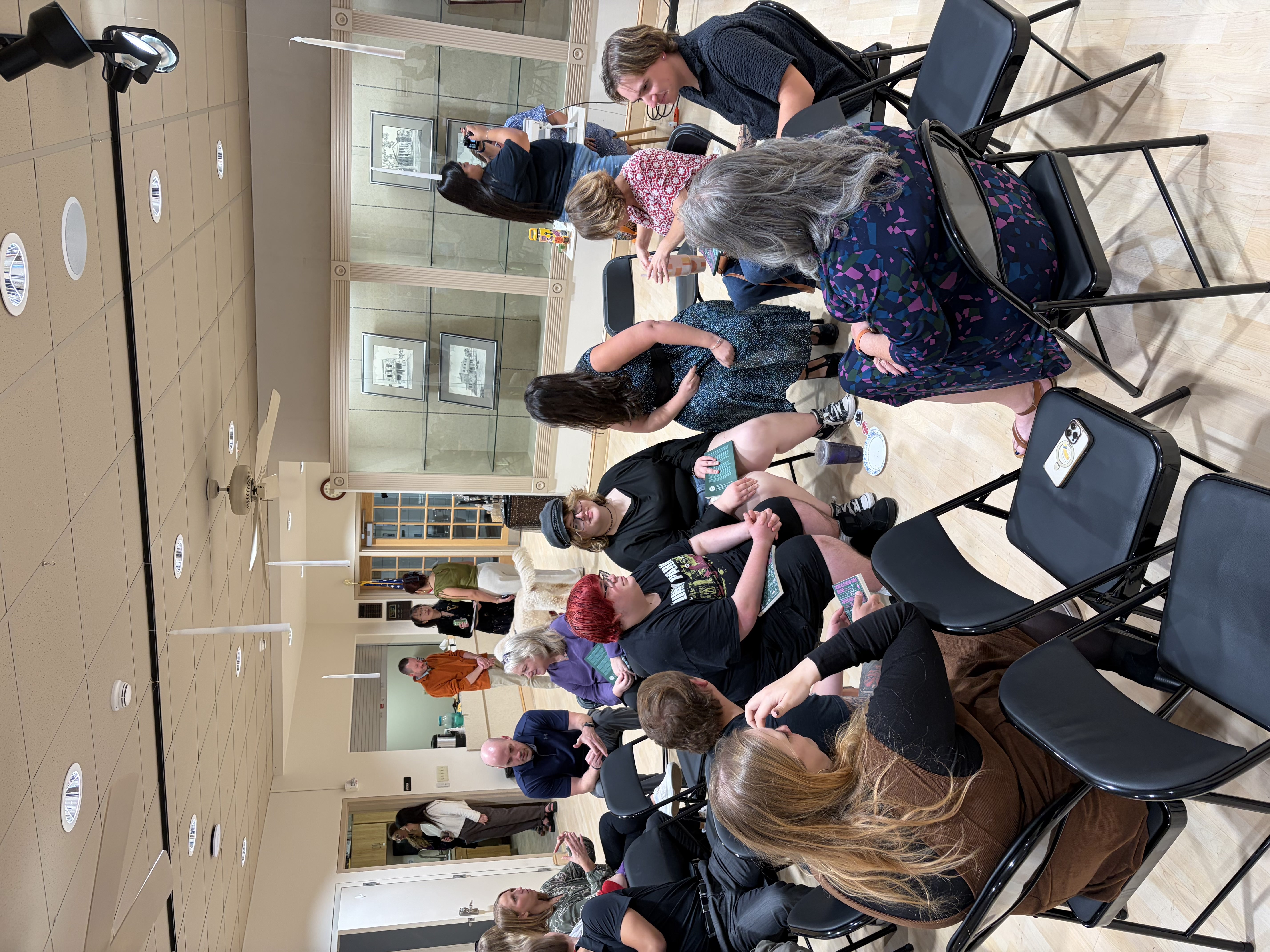
After the readings, Jamison encouraged attendees to talk about what they heard and to consider what they could do in response. Jamison encouraged the audience to get into “Listening circles” to talk about the stories that were just told and to create themes and similarities between them.
In her presentation, Qi urged people to learn warning signs, check in on one another, know where local resources are and teach young people what healthy relationships look like.
When someone shares an experience, she said, people can replace questions such as ...
“Why didn’t you leave?” with “What do you need, and how can I support you?”
For Blackburn and Hecker, the book is one way to keep those conversations going.
For Wilkerson, it was a lesson in listening carefully and representing someone else’s words with respect.
For Jamison, the stories leave the community with a question that extends beyond the book: What will people do, now that they have heard them?
The book can be purchased online or by clicking the link here.