


By ALIN HETT
Hays Post
A classroom idea rooted in local history became a published project celebrating Volga German heritage.
As part of the 150-year sesquicentennial celebration, two Hays High School students helped transform oral histories from community members into two children’s books designed for younger readers. The books are titled: "Tom and the Farm" and "The Blue Dress."
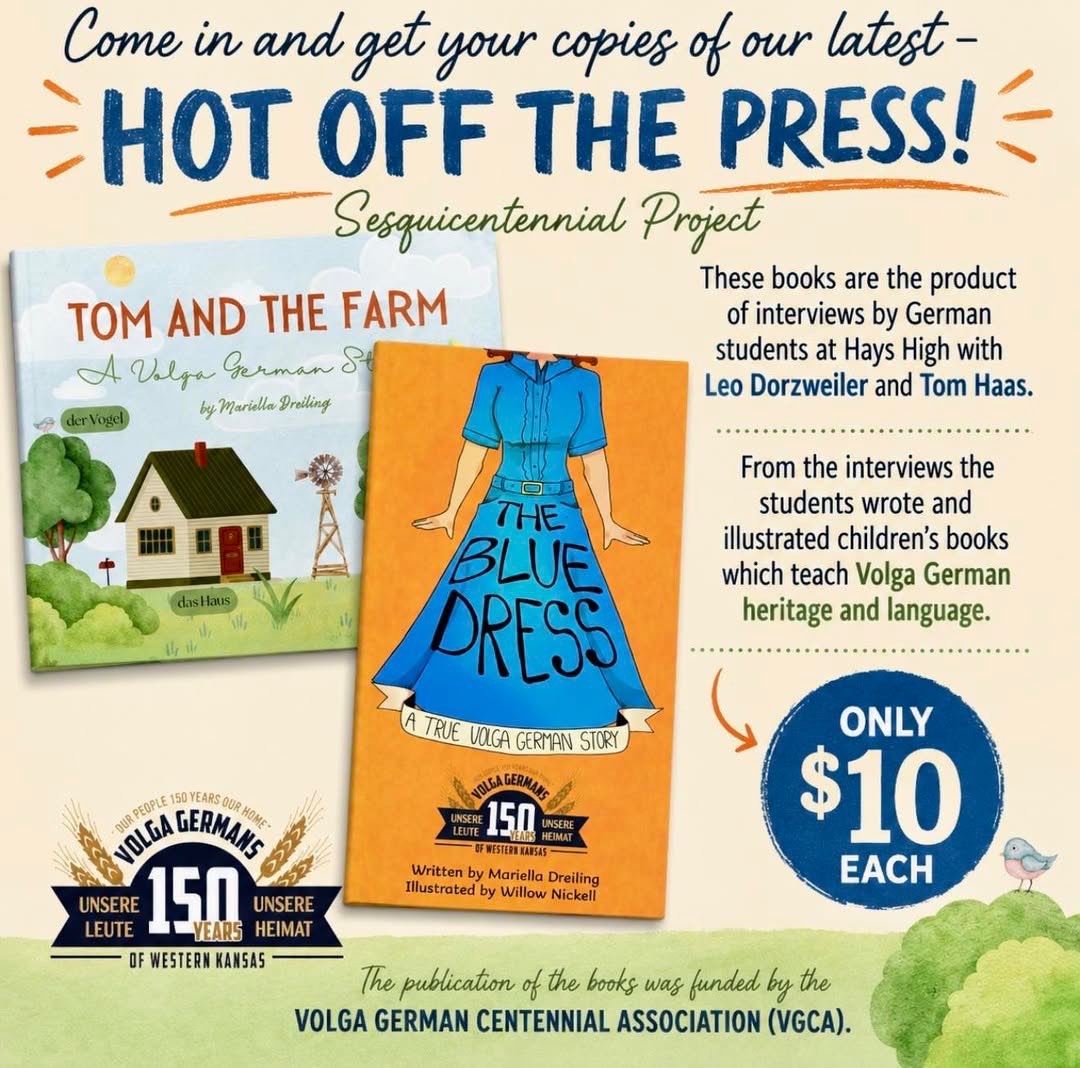
Led by Codi Fenwick, Hays High teacher, the initiative combined storytelling and illustration to preserve family histories and local traditions for younger generations.
“I grew up prioritizing intergenerational relationships that worked together and shared local history and knowledge,” Fenwick said. “I believe community connections and civic engagement is important in education.”
Fenwick said preserving personal stories and traditions has long been a goal in her classroom.
“I’ve had several wonderful speakers visit my classrooms multiple times,” she said. “They share wonderful traditions and stories that my students truly appreciate. I’ve always thought that these stories needed to be captured and shared with the public at large.”
Fenwick said she hopes the series continues to expand in the coming years and remains accessible to children and families.
"I believe it is important to make local history, traditions and language acquisition accessible to younger children, Fenwick said. "We have so much to learn from those who came before us, and we have a responsibility to share with those who follow.”
Fenwick also said both students did an amazing job on the first two books.
“They’ve done an amazing job on these first two books,” Fenwick said. “They’ve indicated interest in doing a few more books next year to continue the series, ‘Our People. Our Home.’"
The German title for the series is, “Unser Leute. Unser Heimat.”
For illustrator Willow Nickell, the project centered on translating real stories into visuals that would hold the attention of young readers while remaining faithful to the people behind the narratives. Nickell described the purpose behind the work.
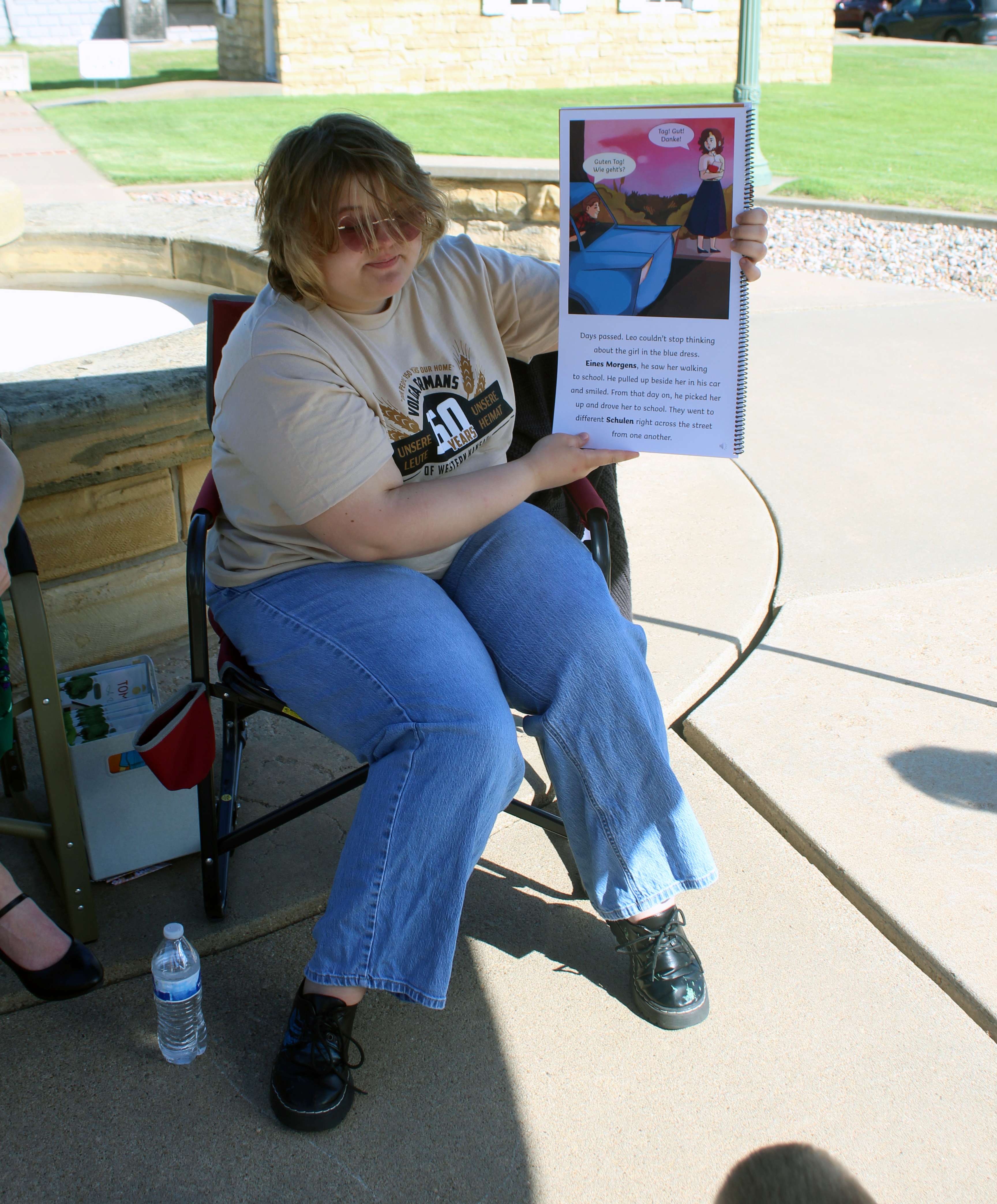
“These books are about real people, and these are real people's stories,” Nickell said. “It is a community project, and to bring light to Volga German heritage and their histories.”
Nickell said she focused on creating artwork that would feel lively and engaging for children while still honoring historical detail.
“My approach is watering it down for kids. When you're making things for kids, you want to be bright and bold,” Nickell said. “You want to feel like there's a lot that they can look at, so they keep engaged. Also the kids could still pick up something from the art, even without being able to read the German that was on it.”
The creative process came with challenges, especially near completion. Nickell reflected on the most difficult stage.
“I think the last page that I finished was the one with the girl called Viola in front of the house and Leo inviting her in,” Nickell said. “That one was very hard to match the style to the rest of the kid's book, but I'd say that was the most difficult part of the process.”
Despite the difficulty, the project opened new professional opportunities. Nickell shared optimism about future work in children’s publishing.
“Honestly, I was just hoping for the best,” she said. “This is my first time doing a kid's book, and I now have future opportunities coming up where people have offered me positions to do kids books.”
Among the illustrations, one scene that stood out personally to Nickell was the illustration of the wedding that takes place in one of the books.
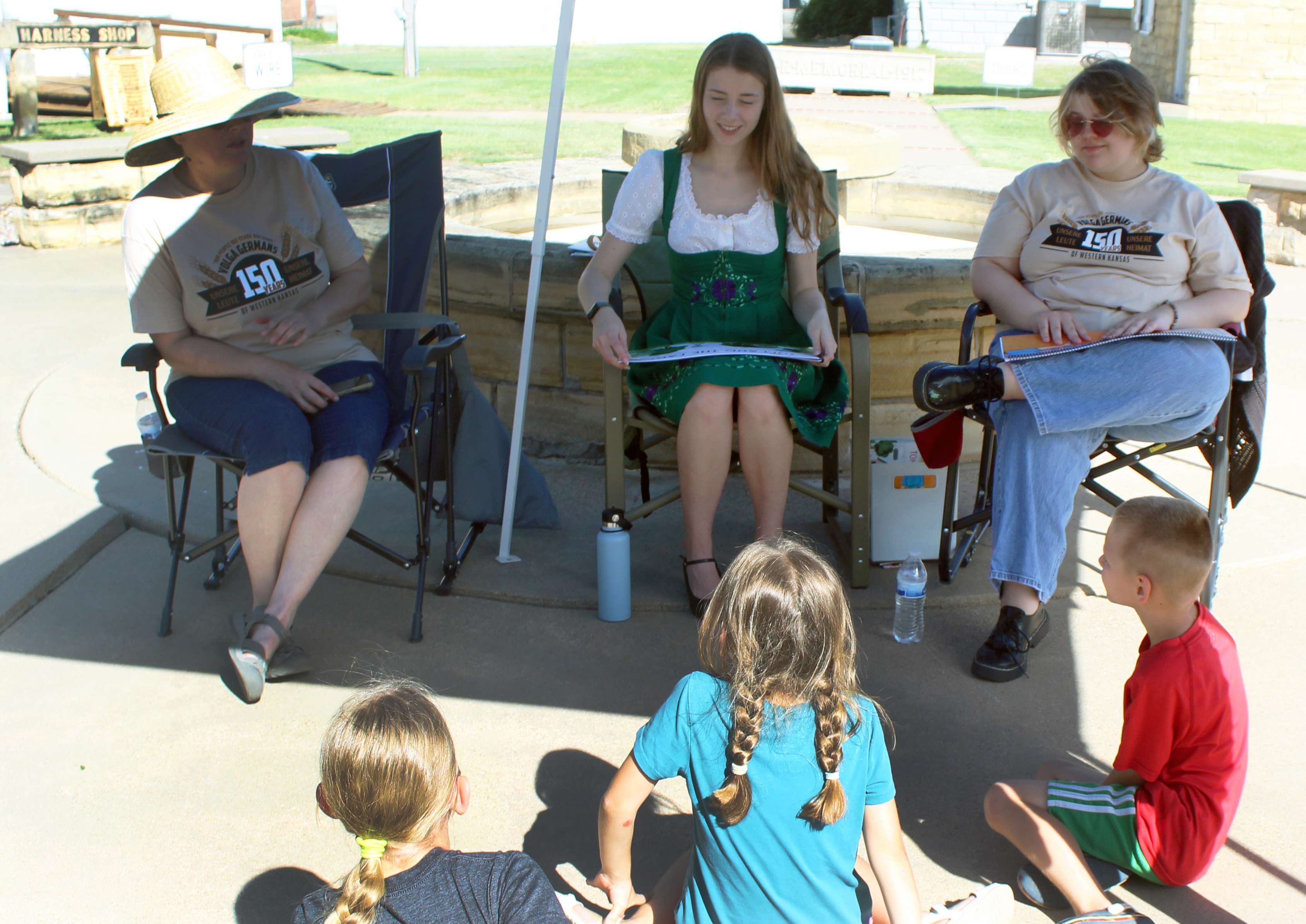
While Nickell focused on visual storytelling, Mariella Dreiling shaped the written narratives drawn from interviews with Volga German community members. Dreiling worked through multiple versions of family histories, selecting stories that would translate into a child-friendly format while still respecting the depth of lived experience.
Dreiling described the selection process during interviews.
“During the interviews, we had multiple different stories, so it was mostly choosing between those stories,” Dreiling said. “The Volga Germans went through some really hard things in life, and so to choose a story that was kid friendly, at least, and wasn't so disappointing, but unfulfilling, was hard.”
Transforming oral history into narrative form required restructuring conversations into a storyline format for younger audiences.
The work also strengthened a long-term interest in preserving community memory. Dreiling shared motivation for continuing similar projects.
“I've always loved talking to older people and hearing their stories, so I definitely want to continue that,” Dreiling said. “ I'm hoping that this project will inspire other people to ask their family for some stories, or just to talk about history in general.”
Dreiling said these books were just the beginning and hopes to start a series of children's books.
She said she found a strong emotional connection developed through the storytelling process, especially around one central narrative.
“I really love the Leo and Viola book,” Dreiling said. “Their love story, it's just so sweet.”
Both creators plan to continue collaborating after the success of the project, forming what they describe as a tag team approach to future books.
Printing of the books was funded by VGCA (Volga German Centennial Association) and the two books are only available for purchase in person at the ECHS Office, 100 W 7th Street, or online through echshays.org.