


By CRISTINA JANNEY
Hays Post
An increase in the number of apartments being built in Hays will likely ease some demand for rental units, but Hays is still not keeping pace with the need for new homes, especially single-family units.
Doug Williams, executive director of Grow Hays, gave his annual housing report at the quarterly Grow Hays luncheon on Tuesday.
Last year, Williams estimated there would be 20 single-family home starts in 2025. There were 17. He estimated there would be 30 multi-family unit starts, and there were 67.
The number of single-family home permits is down significantly compared with 2022 and 2023 because most available lots in Hays have been built out.
However, work started this week on the infrastructure for the Tallgrass Phase 4 Addition, which will include 101 new lots. The infrastructure work will take about a year, with home construction likely to start in 2027.
Williams said housing prices have remained stable, depending on the price range, and rents are stable to trending slightly higher.
The average sale price of homes in Hays has increased steadily over the last three years, from $246,369 in 2024 to $257,046 in 2025. The median price was flat, only increasing by $500 from the previous year.
The number of transactions also stayed steady at 246 in 2024 compared with 253 in 2025.
Williams said Hays is still not keeping up with the demand for new homes, and that shortfall is having a cumulative effect.
To equal a 1% population growth in Hays, 88 units would need to be built each year. In 2025, Hays almost matched that, with 84 units coming online, but the previous year, developers built only 21 units.
Williams' data showed a shortfall of 17 to 70 units dating back to at least 2014.
Hays has about 2-1/2 months' supply of housing, which is a seller's market. Hays would need about a six-month supply to be considered a buyer's market.
"That creates pressure on pricing," Williams said. "Supply and demand—prices go up when you don't have enough inventory."
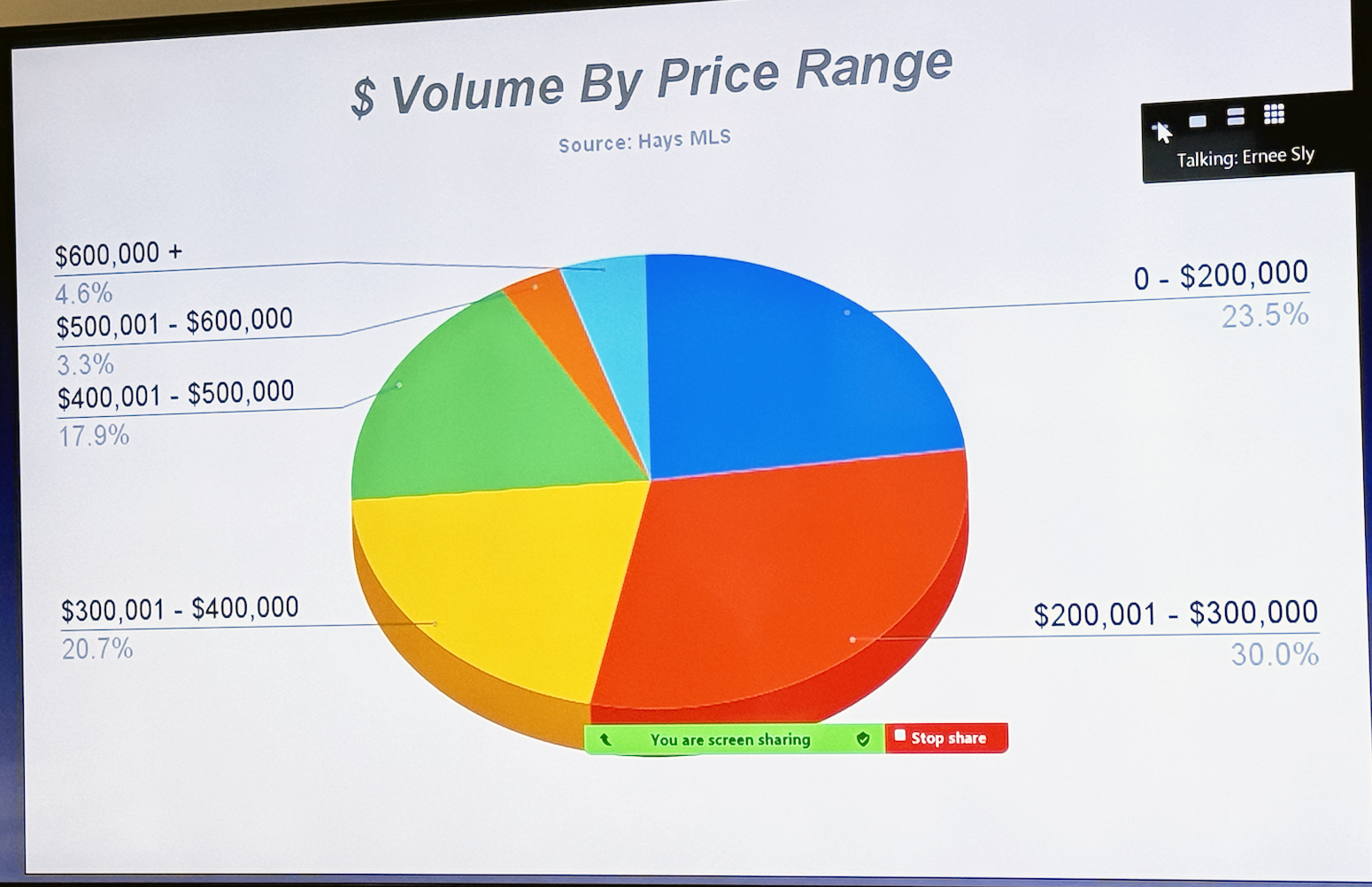
About 70% of the homes sold in Hays last year were priced at $300,000 or less.
Williams was asked how many homes between $180,000 and $225,000 were being built in Hays. He said none. The cost of construction and developing infrastructure is too high.
Rental market
Williams said it is difficult to estimate rental vacancy rates, but he estimated about 2-3%. He said a healthy market would have at least a 5% vacancy rate.
"What happens is that you benefit those who don't do a good job taking care of their properties because they can continue to rent them," he said. "It doesn't keep people honest in terms of taking care of properties."
"It ends up being properties in the campus area that should be torn down, and something else replaces them, but if they can continue to get them rented at a high price, they are going to continue to do that," Williams said.
He said competition could help solve this problem.
A lack of quality housing can hinder employers' efforts to recruit workers in the community, whether that be doctors for the hospital or factory workers at Agility, Williams said.
Outlook for 2026
Williams' outlook for 2026 includes an estimate of 15 single-family home starts. He said a lack of lots available will likely keep single-family home development low.
He estimated 35 multi-family unit starts.
He predicts housing prices will remain stable, depending on the price, and rents will trend stable to slightly higher, as they did in 2025.
He said that as more of the rental units being built now are completed, there should be downward pressure on rental prices in the city.
Low-income housing
Williams said four community projects are vying for low-income housing tax credits (LIHTC).
Those projects are
• Willow Grove Apartments-Zimmerman Properties, 400 W. 48th
• Wheatland Commons-Old Town Development, 22nd and Cumberland
• Magnolia Estates-Housing Opportunities, Inc., 2600 Canterbury
• The Reserves at Pioneer-Overland Property Group, west of the Hilton Garden Inn
Williams said Grow Hays is supporting all four of the projects.
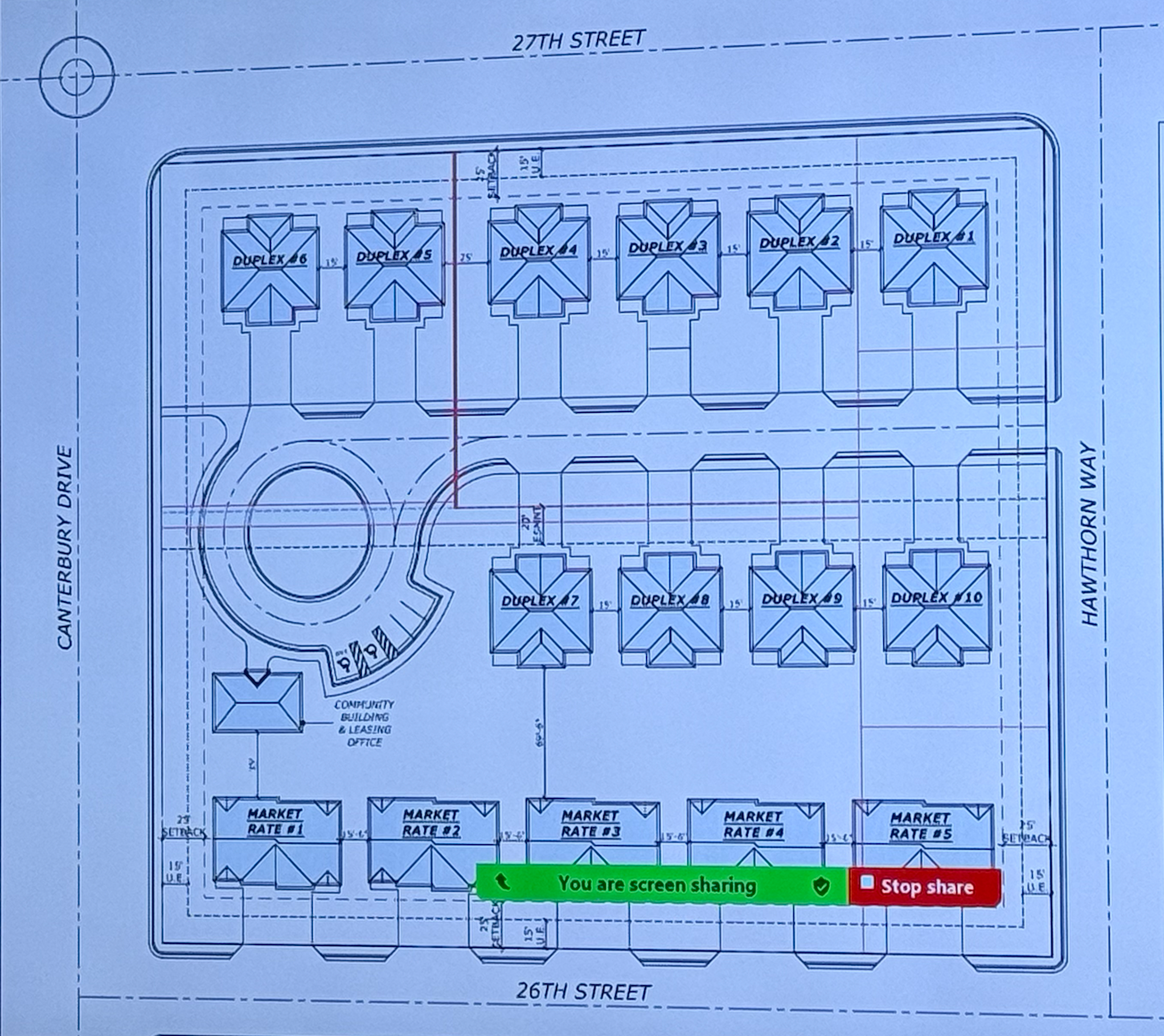
The Magnolia Estates project would be in the northwest portion of The Grove Addition and would replace the proposed Villas project.
The 10 two-bedroom, one garage duplexes aimed at low-income seniors would rent for about $600 to $650 per month, well below the market price of $1,200 to $1,400.
This still would leave space for another five market-value duplexes in the addition.
The applications for these tax credits are very competitive. Williams estimated Hays had about a 25% chance of having one application approved, and that all four applications would be very unlikely to be approved.
Williams said Grow Hays will consider other options for The Grove if the Magnolia Estates application is not approved.
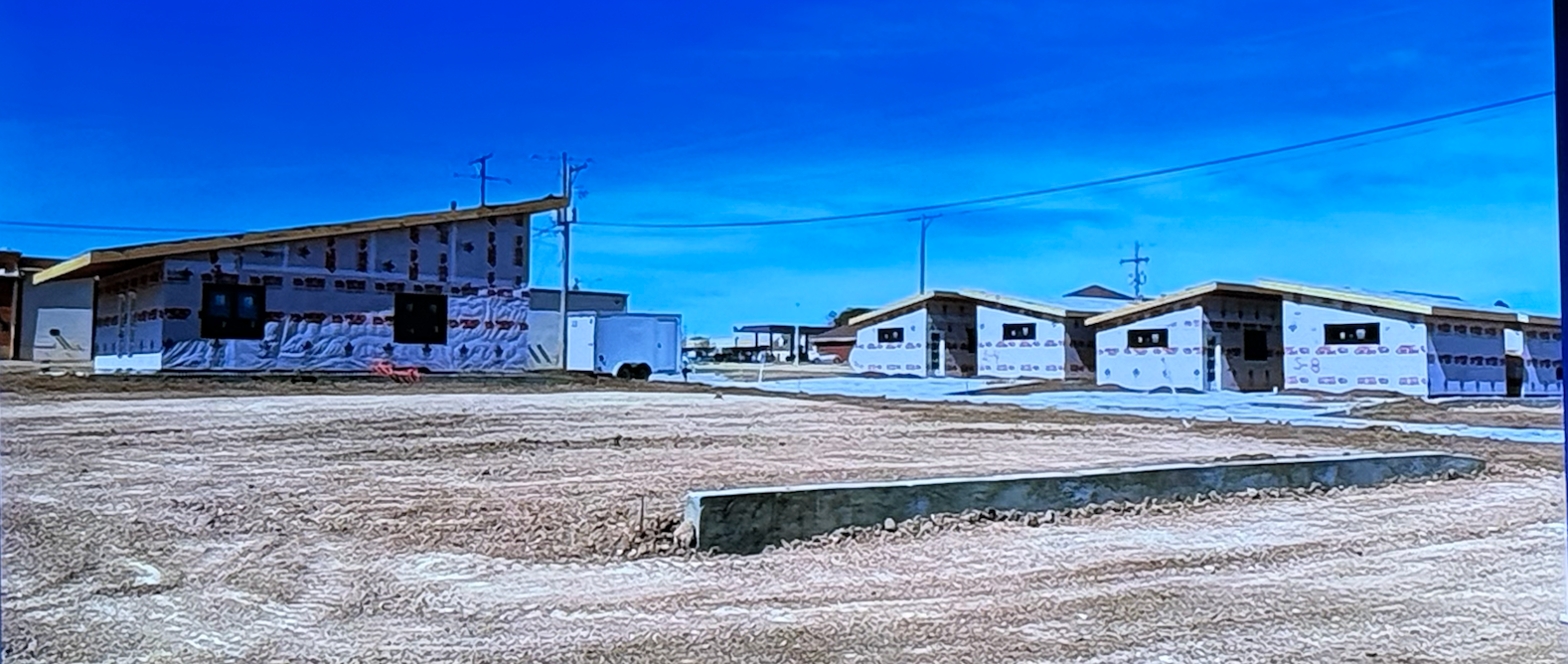
Williams also highlighted other housing projects that are in the works or are under construction, including:
• Tallgrass Addition: The first three phases are sold out, and the last homes are set to be completed in the next 90 days.
• The Grove: Three houses are sold. Five homes have started, and the next three will start in May. One of the first five homes will be a model home.
• 10th Street Apartments: 48 units. Developer Michael Graham hopes to have those units open by August.
• Lincoln school: Seven fourplexes on the former school playground are scheduled to start this year, with the former school being remodeled into more apartments later.
• Extended-stay tiny homes: Developer Aaron Dreher is building 10 tiny homes at 27th and Canal. The frontage on 27th Street will be available for commercial development. The land will still have space for the development of 12 more tiny homes.
• West 11th Street four plexes: Elite Investments is developing two-bedroom, two-bathroom units.
• Big Creek Estates: 11 single-family homes with three-car garages in the $375,000 to $400,000 range. The development is on Reservation Road in the county.
• Knights Addition in Victoria: Eleven lots will be available. Two lots are under construction.
• Ellis Highland Addition: Twelve lots are available, five of which have homes completed or under construction.
USD 489 school board member Ruth Ruder encouraged residents to urge other board members to reconsider the bids for the land, given the benefits of additional housing development. The land is zoned residential.
The land was appraised at $630,000. However, the high bid was $250,000, Ruder said.
Williams said the appraisal is problematic.
He said a builder would not be able to afford to purchase the land at almost $100,000 per acre. The land purchase is only the beginning of the development, Williams said.
Constructing infrastructure, such as roads, sewer, water and electricity, adds as much as $55,000 per lot to the final home price, he said.
"What the school district really needs to look at is what they want to have happen there," William said. "What's our intended purpose? And quit worrying about dollars and start worrying about outcomes."