


By CRISTINA JANNEY
Hays Post
On day two of testimony in a use-of-force case involving the former WaKeeney police chief, a defense expert took the stand, and the former chief testified on his own behalf.
Michael Allen Romero is charged with three misdemeanors: one count of mistreatment of a confined adult and two counts of battery.
He is charged with allegedly inappropriately tasing suspect Steve Baylock on January 19, 2025, and placing his hand, then his arm, on the neck of Jesse Maupin on March 7, 2025.
Romero was eventually removed as WaKeeney police chief.
SEE RELATED STORY: Attorneys argue reasonable force in case of former WaKeeney police chief
Expert testified on use of force
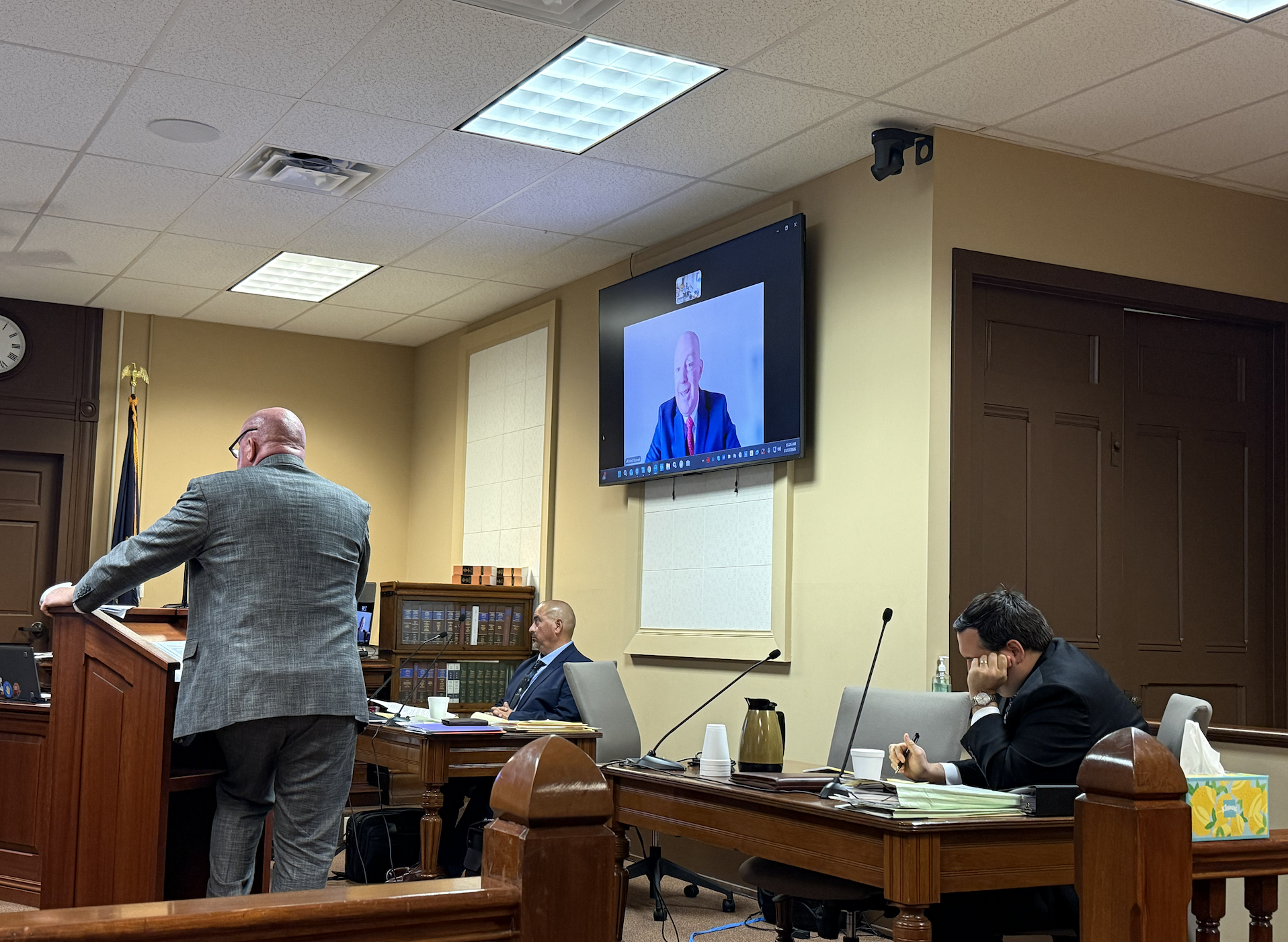
Brian O’Donnell, a retired Charlottesville, Virginia, police officer with more than 29 years of law enforcement experience, testified as an expert witness for the defense on the use of force.
O’Donnell said he believed Romero used reasonable force in both cases.
Prior to Romero restraining the Maupin, he had banged his head against the window of the patrol car he was in. O’Donnell said Romero had a responsibility to keep Maupin from hurting himself or someone else, as well as keep him from damaging the patrol car.
O’Donnell said Romero’s use of his hand at Maupin’s throat is called a c-grip and that Maupin was at no real risk of being rendered unconscious or unable to breathe.
Maupin was handcuffed in the back seat of a patrol car, but he swung his legs out of the car when Romero opened the door to seatbelt Maupin, according to video and testimony.
O’Donnell said, in that instance, had Romero not restrained Maupin, Romero could have been kicked, bitten, spit on or head-butted by the suspect. O’Donnell said he also perceived Maupin’s movements as an attempt to exit the police car and escape.
Expert on tasing
O’Donnell also examined video and reviewed reports from the Baylock case.
Officers had been called to Baylock’s home because his girlfriend had reported that earlier in the day, Baylock had been drinking, kicked his dog and threatened to shoot the dog in the head.
The girlfriend said Baylock had threatened to “go postal,” owned a weapon and she feared for officers' safety.
As officers approached Baylock’s house, Romero and another officer can be heard saying on body camera video that they thought they heard a shot fired.
According to testimony and video shown in court, Baylock stepped onto the porch. He was ordered to put up his hands, but he raised them and then lowered them.
Romero approached Baylock and tased him while he was standing on his concrete porch, which stood about two to two and a half feet off the ground.
Baylock fell but was caught by officers and was not hurt, except for a scrape on his knee.
Earlier on Tuesday, Kansas Highway Patrol Trooper Benjamin Larson testified that he did not think Romero should have tased Baylock while he was standing on the porch.
Larson said Kansas officers are trained not to tase suspects on elevated surfaces because they can fall and be injured.
Baylock was searched and found to be unarmed. His weapon was found holstered in a bedroom several feet inside the home.
O’Donnell said he reviewed a similar case in which the suspect was shot instead of tased. The shooting was determined to be a reasonable use of force, and no criminal charges were brought.
“You do not have to wait until a gun is pointed at you,” O’Donnell said. “In law enforcement, you are taught there’s a blood cost to waiting too long.”
O’Donnell also said officers have to make split-second decisions during quickly evolving situations.
Romero had to take all the information he had at the time, including his and another officer's perception that a shot had already been fired, into account when making his decision, O’Donnell said.
When Trego County Attorney Abraham Pfannenstiel cross-examined O’Donnell, he said he had been paid more than $8,700 to give his expert testimony, although he said he did not feel he was biased in the case review.
O’Donnell also admitted he had never been to Kansas, was not aware of the training Kansas officers received and he had not interviewed any other officers or witnesses who had been at either scene. He said he watched the body cam videos and read the law enforcement reports submitted to him.
Romero testifies on Baylock tasing
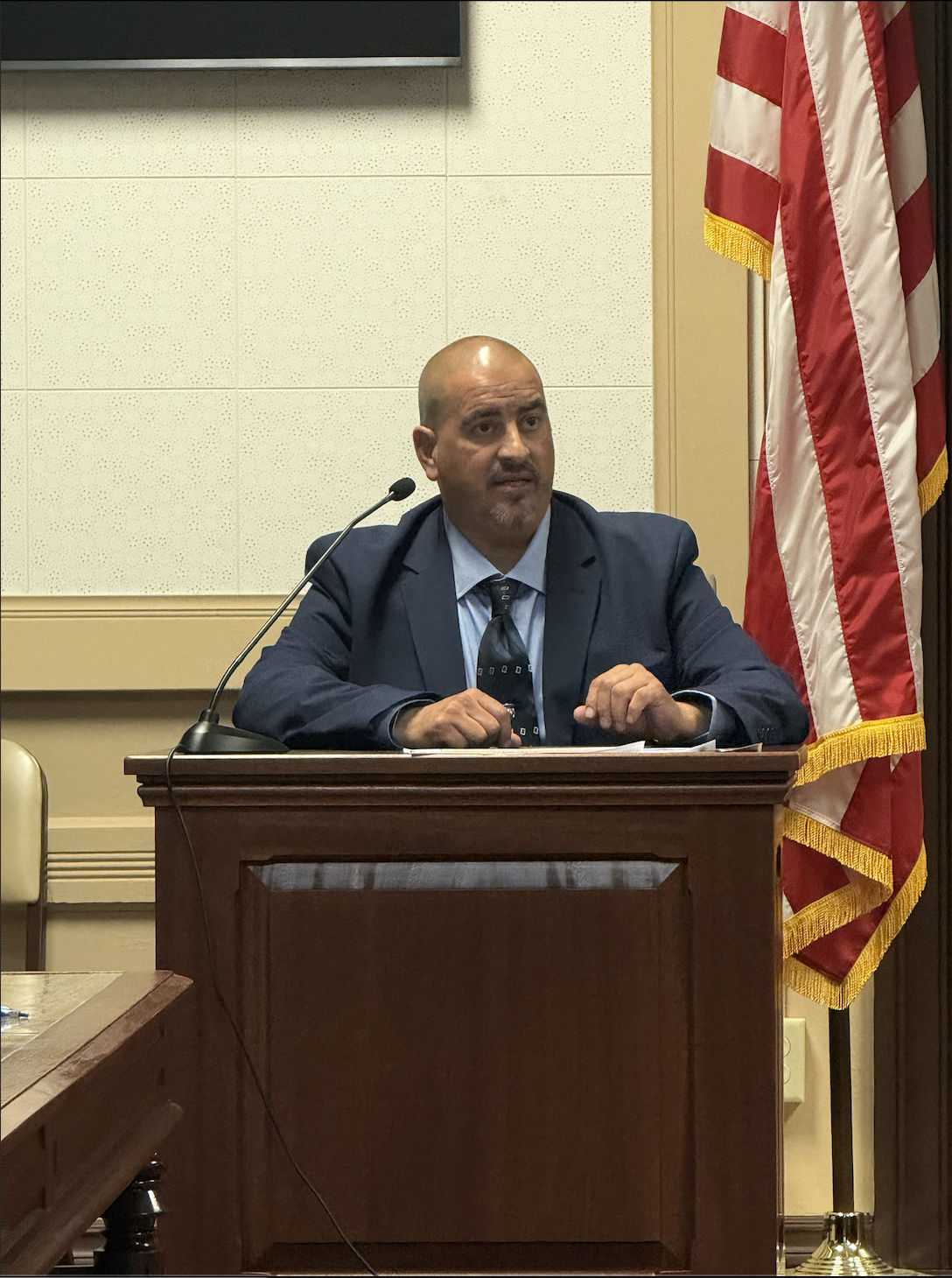
Romero took the stand on his own behalf, telling the jury about his 26 years in law enforcement and as a first responder, most of which was in Colorado.
He said he had chosen his professional life because he wanted to help people.
He said he not only had taser certification, but had been a taser instructor in Colorado.
Romero testified that on the night of the Baylock incident, his intent was to keep everyone safe, especially his young officers, two of whom were less than a year out of the training academy.
Romero testified to his mindset that night based on the information about the suspect and the officers hearing what they thought was a gunshot as they approached the house.
“Intense,” he said of the night. “I was very scared because I think there was a shot”
His voice cracked as he told the jury about losing two of his fellow officers in Colorado in the line of duty and a third officer, who was his buddy at the law enforcement academy in Kansas, also being killed.
He said he had also been the shooting officer in an officer-involved shooting, and the lighting and position of the home that night were very similar to that previous incident.
He described these prior incidents as traumatic to the point he had briefly left law enforcement and had considered not returning.
“I didn’t want to get shot,” Romero testified about his mindset on the night of the tasing.
However, he said he chose to approach and knock on the door before retreating to cover because he didn’t want his fellow officers to be the ones in danger.
When his attorney, Kurt Kerns, asked him why he deployed his taser, Romero said, “Based on the information I had, the totality of my experience and training, I believed there was a significant danger to everyone on scene.”
Romero testifies on restraining Maupin
Romero said a fellow officer had alerted him to Jesse Maupin’s presence in the community. From the description, Romero referred to Maupin as a “bad guy” who had a previous history of methamphetamine use and dealing.
On the night Maupin was detained, he was reported to be yelling outside in a residential area of WaKeeney.
Colton Peterson, arresting officer, testified that he could smell alcohol on Maupin’s breath and that his partner said he had a history of mental health problems.
Romero testified that he did not intend to hurt Maupin. He said he only had physical contact with Maupin for 26 seconds.
Romero said he was concerned Maupin was trying to escape from the vehicle, and he might injure himself or damage the vehicle if he kept hitting his head against the window.
Romero testified he had seen an officer being seriously bitten in the face by a suspect. When he was trying to restrain Maupin, he was attempting to avoid being kicked, bitten, head-butted or spit on.
“Based on my training and experience, I saw a threat,” Romero said. “I had to protect him from himself.”
Romero admitted cursing that night. On cross-examination by Pfannenstiel, he also admitted he was angry at the situation.
He said he was worried about damage to the car. He was frustrated that his young officer had not seatbelted Maupin into the car and was angry that he was not home in bed.
Both the state and defense rested their cases on Tuesday.
Court will resume today at 8:30 a.m., when both sides will give their closing arguments. Then the case will go to the jury.
Because all three charges against Romero are misdemeanors, seven jurors were selected to hear the case: six to render verdicts and an alternate.