


By CRISTINA JANNEY
Hays Post
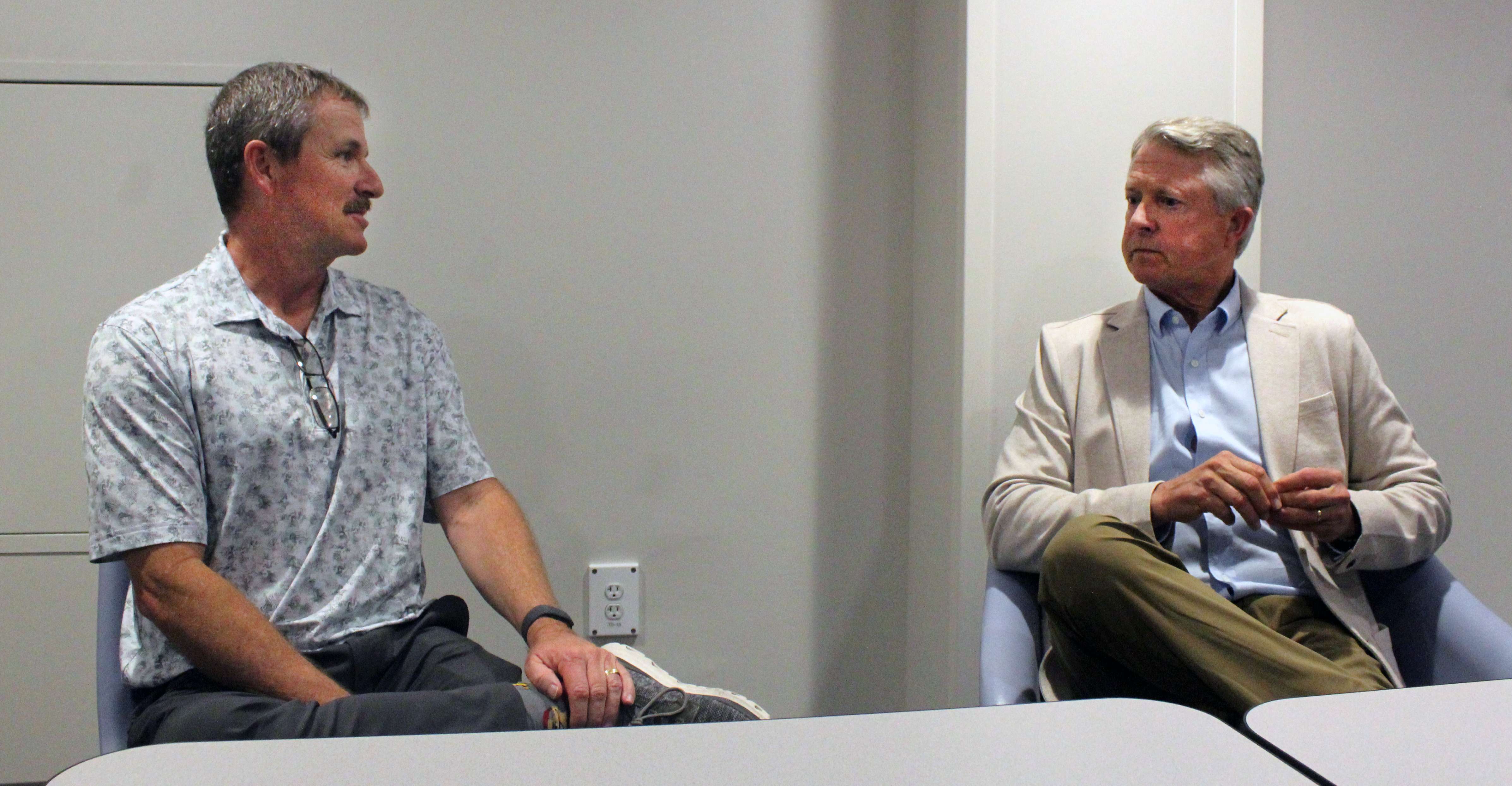
Sen. Roger Marshall, R-Kansas, visited Hays last week and toured the High Plains Mental Health Crisis Intervention Center.
The center, which is on the third floor of the Hadley Center in Hays, opened two months ago and has served 55 patients, averaging about four to six patients per day.
The average stay is about three days.
The staff, including the director of High Plains, Craig Poe, discussed the state's move to Certified Community Behavioral Health Clinics (CCBHCs).
High Plains was one of the first three clinics in the state to make the transition to the model in 2022.
Certified Community Behavioral Health Clinics serves as a clinic model designed to provide a comprehensive, 24/7 mental health and substance use disorder services.
“It was a big transformation for both our patients and our staff. You have people coming in for grief counseling, and you're putting them on a scale and getting their blood pressure. They're like, ‘Why are we doing this?’” Poe said.
However, Poe said people quickly began to understand the interplay between physical and mental health.
The Crisis Intervention Center also has nurses on staff, which means it can address both a patient’s physical and mental health concerns.
It also prevents patients from waiting for beds in a state hospital, in an emergency room or jail.
High Plains serves 20 counties in northwest Kansas, and the Crisis Intervention Center is the only facility of its kind in western Kansas.
Marshall said as a physician, he often struggled in his practice to refer patients for mental health care.
He said patients often had long waits for service.
Neither ERs nor their staff were well-equipped to deal with mental health crises, and holding patients there tied up nurses or law enforcement officers 24/7 until a bed could be found.
Poe said one of High Plains’ most significant struggles has been hiring enough staff for the Crisis Intervention Center.
“We estimated we'd need about 50 to 60 people,” Poe said, “and then we added several [per request, as needed] roles, because we felt like that was going to provide better coverage, and so it got closer to 70 to 75 people. I think, but we are almost full.”
Federal grant for mobile crisis
High Plains received $1.5 million from the $50 billion Rural Health Transformation Fund for two mobile crisis vehicles.
High Plains is using the funds to purchase and equip the crisis vans so it can respond to the 20 counties it serves. The grant will bring its mobile crisis fleet up to four vans.
The vans are staffed by a therapist and a support staff member and also have telehealth equipment.
“We have thrown billions of dollars at [mental health] through my 10 years. This is the first time these last two years I feel like we're finally over the hump,” Marshall said.
Poe said a further challenge has been reimbursement from private insurance.
Private insurance will not cover Crisis Intervention Center stays. They will pay for ER visits or private mental hospitals known as state institutional alternatives (SIA).
“There isn't really anything but outpatient care for crisis services with commercial carriers,” Poe said.
He said a crisis intervention center is a place where a patient could come to stabilize to the point that they would not need a longer stay in a hospital, but insurance won’t pay for it.
Iran
Marshall discussed the war in the Middle East. He was speaking on July 2.
President Trump warned Wednesday the U.S. was preparing for another night of strikes, just hours after he said the ceasefire was over because of Iranian attacks.
Marshall said on July 2, “I always stay focused on what my goals are. No. 1 is no nukes for Iran. No. 2, no forever war. And No. 3 is I'm concerned about the price of gas and groceries at home, and we're certainly a lot closer today than we were several months ago.” He added, “Most importantly, our country is much safer today than it was. Certainly, we have disarmed them. We've destroyed their military, their economy. These are people who would love to kill Americans, and if they ever had a nuclear weapon, the whole world would be their hostage.”
SAVE Act, housing bill
“I respect the president's concern about voter integrity, and he's using it as a leverage to try to get some Democrats,” Marshall said. “I think the real question is, why can’t we find 10 Democrats who want to support voter ID or proof of citizenship when you register to vote?”
Agriculture
Marshall said Congress has not passed a farm bill, but it has passed 90% of what's important in a farm bill. It added $65 billion in crop insurance when Congress passed the Working Family Tax Cuts Act a year ago.
“We raised those reference prices. So, this fall the farmers are going to see the benefits of that, and that was done through Republican only votes,” he said.
“Beyond that, in the working family tax cuts bill, we doubled the debt tax exemption,” Marshall said. “We made permanent the 199A tax deduction, interest deductibility, capital depreciation, as well, so those are all huge wins for the farmers.”
“The only thing left in the farm bill of significance out here to the farmers is some of the conservation programs, and I think they're in a good spot, and we'll get those across the finish line.”