


By CRISTINA JANNEY
Hays Post
The outgoing chairman of the Kansas Board of Regents recently discussed what has been referred to as an enrollment cliff facing colleges and universities across the country.
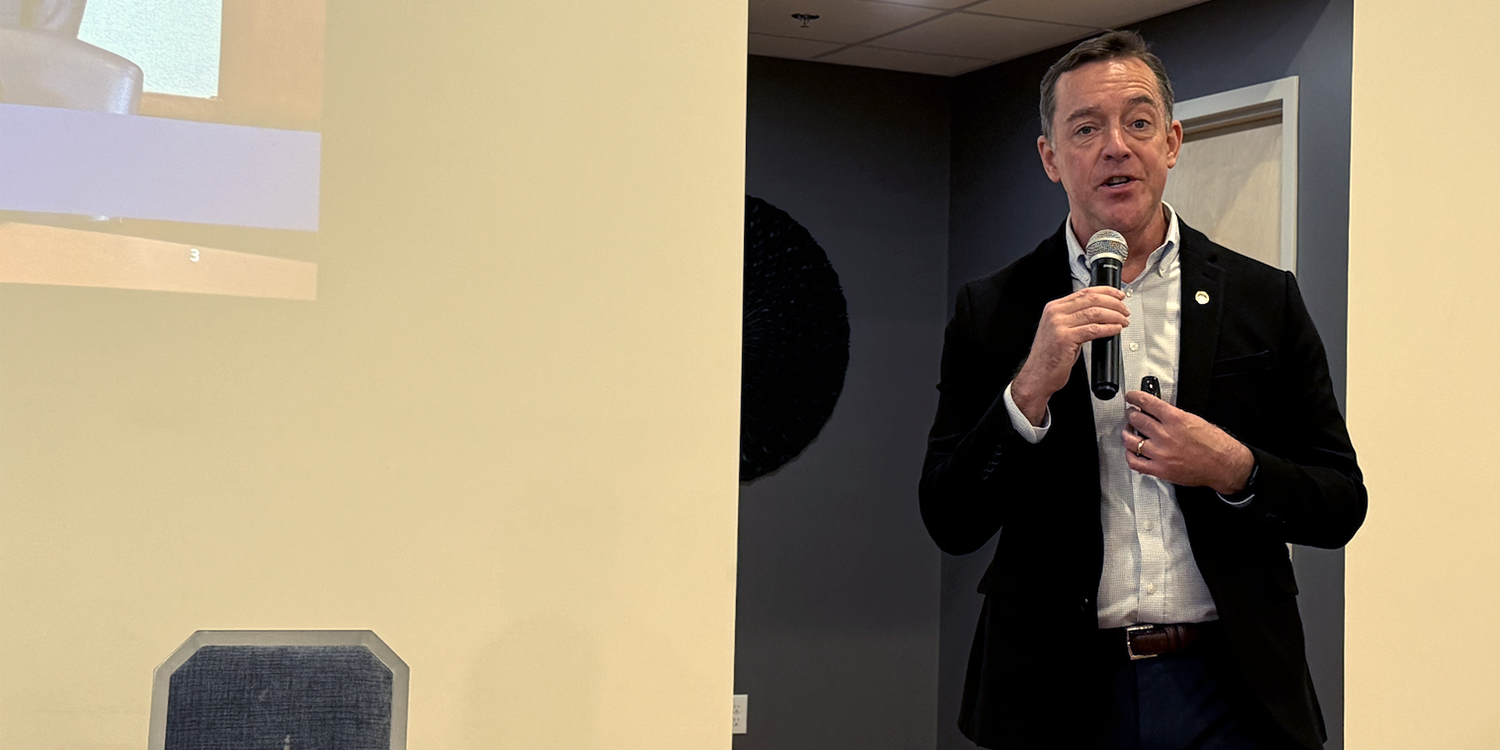
Blake Benson of Pittsburg is coming to the end of his term on the Board of Regents, but spoke at a Chamber in Hays luncheon on June 26.
He said the state’s higher education institutions are facing budget struggles as fewer students enroll.
The cause of this drop in enrollment is two-fold.
The job market is strong, and fewer students are choosing to pursue degrees, he said.
Although Benson said the lifetime earnings of college graduates continue to be strong.
Compared to a high school diploma, earnings for someone with a two-year degree over their lifetime are about $250,000 more.
With a four-year degree, it's a $1 million difference, Benson said.
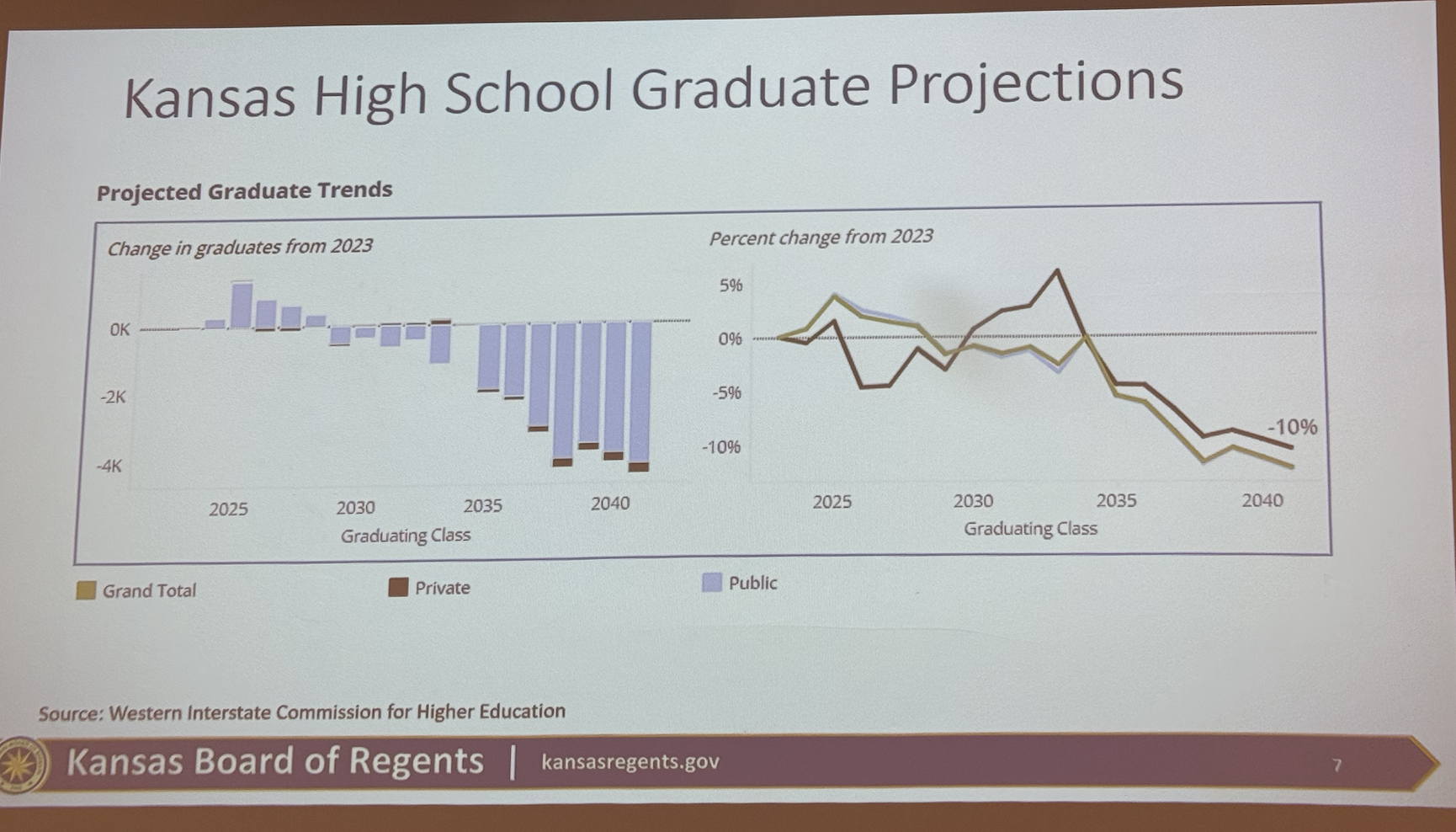
Also, fewer students are graduating from high school.
Fewer children were born after the economic downturn of 2008. Those smaller classes are now graduating from high school.
Populations across all age groups in rural Kansas are also declining, Benson said.
The Kansas Board of Regents governs the six public universities in the state. This includes Fort Hays State University. It also serves as a coordinating body for Washburn University as well as the state community colleges and technical schools.
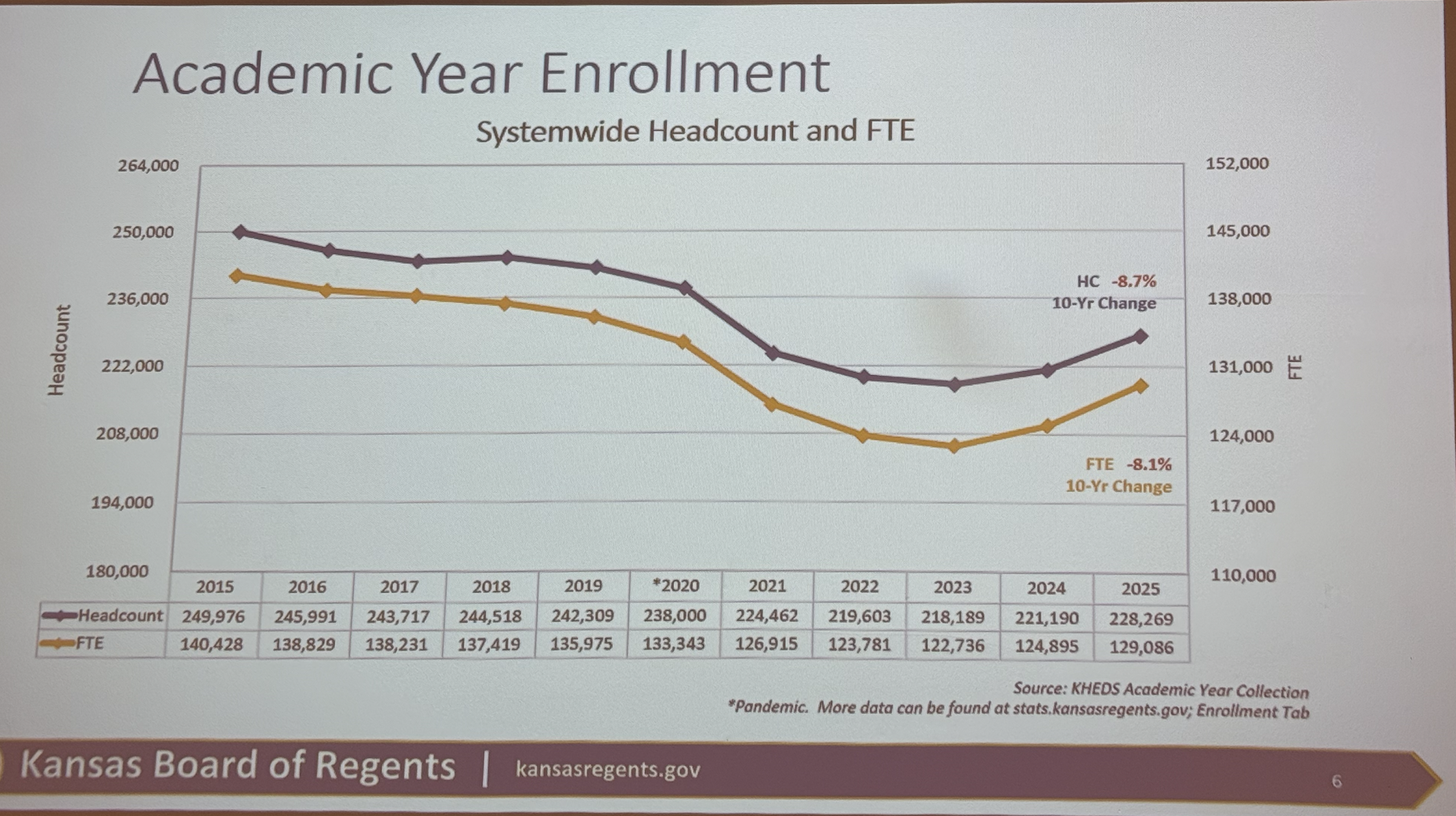
There are very few states in the country that have increased enrollment in the last 10 years. In Kansas, it's been just more than an 8% decline, Benson said.
Enrollment at Regents schools hit a 10-year low in 2023 with a full-time equivalent of 122,700 students.
Enrollment in the last two years has started to rebound, reaching 129,000 in 2025.
However, the number of Kansas high school graduating seniors is not expected to rebound any time soon. It is expected to fall through 2040 with an anticipated decrease of about 10 percent during that timeframe.
“So, this really is referred to as an enrollment cliff, and I know our higher education leaders have been preparing for it for quite a while, but it's 2026, and it is here, and it's going to continue to be a challenge for us,” Benson said.
This is not a phenomenon unique to Kansas, Benson said. It is a nationwide trend, which means colleges across the country are ramping up recruiting efforts to compete for a shrinking pool of potential students.
“Added that an additional challenge for us is you can see how much Kansas invests in terms of student financial aid as compared to our neighboring states,” he said.
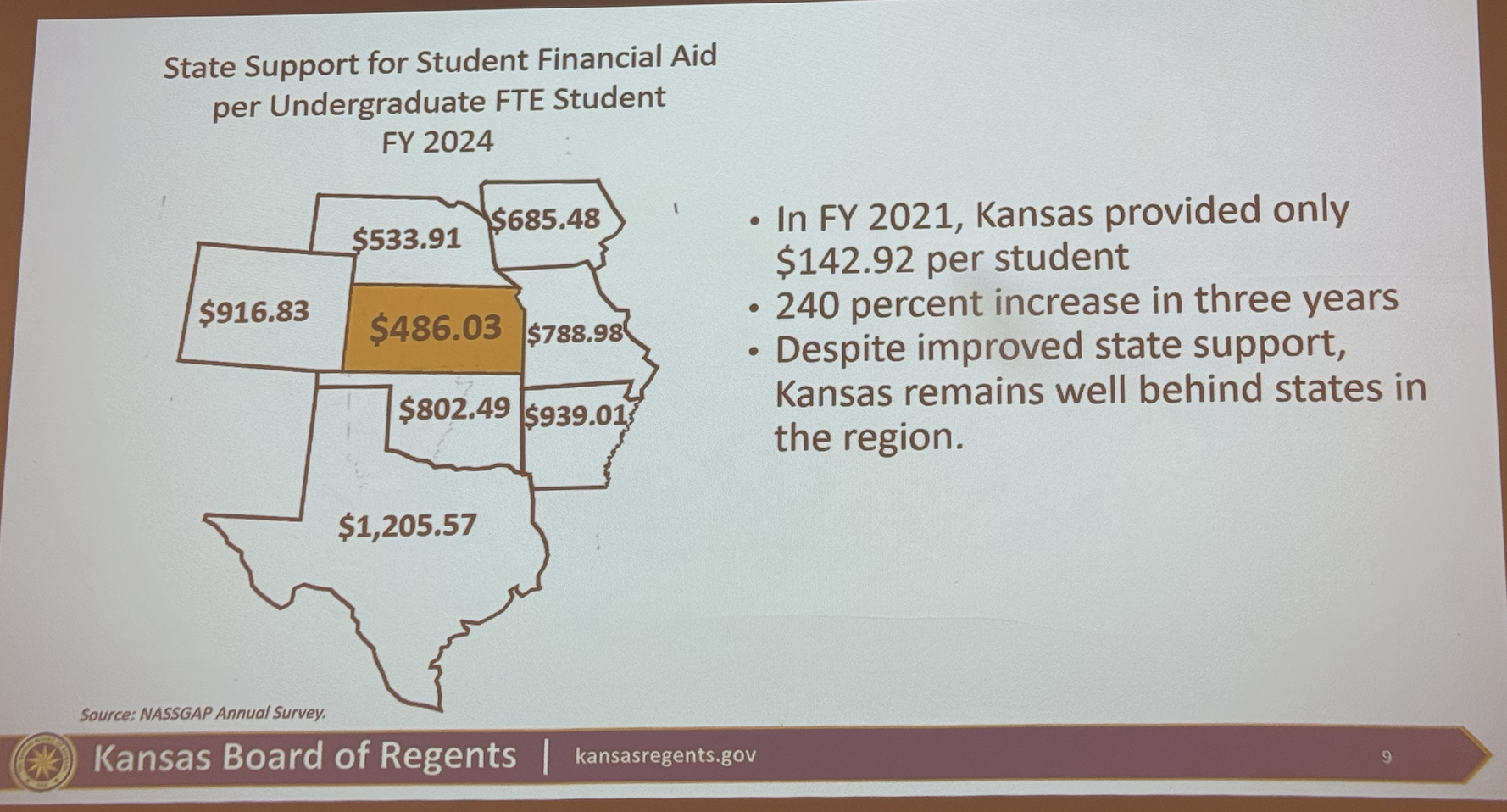
As of fiscal year 2024, Kansas was investing $486 per student in financial aid. Even though that was a 240% increase compared to FY 2021, it still lagged behind neighboring states, with Arkansas and Colorado investing more than $900 per student and Texas investing more than $1,200 per student.
Although enrollments are shrinking, costs continue to rise.
The Consumer Price Index has risen by 25% since 2020.
“Obviously, inflation has affected everyone, and higher education is a business, just like your business,” Benson said. “I'm guessing everyone in here has seen your cost go up over the last five or six years.”
Despite economic pressure, tuition increases across the system have been held at about half of the inflation rate.
For the coming academic year, the Board of Regents approved tuition increases ranging from 0% at Emporia State University to a high of 4% at FHSU.
The Kansas Legislature is fighting its own battles to balance budgets, and higher education is not exempt from cuts, Benson said.
Additional challenges for Kansas schools include a 55% to 15% cut from the National Institutes of Health (primarily affecting the University of Kansas), $20.5 million in name, image, and likeness costs, and increased competition for support staff.
“Support staff, a maintenance technician, someone like that, they could go to a manufacturer, they could go work for the county, they could go work for the city, so we've really seen increased competition for that support staff,” Benson said.
The Regents are basing the future of higher education on three foundations: serving families and students, serving businesses, and advancing economic prosperity in Kansas.
“You can see what we mean by family and students is that affordability that I've talked about,” Benson said, “making sure we're staying on top of that
“But then also access for first-generation students. We need to make sure that they can not only get to our campuses, but that they're supported throughout their college journey. …”
One move universities have made to assist in that journey is centralized advising in the place of faculty advisers.
“That's not only helped our students get through college quicker … and as cost-efficient as possible, but if you transfer from one school to the next, or within your college, if you change degrees or programs, that central advising, and that adviser is knowledgeable on the entire campus in what you require.”
Colleges are also offering free application days.
For businesses, developing a trained workforce is key, Benson said.
He said the Board of Regents and schools are trying to work more closely with the Kansas Department of Commerce and local businesses.
“I'm a big fan of Small Business Development Centers and the role that they play, and then just making sure that the programs that are offered at our institutions are what business is still asking for, and they're still relevant,” Benson said.
He shared three instances in which FHSU worked closely with area businesses to meet their needs, including assisting a regional ag supplier, helping Agiliti, which chose to expand its manufacturing facility in Hays, and assisting High Plains Mental Health with recruiting, which recently opened a Crisis Intervention Center in Hays.
On the horizon, the Regents are developing policies to address AI and piloting programs for reduced-credit degrees and competency-based credits.
Competency-based credits would give workers with experience in their fields credits for skills they have built over time on the job.