


By TONY GUERRERO
Hays Post
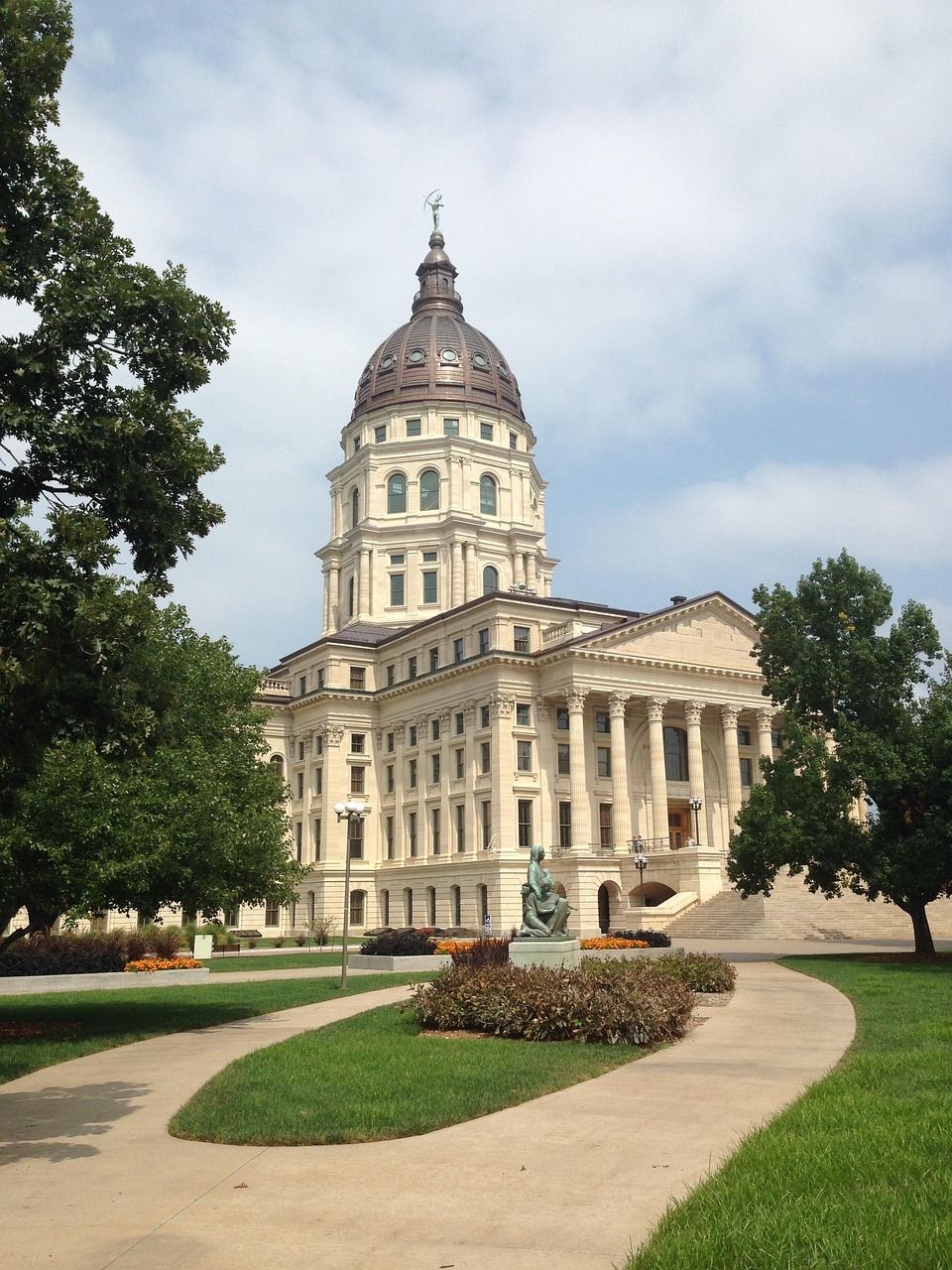
Local Republican legislators said property tax relief will be a focus as the Kansas Legislature begins its session on Monday.
Rep. Ken Rahjes, R-Agra, 110th district, Sen. Rick Billinger, R-Goodland, Rep. Jim Minnix, R-Scott City, Troy Waymaster, R-Bunker Hill, and Rep. Barb Wasinger, R-Hays, spoke with Hays Post to give a sneak peek at key issues slated for the Kansas legislative session.
Wasinger said her top priorities include controlling spending, balancing the state budget and addressing taxes. She spoke with the Ellis County Commission and the Hays City Commission in December about potential property tax solutions.
"What we have to do is figure out a more equitable way to impose property taxes that aren't so high," she said.
SEE RELATED STORY: Rep. Wasinger seeks Ellis County commissioners' input on property tax relief
SEE RELATED FOR CITY: Hays City Commission talks housing, business developments, marijuana sales
"Valuations and property taxes are so high," Billinger said. "Our seniors especially, spent their whole life paying mortgages off, and now they're paying more on property tax than they did for a mortgage. ... It's made it very tough on our seniors."
Wasinger said all state agencies are on the table for budget cuts, with no exceptions. She noted excess staffing and unused office space in Topeka.
"We have to learn to live within our budget, and we have to learn how to cut back in a very judicious way," she said. "I think the government itself is very bloated. ... I think we have a lot of excess space, and we're not filling it, so we shouldn't be paying for it."
Rahjes said property tax relief remains the top issue, pointing to constituent frustration and ongoing disagreements between the House and Senate on how to address it.
"We need to have a conversation with the counties, the Legislature and all parties concerned, rather than just yelling at each other," Rahjes said.
Minnix said he wants to explore new revenue sources to reduce the state’s reliance on property taxes.
"I'm working on something to tax some of the additional energy here in Kansas that seems to be a very fast-growing industry to bring a little tax revenue into the state and distribute that back to the local government, cities and counties," he said.
Billinger said Kansas spent more than it collected last year, prompting the state to tap into its reserves.
"Last year, we cut about a little over $200 million, but we still spent more than we brought in. The revenues were less than what we spent," Billinger said. "We spent from our reserves, and we'll have to find ways to reduce the budget some more again this year."
Waymaster said the state has limited flexibility on property taxes but pointed to education as a possible area for adjustments.
"We did reduce the 20 mills that go to education. We could possibly look at that," he said. "There are various other proposals that some are coming up with regarding addressing property taxes for taxpayers."
Billinger said all agencies will be considered for budget cuts, while acknowledging the importance of supporting social services and education.
Education funding
On education funding, Wasinger said she questions whether increased spending is effective, citing low reading and math proficiency rates despite higher funding levels.
"We have given the Department of Education millions and millions of dollars, and they said, 'You haven't paid us enough. That's why there's no student success.' But if you look at the test results of children right now, over 40% do not read or do math at grade level, and that's with a few billion more dollars," she said.
Wasinger said the department also oversees the distribution of special education funding and that a broader review is needed before any potential court involvement.
Billinger said there is little room to cut funding for K-12 education and social services. He said special education remains underfunded, and lawmakers plan to continue increasing its share of the budget.
Waymaster said education is a recurring focus each year, with K-12 funding making up about 52% of the state budget.
"It's not like we don't fund special education, we do," he said. "A lot of school districts are saying that the state is coming up short because we should be financing it at a certain level. But the federal government is also supposed to be doing that, too, which it's not."
Waymaster said higher education institutions, such as universities, are expected to submit sizable funding requests and will be part of budget discussions.
Water, ag
As chairman of the House Water Committee, Minnix said he plans to work on several bills, such as proposals for long-term water funding.
"There are a lot of things that we need to improve. We need to encourage conservation and better utilization of our water resources out there," he said.
Rahjes said the session will include discussions on the agricultural economy, disease prevention and right-to-farm protections.
"We want to make sure the tools that farmers have when it comes to using some chemicals are correct. In fact, we're learning about some of those right now and working on some language that allows farmers to use some of those tools that work," Rahjes said.
Minnix said agriculture is experiencing mixed conditions between cattle and crop production, and property tax relief would also benefit both.
Health care staff, rural attorney shortage
Rahjes said rural health care will be discussed. He acknowledged critical access hospitals in southwest Kansas continue to face challenges, including staffing shortages.
"The other thing we hope to complete this year is to start the process of working with our law schools to get more rural attorneys. We are desperately short," he said.
Billinger said mental health is a growing concern and expects the new 104-bed South Central Regional Mental Health Hospital in Wichita to help reduce the state’s reliance on temporary health care staff.
"At Larned and Osawatomie, we're using a lot of traveling staff, nurses and doctors. We spent over $60 million on traveling personnel," he said.
Waymaster said recent federal health care changes are expected to affect the state’s budget, but added that Kansas received funding in December to support rural health care.
"Kansas is going to be receiving about $221 million to address rural health care across the state. That's kind of in its infancy," Waymaster said. "The timeline, according to the Department of Health and Environment, is we have to spend or allocate it by Oct. 31, 2026."
Direct election of Kansas Supreme Court justices
Voters will decide in August whether to rewrite the state Constitution to make Kansas Supreme Court justices elected and end the current merit-based selection system for filling vacancies.
Wasinger and Rahjes said they support the amendment.
"We need to have the Supreme Court justices be elected," Wasinger said. "The Supreme Court is chosen by a panel that is not in touch with Kansans or what's going on. They are making the decisions for us, and we need to be accountable for our decisions."
A nine-member nominating commission reviews applications to fill a vacancy and selects three finalists for the governor to choose from.
"The Supreme Court should be representative of the people," Rahjes said. "Over the last few years, if you go back and look at who has appointed these Supreme Court Justices, it's primarily been one party. There's this game being played that if you're in the right position, you hold out until you absolutely have to retire, and maybe somebody that's from my party is the governor."
Waymaster said he likes the idea of elections but prefers to have a federal model.
"We'll see what the Kansas voters say in the primary ballot," he said.
Minnix said he is still undecided, while Billinger said he has not yet thoroughly reviewed the issue.