Prairie-Chickens once numbered in the millions from Texas to Canada and at least as far east as Kentucky. They were so plentiful that they were often eaten by earlier settlers.
However, today, worldwide, the Lesser Prairie-Chicken population is estimated at 30,000.
Western Kansas is unique in that both Lesser- and Greater-Prairie-Chickens live and breed here on open prairie habitats called leks.
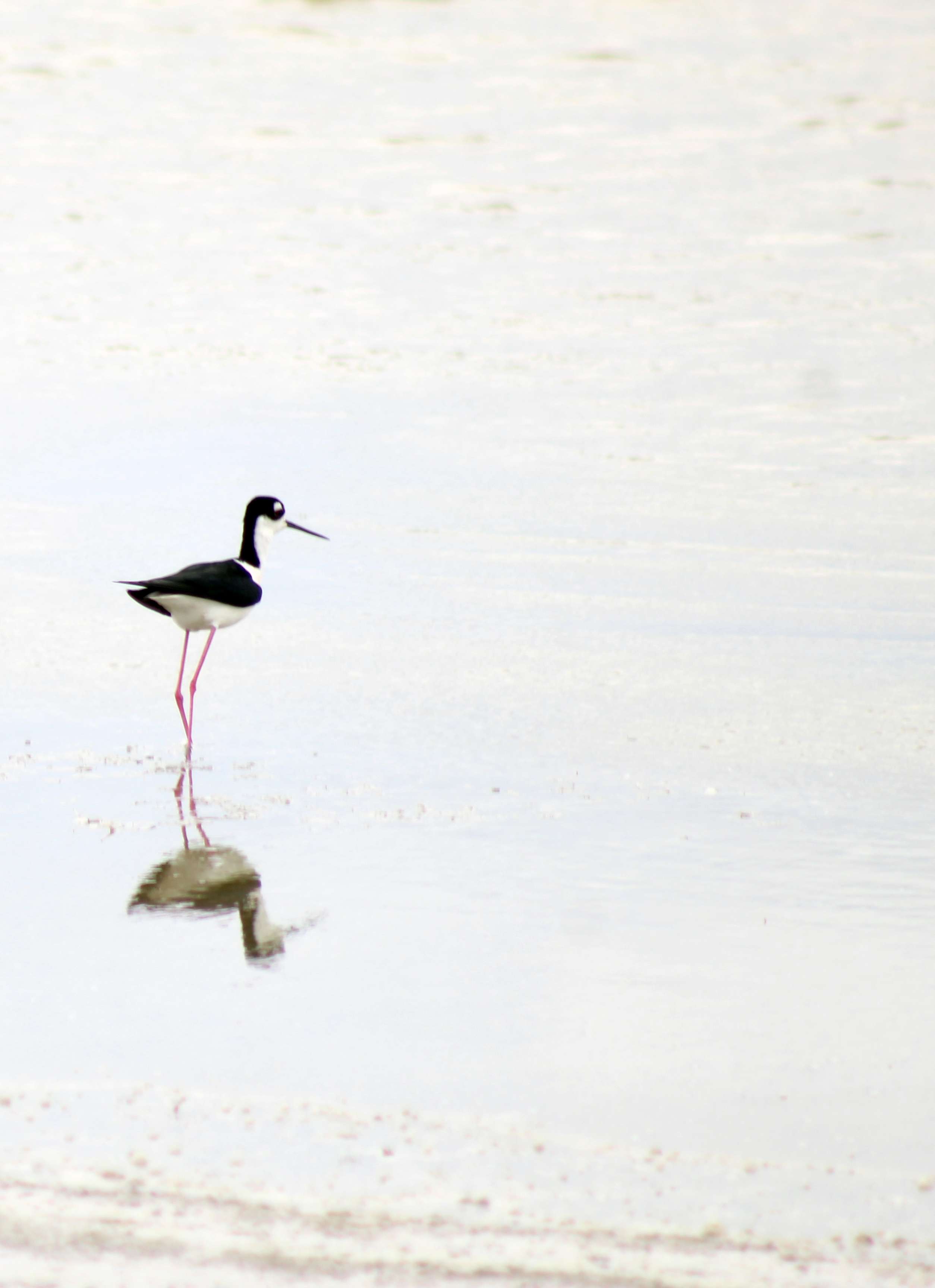
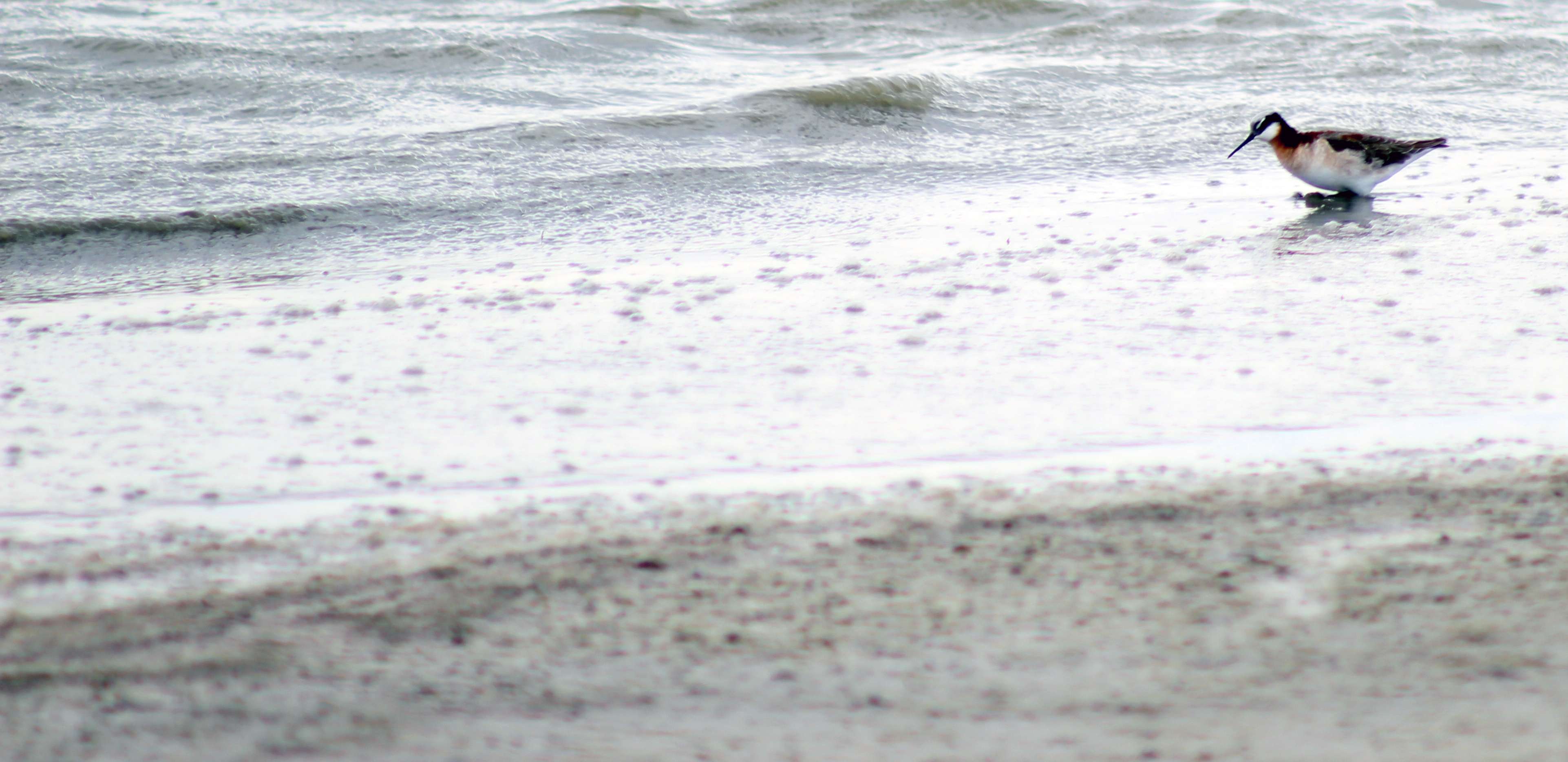
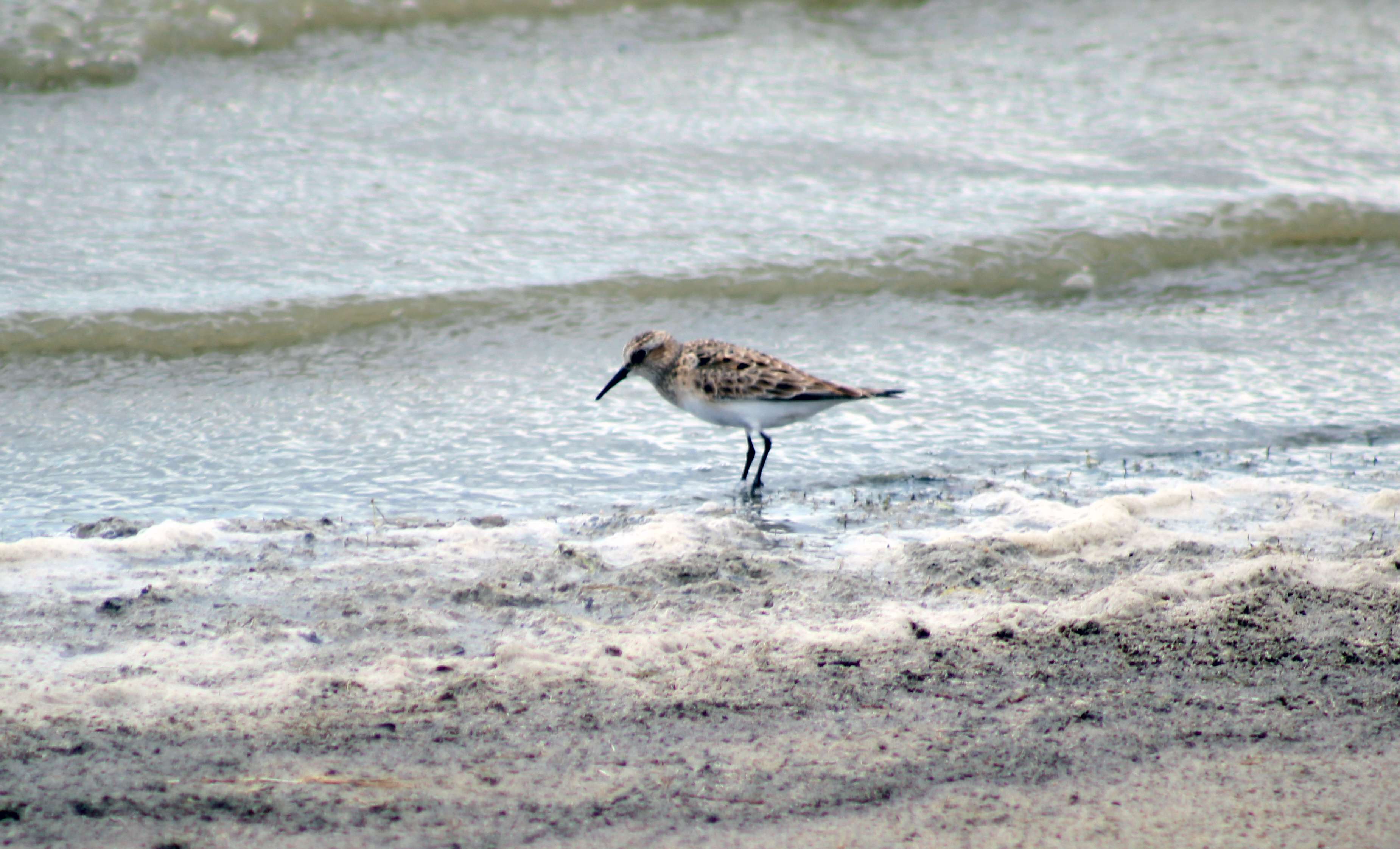
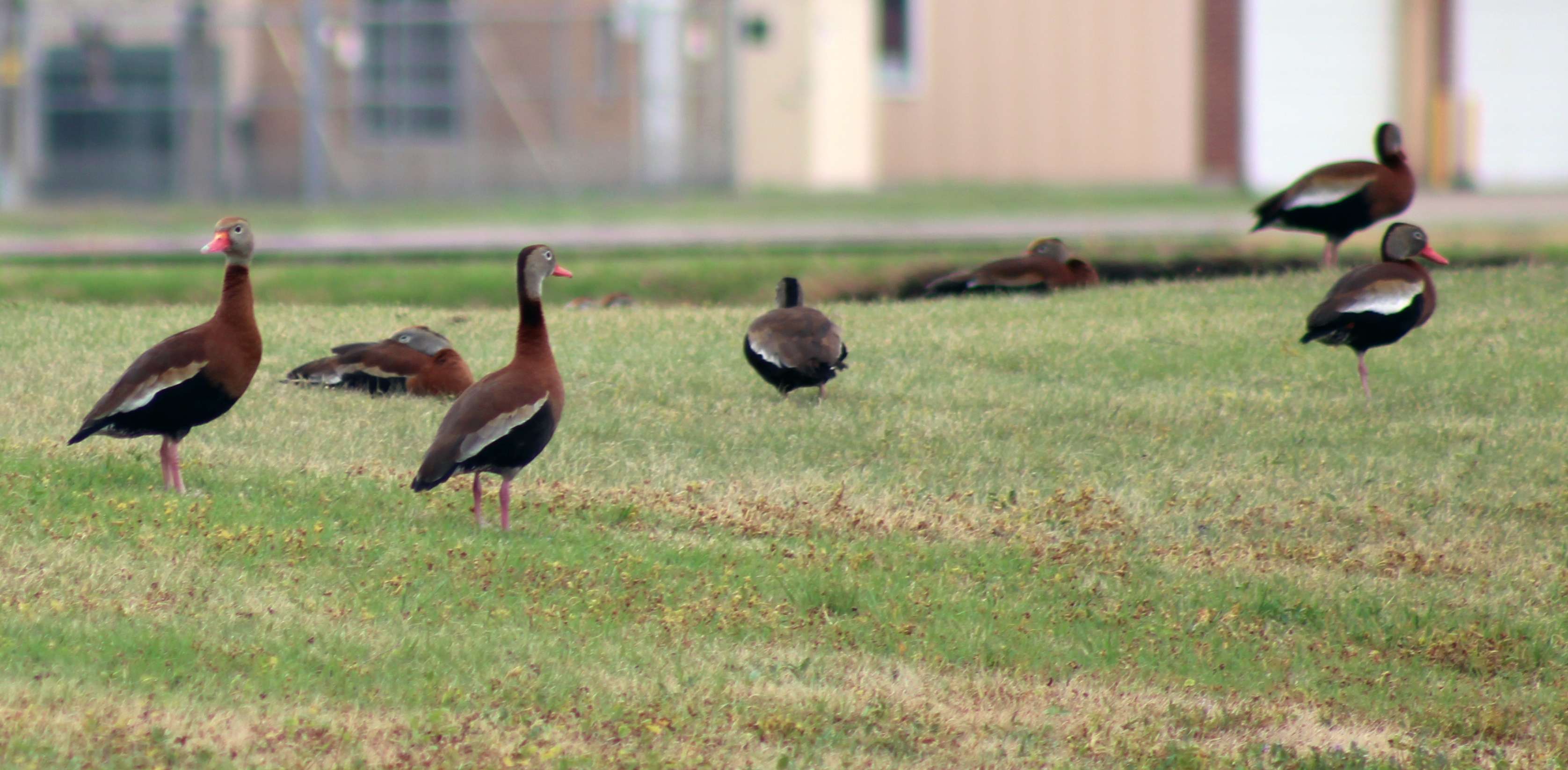
A Black-Necked Stilt at Quivira National Wildlife Refuge on Saturday. Birders from across the nation visited Quivira and Cheyenne Bottoms as part of the Lek Treks Prairie Chicken-Festival, Thursday through Sunday, based in Hays. Photo by Cristina Janney/Hays PostA Wilson's Phalarope at Quivira National Wildlife Refuge on Saturday. The Quivira's salt marshes are part of the Central Flyway for the annual spring and fall migrations of many species of shorebirds and ducks. Photo by Cristina Janney/Hays PostA shorebird in Quivira National Wildlife Refuge on Saturday. Quivira National Wildlife Refuge is near the town of Stafford, it lies mostly in northeastern Stafford County, but small parts extend into southwestern Rice and northwestern Reno Counties. Photo by Cristina Janney/Hays PostBlack-Bellied Whistling Ducks on Saturday at a pond in Ellinwood near Quivira National Wildlife Refuge. Many species of ducks use the wetlands at Cheyenne Bottoms and Quivira as a stopover during their spring migration. Photo by Cristina Janney/Hays Post
Not only did festival participants visit the prairie-chicken leks to witness their elaborate mating dances, but they also traveled to the international birding hotspots of Quivira National Wildlife Refuge and Cheyenne Bottoms to view migrating shore birds and ducks.
Van trips also visited the Smoky Valley Ranch, and Castle Rock, Monuments Rocks and Little Jerusalem Badlands State Park.
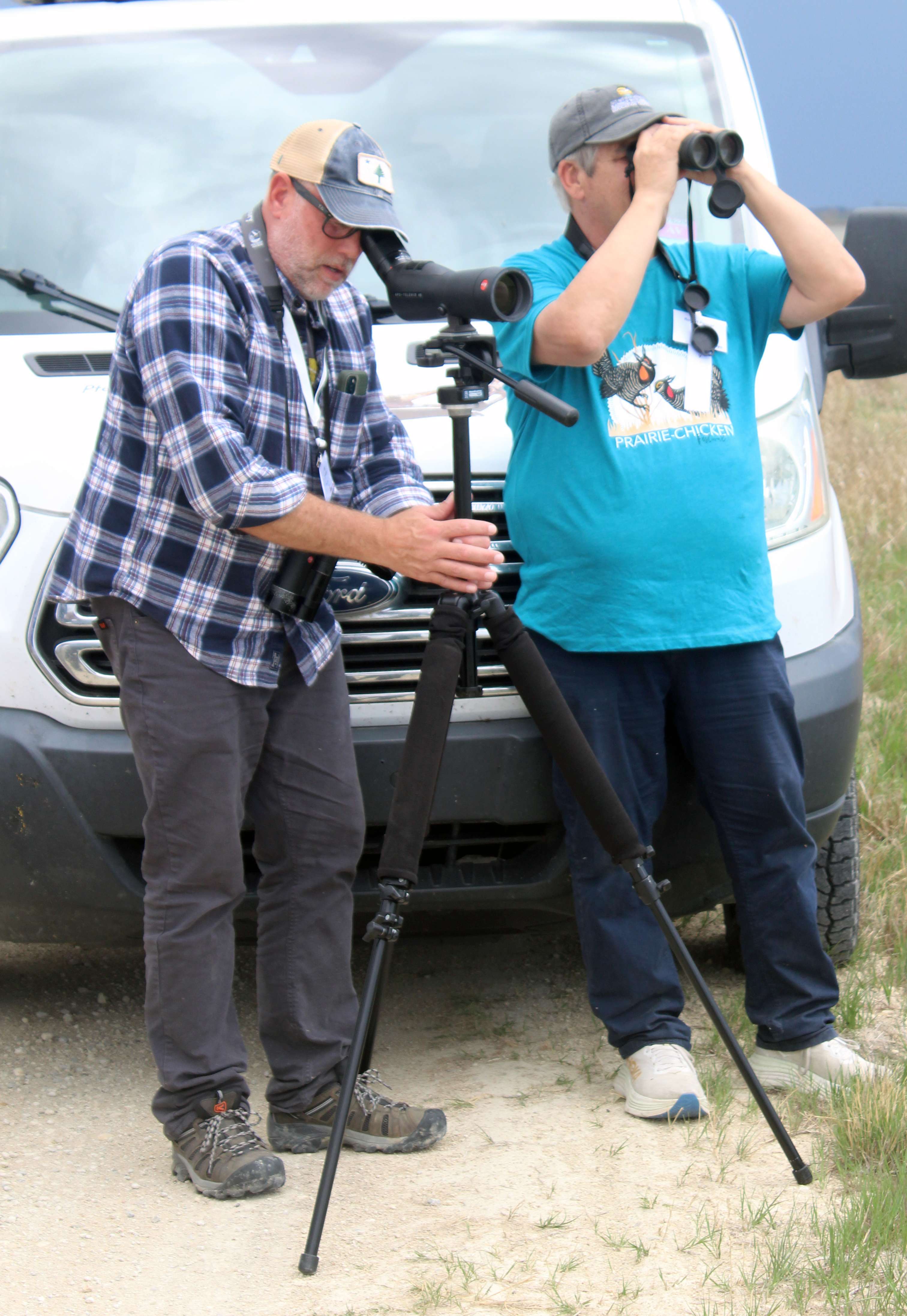
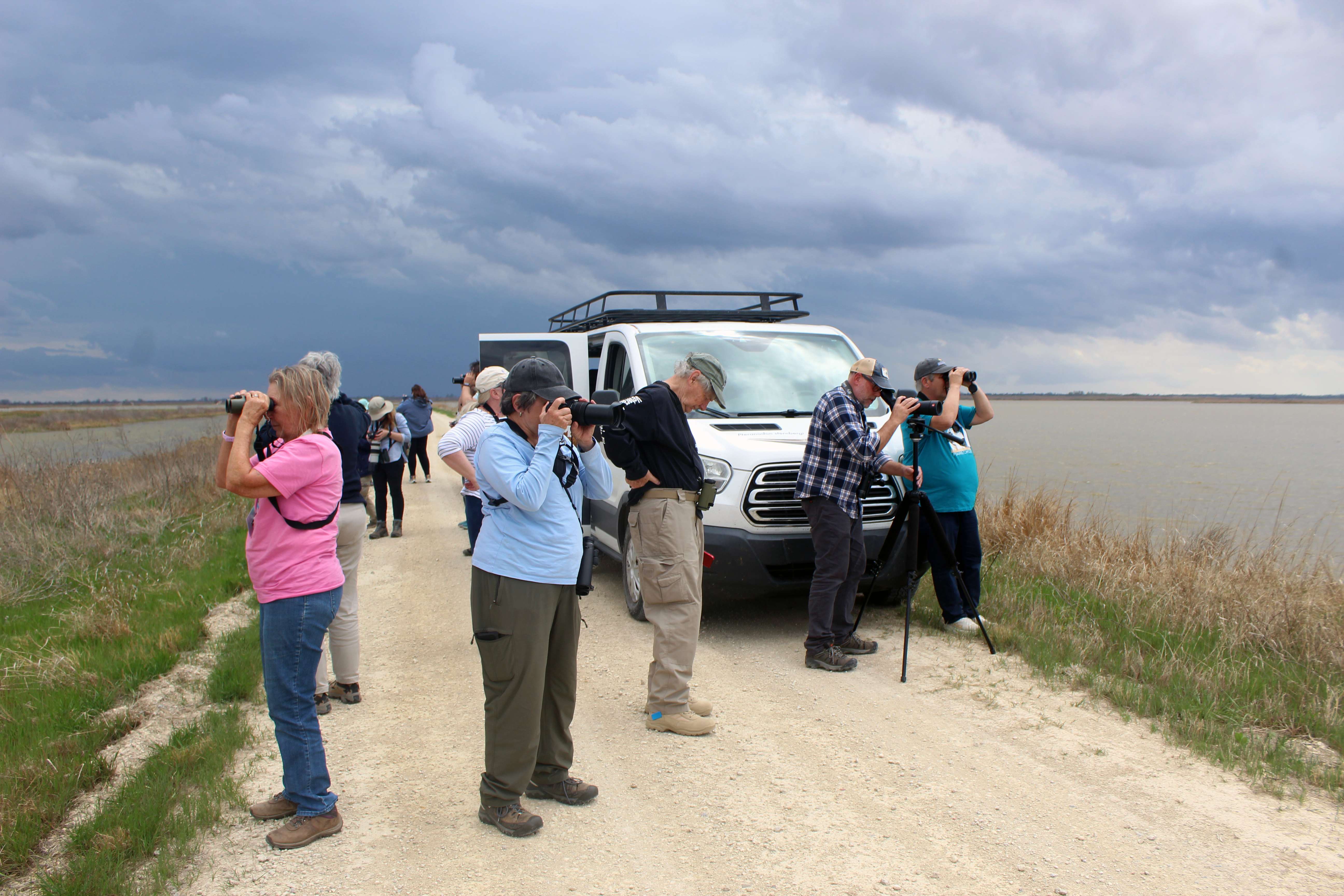
Birdwatchers on Saturday at Quivira National Wildlife Refuge, visiting as part of the fifth-annual Lek Trek Festival. Photo by Cristina Janney/Hays PostBirdwatchers on Saturday at Quivira National Wildlife Refuge, trying to get some last looks at birds before a storm rolled in. Photo by Cristina Janney/Hays Post
On Friday night, participants toured behind the scenes at Sternberg Natural History Museum for a "Night at the Museum."
Both attendees and residents could join free bird walks around Hays each morning, and the local Sunflower Audubon chapter hosted bird trivia at Lb. Brewing.
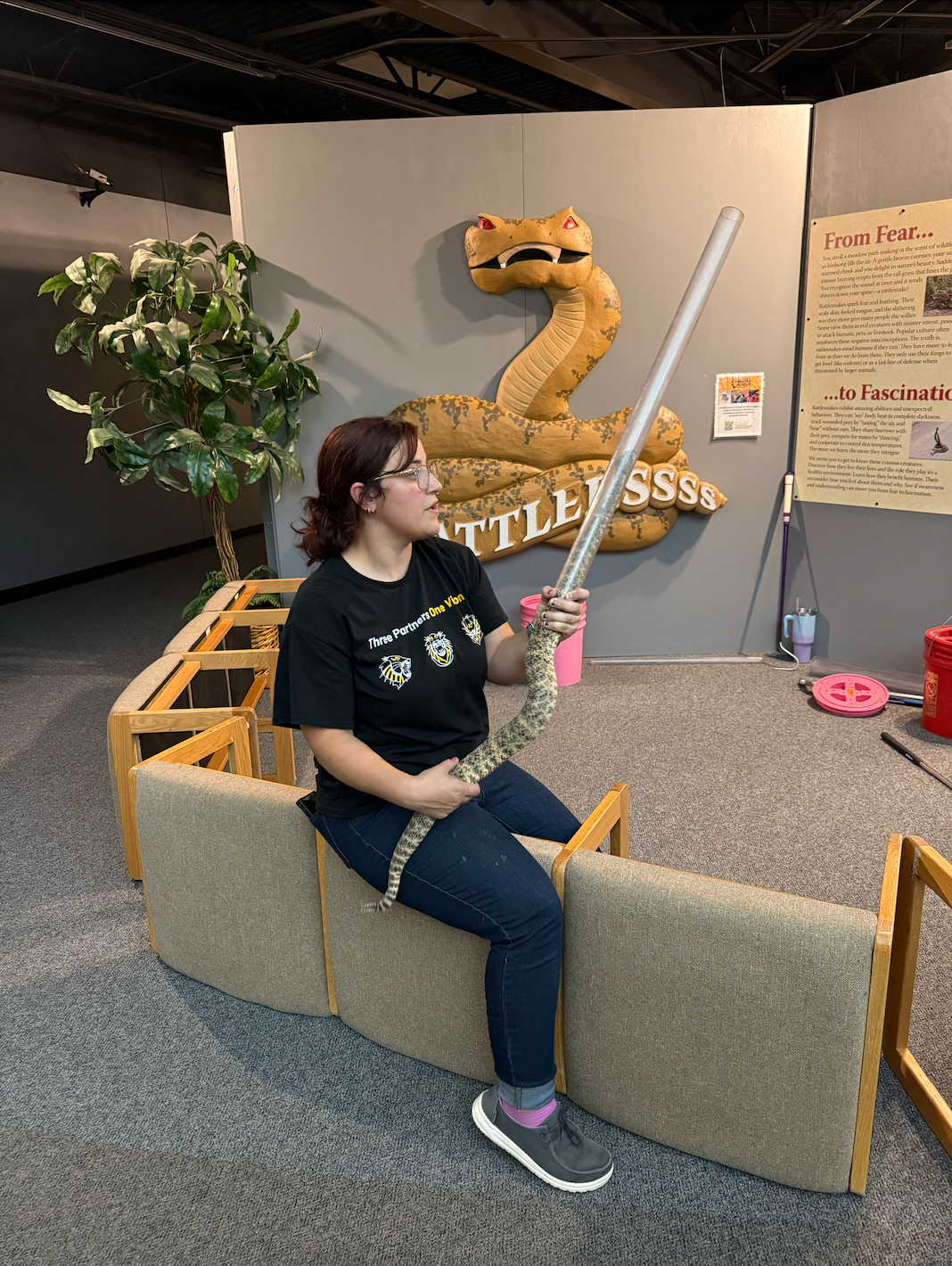
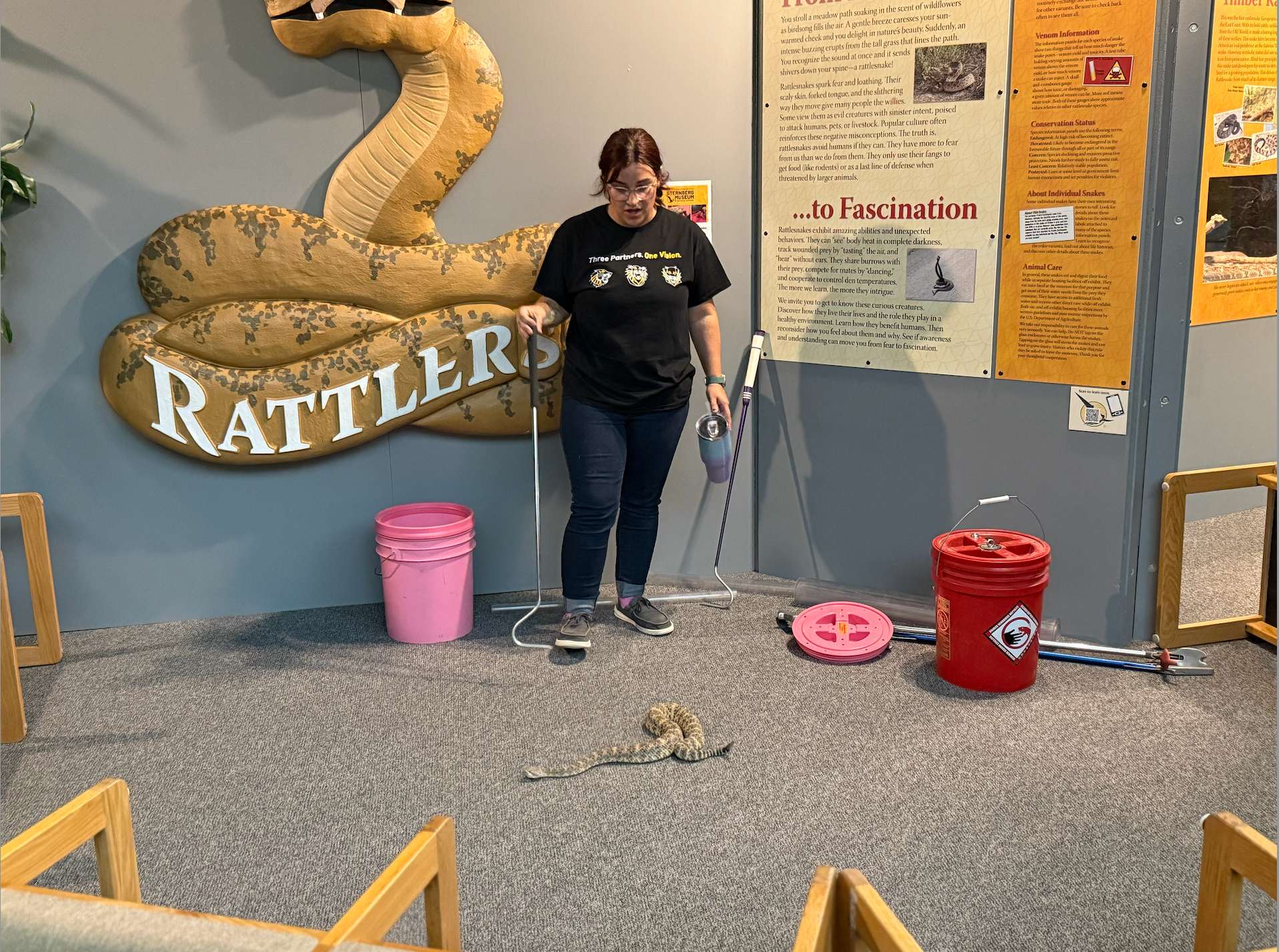
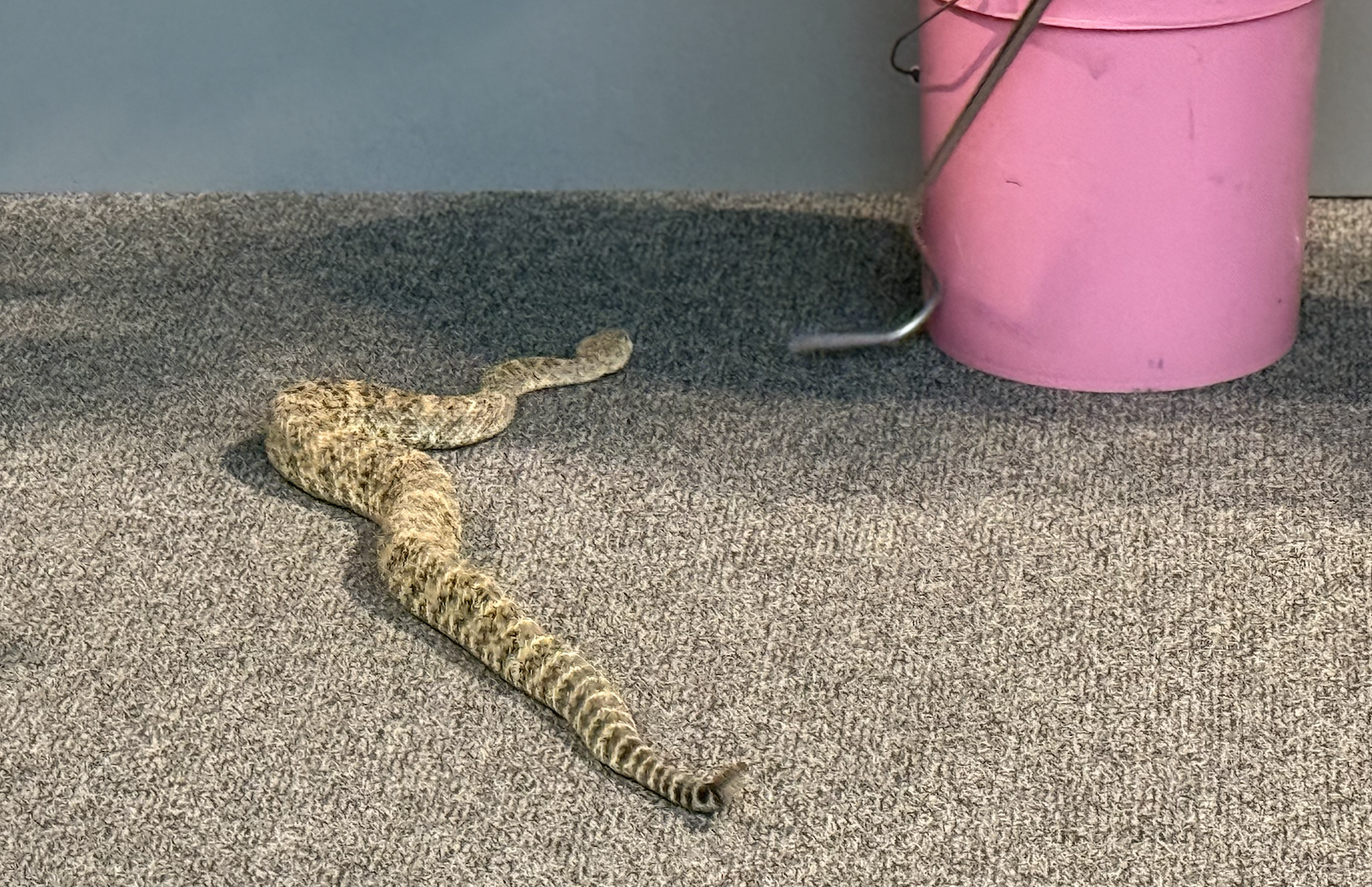
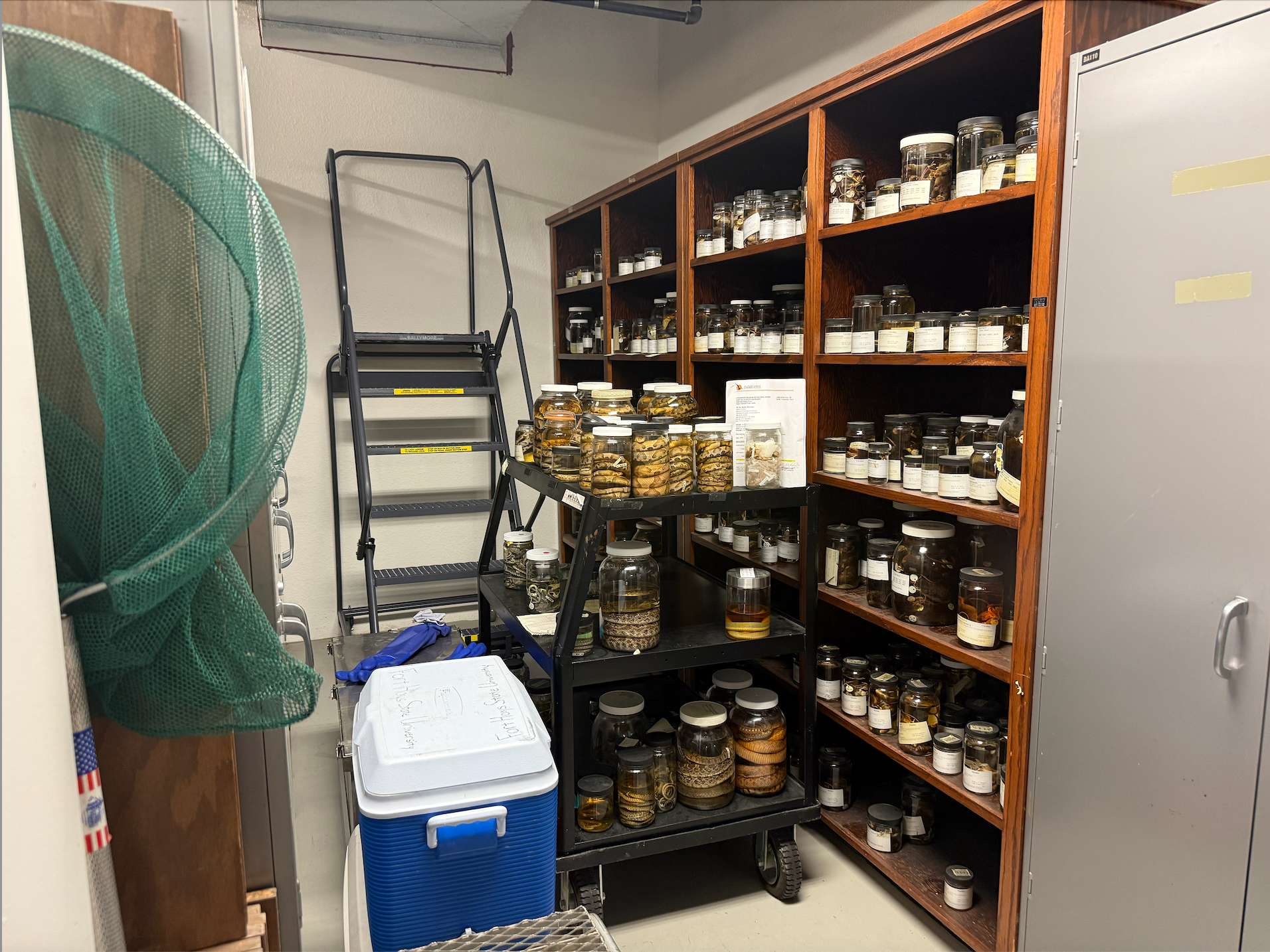
Visitors were able to view the dry and wet collections, as well as get up close views of a couple of the rattlesnakes from the museum's live animal collection.
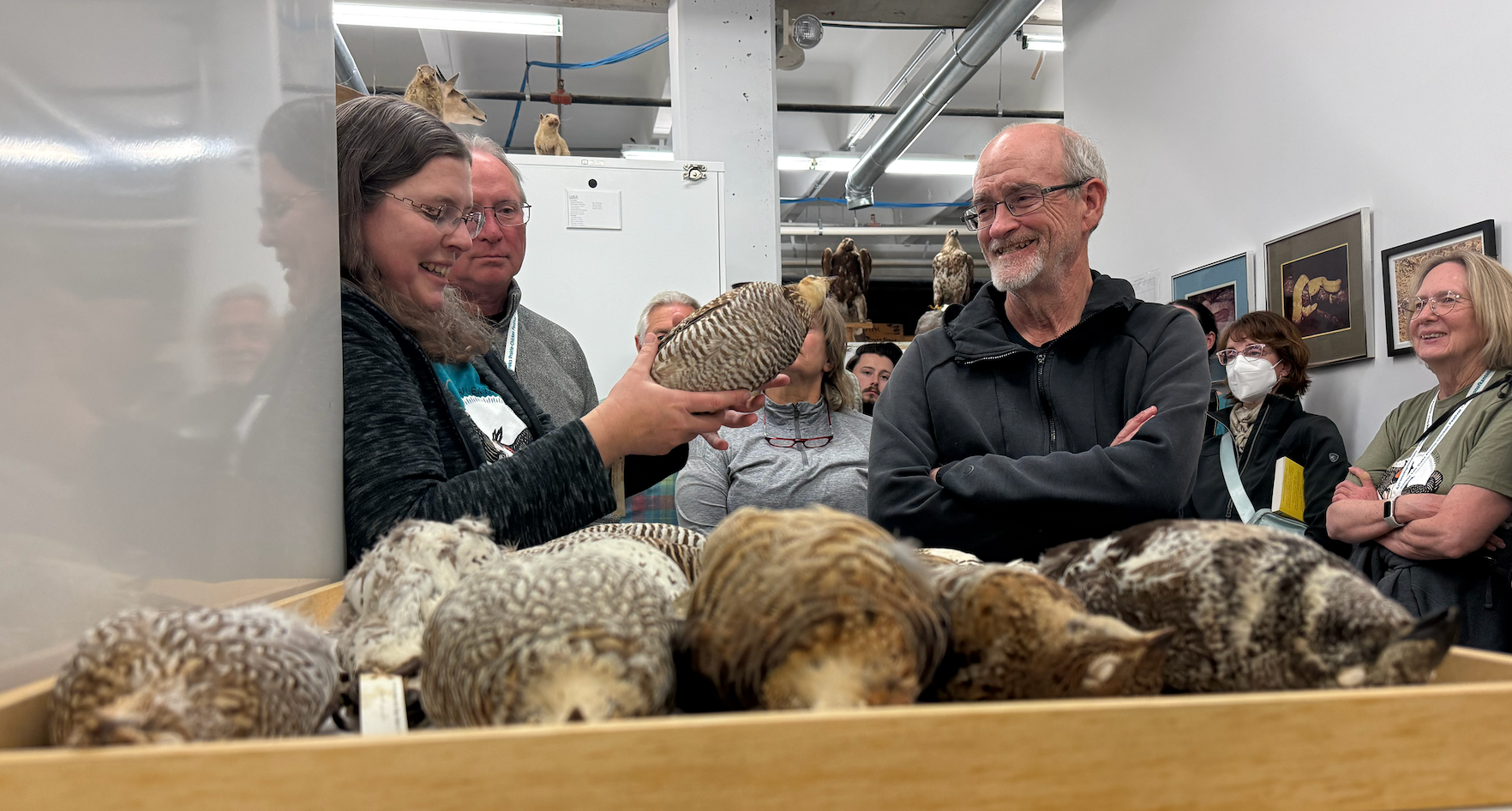
A Sternberg museum staff member handles a rattlesnake on Friday night at the museum. Lek Trek participants were allowed to touch the snake as its head was safely tucked into a tube. Photo by Cristina Janney/Hays PostA Sternberg museum staff member discusses care of the museum's rattlesnake collection during "Night at the Museum," a behind-the-scenes look at the museum for Lek Trek participants. Photo by Cristina Janney/Hays PostFreckles the rattlesnake greets Lek Trek guests on Friday. Photo by Cristina Janney/Hays PostJackie Augustine, executive director for Audubon of Kansas, left, shows Lek Trek participants Sternberg's Prairie-Chicken specimens on Friday during the festival's "Night at the Museum." Photo by Cristina Janney/Hays PostLek Trek participants also viewed specimens from Sternberg's wet collection, which includes amphibians, snakes and fish. Photo by Cristina Janney/Hays Post
The keynote speaker was internationally renowned birder and author of numerous books and field guides, Kenn Kaufman.
Kaufman grew up in Wichita before dropping out of school at 16 to pursue birding full-time.
He discusses some of the species that have been lost or significantly declined in the United States since colonial settlement, including the Passenger Pigeon and the Eskimo Curlew.
However, he also highlighted the abundance of bird life that remains, including some species that were saved from near extinction through human intervention, including the Bald Eagle, Peregrine Falcon, Brown Pelican and Whooping Crane.
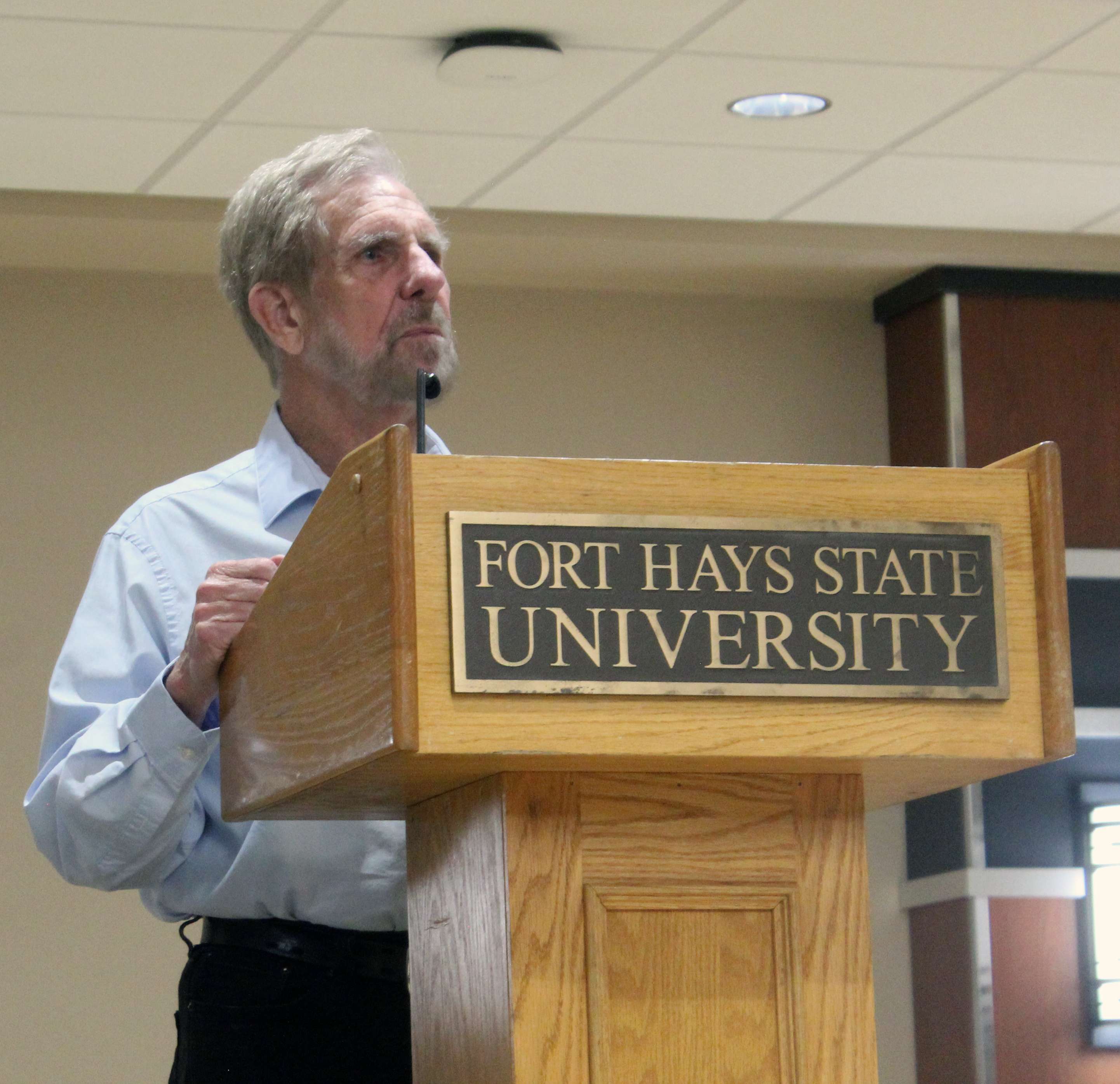
Ken Kaufman, an internationally renowned ornithologist and author, was the keynote speaker at the Kansas Lek Trek Prairie-Chicken Festival on Saturday night at Fort Hays State University. Photo by Cristina Janney/Hays Post
Kaufman concluded his talk by saying, "We are blessed every time we go outside."