


By KAREN MADORIN
Many either know Kansas as a flyover state or viewed through car windows while driving across the flattest, straightest route highway crews could construct. It’s not surprising to hear Kansas labeled boring.
However, those living here, traveling gravel roads, and wandering rock-strewn shores, grassy pastures, and chalky limestone bluffs and arroyos, find this landscape’s exciting stories.
Two grandkids live on a ranch. Their dad’s parents live in a home built of limestone locally quarried over a century ago. Weathered Post Rock fenceposts define surrounding pastures.
When the girls were tiny, we’d examine quarried stone, finding embedded inoceramid clam shells and ammonite imprints. When I explained these were ancient relatives of clams and snails they find in creeks or at area lakes, they questioned how fossils got in rocks.
When I explained an ancient sea once covered this land where they live, disbelief dropped their jaws. How would they get to their other grandma’s house if water covered everything.
As birthdays multiply and fossil collections grow, they still struggle to imagine their home as a shallow sea filled with plesiosaurs, mosasaurs, sharks, small and large fish, along with clams and ammonites. Slowly, they wrap brains around the idea place can change throughout different geological eras.
Rocky outcrops exposing shale, chalk, and limestone layers invite us to play detective, investigating evidence of life that existed before deer, turkeys, coyotes, cows, horses, and humans replaced them.
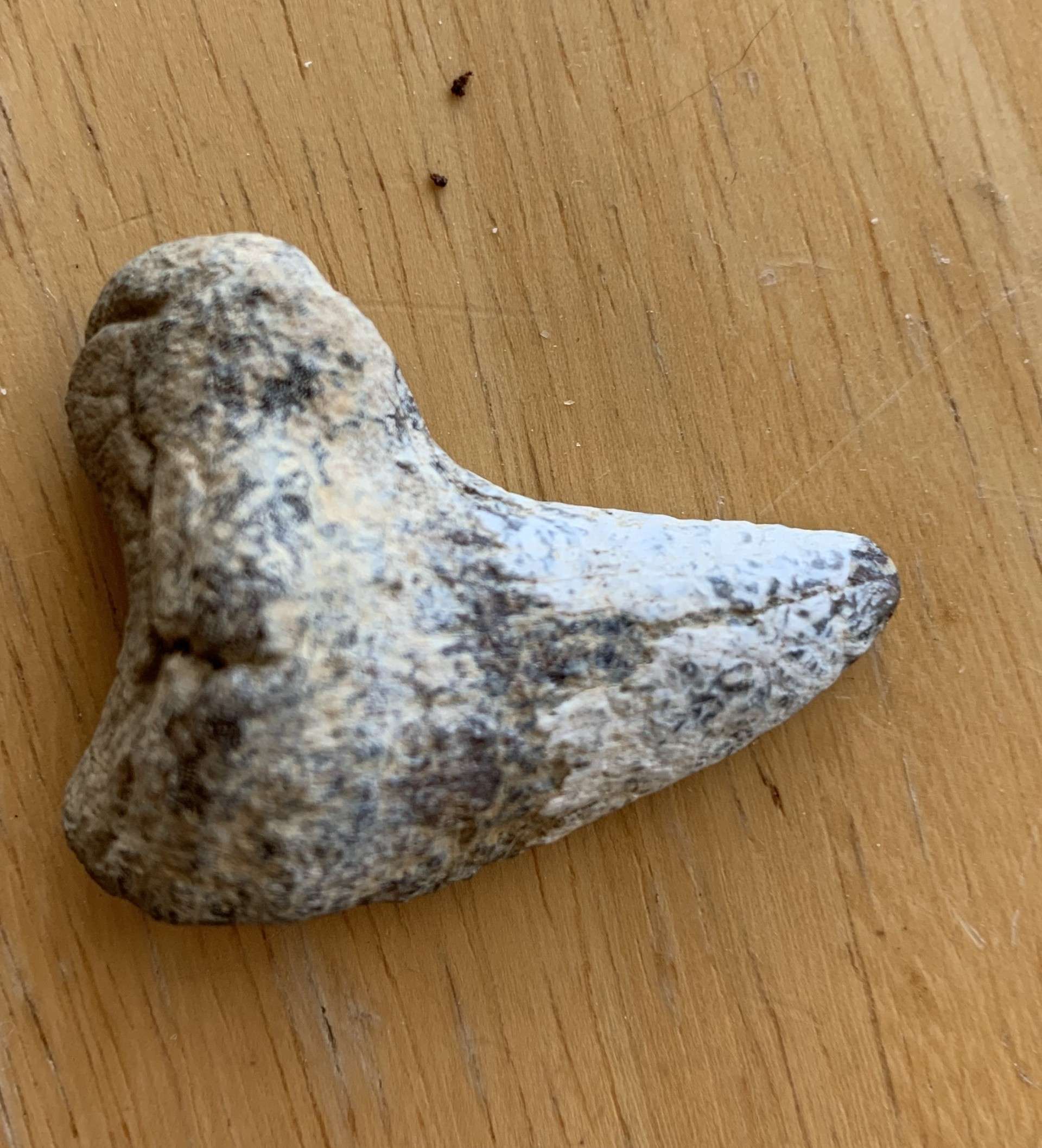
It doesn’t take long to find cretoxyrhina or squalicorax teeth to reveal sharks swam here, dining on smaller fish. Fossilized clam and oyster shells or imprints teach us this sea bottom supported a thriving shellfish colony whose death and decay mark stone used to construct local homes and fences.
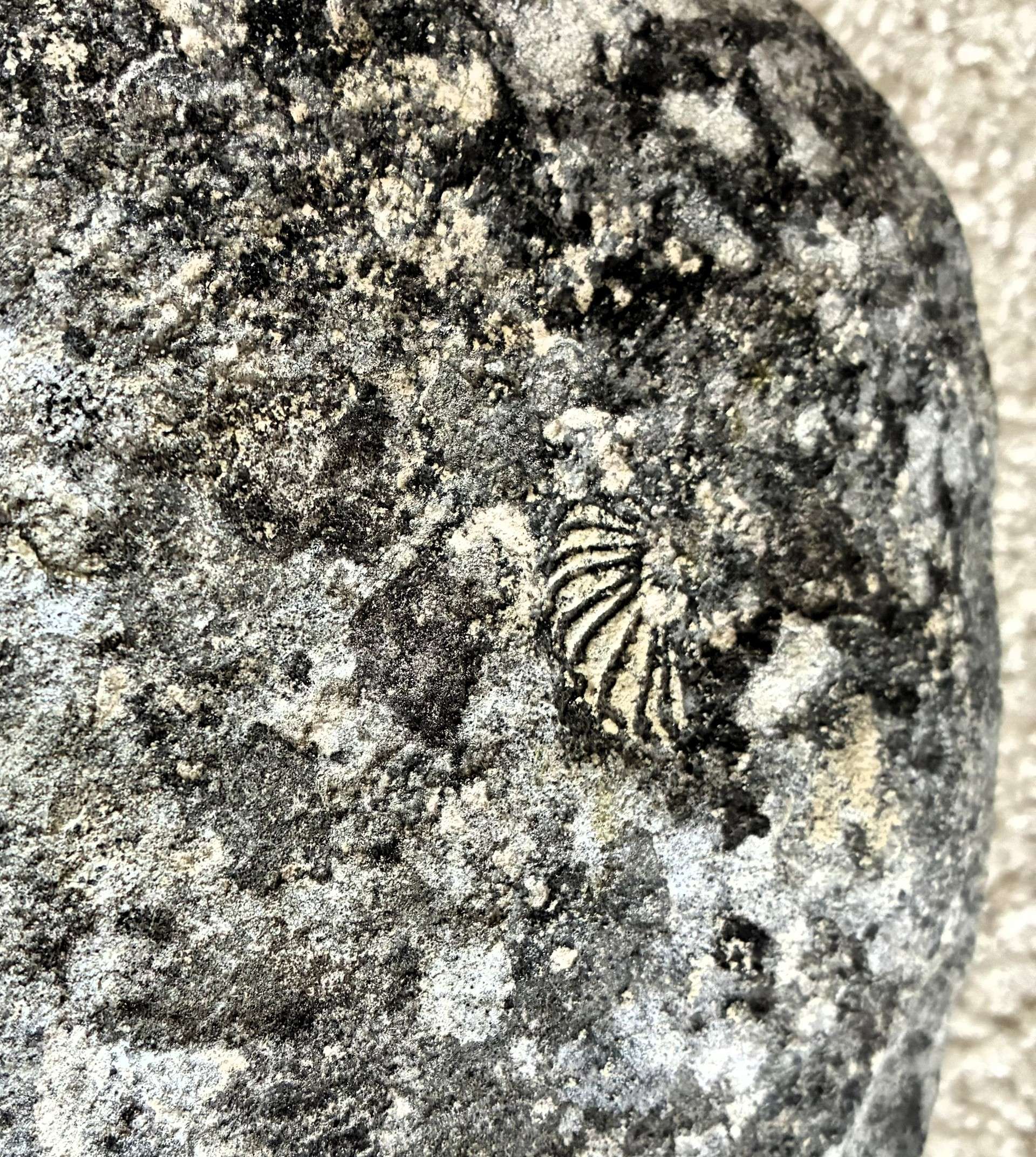
When we find ammonite impressions in either limestone concretions or post rock, we imagine their tentacles propelling them through plankton-rich waters until a plesiosaur or mosasaur popped them out of their shells to gobble an hors d’oeuvre that stayed hunger 'til they snagged bigger prey.
We’re still searching to find our first belemnite or fossil squid.
Weathered limestone concretions litter the region like crazy polka dots, occasionally splitting to offer peeks at innards. Oftentimes, they’re just chalky limestone ringed with various colors that reveal secrets of this ancient sea and surrounding areas. Far off volcanoes launched mineral-rich ash into thermals that dumped it in these waters, coloring stone that formed over millennia. Sometimes we discover a shell or bit of wood inside these concretions.
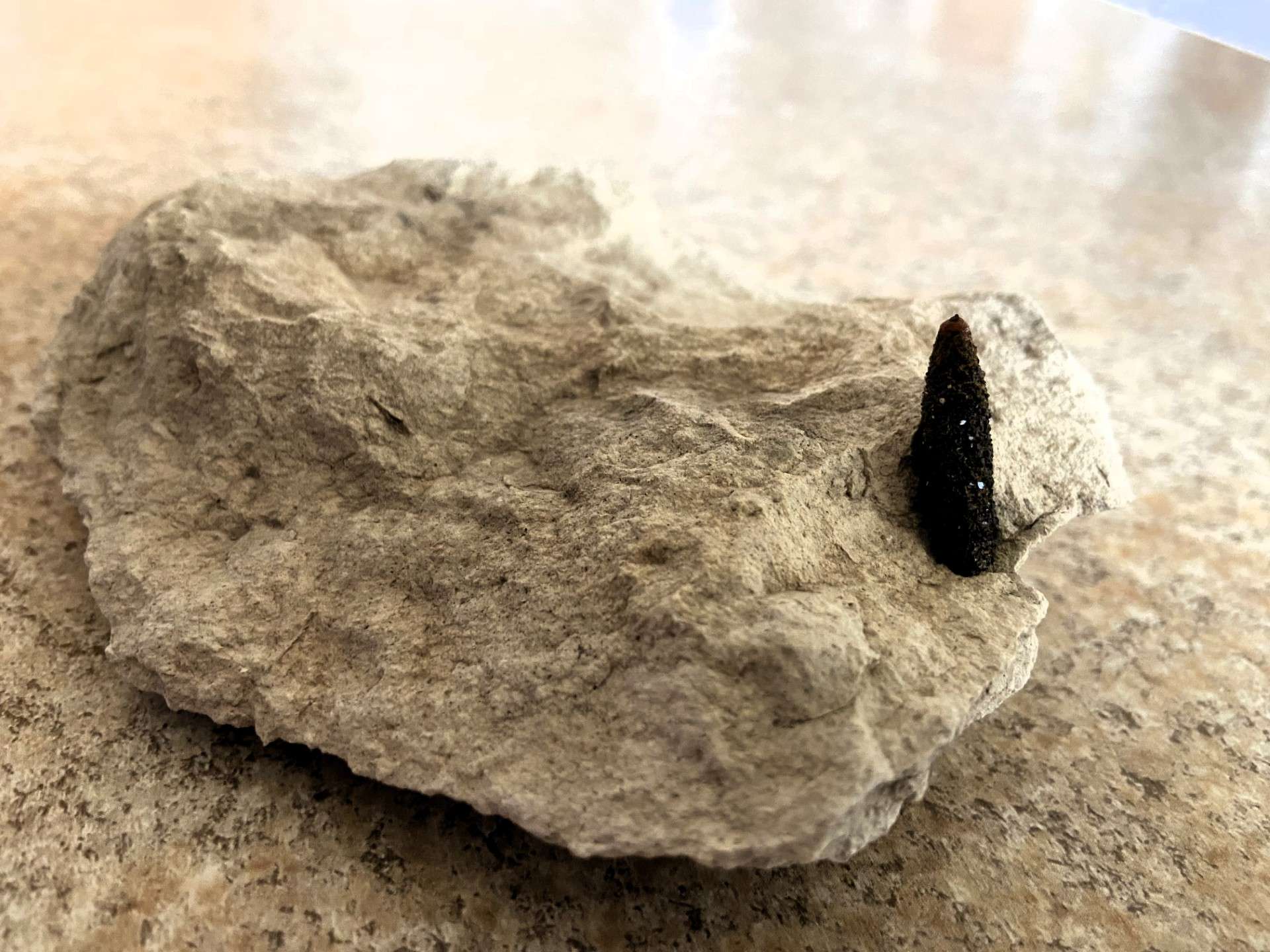
Nearby, we find tiny rust-colored iron concretions pocked with botryoidal projections or every now and then spike-shaped iron emerging from limestone. The creations of that burbling kettle of sea-goo constantly amaze us.
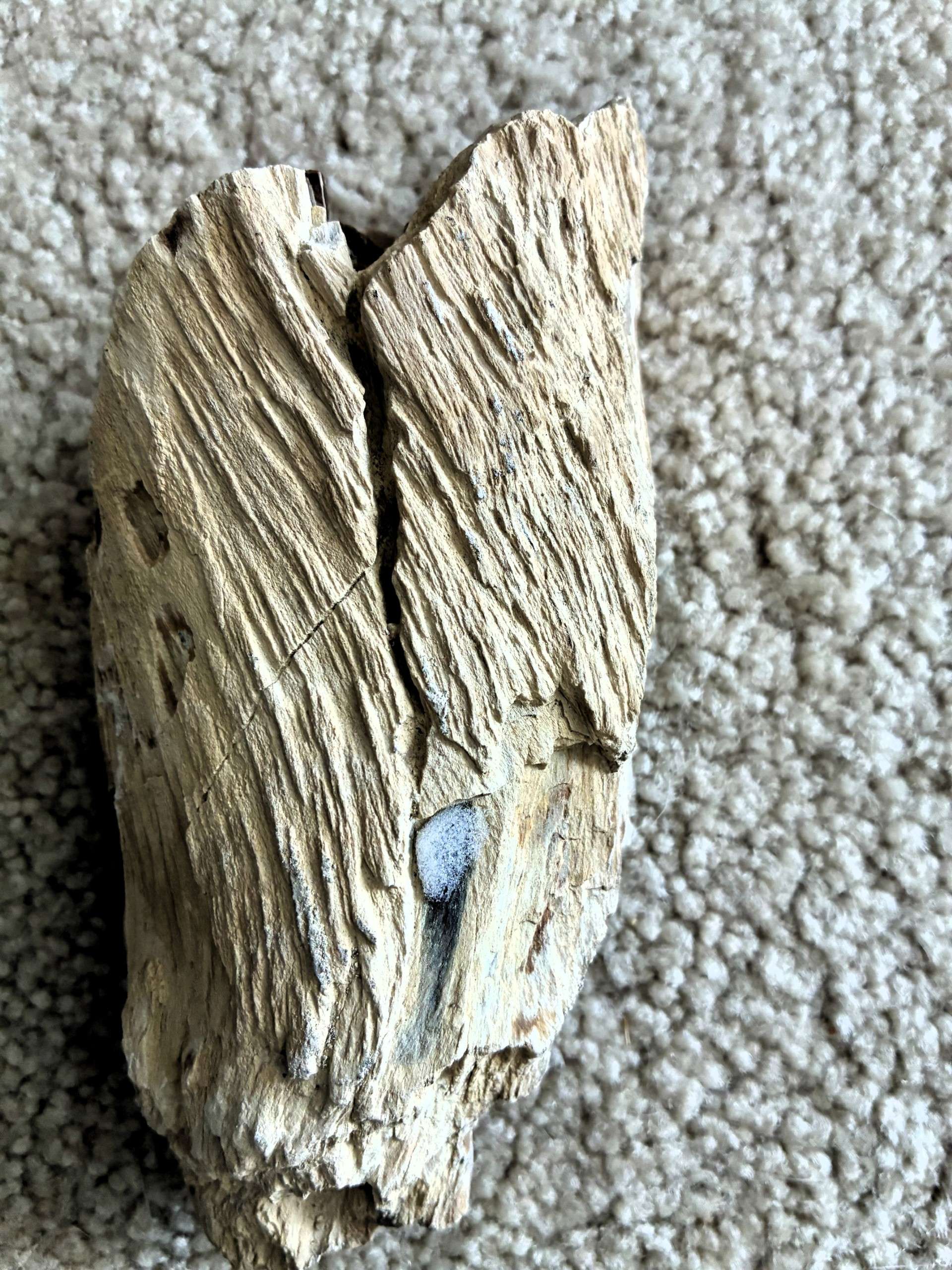
Because this was a 600+ mile wide sea bed, trees and resulting petrified wood aren’t common finds. That doesn’t mean it’s not here. Recently, a sharp eyed grand spied a rock that began life as an ancient branch. What fun to tell her, yep, it was wood. Now, it’s stone.
Thank goodness this landscape inspired Sternberg and Fick Fossil Museums where we can visit to learn more about geology and critters that occupied western Kansas. It helps to add Mike Everhart’s Oceans of Kansas to our bookshelf and his website to our computer feed. I’m certain endless real-life geology adventures will continue in this place we call home.
Karen Madorin is a retired teacher, writer, photographer, outdoors lover, and sixth-generation Kansan.