


By ALIN HETT
Hays Post
Southwest Kansas continues battling devastating wildfires that have scorched more than 100,000 acres in recent days, forcing firefighters from across the region into long hours and dangerous conditions.
As neighboring communities struggled to contain the fast-moving fires, firefighters from Hays answered the call for help.
On May 14, Hays firefighters Grady Keith and Trevor Sherman deployed to southwest Kansas to assist crews on the fire lines.
Working through intense heat, heavy smoke, unpredictable winds and rapidly changing fire behavior, the pair spent several days supporting wildfire suppression efforts before returning safely to Hays around 3 a.m. Saturday morning.
SEE RELATED STORY: Evacuation order lifted as crews continue to fight SW Kansas fires
Their return, however, did not mark the end of the city’s involvement.
With fire conditions still volatile and high winds continuing to threaten containment efforts, the Hays Fire Department authorized another deployment to the region.
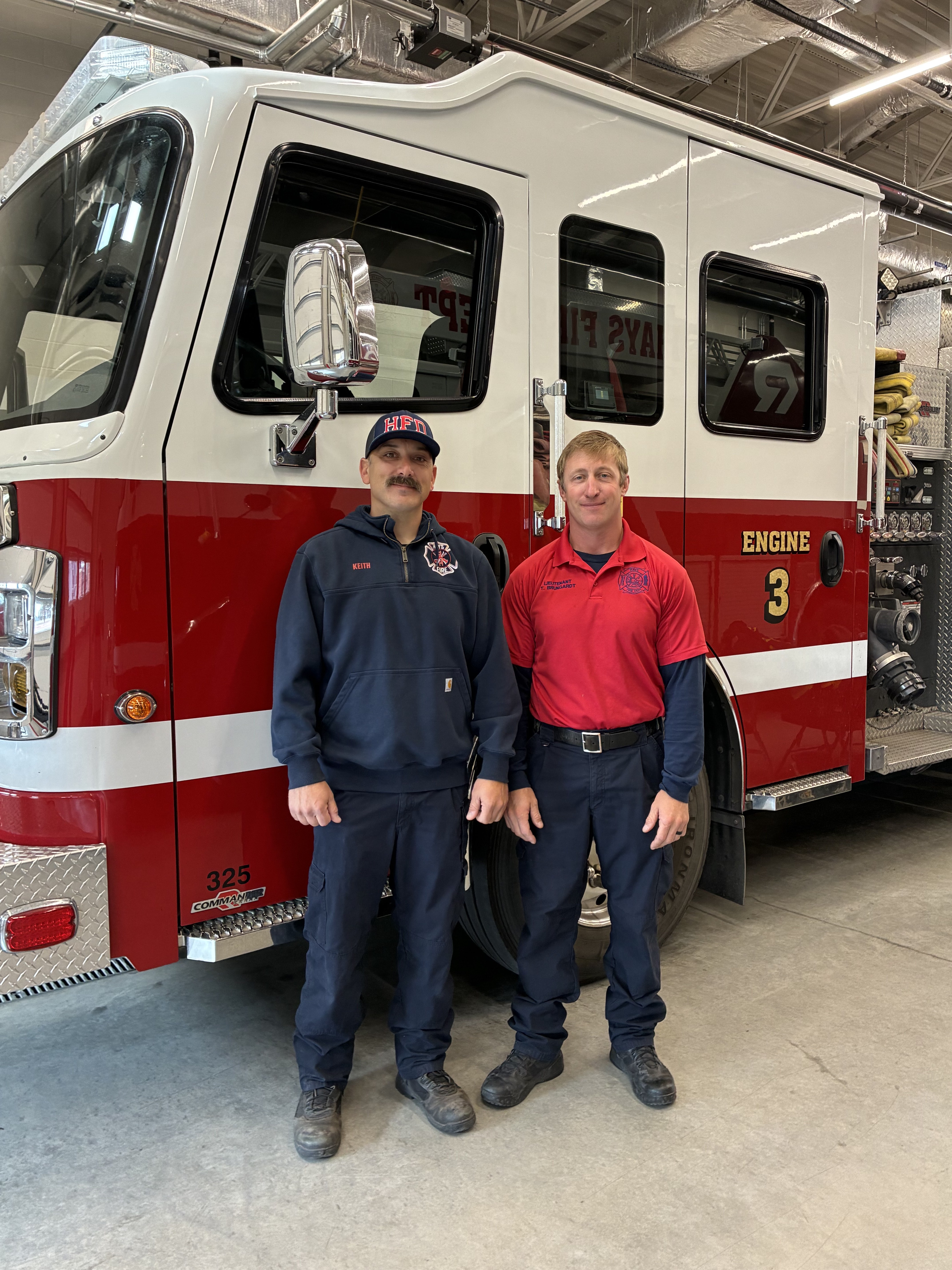
Hays Fire Department Lt. Tyler Brungardt and Lt. Tim Detrixhe traveled to Clark County, joining the Dickinson County Task Force in ongoing firefighting and operational support efforts.
The deployment shows the regional cooperation that often defines emergency response times in Kansas, where departments regularly assist one another during large-scale disasters.
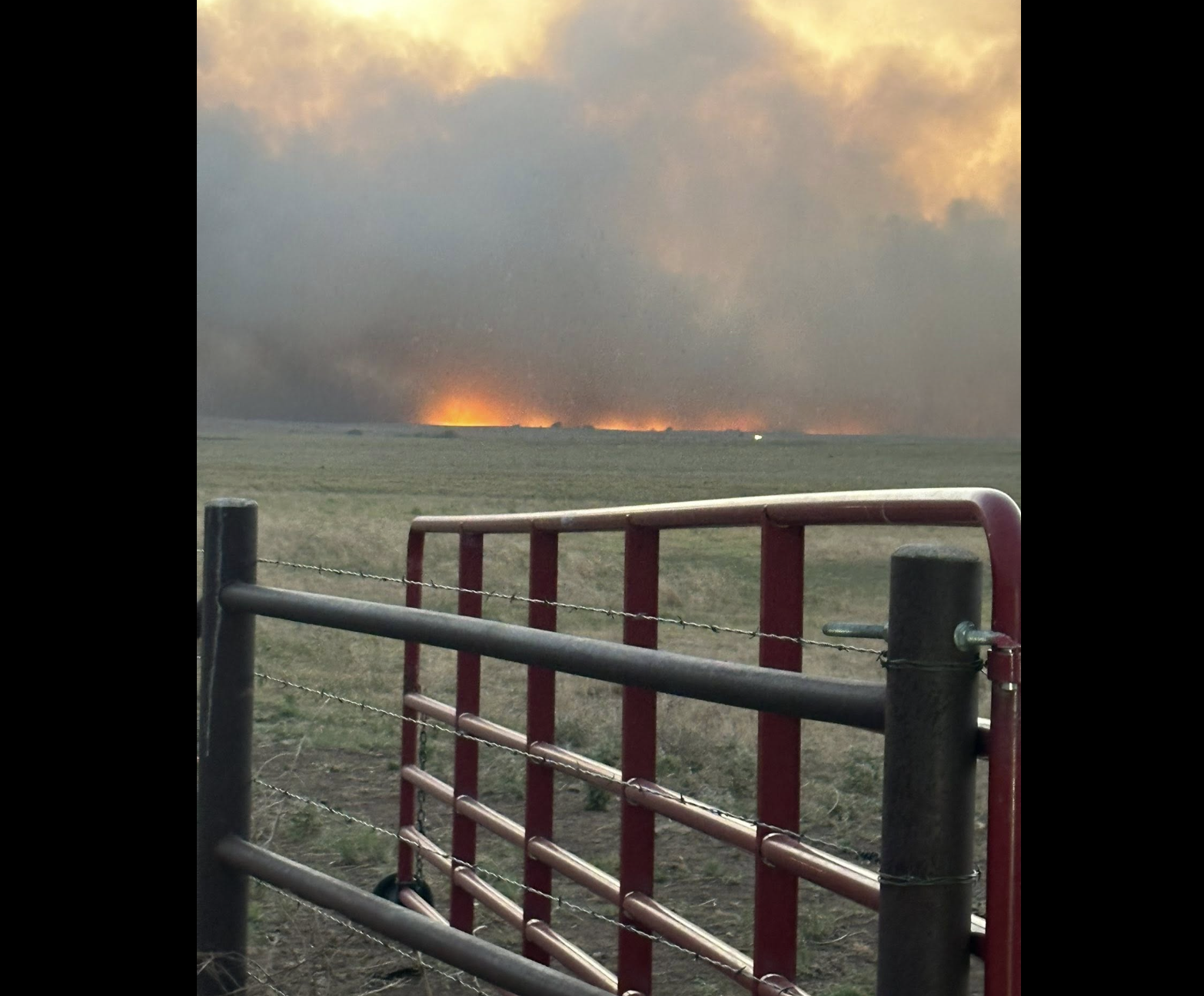
When firefighters from Hays arrived in southern Kansas Monday night, Keith said the sheer scale of the fires became immediately clear. They could see flames stretching for miles as they approached the fire zone after dark.
“When we got close, it was after dark, and pretty much every direction you looked, you could see glowing on the horizon from different fires,” Keith said. “There were so many of them [fires]. Then we worked through the night, and as day broke, it was blackened fields and pastures as far as you could see.”
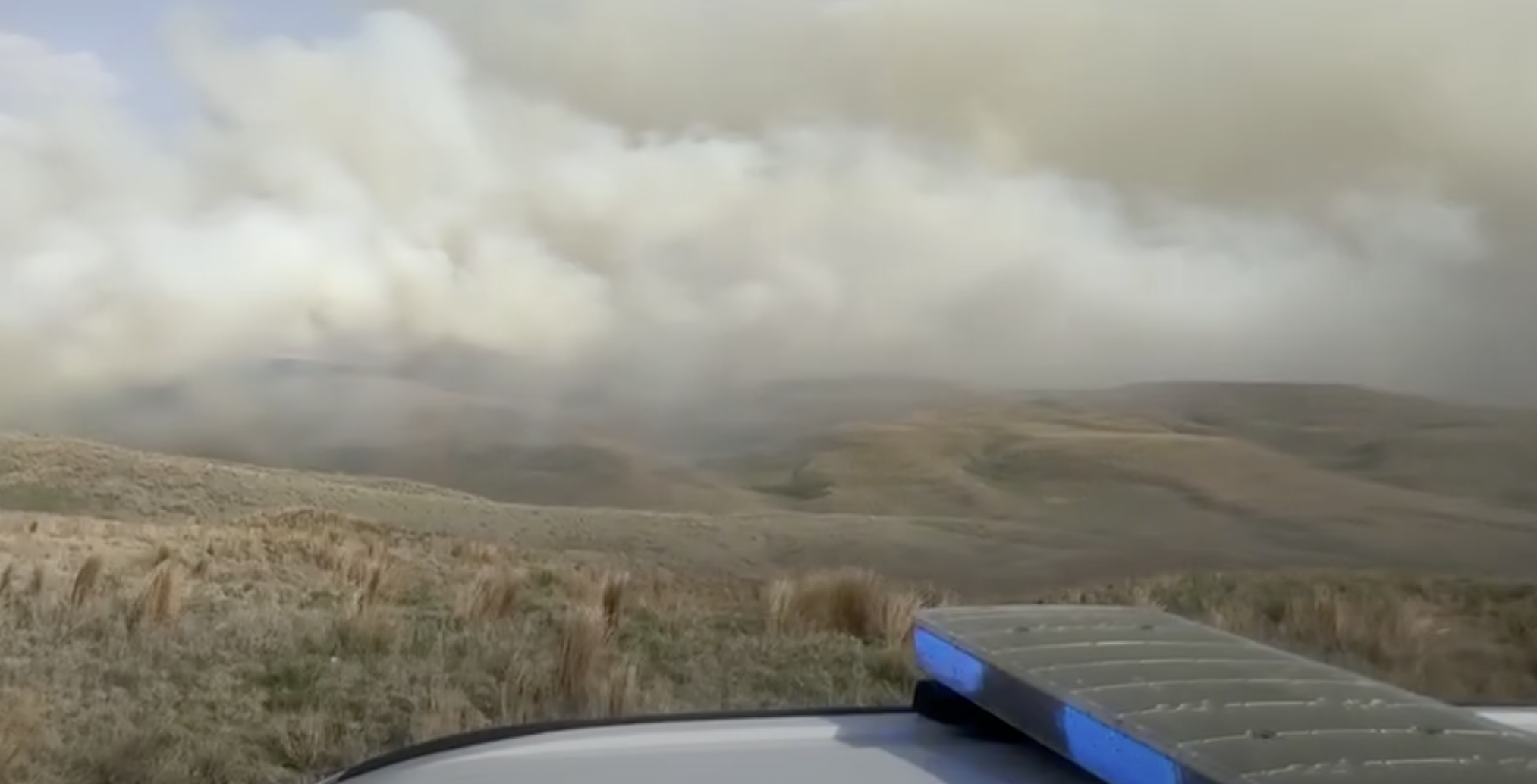
Brungardt, who deployed to Ashland as part of the task force, described how it felt arriving under smoke-covered skies.
“When we got down there, it was a lot of dark skies, smoke-filled skies,” Brungardt said. “The sun was kind of poking through the smoke a little bit, but being down there at night and not knowing the area made things harder.
"We relied on local help—farmers and ranchers leading us with their equipment to where we needed to go. Also, being at night, not having that natural light makes quite a bit of difference. Yes, you’ve got lights on the truck, but you still can’t really see what’s a thousand feet in front of you.”
Crews primarily relied on brush trucks equipped with water tanks and hoses, but firefighters also used hand tools in areas trucks could not reach.
“Sometimes you can’t get a hose down to where stuff is burning,” Keith said. “So you’ve got to use hand tools and mitigate the fire that way, either dig it up and throw it into the black or bury it, something like that.”
Brungardt said he almost couldn't believe how many departments from across Kansas responded.
“There were departments from every corner of the state,” Brungardt said. “I saw departments from Dodge City, KCK [Kansas City, Kansas] and all over. Coordinating all of that, at that level, means a lot.”
Keith also said many of the departments fighting the fires were volunteer agencies whose firefighters had already spent days on the fire line.
“The men and women there had been on the fire line for several days, so they needed breaks," Keith said. "That’s where the state brings in other resources to help so they can rehab themselves and their equipment, because the terrain is hard on the equipment and trucks too.”
Both Keith and Brungardt said the size and intensity of the fires are something they will not soon forget. Keith said one of the moments that stood out to him the most was seeing how widespread the fires had become in such a short time.
“There were miles and miles of fire line still burning, and you didn’t really know where to go,” Keith said. “Just seeing the complexity of all the fires and then they all kind of came together and made one big fire, that’s something I’ll remember for a long time.”
Keith also described how crews were reassigned as conditions changed and structures became threatened in other areas.
“We got assigned to a fire north of Ashland,” Keith said. “We were there, and then we got pulled from that fire to go over to Meade County, because a fire over there was threatening some houses, and the Ashland fire was just burning in open range. They pulled us from that one to go over and help protect structures over in Meade.”
Despite the danger and long hours, both firefighters said helping others is what motivates them to continue answering the call.
“When help shows up, you’re awfully grateful,” Brungardt said. “That said, I want to be part of that group that just shows up to help.”
Keith echoed that sentiment.
“Someday, we might be the ones who need help,” Keith said.
Hays Fire Chief Ryan Hagans said that willingness to serve is what defines the fire service.
“You don’t do it for the glory,” Hagans said. “You do it because you want to help, and that’s the foundation of the fire service.”
The Hays Fire Department sent one brush truck and two firefighters each day to assist crews battling the fires, totaling eight firefighters and four brush trucks deployed during the response.
In a statement, the Hays Fire Department asked the community to continue supporting not only Hays personnel, but all firefighters and families impacted by the fires.
“Please keep our deploying personnel, all responding crews, and the families affected by these devastating fires in your thoughts,” Hagans said in a Facebook post. “We are incredibly proud of our team’s dedication to serving and protecting our fellow Kansans.”