


By ALIN HETT
Hays Post
Volga German descendant and longtime Catharine-area resident Leo Dorzweiler traveled to Russia in 1992 to find the original villages his family had left behind. He found traces of some, records of others and questions about what had happened to the places he came looking for.
This year marks 150 years since Volga German settlers began establishing communities in Ellis County. Their history started much earlier, when Catherine the Great invited German-speaking colonists to settle and farm along the Volga River.
Between 1763 and 1768, more than 25,000 Germans established 104 colonies along the Volga and Karaman rivers. The Russian government offered settlers land and other incentives, including exemption from military service. www.kansashistory.gov.
The settlers maintained their language, faith and customs for generations. The communities developed distinct German dialects, some of which survived in Kansas after families crossed the ocean.
Dorzweiler remembers that difference from his childhood: Catharine, Munjor, Schoenchen, Pfeifer and other communities each had their own way of speaking.
The invitation that had drawn Germans to Russia eventually became part of the reason some left. In 1871, Czar Alexander II revoked their military-service exemption, and a military reform law that took effect in 1874 made residents subject to conscription. Historians also point to concerns about land, schools and the growing reach of the Russian government.
The first groups of Volga Germans left Katharinenstadt in 1875 and reached Topeka that November. Settlement in Ellis County began the following year. By the end of 1876, about 1,200 Roman Catholic Volga Germans had settled in Ellis and Rush counties.
Among the new communities were Catharine, Herzog, whose Kansas namesake became Victoria, Munjor, Pfeifer and Schoenchen. The names gave Kansas families a link to the villages they had left in Russia.
Dorzweiler was born Nov. 12, 1934, about a mile east of Catharine, to Leo and Mary (Unrein) Dorzweiler. His grandfather lived with the family when Dorzweiler was young. According to family stories, his grandfather was 18 when he left Russia in about 1877 or 1878, as military service for Volga German men was becoming a concern.
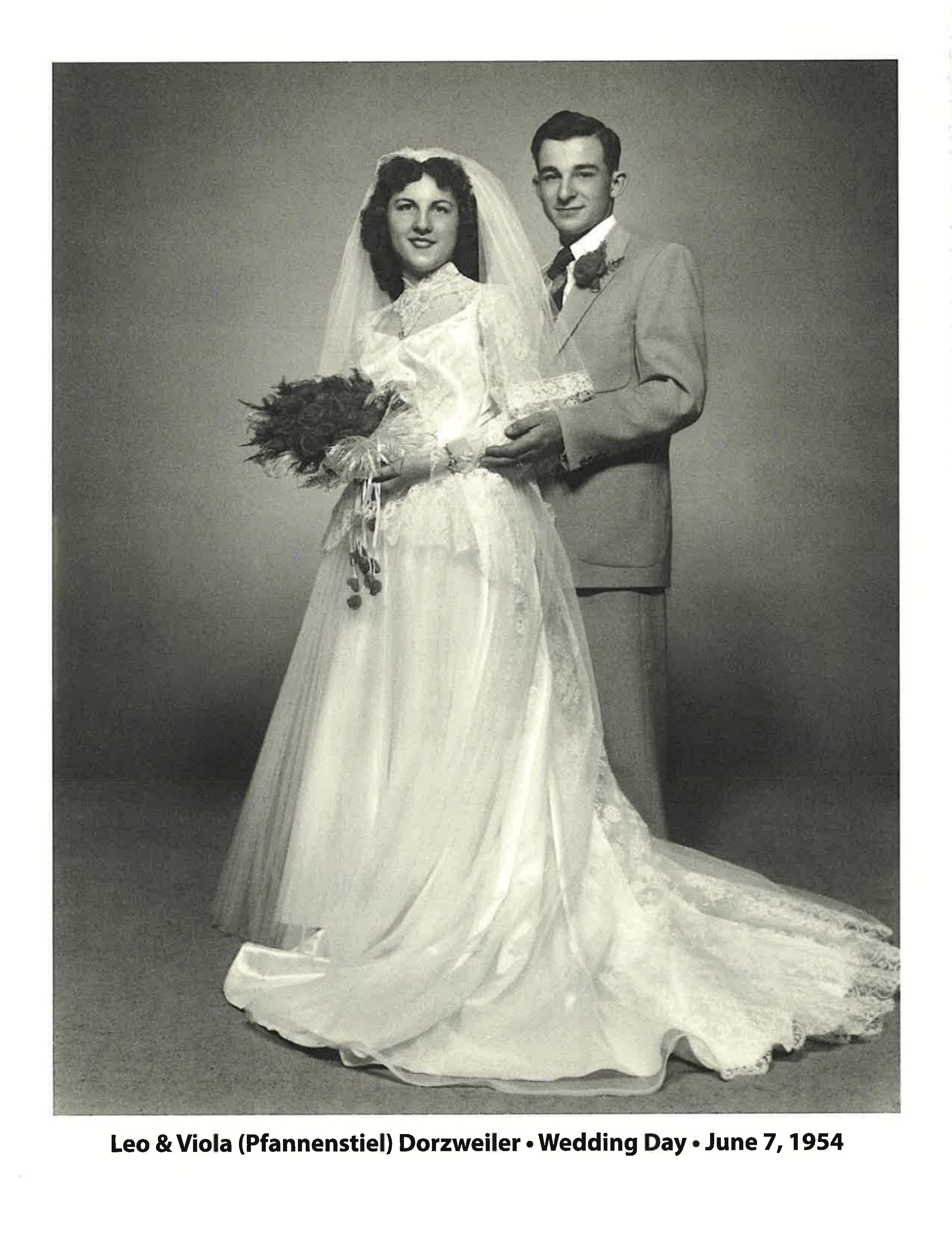
Leo Dorzweiler married Viola A. Pfannenstiel in 1954, and they raised five children. The old part of the house where he was born was built in 1926, he said. After he and Viola married, he worked as a contractor and built an addition to the house.
His interest in the old country grew through travel. In 1976, he and Viola joined the Dutch Masters, a polka band from Russell, on a trip to Germany. Dorzweiler said the band planned to play at the Hofbräuhaus, and he and Viola were eager to go. They searched a German telephone book for the family name but did not find anyone.
After Dorzweiler’s father died, a woman in North Dakota saw the name of his uncle, Father Edwin Dorzweiler, in an obituary and realized her mother was related to the family. The connection led Dorzweiler and Viola to relatives in Germany. Dorzweiler said those relatives had been sent to Siberia during World War II and later made their way back to Germany. Dorzweiler said he remembers they told him stories of imprisonment and survival.
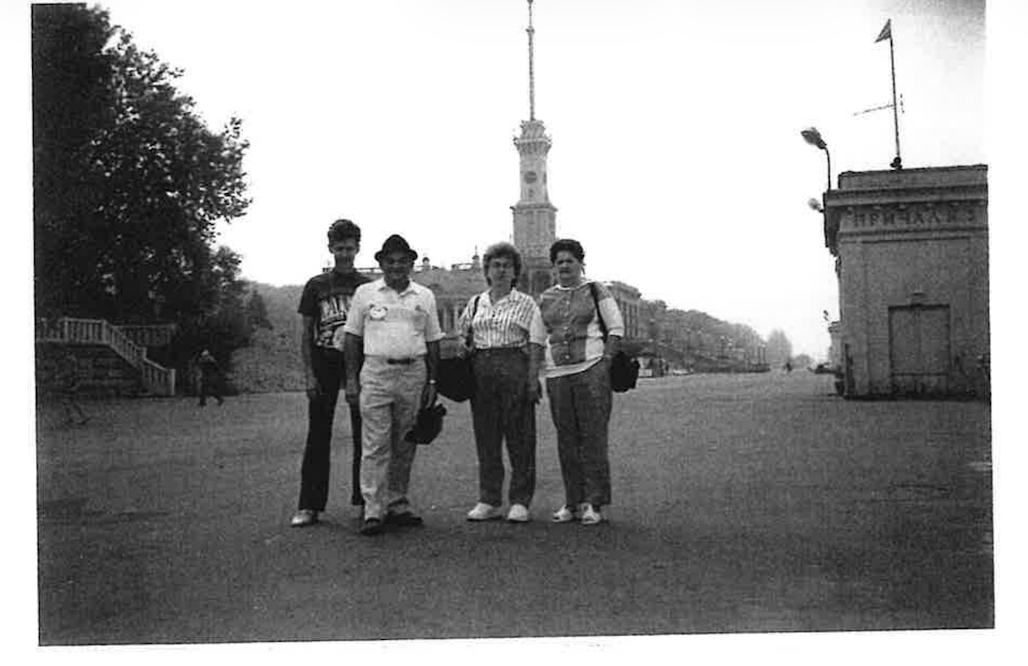
The stories left Dorzweiler wondering what had happened to the relatives who had stayed in Russia. In 1992, a newspaper article about a cruise down the Volga offered a way to find out. Dorzweiler was involved with the Volga German organization in Hays and heard about a priest in Katharinenstadt, the Russian village connected to Catharine.
Reaching him took patience. Dorzweiler did not speak Russian, and the man who answered did not speak English or German. An operator suggested using a telephone language service, which arranged a later call with a German-speaking woman who could translate. Dorzweiler eventually connected with Nikolai Titov, who agreed to meet him and help him see the region.
The trip began in Moscow and continued down the Volga River by boat. Dorzweiler said his hosts helped arrange the rest of the journey, including a train ride and a drive through the countryside. On the train, he watched the sun come up over fields of dark soil.
“The soil was just as black as coal,” Dorzweiler said. “I thought it had rained. That’s how it looked.”
Dorzweiler remembered the tension while traveling within Russia.
“We only had one Visa,” Dorzweiler said. “Our host Nikolai told us to not say anything, so they don’t know you’re American. Anyways, I didn’t shut my mouth.”
When they arrived, Dorzweiler and Viola stayed in a dacha, or country home, with a garden. They slept upstairs and used an outdoor toilet. One more aspect Dorzweiller recalled was that the mosquitoes in that part of the world were the worst mosquitos he ever had encountered.
The visit also gave Dorzweiler a chance to search for family history in local records. At an archive, he saw a ledger in which early settlers had signed their names after arriving from Germany. He wanted copies. His hosts found a photocopier, Dorzweiler said, but it could not be used in the United States because of the difference in electrical systems. The machine stayed in Russia, where it was used to copy the records he wanted.
After searching the records, the moment of truth finally came, to check out the original village sites. At one stop, Dorzweiler recalled, there was no village to walk through. Their hosts drove across a pasture to reach the cemetery.
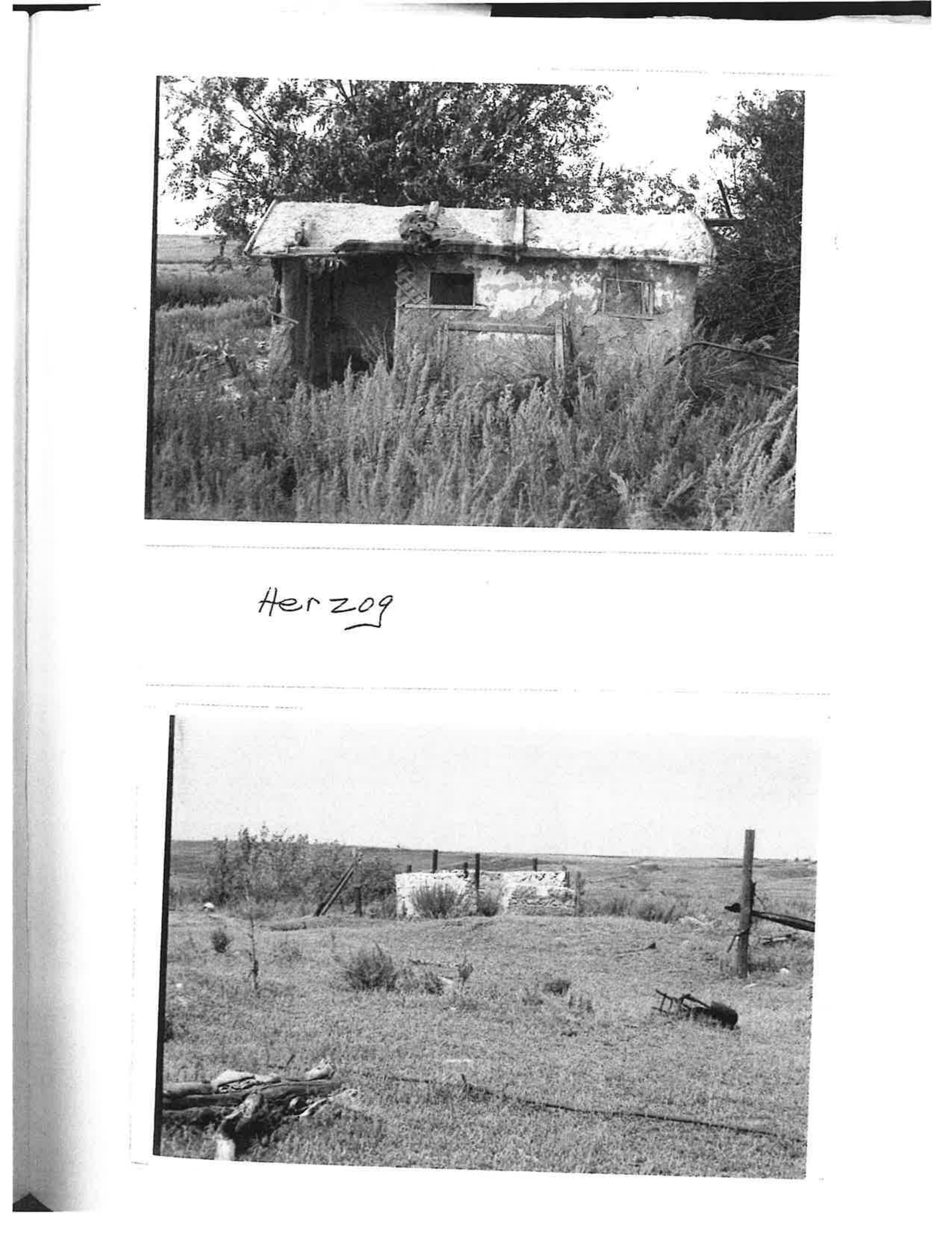
The graves had left only indentations in the earth, and a raised patch marked where Dorzweiler believed the church had stood. At another village site, there was just a small concrete monument and nothing else.
“Nothing, there was nothing,” Dorzweiler said. “I didn’t think too much about it. Just, everything was gone.”
In a third cemetery, Dorzweiler and a companion searched wooden markers for German family names. The markers they found belonged to people who had died in the 1950s, he said.
Dorzweiler said a German-speaking woman told him that an accident had killed many people and that they had been buried over the older graves. She said the earlier remains had been scattered across the grass.
Over the next couple days, Nikolai invited Dorzweiler to visit what he called the “island of death.”
Dorzweiler said Nikolai told him that Volga German families who had tried to flee Russia had been murdered there. Dorzweiler said he had never heard that story before the trip.
The documented history is already marked by upheaval. In 1941, after Nazi Germany invaded the Soviet Union, Soviet authorities forcibly deported Volga Germans to Siberia, Kazakhstan and other regions. The Soviet government abolished the Volga German Autonomous Soviet Socialist Republic and suppressed German institutions. Many Volga Germans were not allowed to return to their former homeland until after the Soviet Union dissolved in 1991.
Years later, after the 1992 trip to Volga, Russia, Dorzweiler said he asked one of his cousins to research explosions he had heard about in the region from the German girl he met.
Dorzweiler came to believe those events might explain some of the destruction he saw. That connection is his own interpretation. It has not been independently confirmed for the specific villages and cemeteries he visited.
The 1992 trip did more than open the lineage for Dorzweiler and his family, the trip led to a lasting connection with the Russian family who hosted Dorzweiler and Viola.
Their grandson, Ilya, who Dorzweiler met in Russia, came to visit Hays and even attended Thomas More Prep-Marian High School for a year, staying with Dorzweiler and another local family.
In August of 1997, Leo and Viola again set out for Russia. They picked up Ilya Plaksin, who at the time was 19 years old.,and continued their tour of villages. He was their translator in 1992 in Moscow.
For Dorzweiler, the journey made the distance between the Volga and Ellis County feel smaller. He had gone looking for the places behind familiar Kansas names and found traces of them in an archive, a church foundation, a monument and the people who live there today.
The 150 sesquicentennial celebration is a chance to pass that history to people who may know the Kansas communities but not the journey that brought their names and traditions here. The Kansas Historical Society notes that fewer households speak the distinct dialects today, even as music, food and faith traditions continue.
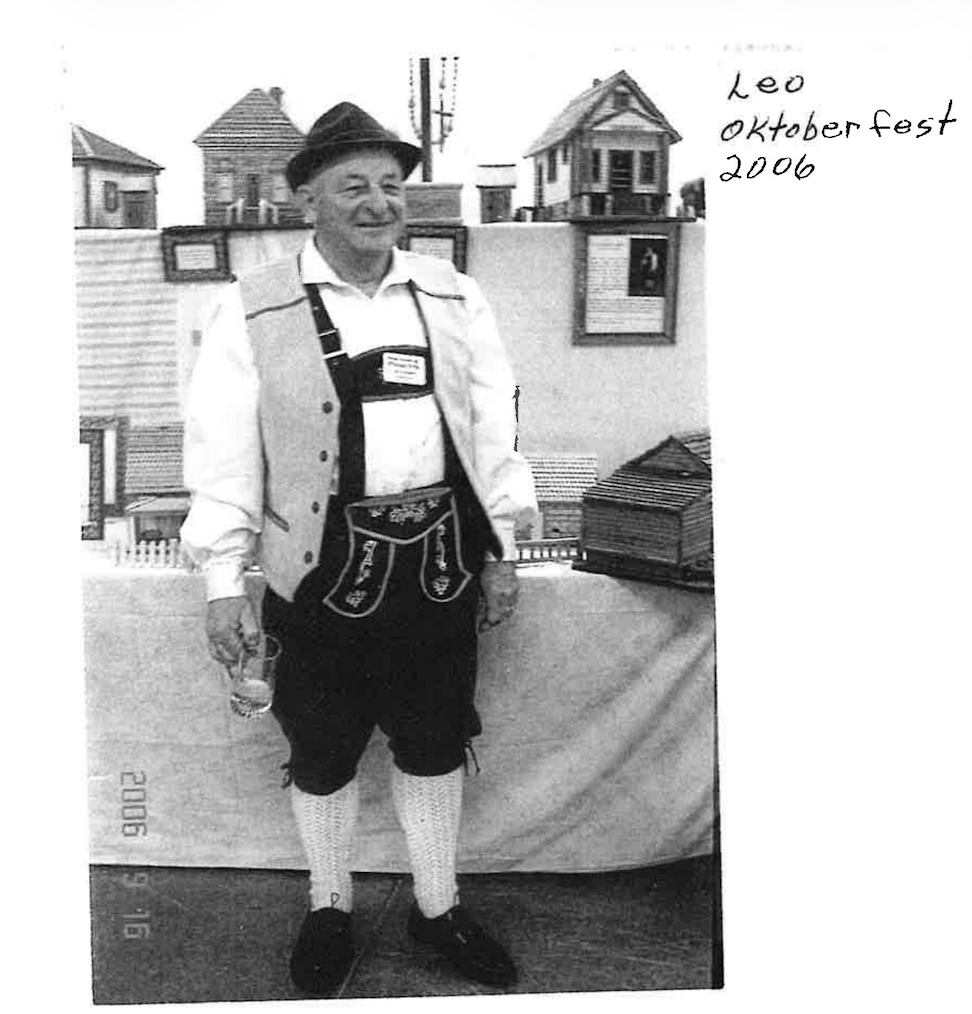
The 54th-annual Volga German Oktoberfest begins today at Municipal Park in Hays and continues Saturday.
Other sesquicentennial events include:
- St. Francis of Assisi ancestors Mass at 8 a.m. Sunday, Oct. 4 in Munjor
- Limestone Day quarry tour Oct. 10 at Grants Villa near Vincent
- Brewfest Nov. 8 at the Historic Opera House in Grainfield
- St. Boniface ancestors Mass at 8:30 a.m. Dec. 13 at St. Boniface Cemetery in Vincent