


By CRISTINA JANNEY
Hays Post
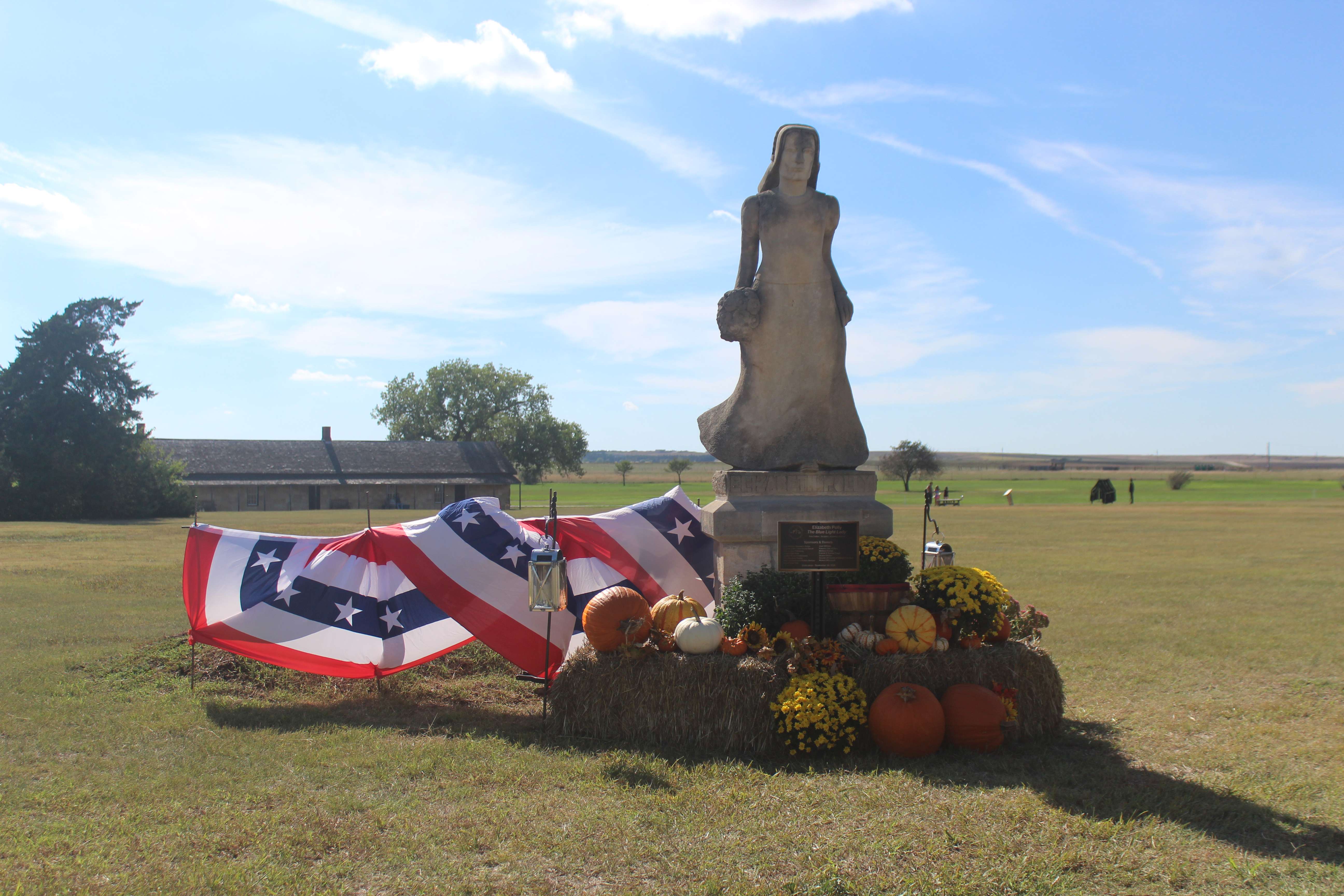
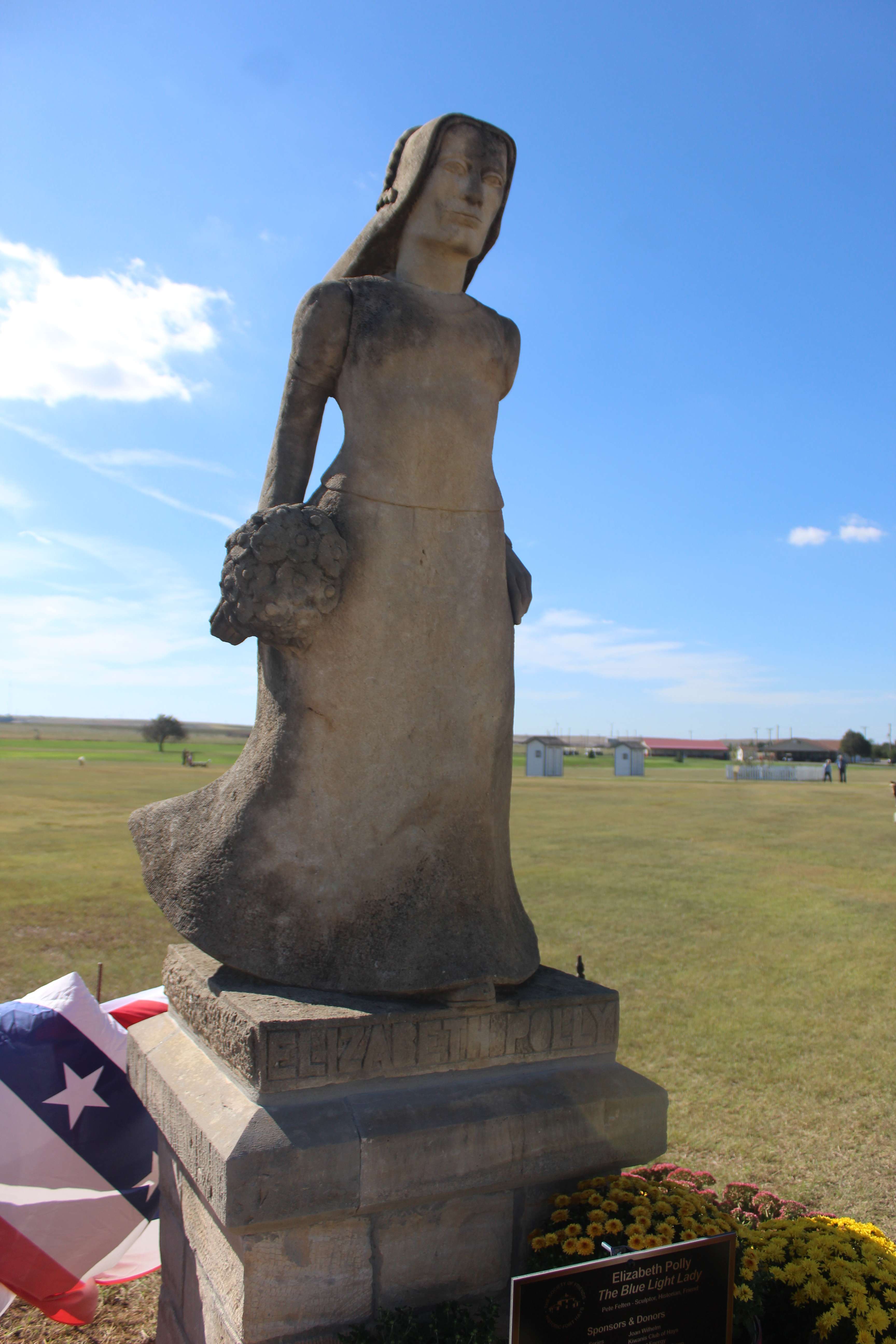
Pete Felten’s Elizabeth Polly statue was rededicated at Historic Fort Hays on Saturday after being moved from its former home at 26th and Indian Trail.
Mayor Mason Ruder read a city proclamation honoring Polly.
Elizabeth Polly was born in 1843. Her husband was a hospital steward at Fort Hays. She tended to cholera victims at Fort Hays during an outbreak in 1867. She contracted cholera and died that same year.
Brenda Meder, former director of the Hays Arts Council, spoke about Pete Felten, who sculpted the limestone Polly statue.
The Hays Arts Council commissioned the Elizabeth Pauley sculpture, which was dedicated in 1984.
Felten also carved the Monarch of the Plains bison statue on the museum’s grounds.
Felten was known for his limestone figures, including the four Kansans in the Kansas Capitol.
Meder quoted Felten on working with limestone.
“I like limestone. It's a real common material. It's not prestigious like marble. Temperamentally, I'm limestone. It's dull, plain, ordinary, and that's what I like,” he said.
No photos or paintings of Polly exist, so Felten said he carved her as he imagined her, Meder said.
Meder also described Felton as modest and quiet. She said he valued honest limestone work over fame or money.
“Even if this dedication had happened while he was alive, we'd all be here and celebrating and cameras. But you know, he wouldn't be here, Pete Felton, because that wasn't what it was about for him. He was just an amazing, amazing man,” Meder said.
Felten died earlier this year, but work was already in progress to move the statue. Meder said the volunteers organizing the move spoke with Felten about the plan, and he approved.
Fundraising is underway to restore Felten’s former studio in Hays as an art gallery. Learn about the nonprofit Pete Felten Legacy Fund.
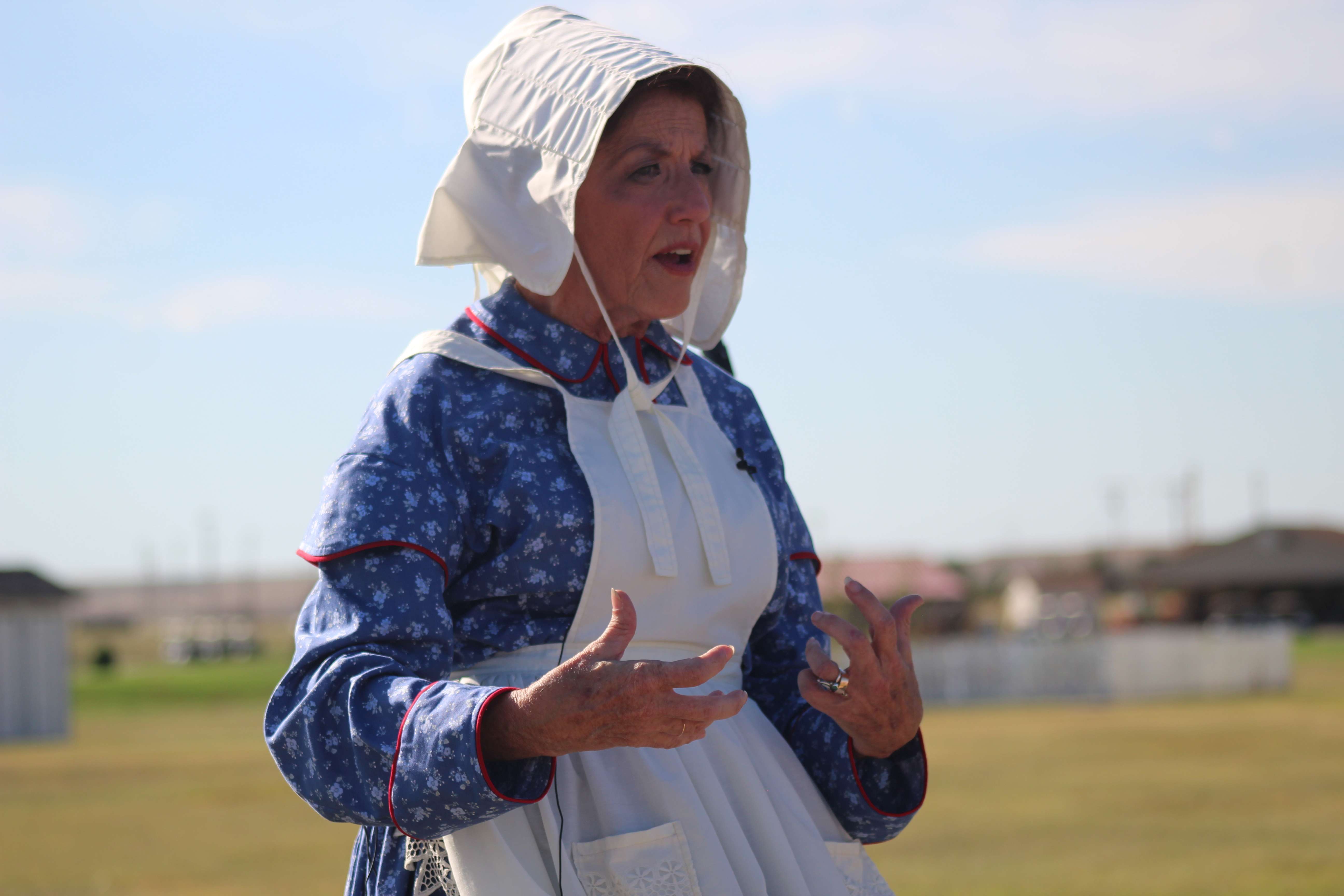
Marla Matkin of Friends of the Fort also portrayed Polly at the ceremony on Saturday.
Speaking as Polly, Matkin said, “I was there for them when they needed me, and they always knew I cared. It was heart-wrenching, though, to see them in such agony when, but a few days earlier, they had been healthy and vigorous young men.”
Matkin said Polly enjoyed riding in the nearby fields when not nursing in the hospital. Upon her death at 25, she had requested to be buried on top of nearby Sentinel Hill. The bedrock prevented this, so she was buried with full military honors at its base.
Polly’s remains would at last be moved to the top of the hill by the Civilian Conservation Corps in 1941. A monument, carved by Felten, now marks the top of the hill and speaks to her life and legend.
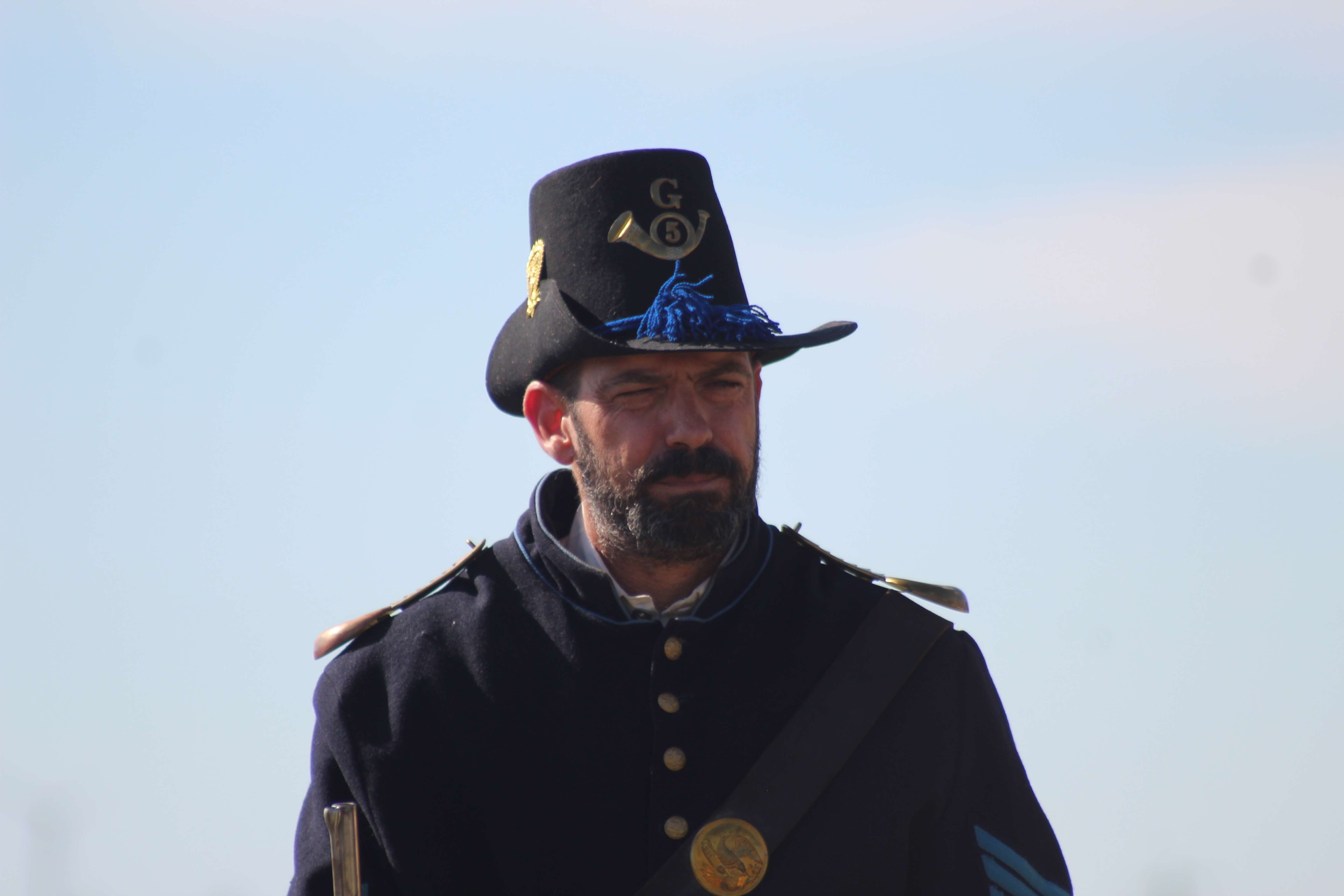
Stories have persisted over time of Polly haunting the area.
Matkin shared several stories of apparitions.
In 1878, a man asked to be driven out to Elizabeth Polly's grave on Sentinel Hill. He admired the scenery, was pleased with how the grave was being cared for and said he would report to the people back home, Matkin said. The man allegedly was the notorious outlaw Jesse James, she said.
The first recorded account of a sighting of Polly was by John Schmidt.
“He was farming out here between Sentinel Hill and Fort Hays on what had been part of the Fort Hays Military Reservation,” Matkin said. “He was going out to gather some cattle one morning, and he was mounted on his trusty steed with his dog. Well, they get out, and the horse starts walking and backing up because he senses something.
“He looks out, and here's this apparition of this woman, and she wasn't like we walk with the gate. It was an undulation over the prairie. … The dog, who wasn't afraid of the devil, put his tail between his legs, yelped, and ran for the house.
“At a safe distance, John followed her, and she headed toward his homestead. And upon reaching there, she disappeared in one of the outbuildings.”
Matkin told of a custom cutter who allegedly saw Poll in 1977.
“Mark Gilbert and some custom cutters from Texas were up here cutting wheat in a field southwest of the fort. Now it's getting toward dusk, and they only have a round or two more to make. So he recommends that the other men go to town, get cleaned up, and he meet them for supper,” she said.
“Well, the first thing he sees is figure of a woman run by in front of the combine. Now I don't know if he particularly thought he hit her, but it unnerved him a little bit too. He finishes up the last round.
“He goes and parks the combine and gets down. Then he realizes he maybe should take the keys. There was somebody rooting around out there. So he climbs up the ladder, and at the top of the ladder, he gets this sense that someone's behind him.
“And he turns around, and there she is looking out. …
He turned back around and grabbed the keys, and when he turned back, she was gone,” Matkin said.
Sentinel Hill has been visited over the years by many hoping to glimpse the ghost. However, the gravesite is now on private land, and you need the landowner's permission to visit.
You can learn more about Historic Fort Hays and how to visit on its website.