


By ALICIA BOOR
Cottonwood Extension District
Soil testing is the foundation of a sound fertility program for pastures and hayfields. Soil testing can be done in either spring or fall on hayfields and pastures; however, fall is generally preferred for a couple of reasons. Sampling in the fall allows time for lime applications to react before the next growing season and gives producers more flexibility in planning fertilizer applications.
Soil sampling is typically recommended at least every 3-4 years. More frequent sampling (every two years) can prevent over-application of fertilizer or manure and increase yields by revealing exactly which soil nutrients are too low for optimum productivity. This is especially valuable when fertilizer prices are high.
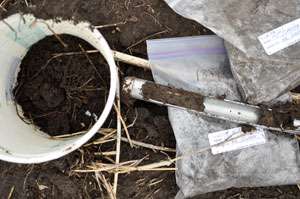
Collecting a representative soil sample
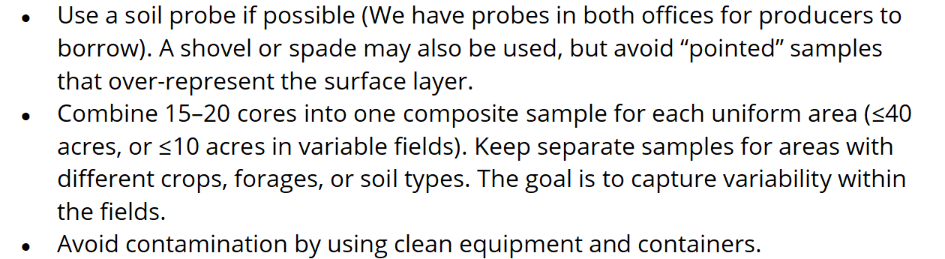
Sampling depths

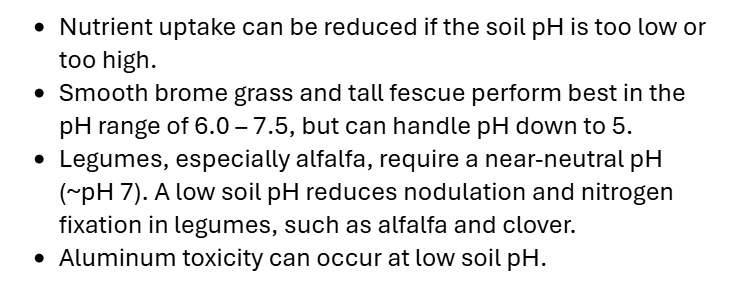
Why soil pH matters
Soil pH is one key soil property for forage production, especially with legumes. The optimal pH level is 6 to 7, depending on the forage species.
If liming a new pasture, it is important to apply the lime 6 to 12 months before planting. Finer lime materials with a high effective calcium carbonate (ECC) value will react more quickly. Fields being prepared for alfalfa should also be evaluated for phosphorus and potassium, with any corrections made before planting.
Alicia Boor is an Agriculture and Natural Resources agent in the Cottonwood District (which includes Barton and Ellis counties) for K-State Extension. You can contact her by e-mail at aboor@ksu.edu or calling 620-793-1910.