


WASHINGTON (AP) —The Supreme Court on Tuesday upheld a broad conception of birthright citizenship, rejecting President Donald Trump’s executive order declaring that children born to parents who are in the United States illegally or temporarily are not American citizens.
The decision, in line with the longstanding judicial interpretation of the 14th Amendment, comes on the final day of a Supreme Court term that has centered on Trump’s expansive claims of presidential power — and largely ruled in his favor.
Trump says Congress should end birthright citizenship and calls court ruling ‘too bad’
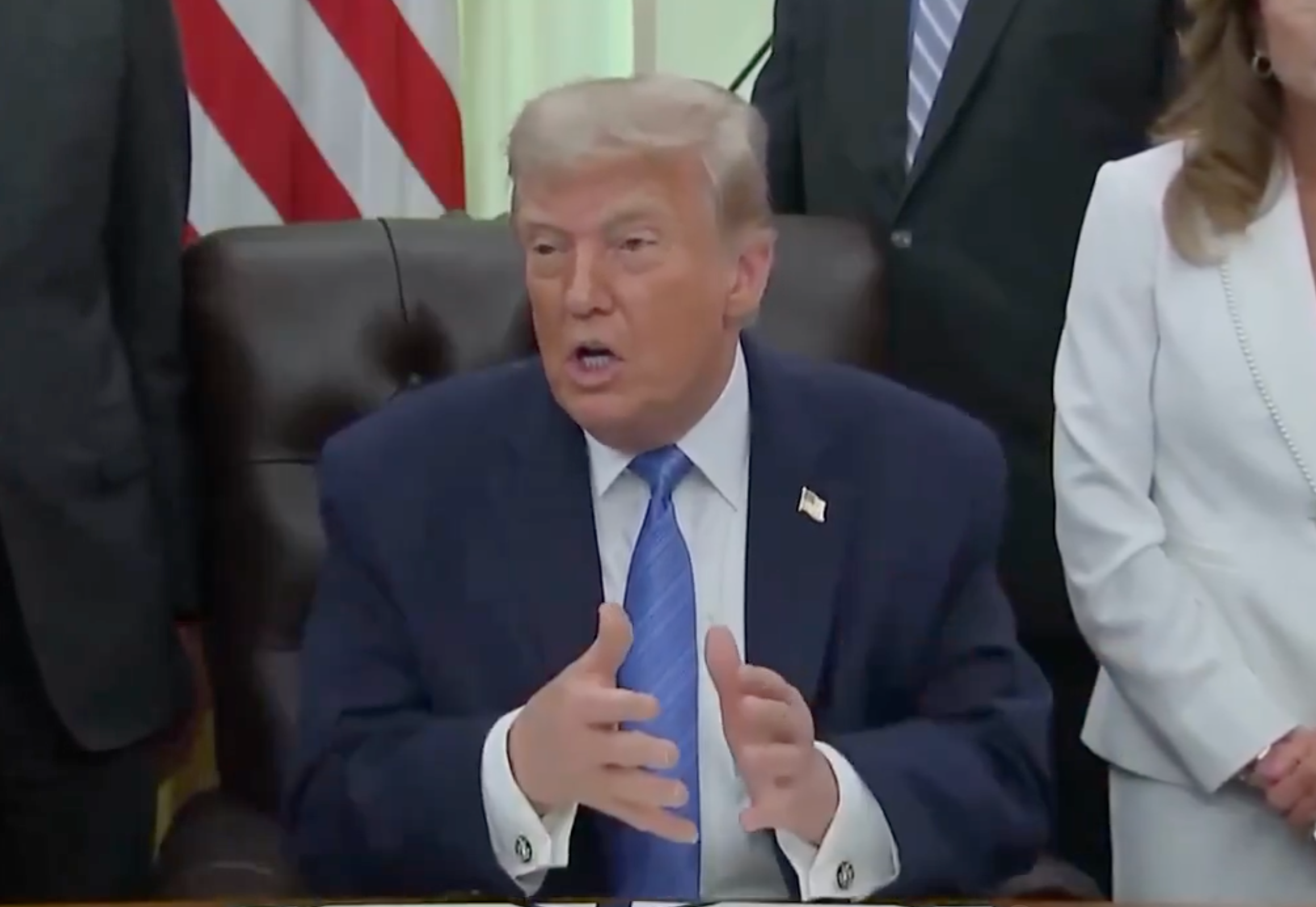
The president said the Supreme Court’s decision upholding that anyone born in the United States automatically becomes an American citizen was “too bad for our Country,” but that Congress could “easily” address it with legislation.
Trump declared that “No long and unwieldy Constitutional Amendment is necessary!”
But the Supreme Court’s ruling Tuesday makes it clear that it would be necessary to amend the Constitution. Chief Justice John Roberts, who wrote the opinion for the court, pointed to the Fourteenth Amendment in the Constitution in ruling that anyone born in the country, with very limited exceptions, is a citizen.
Justice Department reacts to the ruling on birthright citizenship
The Justice Department said in a statement that it’s “committed to tackling illegal birth tourism schemes by working diligently with U.S. Attorneys across the country to uphold the law.”
“Actors seeking to exploit loopholes to obtain automatic citizenship for their children pose a national security threat and will be brought to justice,” the department said in a post on X.
Dred Scott case featured in the justices’ birthright citizenship writings
U.S. Supreme Court justices have long distanced themselves from the pre-Civil War decision that declared Black people — enslaved and free — were not U.S. citizens.
The 1857 Dred Scott case was featured again Tuesday, being mentioned 48 times in 194 pages of the birthright citizenship opinion, concurrences and dissents.
Roberts’ majority opinion explained how U.S. birthright citizenship originates with English common law: Anyone born in the monarch’s realm was considered a “natural-born subject.”
The “odious” Scott case, Roberts said, deviated from that once-accepted understanding and “was met with shock.”
In response, he detailed, the Civil Rights Act of 1866 and the 14th Amendment’s citizenship clause restored common law understanding, with lawmakers making clear they were explicitly rebuking the Scott decision.
Yet, Roberts wrote, “the Government and the principal dissent propose a return to its core tenet,” that “for certain people, being born on American soil will not suffice to confer citizenship.”
From a descendant of the man at the center of the 1898 birthright citizenship ruling
Norman Wong, the great-grandson of Wong Kim Ark, the Chinese American cook at the center of the landmark 1898 Supreme Court decision establishing birthright citizenship, applauded Tuesday’s ruling.
“My great grandfather, Wong Kim Ark, never set out to become a symbol. He was one man, only a cook, and yet he stood up for what was right, and I believe that it has made a difference,” Wong said in a statement. “As a result, he stood up for the rights of all of us Americans — it just so happens that I am related to him. Today’s ruling shows that his victory remains as important now as it was in 1898.”
‘By the grace of God, the president does not manage to do everything he wants’
For a Mexican mother with six children born in the United States — ranging in age from 18 years to 18 months — the Supreme Court’s decision brought happiness.
“I am happy for our children,” the 38-year-old woman said in a telephone interview. “I am happy because they don’t face any risk like we do.”
The woman, who asked not to be identified for fear of being detained and deported, crossed the U.S.-Mexico border in 2007 in search of a better life. She has not applied for asylum or any other immigration status.
She works at a plant nursery in South Florida, where her children attend school.
The woman said one of her children called her as soon as he found out about the decision to share his joy with her.
Birthright citizenship survived racist eras, and now Trump, Global Refuge leader says
The head of Global Refuge said the Supreme Court averted a catastrophe with its 6-3 opinion upholding the 14th Amendment and rejecting the Trump administration’s attempt to overturn a Reconstruction era amendment.
“Birthright citizenship survived the Chinese Exclusion Act, Jim Crow, and today, it survived an executive order that would have essentially turned the maternity ward into a customs checkpoint,” said Krish O’Mara Vignarajah, President and CEO of Global Refugee.
“The Justices rightly recognized that the U.S. Constitution is clear and unambiguous: if you are born in this country and subject to its jurisdiction, you are a citizen of this country,” she said. Vignarajah said a different outcome would have denied citizenship to more than 250,000 children born in the U.S. each year.
“This was a constitutional stress test.”