


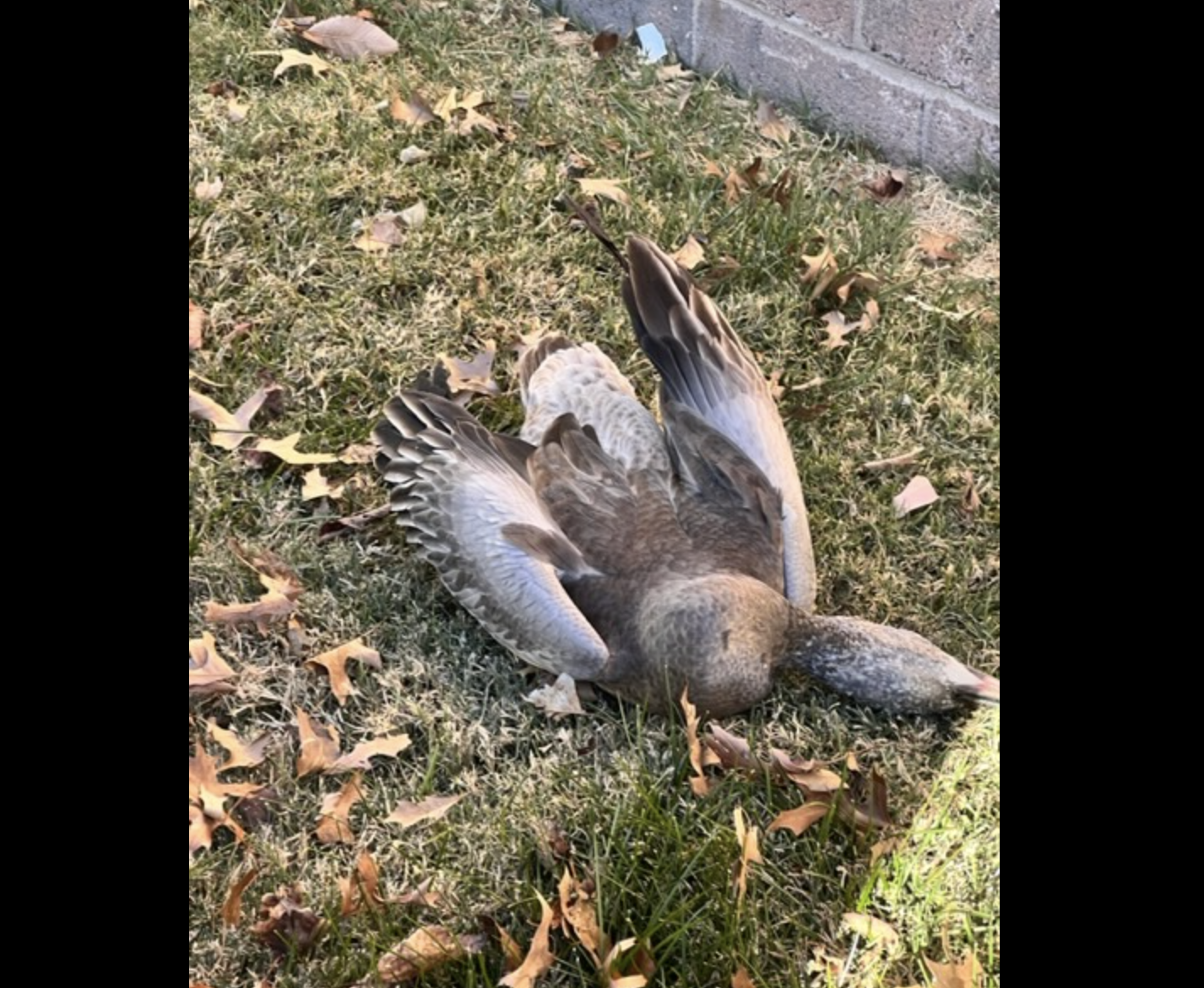
Highly Pathogenic Avian Influenza (HPAI) is hitting the Kansas City metro, Lawrence and surrounding areas hard right now, according to a media release from Operation Wildlife.
The organization reports fielding 15 or more calls per day with birds -mostly waterfowl - ducks, geese etc. exhibiting symptoms.

Symptoms include:-Neurological impairment: Birds may lack coordination, appear confused or disoriented, have tremors, seizures, or have a twisted neck.
Difficulty breathing: open mouth, wheezing-Nasal discharge, coughing, or sneezing: Birds may have blood-tinged discharge
Sudden death: Without any prior signs of illness
Swelling: Of the eyelids, head-Other symptoms: Birds may stumble or fall down, have diarrhea, have a hunched appearance, or have ruffled feathers and die within a few hours or a day of intake.
Birds with HPAI may have additional injuries such as a broken leg or broken wing, sustained from falling from the sky from exhaustion during flight.
HPAI is not treatable and is a fatal disease for the bird.
Birds with this disease need to be humanely euthanized and properly disposed of to limit spread of disease.
HPAI is highly contagious to other birds, felines, and potentially to humans and other species. If you come across a bird you suspect is affected contact Operation Wildlife by email opwildlife@aol.com or 785-542-3625 and they can advise you on how to proceed.
In SOME cities, animal control is assisting by dispatching the bird in the field and removing it for cremation. For residents of cities that do not provide this service, Operation Wildlife are able to assist with euthanasia and cremation. The organization asks that you make a donation to help them offset these costs.
It’s important to note that Operation Wildlife operates like a veterinary clinic, run by volunteers and funded by donations so we ARE NOT able to report out to pick these birds up. If you are bringing a sick bird to Operation Wildlife for these services please notify them ahead of time and do not bring the bird into the facility. They will meet you out on the driveway so as not to expose the birds in their care.
Click here for more information from the CDC.